
For many fashion enthusiasts and sneakerheads, a growing shoe collection is a source of pride. But when square footage is limited, storing dozens—or even hundreds—of pairs in a compact closet can feel like an impossible puzzle. The good news: with strategic planning, clever organization, and the right tools, even the smallest closets can house a vast footwear archive efficiently and stylishly.
The key lies not in reducing your collection, but in rethinking how you use vertical space, prioritize access, and maintain order. From adjustable shelving to rotation systems, this guide breaks down proven methods to transform a cramped closet into a high-capacity, visually appealing shoe sanctuary.
Assess Your Collection and Usage Patterns
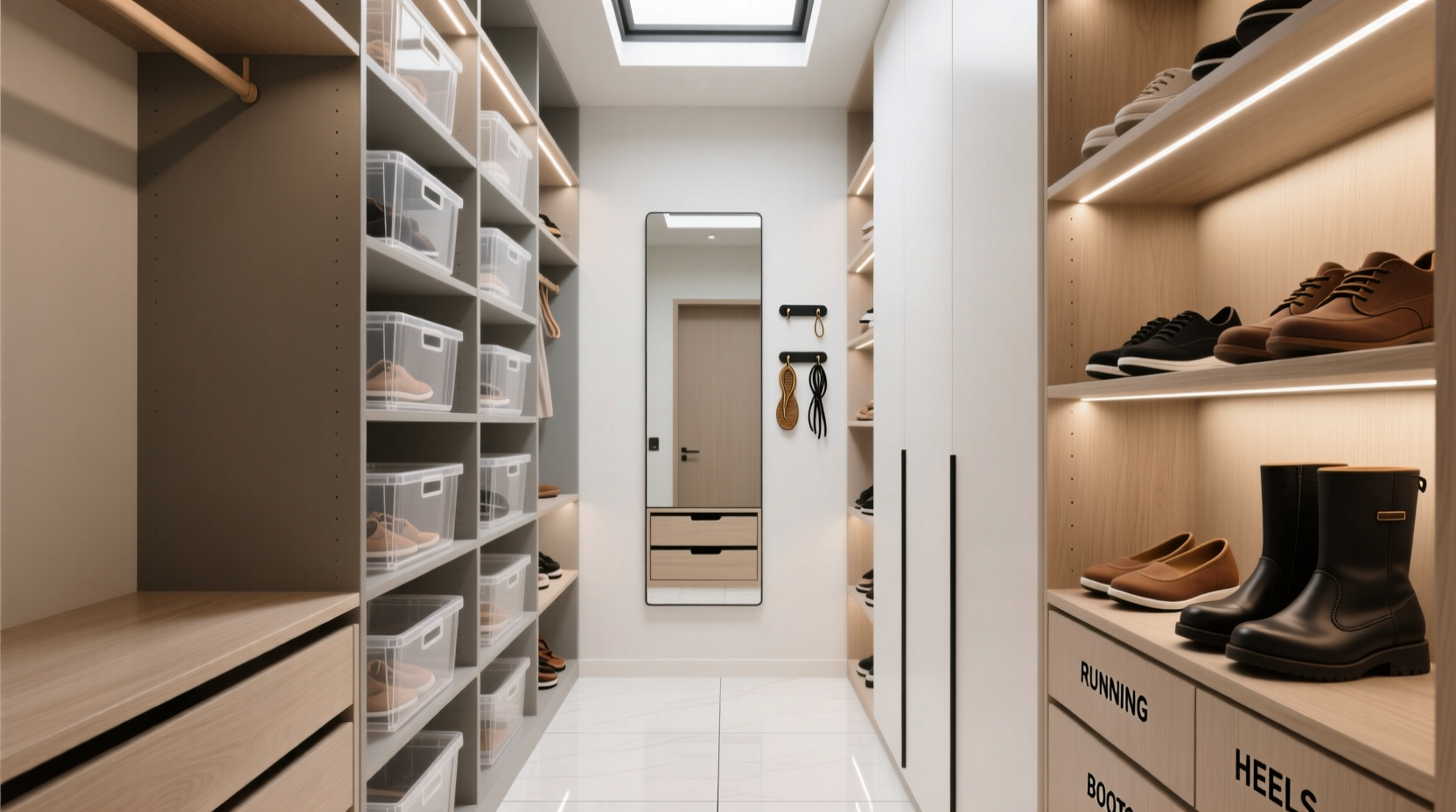
Before installing shelves or buying racks, take stock of what you own and how you wear it. A thorough inventory helps identify which shoes are used daily, which are seasonal, and which are collectibles. This distinction shapes your storage strategy.
Start by removing every pair from the closet and sorting them into categories:
- Daily wear: Comfortable, frequently worn styles (e.g., sneakers, flats).
- Seasonal: Boots, sandals, or weather-specific footwear.
- Special occasion: Heels, dress shoes, formal boots.
- Collectibles: Limited editions, vintage pairs, or unworn statement pieces.
This classification determines where each category should live within your closet. Daily-use shoes need front-and-center access; collectibles can occupy harder-to-reach zones if properly protected.
Optimize Vertical Space with Tiered Storage
Floor space is at a premium in small closets, so upward expansion is essential. Most people underutilize the full height of their closet, especially above hanging rods or near the ceiling. Installing tiered shelving maximizes cubic volume without increasing footprint.
Adjustable wire or acrylic shelves are ideal—they allow customization based on heel height and shoe depth. For example:
| Shoe Type | Average Height | Recommended Shelf Spacing |
|---|---|---|
| Sneakers & Flats | 3–5 inches | 6 inches |
| Ankle Boots | 6–8 inches | 9 inches |
| Knee-High Boots | 14–18 inches | 19+ inches |
Consider stacking clear stackable bins for off-season storage. These protect shoes from dust while allowing visibility. Label each bin by season or category (e.g., “Winter Boots,” “Summer Sandals”) for quick retrieval.
“Vertical organization isn’t just about saving space—it’s about creating a system that respects both function and aesthetics.” — Lena Park, Interior Organizer & Closet Design Consultant
Use Specialized Organizers for High-Density Storage
Generic cubbies won’t cut it for serious collectors. Purpose-built organizers dramatically increase capacity while preserving shoe shape and finish.
Here are four top-performing solutions:
- Over-the-Door Shoe Pockets: Ideal for lightweight sneakers or flats. A single door panel can hold 20+ pairs without using floor space.
- Shoe Cubby Units: Modular cubes fit snugly into corners or against back walls. Opt for open-back designs to improve airflow.
- Boot Stands or Shapers: Prevent tall boots from slumping. Inflatable inserts or foam supports keep legs upright and crease-free.
- Rotating Shoe Carousels: Perfect for tight corners. These 360-degree units provide access to 30+ pairs in a compact footprint.
For ultra-narrow spaces, consider wall-mounted pull-out drawers or sliding racks. These glide smoothly and retract when not in use, minimizing obstruction.
Implement a Smart Rotation System
Even the most optimized closet becomes cluttered if everything stays out year-round. A rotation system keeps only relevant shoes accessible while protecting others from unnecessary exposure.
Follow this seasonal rotation timeline:
- Every 3 months: Rotate footwear based on upcoming weather and wardrobe needs.
- Pack away off-season shoes: Store in breathable cotton bags or ventilated containers.
- Inspect stored pairs: Check for moisture, pests, or material degradation every 6 weeks.
- Deep clean before storage: Wipe soles, condition leather, and insert shoe trees if applicable.
For collectors, consider a “shoe calendar” that maps out monthly wear plans. This prevents overuse of certain pairs and ensures even aging across the collection.
Mini Case Study: Sarah’s 7x4-Foot Closet Holds 120 Pairs
Sarah, a graphic designer and sneaker enthusiast in Seattle, faced a common dilemma: her 28-square-foot reach-in closet was overwhelmed by 120 pairs of shoes. After years of overcrowding and damaged finishes, she redesigned the space using a layered approach.
She installed adjustable acrylic shelves from floor to ceiling, dedicating the lower third to daily sneakers. Mid-level cubbies housed work heels and ankle boots. Above the hanging rod, she added two tiers of stackable bins labeled by season. Over the door, a clear pocket organizer holds 18 flat shoes.
Her secret? A weekly 10-minute “shoe audit.” Every Sunday, she checks for scuffs, rotates in new pairs, and returns unused ones to storage. The result: easy access, preserved condition, and no visible clutter.
Avoid Common Storage Mistakes
Even well-intentioned efforts can backfire if based on misconceptions. Here are frequent pitfalls and how to avoid them:
| Mistake | Why It’s Harmful | Better Alternative |
|---|---|---|
| Storing shoes in plastic bags | Traps moisture, promotes mold, and degrades adhesives | Use breathable cotton or mesh garment bags |
| Stacking shoes sole-to-uppers | Causes permanent indentations and material stress | Store with protective tissue or individual boxes |
| Using non-ventilated containers | Limits airflow, leading to odor buildup | Choose perforated or fabric-sided bins |
| Ignoring humidity control | High moisture warps materials and fades colors | Add silica gel packs or a mini dehumidifier |
Another overlooked issue is improper weight distribution. Heavy boots stored on flimsy shelves can warp or collapse. Always anchor shelves to wall studs and distribute heavier items on lower levels.
Checklist: Build Your High-Capacity Shoe Closet
Follow this step-by-step checklist to transform your small closet into a functional, high-density shoe haven:
- ☐ Empty the closet completely and clean all surfaces.
- ☐ Sort shoes by frequency of use, season, and type.
- ☐ Measure closet dimensions (height, width, depth).
- ☐ Install adjustable shelving from floor to ceiling.
- ☐ Add over-the-door organizers for flats and low-profile shoes.
- ☐ Incorporate boot shapers or stands for tall footwear.
- ☐ Use clear, labeled bins for off-season storage.
- ☐ Integrate LED lighting for visibility and aesthetics.
- ☐ Place silica gel packs or cedar blocks to control moisture and odor.
- ☐ Establish a quarterly rotation schedule.
FAQ
Can I store shoes in their original boxes?
Yes—but only if modified. Original boxes often trap moisture and hide contents. Cut the top off one side and label the box with a photo or description. Store flat or upright, never stacked haphazardly.
How do I prevent musty smells in a tightly packed closet?
Ventilation is critical. Leave gaps between shelves for airflow, use moisture absorbers like silica or activated charcoal, and avoid overcrowding. Run a portable air purifier nearby if needed.
What’s the best way to store limited-edition sneakers?
Treat them like archival items. Keep them in UV-protected display cases or climate-controlled cabinets. Maintain stable temperature (68–72°F) and humidity (45–55%). Avoid direct sunlight to prevent yellowing.
Final Thoughts: Make Space Work for You, Not Against You
A massive shoe collection doesn’t require a walk-in closet. It requires intentionality. By leveraging vertical real estate, investing in specialized organizers, and maintaining a disciplined rotation system, you can turn spatial constraints into design opportunities.
The goal isn’t just storage—it’s curation. Every shelf, bin, and hook should reflect how you use your shoes, honor their craftsmanship, and simplify your daily routine. When your closet works as hard as your collection does, getting dressed becomes effortless, enjoyable, and even inspiring.




 浙公网安备
33010002000092号
浙公网安备
33010002000092号 浙B2-20120091-4
Comments
No comments yet. Why don't you start the discussion?