
Meal prepping is often praised as a time-saving, budget-friendly, and health-supportive habit. But when you're cooking for just one person, the usual advice—batch cook large portions, freeze extras, make big salads—can lead to frustration. Leftovers go uneaten, ingredients spoil, and motivation fades. The key isn’t abandoning meal prep; it’s rethinking it with smarter portioning strategies tailored to solo living.
With thoughtful planning, portion control, and ingredient flexibility, you can enjoy the benefits of meal prep without the waste. This guide breaks down practical methods, storage insights, and real-life approaches that help you prepare meals efficiently, keep food fresh longer, and actually finish what you cook.
Why Meal Prepping for One Is Different
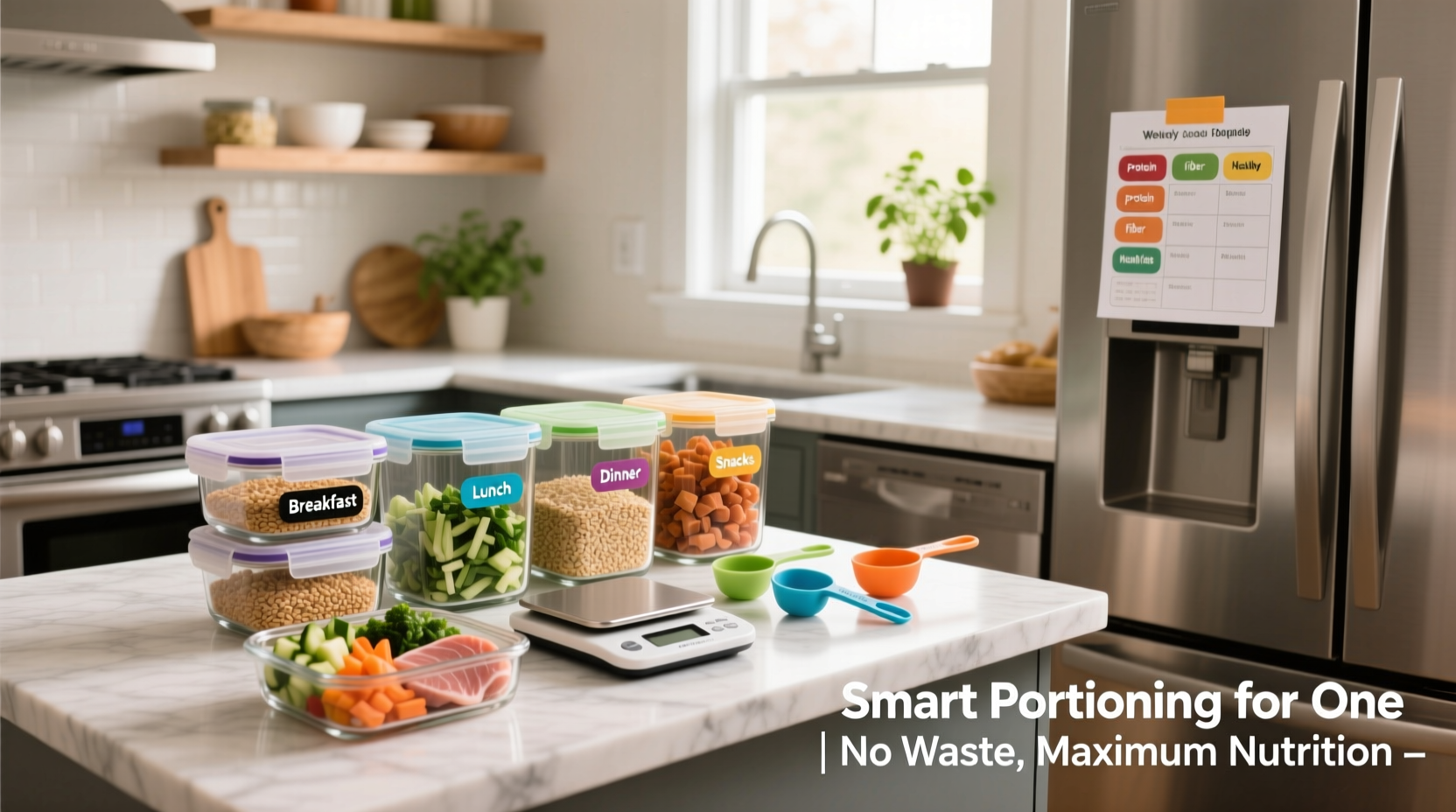
Cooking for a household of multiple people allows for economies of scale: roasting a whole chicken, doubling a sauce, or making a giant casserole makes sense. For one person, those same habits result in three days of identical meals—or worse, forgotten containers pushed to the back of the fridge.
The challenge isn’t lack of willpower—it’s mismatched expectations. Most meal prep guides assume you’ll eat the same dish repeatedly, but variety matters, especially when dining alone. Additionally, perishable items like herbs, greens, and dairy degrade quickly in small quantities, increasing the risk of spoilage.
The solution lies in strategic scaling, modular cooking, and understanding your actual consumption patterns. Instead of forcing yourself to eat four servings of chili, design a system where each component serves multiple purposes across different meals.
Smart Portioning Strategies That Work
Portioning isn’t just about dividing food—it’s about designing meals with reuse and rotation in mind. These strategies help stretch ingredients without overproducing.
1. Cook Components, Not Complete Meals
Instead of fully assembling meals in advance, prep versatile building blocks. For example:
- Cook 1 cup of quinoa (enough for 2–3 bowls)
- Roast half a sweet potato
- Grill one chicken breast or tofu fillet
- Chop a handful of kale or spinach
Combine these into a bowl today, then use the remaining quinoa tomorrow in a salad with beans and lemon dressing. Modular prep reduces monotony and maximizes ingredient use.
2. Use the “Half-Batch Rule”
Whenever a recipe calls for a full pound of ground meat or two cups of rice, halve it. Invest in a kitchen scale or small measuring tools to accurately divide ingredients. Over time, you’ll develop an eye for single-serving amounts.
3. Freeze in Single Servings
Some dishes, like soups, stews, or curries, benefit from batch cooking. But instead of storing them in one large container, freeze individual portions in reusable silicone molds or small glass jars (leave headspace for expansion). Thaw one serving at a time as needed.
4. Embrace “Flexible Bases”
Choose staple bases that stay fresh for days and work across cuisines. Examples include:
- Hard-cooked eggs (last up to 5 days)
- Roasted vegetables (broccoli, carrots, cauliflower)
- Cooked lentils or chickpeas (4–5 days in fridge)
- Pre-washed greens (stored properly)
Step-by-Step Weekly Prep Plan for One
A realistic weekly routine balances effort, variety, and shelf life. Follow this timeline to avoid burnout and waste.
- Sunday (30–45 minutes): Wash and chop sturdy vegetables (carrots, bell peppers, cabbage). Roast a tray of mixed veggies. Cook one grain (quinoa, rice, farro) in a small pot. Hard-boil two eggs. Store each in separate airtight containers.
- Wednesday (20 minutes): Refresh your supply. Sauté a new vegetable (zucchini, mushrooms), cook a protein (salmon fillet, tempeh), or make a quick soup using leftover grains.
- Daily (5–10 minutes): Assemble meals by combining one base, one protein, and one vegetable. Add sauces or spices for variety.
This staggered approach keeps food fresher and prevents the “prep fatigue” that comes from doing everything at once.
Essential Tools and Storage Tips
Having the right equipment makes portion-controlled meal prep easier and more sustainable.
Recommended Tools
- Small cutting board and sharp paring knife
- Mini food processor (for chopping herbs or nuts)
- 4-ounce and 8-ounce glass containers with lids
- Kitchen scale (digital, under $20)
- Reusable silicone freezer bags
Storage Guidelines by Ingredient
| Ingredient | Fridge Lifespan | Freezer Lifespan | Best Storage Method |
|---|---|---|---|
| Cooked grains | 4–5 days | 3 months | Airtight container, cool part of fridge |
| Roasted vegetables | 3–4 days | 2 months | Separate by type; avoid moisture buildup |
| Raw chopped veggies | 5–7 days | Not recommended | In water (carrots, celery) or dry with paper towel |
| Cooked proteins | 3–4 days | 2–3 months | Vacuum seal or wrap tightly |
| Herbs (cilantro, parsley) | 7–10 days | 1 month (frozen in oil) | Stem in water, covered with bag |
Proper storage prevents premature spoilage and maintains texture. Always cool food completely before sealing containers to avoid condensation, which accelerates mold growth.
Real Example: Maria’s No-Waste Prep Routine
Maria, a freelance designer living alone in Portland, used to dread cooking. She’d buy groceries on Sunday, end up throwing half away by Thursday, and rely on takeout. After learning modular prep, she changed her approach.
She now buys only what she needs: one chicken breast, half a bunch of kale, a small sweet potato. On Sundays, she roasts the sweet potato and kale, cooks the chicken, and prepares a quarter-cup of brown rice. Each day, she combines one element with a new sauce—a tahini drizzle Monday, pesto Tuesday, soy-ginger Wednesday. By midweek, she refreshes with a scrambled egg and sautéed spinach. Nothing spoils, and she eats varied, home-cooked meals all week.
“I used to think meal prep meant eating the same thing every day,” she says. “Now I realize it’s about having ingredients ready, not full meals. It’s way more flexible—and I actually stick with it.”
“Single-person meal prep should focus on agility, not volume. Success isn’t how much you cook—it’s how little you waste.” — Dr. Lena Torres, Nutrition Behavioral Scientist, University of Vermont
Common Mistakes to Avoid
Even with good intentions, small errors can lead to wasted food and lost motivation. Watch out for these pitfalls:
- Buying family-sized packs: Repackage bulk meat or cheese immediately into single servings and freeze extras.
- Overestimating appetite: Start with smaller portions. You can always make more if hungry.
- Ignoring label dates: “Best by” doesn’t always mean “spoiled.” Use sight, smell, and taste to judge freshness.
- Skipping inventory checks: Before shopping, scan your fridge and pantry. Build meals around what’s already on hand.
- Forgetting flavor rotation: Keep a spice jar collection or small bottles of sauces (sriracha, balsamic, curry paste) to transform simple ingredients quickly.
Checklist: Your Waste-Free Solo Meal Prep Routine
Your 7-Day Waste-Reducing Meal Prep Checklist:
- Plan 3–4 meals in advance based on current ingredients.
- Shop with a list—buy only what you need.
- Wash and chop vegetables upon returning home.
- Cook grains and proteins in single or double servings.
- Store components separately in clear containers.
- Label containers with date and contents.
- Use older items first (first in, first out).
- Refresh midweek with one quick cook session.
- Freeze extras within 2 days.
- Review what was unused and adjust next week’s plan.
FAQ
How do I know how much to cook for one?
A good starting point: 3–4 ounces of raw protein (about the size of a deck of cards), ½ cup cooked grains, and 1–2 cups of vegetables per meal. Adjust based on your hunger levels after a few tries. Track what you finish versus what gets tossed.
Can I still meal prep if I don’t like leftovers?
Absolutely. Focus on prepping ingredients, not full meals. This gives you the convenience of having food ready without repeating the same dish. A grilled chicken breast can become a taco Tuesday, a salad topping Wednesday, and a stir-in for soup Thursday.
What are the best foods to prep for one person?
Top choices include: hard-boiled eggs, roasted root vegetables, cooked lentils, grilled fish fillets, quinoa, chopped cabbage, and pre-washed greens. These hold up well and adapt easily to different recipes.
Conclusion: Make Meal Prep Work for You, Not Against You
Meal prepping for one doesn’t have to mean bland repetition or overflowing trash cans full of spoiled food. With smart portioning, modular cooking, and a focus on flexibility, you can enjoy the benefits of prepared meals while honoring your actual lifestyle and appetite.
The goal isn’t perfection—it’s progress. Start small: prep two components this week. See what works. Adjust. Build a rhythm that feels sustainable. When you stop wasting food, you’re not just saving money—you’re respecting your time, your health, and the planet.




 浙公网安备
33010002000092号
浙公网安备
33010002000092号 浙B2-20120091-4
Comments
No comments yet. Why don't you start the discussion?