
A cluttered desk is more than just an eyesore—it disrupts focus, slows productivity, and increases daily stress. One of the most effective ways to reclaim order is by using storage boxes tailored to your space and needs. But simply buying any container won’t solve the problem. The key lies in choosing the right size—one that fits your desk dimensions, accommodates your items efficiently, and supports long-term organization. This guide walks through the precise steps to measure your workspace, assess your storage needs, and select the ideal storage box size without guesswork.
Assess What You Need to Store
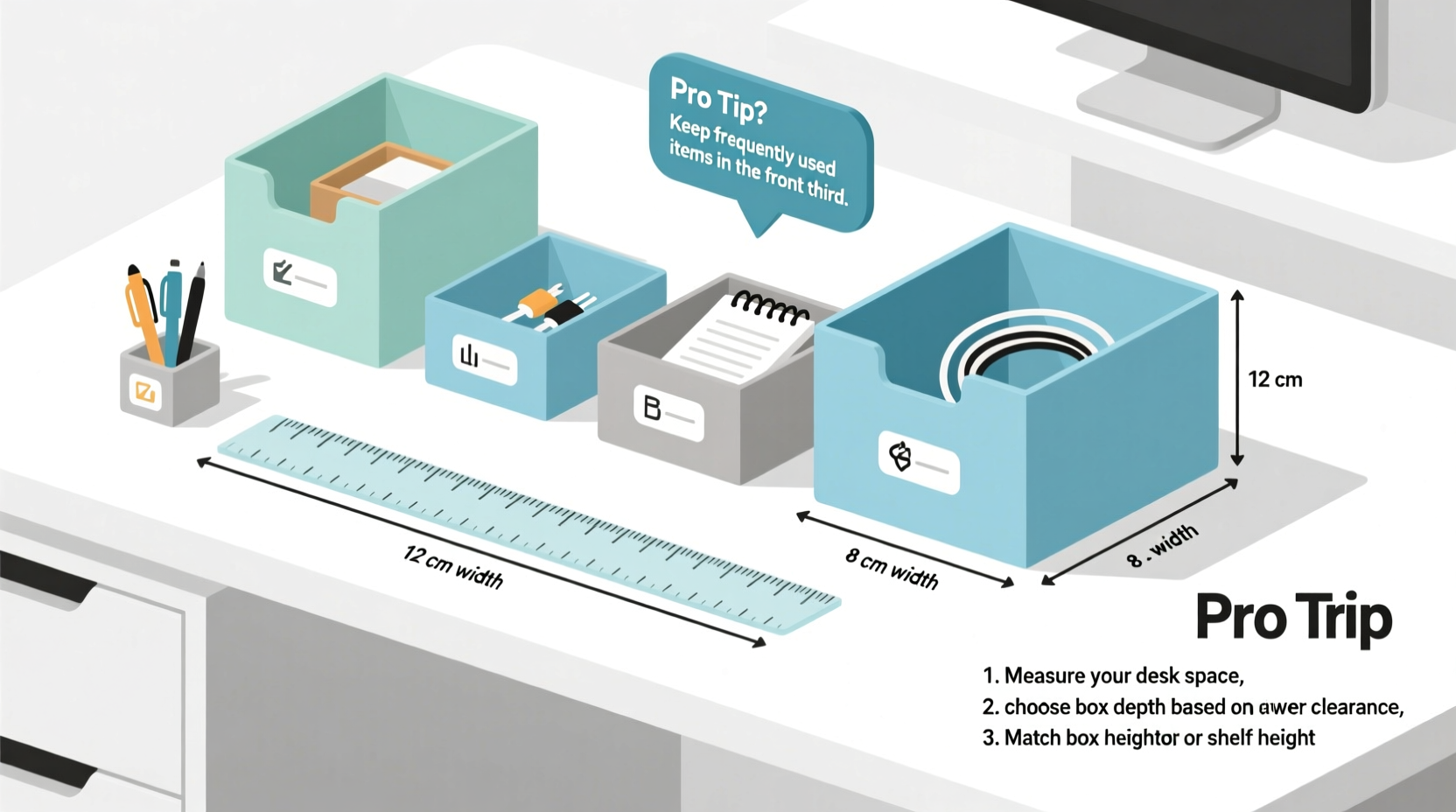
Before measuring anything, identify exactly what you’re organizing. Desk clutter typically falls into categories: office supplies (pens, clips, notepads), electronics (cables, adapters, chargers), personal items (glasses, hand cream), or project materials (papers, sticky notes). Take everything off your desk and sort items into groups. This inventory reveals both volume and frequency of use—critical factors when selecting storage solutions.
Ask yourself:
- Which items do I use daily?
- What takes up the most space?
- Are there bulky items like notebooks or tape dispensers?
- Do I need separate compartments for small parts?
High-frequency tools should be easily accessible, while rarely used items can go into deeper or stackable containers. Overlooking usage patterns leads to inefficient layouts—even a perfectly sized box becomes frustrating if it buries essential tools under less-used ones.
Measure Your Desk Space Accurately
Accurate measurements are non-negotiable. A storage box that’s too large will crowd your work surface; one that’s too small defeats the purpose. Begin by clearing your desk completely. Then, measure the available footprint for storage using a retractable tape measure.
Focus on three zones:
- Front-to-back depth: Measure from the edge of the desk to the back (typically 20–30 inches). Leave at least 6–8 inches clear for wrist room and monitor visibility.
- Left-to-right width: Note total width, then subtract space occupied by your keyboard, mouse, and monitor base.
- Vertical clearance: If considering stacked boxes, check ceiling height, shelf overhangs, or monitor arms that limit upward space.
For example, if your desk is 60 inches wide and your keyboard setup uses 30 inches centrally, you may have two 15-inch side zones for storage. A box wider than 14 inches would interfere with usability.
“Many people buy organizers based on aesthetics, not ergonomics. The result? Boxes that look good but hinder workflow.” — David Lin, Workspace Design Consultant
Choose the Right Box Dimensions Based on Contents
Once you know your available space, match it to the physical requirements of your stored items. Small items like paper clips or USB drives don’t need deep boxes, while letter-sized files or sketchbooks require vertical height and front access.
Use this rule of thumb: the internal dimensions of the box should exceed the largest item by at least 1 inch on all sides for ease of retrieval. For irregularly shaped objects (e.g., tangled cables), allow extra depth for coiling or bundling.
| Item Type | Recommended Box Size (L×W×H) | Features to Consider |
|---|---|---|
| Pens, pencils, small tools | 6×4×3 inches | Compartments, lid |
| Cables & adapters | 8×6×4 inches | Ventilation, label panel |
| Notebooks, notepads | 9×7×2 inches (flat) or 9×7×6 inches (stacked) | Open-top or hinged lid |
| Files, documents | 12×9×6 inches | Folders slots, dust cover |
| Mixed supplies | 10×8×5 inches (modular) | Dividers, stackability |
Modular systems offer flexibility. Start with one appropriately sized box and expand as needed. Avoid oversized containers—even if they fit spatially, they often encourage disorganized dumping instead of intentional placement.
Step-by-Step Guide to Selecting the Perfect Storage Box
Follow this five-step process to ensure your choice is functional, ergonomic, and sustainable:
- Clear and categorize: Remove all items from your desk and group them by type and usage frequency.
- Measure your desk zones: Determine usable space in width, depth, and height. Mark boundaries with tape if helpful.
- Size your contents: Lay out each category and estimate required volume. Use a ruler to find max dimensions per group.
- Select box specs: Match internal capacity to your volume needs. Prioritize accessibility—front-opening or shallow boxes for frequent access.
- Test before committing: Use cardboard mockups or existing containers to simulate placement. Adjust until retrieval feels natural and space-efficient.
Real Example: From Chaos to Clarity in One Afternoon
Sarah, a freelance graphic designer, struggled with a perpetually messy desk. Her Wacom tablet, styluses, charging cables, and client notes were scattered across the surface. She bought a large acrylic drawer unit hoping for a fix—but it was too wide and blocked her arm movement.
After reassessing, she measured her left-side zone: 14 inches wide, 10 inches deep. She categorized items and found her styluses and pens took little space but needed quick access, while cables could be grouped vertically. She chose a two-tier organizer: a shallow 6×8×3 inch top tray for pens and a deeper 10×8×5 inch lower box with dividers for cords and adapters.
The new setup freed up 40% more workspace, kept essentials visible, and reduced daily setup time. The difference wasn’t just aesthetic—it improved her ability to transition between tasks smoothly.
Checklist: Picking the Right Storage Box
- ✅ Removed all items from desk for accurate assessment
- ✅ Grouped items by category and usage frequency
- ✅ Measured available desk space (width, depth, height)
- ✅ Determined maximum dimensions of stored items
- ✅ Selected box with 1+ inch clearance around largest item
- ✅ Ensured easy access based on daily workflow
- ✅ Tested layout with placeholder before final purchase
- ✅ Chose material (plastic, fabric, wood) compatible with desk aesthetics and durability needs
Frequently Asked Questions
How do I know if a storage box is too big?
If the box occupies more than one-third of your desk surface, restricts hand movement, or forces you to stretch around it, it’s likely too large. Also, if you only fill half its volume, consider downsizing to avoid wasted space and visual clutter.
Can I use multiple small boxes instead of one large one?
Yes—and often, this is better. Multiple smaller boxes promote categorization, improve access, and allow flexible reconfiguration. Just ensure combined footprints don’t overcrowd your desk. Modular sets designed to interlock work especially well.
Should storage boxes have lids?
Lids help protect sensitive items (like unused cables or spare batteries) from dust and spills. However, for frequently accessed tools, open-top or low-rim designs reduce friction in daily use. Consider a mix: lidded for storage, open for active tools.
Final Thoughts: Build a System That Works With You
Effective desk organization isn’t about filling every corner with containers—it’s about designing a system that reduces friction and supports your workflow. The right storage box size emerges from honest assessment of both space and habits. By measuring precisely, matching containers to content, and testing layouts before finalizing, you create an environment where clarity replaces chaos.




 浙公网安备
33010002000092号
浙公网安备
33010002000092号 浙B2-20120091-4
Comments
No comments yet. Why don't you start the discussion?