
Selecting the right cushion cover isn't just about aesthetics—it's about fit, comfort, and longevity. A poorly sized cover can look sloppy, slip off easily, or strain at the seams. On the other hand, a perfectly fitted cover enhances your decor, provides optimal support, and protects your pillow from wear. Yet, many people make the mistake of guessing sizes or assuming standard labels are universal. The truth is, cushion dimensions vary widely across brands and regions, and even a half-inch difference can impact how a cover fits.
Understanding how to measure your existing pillows and match them to the correct cover ensures you get both visual harmony and functional performance. Whether you're refreshing your living room, styling outdoor furniture, or upgrading bedroom accents, getting the size right is the first step toward a polished, professional look.
Step-by-Step: How to Accurately Measure Your Pillow
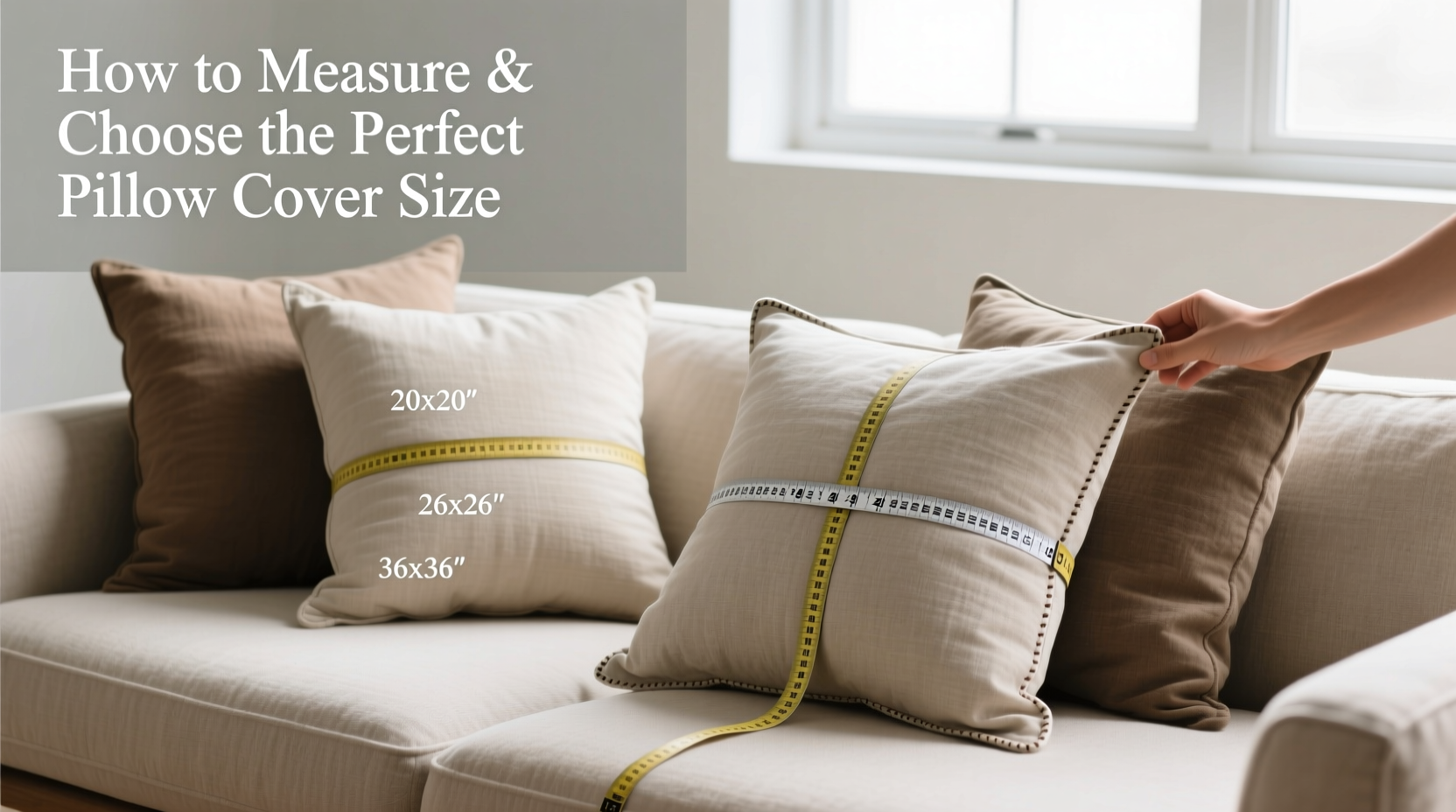
The foundation of selecting the right cushion cover is precise measurement. Don’t rely on old labels or memory—pull out a tape measure and follow these steps:
- Remove the current cover (if present): If your pillow has a cover, take it off to measure the insert directly. Covers often stretch or compress over time, leading to inaccurate readings.
- Lay the pillow flat: Place it on a hard, level surface like a table or floor. Avoid measuring on soft surfaces like beds or sofas, which can distort the shape.
- Measure length and width: Use a flexible tape measure to record the distance from edge to edge along the longest and shortest sides. For square pillows, measure both dimensions to confirm they’re truly equal.
- Check thickness: While most covers are designed for standard thicknesses, some decorative or orthopedic pillows are deeper. Measure the depth from front to back if your pillow is unusually thick.
- Note any irregularities: If the pillow is lumpy, flattened, or misshapen, consider replacing it before buying a new cover.
Understanding Cushion Cover Sizing Labels
Once you have your measurements, you’ll encounter various sizing labels—standard, euro, lumbar, bolster, etc. These terms aren’t always consistent across retailers, so knowing what they typically mean helps avoid confusion.
| Sizing Label | Common Dimensions (inches) | Typical Use Case |
|---|---|---|
| Standard/Throw | 18” x 18”, 20” x 20” | Couches, accent chairs, daybeds |
| Euro | 26” x 26”, 24” x 24” | Bedding layers, behind standard pillows |
| Lumbar | 12” x 20”, 14” x 22” | Lower back support, benches, window seats |
| Bolster | 12” diameter x 20” long | Door stops, decorative ends, boho styles |
| Oversized | 22” x 22” and up | Modern sectional seating, statement pieces |
Keep in mind that “standard” doesn’t guarantee compatibility. A 20x20 cover from one brand may be slightly larger than another’s due to seam allowances or fabric stretch. Always cross-reference the manufacturer’s exact dimensions before purchasing.
Choosing the Right Fit: Snug vs. Loose vs. Oversized Look
Finding the ideal fit involves more than matching numbers—it’s also about design intent. There are three main approaches to fit:
- Snug Fit: The cover is cut to the exact size of the pillow. This creates clean, tailored edges and a crisp appearance. Best for structured interiors and synthetic-filled inserts.
- Loose (Euro) Shams or Knife-Edge Style: Covers are made 1–2 inches smaller than the pillow. When inserted, the pillow fills the cover tightly, eliminating sagging. Common in high-end bedding.
- Oversized or “Poufy” Look: Covers are intentionally 1–3 inches larger than the pillow. This creates a relaxed, inviting appearance with gentle wrinkling. Ideal for down-filled or feather pillows that need room to loft.
“Fit is as important as fabric when designing with cushions. A cover that’s too tight will stress the seams, while one that’s too loose sags and loses its shape within days.” — Lena Torres, Interior Stylist & Textile Consultant
Real-Life Example: Matching Covers After Renovating a Living Room
Sarah, a homeowner in Portland, recently redesigned her living room with a modern farmhouse aesthetic. She bought six new linen-blend cushion covers labeled “20x20,” assuming they’d fit her existing pillows. When she tried to insert them, two were too tight, and four were slightly loose. Confused, she measured her inserts and found they varied from 19.5” to 20.75” across different manufacturers.
She returned the mismatched covers and purchased new ones based on exact measurements: 20.5” x 20.5” for a slightly poufy look on her sofa, and 19.5” x 19.5” knife-edge shams for her armchairs. The result was a cohesive, designer-quality layout where every pillow looked intentional and stayed in place.
Sarah’s experience highlights a common oversight: assuming uniformity in mass-produced pillows. Taking individual measurements—even among a set—can prevent costly returns and styling frustrations.
Checklist: Selecting the Perfect Cushion Cover Size
Before placing your next order, go through this checklist to ensure accuracy and satisfaction:
- ✅ Removed all current covers to measure bare pillows
- ✅ Measured length, width, and depth using a tape measure
- ✅ Recorded dimensions in writing (e.g., 18” x 18”)
- ✅ Checked manufacturer’s listed cover dimensions—not just the label
- ✅ Decided on desired fit: snug, tailored, or slightly oversized
- ✅ Considered pillow fill type (down expands more than polyester)
- ✅ Verified return policy in case of sizing issues
- ✅ Compared multiple retailers for consistency in sizing standards
Frequently Asked Questions
Can I use a 20x20 cover on an 18x18 pillow?
Yes, but only if you want a very loose, gathered look. Most people find this excessive. A better option is to use a cover no more than 1–2 inches larger per side. For an 18x18 pillow, a 19x19 or 20x20 cover can work if you prefer volume, but expect visible wrinkling and potential shifting.
What if my pillow size isn’t standard?
Many custom or vintage pillows don’t conform to standard sizes. In this case, look for retailers offering custom cushion covers. Provide your exact measurements, and choose fabrics with minimal stretch for best results. Alternatively, replace the insert with a standard-sized one for easier cover shopping.
Do cushion covers shrink after washing?
Natural fibers like cotton and linen can shrink by 3–5% after the first wash, especially if hot water is used. To prevent fit issues, either pre-wash your cover before inserting the pillow or select pre-shrunk or blended fabrics. Always follow care instructions carefully.
Final Tips for Long-Term Success
Once you’ve selected the right size, maintain the fit over time by rotating covers regularly and fluffing inserts. Polyester fills flatten over time, making once-perfect covers appear too large. Down and feather blends retain loft longer but benefit from occasional airing.
Also, consider envelope closures or zippers for easy removal and cleaning. Hidden zippers offer a seamless look, while overlapping envelope backs are simpler but may gape on thicker pillows.
Conclusion
Measuring and selecting the perfect cushion cover size is a small task with a big impact. It transforms casual decor into curated spaces, prevents constant readjustment, and extends the life of your pillows. By taking accurate measurements, understanding sizing nuances, and choosing the right fit for your style, you create a space that feels intentional and inviting.




 浙公网安备
33010002000092号
浙公网安备
33010002000092号 浙B2-20120091-4
Comments
No comments yet. Why don't you start the discussion?