
Meditation is often described as sitting quietly, eyes closed, mind at peace. But for many people—especially beginners—this image feels impossible. If you’ve ever tried to meditate and found yourself fidgeting after 30 seconds, standing up after a minute, or mentally checking out before the timer even finishes, you’re not alone. The truth is, meditation doesn’t require perfect stillness or silence. It’s not about forcing your body into unnatural positions or silencing your thoughts completely. For those who struggle to sit still, especially in the beginning, there are effective, accessible ways to build a meditation practice that works with your body, not against it.
The goal isn’t to become a statue. It’s to cultivate awareness, presence, and a sense of inner calm—even if that starts with just one conscious breath. This guide offers realistic, science-backed approaches tailored for restless minds and bodies, helping you begin a sustainable meditation habit without frustration or failure.
Understanding Why Sitting Still Feels Impossible
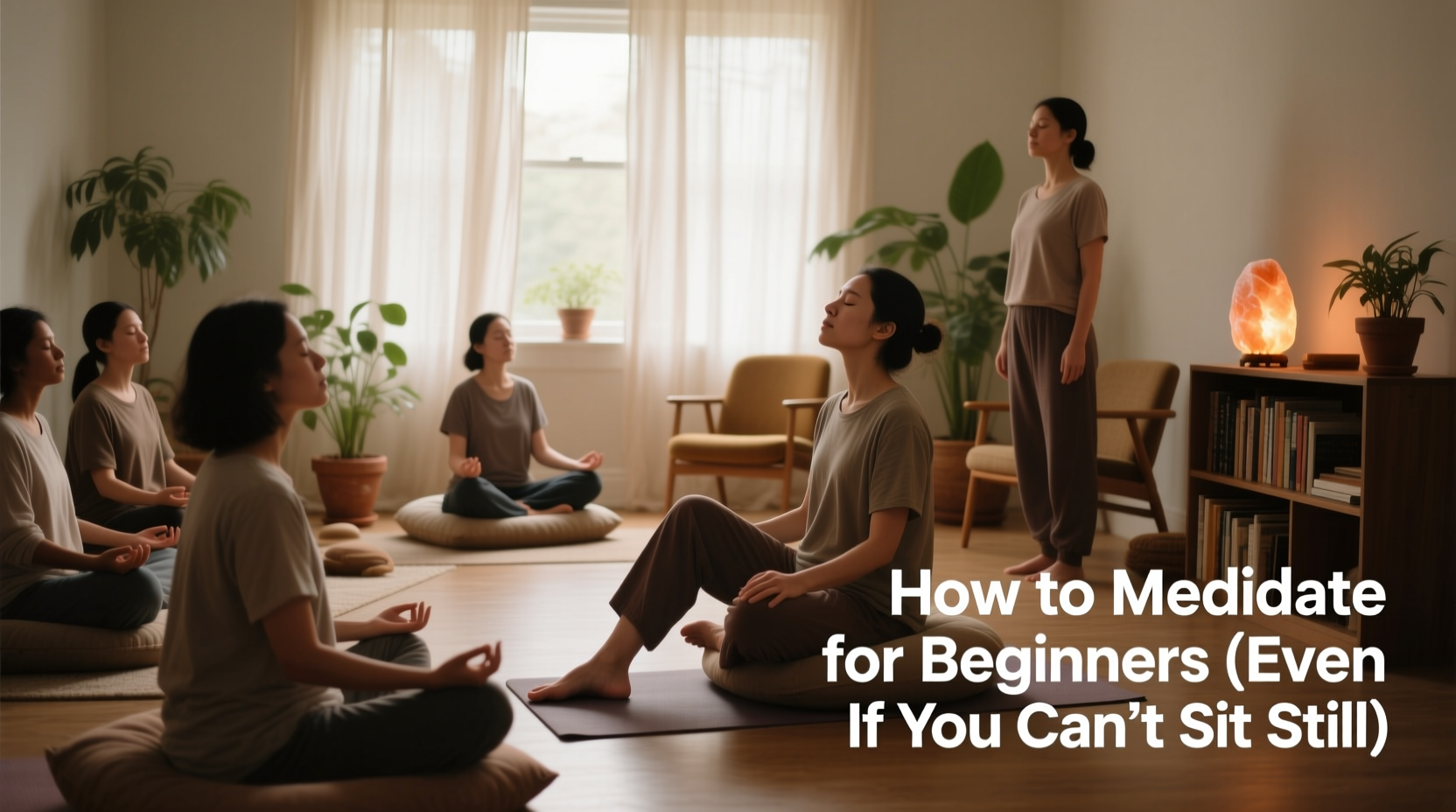
Restlessness during meditation isn’t a personal failing—it’s a natural response rooted in biology and modern lifestyle habits. Most people today spend hours sitting passively in front of screens, yet their nervous systems are constantly stimulated by notifications, multitasking, and information overload. When you suddenly ask your body to be still and quiet, it can trigger a surge of physical discomfort or mental agitation.
Neurologically, this restlessness often stems from an overactive sympathetic nervous system—the part responsible for the “fight-or-flight” response. Chronic stress keeps this system engaged, making it harder to transition into relaxation. Additionally, conditions like ADHD, anxiety, or chronic pain can make traditional seated meditation especially challenging.
“Meditation is not about stopping movement. It’s about noticing what arises—whether it’s a thought, sensation, or urge to move—and responding with awareness.” — Dr. Jon Kabat-Zinn, Founder of Mindfulness-Based Stress Reduction
The key is reframing meditation: it’s not about achieving stillness but about developing attention and acceptance. Once you shift your mindset from “I must sit perfectly” to “I’m learning to be present,” the door opens to more flexible, inclusive practices.
Alternative Meditation Techniques for Restless Beginners
If sitting still for five minutes feels unattainable, start with methods that incorporate movement, rhythm, or environmental engagement. These techniques keep the body active while training the mind in mindfulness.
1. Walking Meditation
This form of meditation turns a simple walk into a mindful practice. Instead of focusing on reaching a destination, you pay close attention to each step—the lifting, moving, and placing of your foot.
- Stand still and take three deep breaths to center yourself.
- Begin walking slowly, lifting one foot slightly higher than usual.
- Notice the shift in balance, the pressure on your heel, then the ball of your foot.
- When your mind wanders, gently return focus to your steps.
- Pause after a few minutes and check in with your body and breath.
Walking meditation is ideal for people who feel trapped when seated. It provides rhythmic movement that soothes the nervous system while building concentration.
2. Mindful Movement Practices
Yoga, tai chi, qigong, or even gentle stretching can serve as moving meditations. These activities synchronize breath with motion, anchoring attention in the body.
- Chair yoga: Perform seated stretches with focused breathing—ideal for office breaks.
- Tai chi: A slow, flowing martial art that enhances balance and mental clarity.
- Dancing mindfully: Put on calming music and move freely, paying attention to how your body feels with each motion.
The emphasis isn’t on performance but on sensory awareness—what you feel, hear, and sense in each moment.
3. Breath Anchors During Daily Activities
You don’t need dedicated time or space to meditate. Use routine tasks as opportunities to practice mindfulness.
| Activity | Mindful Focus | Duration |
|---|---|---|
| Washing dishes | Feel water temperature, soap texture, sound of running water | 2–5 minutes |
| Brushing teeth | Notice bristle sensations, taste of toothpaste, hand movements | 2 minutes |
| Drinking tea or coffee | Savor warmth, aroma, taste, and the act of swallowing | 3–4 minutes |
| Waiting in line | Observe breath, posture, sounds around you | As long as needed |
These micro-meditations train your brain to stay present without requiring stillness. Over time, they reduce reactivity and increase emotional regulation.
A Step-by-Step Guide to Building Your Practice (Even If You Can’t Sit)
Starting small is essential. Here’s a realistic seven-day plan designed for beginners who struggle with stillness.
- Day 1–2: Choose a Movement-Based Practice
Select one method—walking, stretching, or mindful dishwashing. Commit to 2 minutes once per day. - Day 3–4: Add a Breath Check-In
Pause three times daily. Take one slow inhale and exhale, noticing how your body feels. No need to close your eyes or stop moving. - Day 5: Try Seated Meditation for 60 Seconds
Sit comfortably. Set a timer. Close your eyes and focus on your breath. When the urge to move arises, acknowledge it without acting. See if you can stay for the full minute. - Day 6: Combine Movement and Stillness
Walk mindfully for two minutes, then sit quietly for one minute. Observe how your body responds to the transition. - Day 7: Reflect and Adjust
Ask: What felt easiest? What caused resistance? Use insights to shape your next week.
After the first week, gradually increase duration by 30-second increments. The goal isn’t to reach five minutes quickly—but to build tolerance and awareness steadily.
Common Challenges and How to Work With Them
Expect setbacks. The path to mindfulness is rarely linear. Below are frequent obstacles and compassionate solutions.
“I keep getting distracted.”
Distractibility is normal. Every time you notice your mind has wandered and bring it back, you’ve done the core work of meditation. Think of it like a mental rep—each redirection strengthens focus.
“My body hurts when I sit.”
You don’t have to sit cross-legged. Use a chair, cushion, or even lie down. Support your lower back, rest hands on knees, and keep your spine upright but relaxed. Discomfort should not be ignored; adjust your posture as needed.
“I don’t have time.”
You don’t need 30 minutes. Two minutes of intentional breathing counts. Anchor practice to existing habits: after brushing your teeth, before starting your car, or during a bathroom break.
“I feel silly doing this.”
Self-consciousness fades with repetition. Remind yourself that meditation is a skill, like learning to play an instrument. Early attempts may feel awkward, but consistency builds confidence.
Mini Case Study: From Fidgeting to Focus
Mark, a 34-year-old software developer, struggled with anxiety and an inability to sit still. He’d tried meditation apps but always quit within days. “I’d last 90 seconds and feel like crawling out of my skin,” he said.
Instead of forcing seated sessions, Mark started with walking meditation during his lunch break. He walked slowly around the block, counting 10 steps forward, pausing, then 10 steps back. He focused only on his feet and breath. After three days, he noticed less tension in his shoulders. By week two, he added one-minute seated breath checks in the morning.
Within a month, Mark could sit for four minutes without moving. More importantly, he reported fewer panic spikes at work and improved sleep. “I didn’t fix my restlessness,” he shared. “I learned to move with it, not fight it.”
Checklist: Your First Week of Rest-Friendly Meditation
- ☐ Choose one movement-based meditation (walking, stretching, mindful task).
- ☐ Practice for 2 minutes per day.
- ☐ Perform three daily breath check-ins (one breath each).
- ☐ Attempt one 60-second seated session.
- ☐ Journal briefly: What worked? What was hard?
- ☐ Adjust your approach based on experience.
- ☐ Celebrate showing up—even if it felt messy.
Frequently Asked Questions
Can I meditate while doing something else, like folding laundry?
Yes. As long as you’re intentionally focusing on sensations, sounds, or breath during the activity, it counts as meditation. The key is presence, not posture.
Is it okay to move during meditation?
Absolutely. If you need to scratch an itch, shift position, or stand up, do so mindfully. Notice the impulse, pause briefly, then move with awareness. Suppressing natural urges creates tension, not peace.
How long until I see benefits?
Some people notice subtle shifts—like reduced reactivity or better focus—within a week. Others take several weeks. Benefits accumulate gradually. Consistency matters more than duration.
Conclusion: Start Where You Are
Meditation isn’t reserved for those who can sit perfectly still. It’s for anyone willing to show up, exactly as they are. If you fidget, think too much, or can only manage one breath at a time, you’re already on the right path. The essence of meditation isn’t perfection—it’s returning, again and again, to the present moment.
Forget rigid expectations. Begin with movement. Use everyday moments. Be kind to yourself when your mind races or your legs twitch. Each small effort builds resilience, awareness, and calm. You don’t need to change who you are to meditate. You just need to begin.




 浙公网安备
33010002000092号
浙公网安备
33010002000092号 浙B2-20120091-4
Comments
No comments yet. Why don't you start the discussion?