
Running low on foundation is a common frustration—especially when you’re down to just two different shades. Instead of tossing them or settling for an imperfect match, there’s a smarter, more sustainable approach: mixing them. This technique not only prevents product waste but can also help you achieve a custom shade that better suits your current skin tone. Whether your complexion has shifted with the seasons or you bought the wrong shade by accident, blending what you have on hand is a practical skill every beauty enthusiast should master.
The idea isn’t new—makeup artists have been mixing foundations for decades to create bespoke matches for clients under varying lighting and skin conditions. With a few simple tools and techniques, you can replicate their results at home. This guide walks you through everything from assessing your shades to applying the blended formula flawlessly—all without wasting a drop.
Why Mixing Foundation Shades Makes Sense
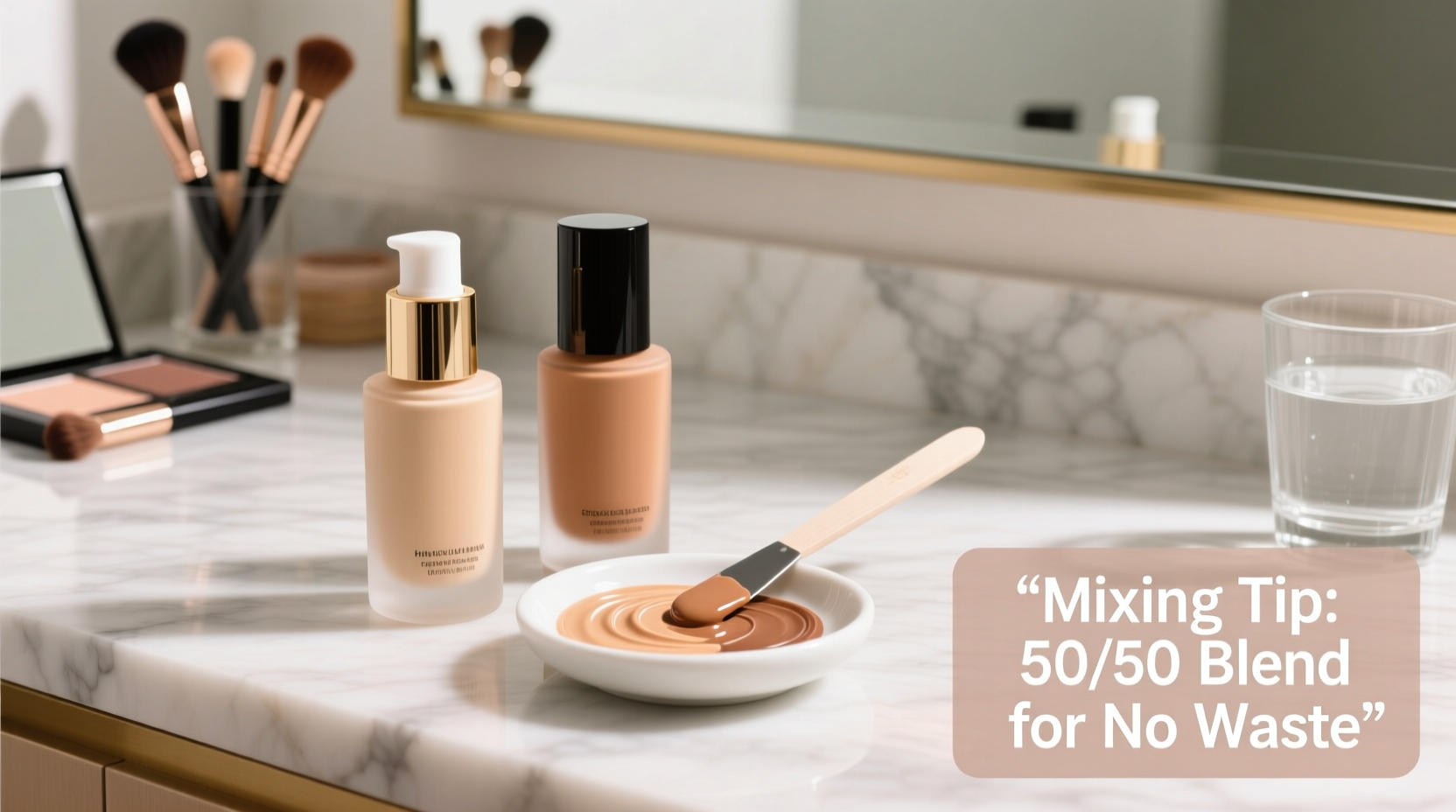
Finding the perfect foundation match is rarely a one-size-fits-all situation. Skin tone changes with sun exposure, hormones, aging, and even indoor lighting. A shade that looked flawless in winter may appear too pale come summer. Rather than buying a new bottle each time, combining leftover formulas allows you to adapt your makeup to your skin’s current state.
Mixing also reduces cosmetic waste—a growing concern in the beauty industry. According to a 2023 report by Zero Waste Beauty, over 80% of consumers discard partially used foundation bottles annually. By repurposing what you already own, you contribute to a more sustainable routine while saving money.
“Foundation isn’t meant to be static. Just like our skin evolves, so should our base. Mixing shades gives you control over coverage, undertone, and finish.” — Lila Chen, Celebrity Makeup Artist & Skincare Consultant
Step-by-Step Guide to Mixing Two Foundation Shades
Mixing foundation doesn’t require special tools or advanced skills. Follow these steps to blend two shades seamlessly and achieve a natural, even result.
- Assess Your Current Skin Tone
Wash your face and wait 15 minutes for your skin to settle. Examine your jawline in natural daylight. Is your skin warmer, cooler, or neutral? Has it darkened or lightened recently? - Evaluate Both Foundations
Dispense a small amount of each foundation onto the back of your hand. Note the undertones (yellow, pink, olive) and coverage level (sheer, medium, full). Determine which is closer to your current tone. - Choose a Mixing Surface
Use a clean palette, ceramic dish, or even the lid of one foundation bottle. Avoid porous surfaces like paper or wood that can absorb product. - Start with the Dominant Shade
If one foundation is closer to your skin tone, use it as the base. Begin with a pea-sized amount. - Add the Secondary Shade Gradually
Introduce the second foundation in tiny increments—one drop at a time. Use a silicone spatula or clean brush to blend thoroughly after each addition. - Test on Your Jawline
Apply a small amount to your jawline and neck. Blend outward. Step into natural light. The right mix will disappear into your skin without visible lines or oxidation. - Adjust as Needed
If the blend is too warm, add a touch of cool-toned foundation. Too dark? Lighten with the paler shade. Always re-blend and re-test. - Transfer and Store (Optional)
If you’ve found a winning combination, transfer the mixed foundation into a sterilized container for future use. Label it with the date and ratio used.
When to Mix—and When Not To
Not all foundation combinations work well together. Understanding compatibility helps avoid texture issues or uneven wear.
| Scenario | Can You Mix? | Notes |
|---|---|---|
| Same brand, different shades | Yes | Highest chance of seamless blend due to matching base formulas. |
| Different brands, same finish (e.g., both satin) | Possibly | Test first; check for pilling or separation after 5 minutes. |
| One matte, one dewy | Limited success | May result in patchy finish. Best for spot correction, not full face. |
| One liquid, one cream | No | Different viscosities lead to poor blending and uneven application. |
| One expired, one fresh | No | Expired product may harbor bacteria or oxidize quickly. |
Real Example: Seasonal Skin Shift Solution
Sophie, a freelance graphic designer from Portland, Oregon, noticed her winter foundation looked ashy by late April. She had half a bottle of NARS Natural Radiant Longwear in “Cape Cod” (light with neutral-pink undertones) and a smaller amount of “Montauk” (medium with golden undertones) left from last summer. Instead of ordering a new shade, she mixed three parts Cape Cod with one part Montauk on a glass palette. After testing on her jawline, she found the blend matched her spring complexion perfectly—warm enough to avoid grayness, but not too deep. She stored the rest in a sanitized pump bottle and used it for six weeks until she adjusted again for summer.
This approach saved her $48 and kept two products from ending up in the trash.
Tips for Long-Term Foundation Mixing Success
- Keep a mixing journal. Note ratios that work (e.g., “2:1 Light:Medium Warm”) so you can recreate them later.
- Use clean tools. Always wash spatulas and palettes after use to prevent bacterial growth.
- Avoid cross-contamination. Never dip fingers or brushes directly into multiple foundation bottles.
- Check expiration dates. Most liquid foundations last 6–12 months after opening. Discard if smell, color, or texture changes.
- Consider undertone balance. If one foundation is too pink, blending with a yellow-based one can neutralize it.
Common Mistakes to Avoid
Even experienced users can make errors when blending foundations. Watch out for these pitfalls:
- Using too much of the secondary shade. Start with less—it’s easier to add than subtract.
- Blending on the face instead of a palette. This wastes product and makes adjustments harder.
- Ignoring oxidation. Some foundations darken within minutes. Wait 5–10 minutes after application before judging the match.
- Mixing expired or separated products. These can cause breakouts or inconsistent texture.
- Forgetting to shake bottles first. Settling can alter pigment concentration. Shake both foundations before dispensing.
FAQ
Can I mix foundation with moisturizer to lighten it?
Yes, but do so carefully. Adding moisturizer reduces coverage and may alter the formula’s longevity. Use a 1:1 ratio max and test for pilling. This method works best for sheer days or dry skin types.
Will mixing two SPFs give me higher sun protection?
No. SPF does not stack linearly, and mixing foundations dilutes active ingredients. For proper UV defense, apply a dedicated sunscreen underneath your foundation.
How do I know if my mixed foundation has gone bad?
Signs include a sour or chemical smell, grainy texture, separation that won’t re-blend, or increased skin irritation. When in doubt, discard it.
Checklist: How to Mix Foundation Without Waste
Follow this quick checklist the next time you're down to two foundation shades:
- ✅ Clean your hands and tools
- ✅ Assess your current skin tone in natural light
- ✅ Identify undertones of both foundations
- ✅ Choose a non-porous mixing surface
- ✅ Start with the dominant shade (pea-sized amount)
- ✅ Add the secondary shade drop by drop
- ✅ Blend thoroughly between additions
- ✅ Test on jawline and neck
- ✅ Adjust ratio until invisible blend is achieved
- ✅ Store remaining mix in a labeled, airtight container
- ✅ Record the successful ratio for future use
Conclusion
Mixing two leftover foundation shades isn’t just a clever hack—it’s a responsible, cost-effective, and customizable approach to makeup. With attention to undertones, texture compatibility, and proper hygiene, you can turn near-empty bottles into a tailored base that adapts to your skin’s changing needs. No longer must you compromise on color match or contribute to beauty waste. This simple skill empowers you to make the most of what you already own, reduce clutter, and refine your routine with precision.




 浙公网安备
33010002000092号
浙公网安备
33010002000092号 浙B2-20120091-4
Comments
No comments yet. Why don't you start the discussion?