
Mixing patterns in fashion isn’t just a trend—it’s a statement of confidence. Done well, it elevates an outfit from predictable to polished and personal. But done poorly, it can appear chaotic or mismatched. The key lies not in avoiding patterns altogether, but in understanding the principles that allow them to coexist harmoniously. From stripes to florals, plaids to geometrics, combining prints successfully is less about luck and more about strategy. With the right approach to color, scale, proportion, and base layers, anyone can master this stylish art.
Understanding Pattern Fundamentals
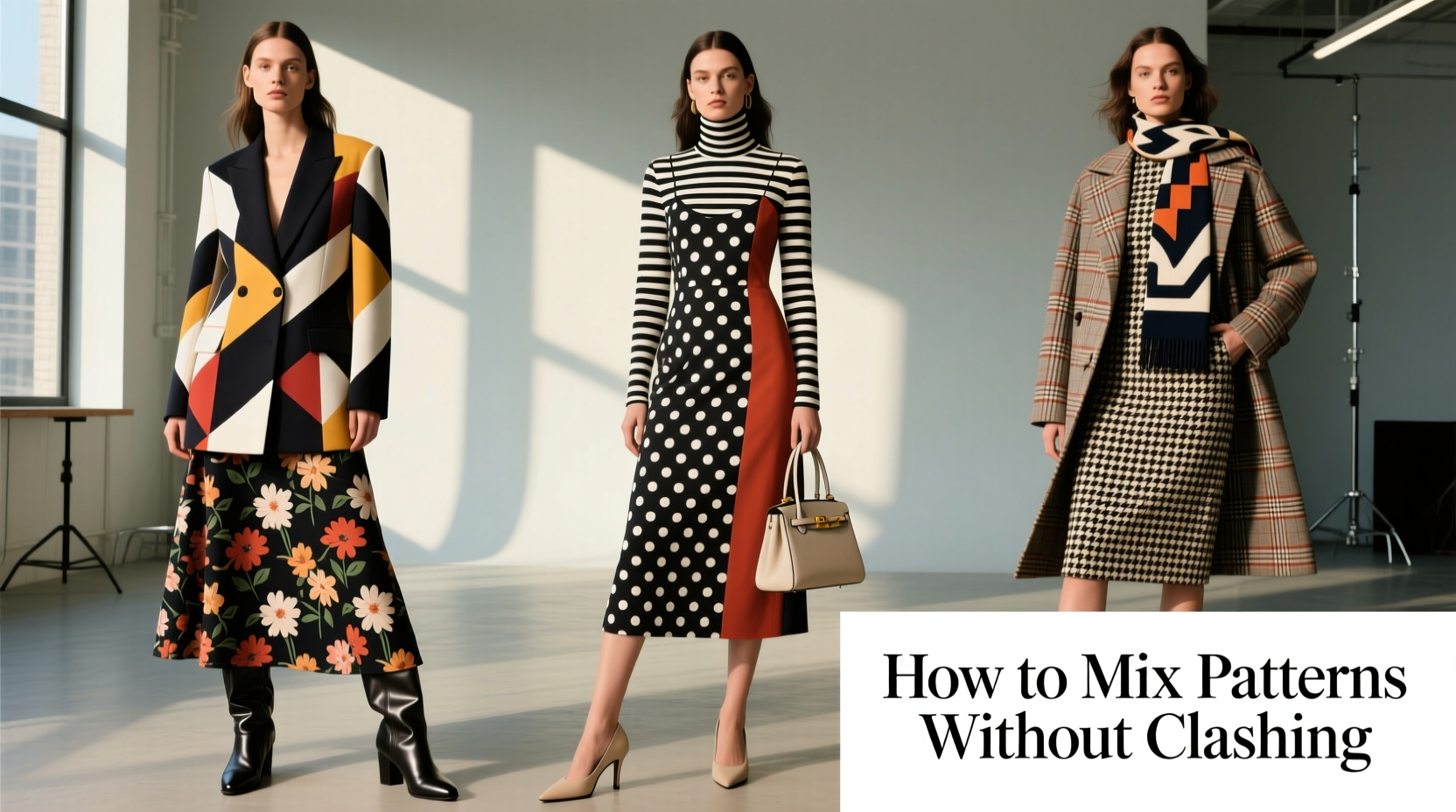
Before mixing patterns, it's essential to understand what defines a pattern and how different types interact. A pattern is any repeated design element across fabric—stripes, checks, dots, florals, animal prints, or abstract motifs. Each carries its own visual weight, rhythm, and mood. Recognizing these characteristics helps determine compatibility.
Patterns vary by:
- Scale: The size of the repeat—small, medium, or large.
- Color palette: Dominant hues and undertones (warm vs. cool).
- Directionality: Linear (stripes), radial (florals), or geometric (plaids).
- Formality: Some patterns lean casual (camouflage), others formal (pinstripes).
The goal when mixing is balance—not symmetry. One pattern should typically dominate while another supports. This prevents visual competition and creates cohesion.
Rules for Successful Pattern Mixing
While fashion encourages creativity, certain guidelines significantly increase the odds of a successful combination. These aren't rigid laws, but proven strategies used by stylists and designers.
1. Anchor with a Neutral Base
Begin your outfit with a neutral foundation—solid black, white, navy, beige, or gray. This provides breathing room between competing prints. For example, pair a floral blouse with striped trousers using a solid blazer or belt to unify the look.
2. Share at Least One Common Color
This is the golden rule. When two patterns share a single color—even if it’s minor—it instantly links them. For instance, a navy-and-white gingham shirt works with burgundy-and-navy paisley tie because navy bridges both.
“Color is the glue that holds mixed patterns together. Without it, even the most thoughtful prints will fight.” — Lena Park, Fashion Stylist & Contributor, *Vogue Living*
3. Vary the Scale
Avoid pairing two large-scale patterns—they compete for attention. Instead, combine a large print with a small one. A bold tropical shirt looks best with micro-checkered pants, not another oversized floral.
4. Balance Busy with Simple
If your top is highly detailed, keep the bottom simpler in both pattern and cut. Conversely, if your skirt has a complex jacquard design, wear a subtly striped or solid top.
5. Use Texture as a Neutral
Sometimes, a textured solid—like herringbone wool, ribbed knit, or corduroy—can act like a pattern without overwhelming. It adds depth while serving as a buffer between two bolder prints.
Step-by-Step Guide to Mixing Patterns
Follow this five-step process to confidently combine prints in your wardrobe:
- Choose Your Dominant Pattern: Decide which item will be the focal point—a leopard blazer, a plaid dress, etc.
- Select a Supporting Print: Pick a second pattern that shares at least one color and differs in scale.
- Add a Solid Bridge: Introduce a solid-colored piece (jacket, bag, shoes) in a shared hue to visually connect the two.
- Consider Proportion: Wear the busier pattern on your strongest feature (e.g., wide-leg printed pants if you love your legs).
- Step Back and Assess: Look in the mirror from a distance. Does one piece overpower? Do colors feel connected? Adjust accordingly.
Pattern Pairings That Work—and Why
Not all pattern combinations are created equal. Some pairings have stood the test of time because they naturally complement each other. Here’s a breakdown of classic and modern combos that consistently succeed.
| Combination | Why It Works | Styling Tip |
|---|---|---|
| Stripes + Checks | Both are structured; sharing a color ties them together. | Use pinstripe trousers with a windowpane blazer and solid shirt. |
| Floral + Polka Dots | Dots provide rhythm; florals add organic flow. Great in similar color families. | Pair a daisy-print dress with polka-dot tights and ankle boots. |
| Animal Print + Geometric | Leopard or snake print acts as a neutral; pairs well with angular designs. | Wear a leopard scarf with navy-and-white striped sweater and jeans. |
| Plaid + Subtle Stripe | Varying scales prevent conflict; often seen in smart-casual menswear. | Try a red tartan shirt under a navy micro-striped overshirt. |
| Paisley + Houndstooth | Both vintage-inspired; work when scaled differently and in monochrome tones. | Opt for black-and-white paisley tie with houndstooth suit. |
Avoiding Common Mistakes
Even experienced dressers can misstep when combining prints. Awareness of frequent errors helps avoid sartorial misfires.
- Matching patterns too closely: Wearing two nearly identical florals creates a “costume” effect rather than intentional layering.
- Ignoring undertones: A warm rust floral won’t blend with a cool-toned teal stripe unless bridged properly.
- Over-accessorizing: Adding a patterned scarf, socks, and bag to already busy clothes overwhelms the eye.
- Forgetting fit: Ill-fitting clothes undermine even the best-curated patterns.
“Confidence sells the outfit. If you walk like you mean it, people will assume you planned every detail—even if you improvised.” — Marcus Tran, Menswear Editor, *GQ Style*
Real-Life Example: Olivia’s Office-to-Dinner Look
Olivia, a marketing consultant, needed an outfit that transitioned from a client meeting to dinner with friends. She started with a navy-and-white pinstripe blazer—structured and professional. Underneath, she wore a silk blouse with a small-scale burgundy floral print. The shared navy in the blouse’s trim linked it to the blazer. For bottoms, she chose tailored charcoal trousers (solid) to ground the look.
After work, she swapped her flats for pointed burgundy heels and added a leopard-print crossbody bag. The animal print echoed the burgundy in her blouse while introducing edge. A thin gold belt pulled focus to her waist, balancing the top’s busyness.
The result? A cohesive, dynamic ensemble that felt intentional and stylish. Coworkers complimented her “bold but put-together” look. Her secret? “I made sure everything shared either color or tone. And I let the blazer lead.”
Checklist: Your Pattern-Mixing Action Plan
Before assembling a multi-pattern outfit, run through this checklist:
- ✅ One dominant pattern identified
- ✅ At least one shared color between prints
- ✅ Different scales used (one large, one small)
- ✅ A solid or neutral piece included as a bridge
- ✅ Proportions balanced (busy on top? Simple on bottom)
- ✅ Colors tested in natural light (screens can distort)
- ✅ Fit verified (no pulling, gaping, or bunching)
- ✅ Final look assessed from a full-length mirror
FAQ: Common Questions About Mixing Patterns
Can I mix more than two patterns?
Yes, but only if you follow strict rules. Limit yourself to three elements maximum—one dominant, one secondary, and one accent (like a pocket square or scarf). Ensure all share a unifying color and vary greatly in scale. Otherwise, the outfit becomes visually noisy.
Is it okay to mix patterns in formal wear?
Absolutely. In fact, it’s a hallmark of advanced style. Try a subtle windowpane suit with a micro-striped dress shirt and a diagonal-striped tie in coordinating hues. Stick to tonal variations (navy, gray, white) for professionalism.
How do I know if my skin tone suits the colors in the patterns?
Test swatches near your face in natural light. Warm undertones (gold, rust, olive) flatter those with yellow-based complexions. Cool tones (blue, plum, silver) suit pink or olive undertones. If uncertain, neutrals like navy, cream, or charcoal are universally flattering.
Mastering Confidence Through Experimentation
Ultimately, mixing patterns is as much about mindset as it is about method. The most stylish people aren’t those who never clash—they’re the ones who learn from mismatches and keep refining. Start small: try a striped tee with checked shorts. Then graduate to bolder combinations like floral jackets over geometric skirts.
Keep a photo log of your attempts. Over time, you’ll notice which pairings consistently work for your body type, coloring, and lifestyle. Don’t fear feedback—ask trusted friends for honest opinions. And remember, fashion is personal. What feels expressive to you might inspire someone else.




 浙公网安备
33010002000092号
浙公网安备
33010002000092号 浙B2-20120091-4
Comments
No comments yet. Why don't you start the discussion?