
Mixing patterns is a hallmark of confident dressing. Done well, it elevates an outfit from predictable to polished and expressive. But done poorly, it can look chaotic or costumey. The key isn’t avoiding patterns altogether—it’s mastering the art of combining them with intention. Whether you're pairing stripes with florals or checks with geometrics, there’s a method behind the madness. This guide breaks down the principles, pitfalls, and practical steps to help you mix patterns confidently and cohesively.
Understand the Core Principles of Pattern Mixing
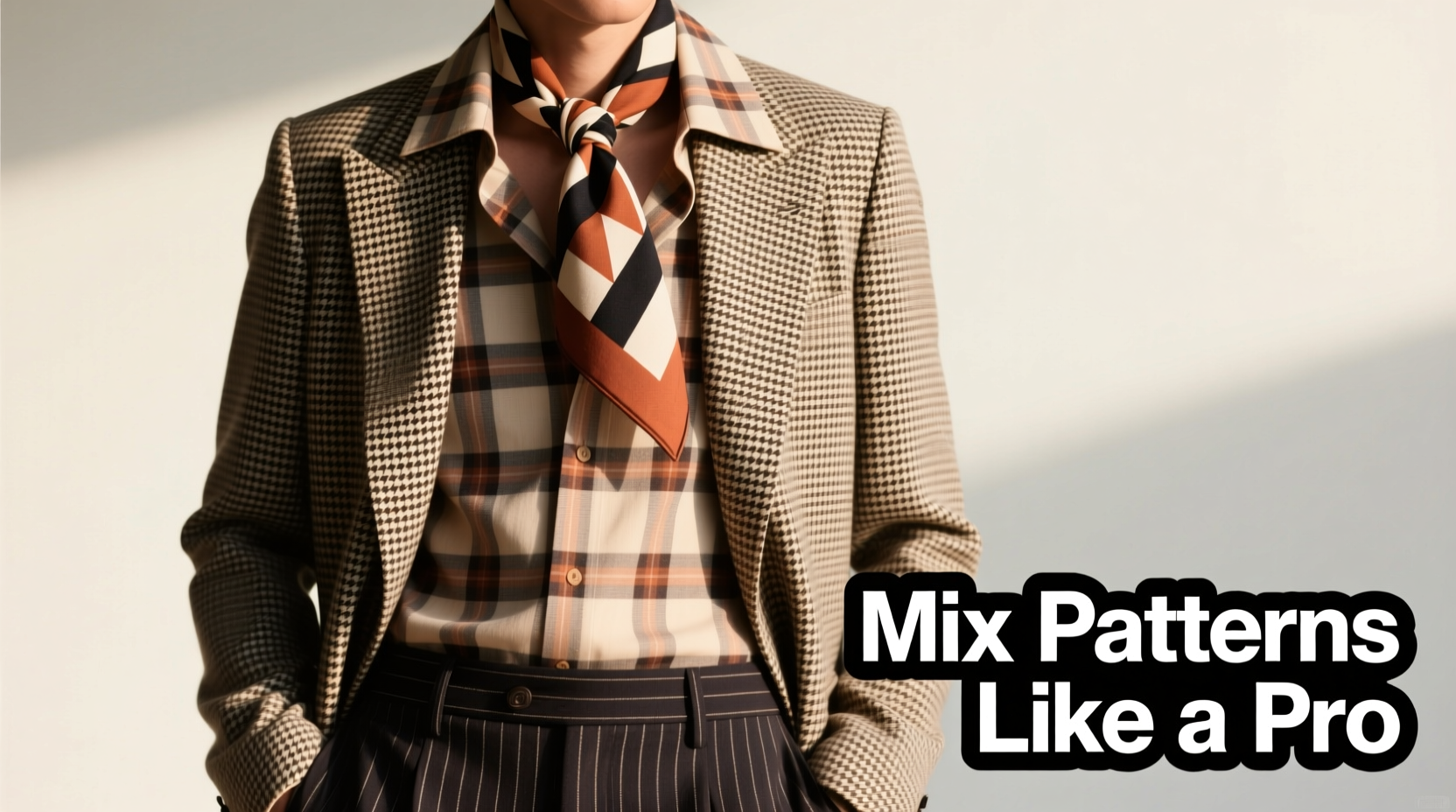
Pattern mixing isn’t random. It follows visual rules rooted in contrast, scale, color harmony, and proportion. When multiple prints compete for attention, the eye needs anchors—elements that create balance and order. The most successful pattern combinations use variation as a tool, not a free-for-all.
Start by recognizing that every pattern has three attributes: scale (size), color palette, and type (e.g., floral, plaid, geometric). Successful mixing hinges on adjusting at least two of these variables so that no single element dominates unfairly.
Scale Matters: Combine Different Sizes
One of the most effective ways to mix patterns is by varying their scale. Pairing a large-scale print with a smaller one creates visual rhythm. For example, a wide pinstripe blazer works beautifully over a fine polka dot shirt because the difference in size allows each pattern to breathe.
Avoid combining two large-scale patterns unless they’re tonal or share a dominant color. Two oversized florals or chunky plaids will clash if they lack contrast. Instead, opt for a hierarchy: one dominant print and one supporting print.
Color Harmony: Stick to a Unified Palette
Even wildly different patterns can work together if they share a common color thread. Pull one or two colors from your primary pattern and ensure they appear in the secondary print. This doesn’t mean matching exactly—it means creating cohesion through tone and temperature.
For instance, a rust-and-navy floral dress can pair with a mustard houndstooth cardigan if both pieces include warm earth tones. The shared warmth ties them together, even though the patterns are unrelated.
“Pattern mixing is about editing, not accumulation. One unifying factor—color, texture, or proportion—can turn chaos into composition.” — Lena Torres, Stylist & Fashion Editor, *Vogue Living*
The Four Rules for Balanced Pattern Combinations
Follow these four foundational rules to avoid overwhelming your silhouette while still making a statement.
- Vary the scale: Combine one large, one medium, and optionally one small pattern—but never more than three distinct prints.
- Anchor with solids: Use solid-colored accessories, shoes, or layers to break up busy areas.
- Match undertones: Ensure all patterns live within the same color family (cool vs. warm) to prevent visual dissonance.
- Limit pattern types: Avoid pairing more than two fundamentally different print categories (e.g., don’t combine stripes, florals, and animal print).
Choose Complementary Pattern Types
Not all patterns play well together. Some combinations are naturally harmonious; others require careful handling. Below is a guide to which pairings work best and why.
| Pattern A | Pattern B | Why It Works |
|---|---|---|
| Stripes | Checks/Plaids | Both are structured and linear; they share geometric discipline. |
| Florals | Polka Dots | Dots act as “negative space” against organic shapes, balancing softness. |
| Animal Print | Solids or Neutrals | Animal print is bold; it should be paired sparingly with clean backgrounds. |
| Geometric | Abstract Watercolor | Contrast in form—rigid vs. fluid—creates dynamic interest. |
| Vertical Stripes | Horizontal Stripes | Risky; only works if scales differ significantly and colors align. |
Step-by-Step Guide to Building a Mixed-Pattern Outfit
Confidence comes from process. Follow this five-step sequence to build a layered, pattern-rich look that feels intentional, not accidental.
- Pick your dominant pattern: Choose the boldest or largest print that will serve as your focal point—this could be a dress, jacket, or trousers.
- Select a complementary secondary pattern: Find something that shares at least one color and contrasts in scale or style.
- Add a solid layer or accessory: Introduce a belt, blazer, bag, or shoes in a solid hue pulled from the palette.
- Balance proportions: If your top is busy, keep the bottom simpler, and vice versa.
- Edit ruthlessly: Step back and assess. Remove any piece that distracts rather than enhances.
This method ensures that each addition serves a purpose. Think like a designer: every element should contribute to the whole.
Real-Life Example: Olivia’s Work-to-Weekend Transition
Olivia, a graphic designer in Portland, wanted to transition her office look into a Friday evening gallery opening. She started with a navy-and-white windowpane blazer (medium-scale check). Underneath, she wore a lavender micro-floral blouse. Her trousers were solid charcoal gray—a grounding neutral.
To elevate the look, she added a silk scarf with diagonal rust-toned stripes, tying it loosely around her neck. The rust echoed a faint accent color in the blouse, linking the patterns subtly. She finished with black ankle boots and minimal jewelry.
The result? A cohesive, fashion-forward ensemble that felt professional yet creative. By anchoring with solids, varying scale, and repeating a tertiary color, Olivia avoided clutter despite using three distinct elements.
Common Mistakes to Avoid
Even seasoned dressers stumble when mixing prints. These missteps dilute impact and create visual noise.
- Matching patterns too closely: Wearing two similar plaids or florals confuses the eye instead of creating contrast.
- Ignoring body proportions: Large prints on petite frames can overwhelm; small prints on tall figures may get lost.
- Over-accessorizing: Adding patterned socks, scarves, and bags multiplies complexity beyond readability.
- Forgetting texture: A tweed jacket and a satin skirt might both be solids, but their textures already create contrast—adding patterns on top can feel excessive.
Checklist: Your Pattern-Mixing Game Plan
Before stepping out in a mixed-print outfit, run through this checklist to ensure balance and sophistication.
- ✅ I’ve varied the scale of at least two patterns.
- ✅ All patterns share at least one common color.
- ✅ I’m using no more than three patterned pieces total.
- ✅ My outfit includes a solid neutral to anchor the look.
- ✅ The busier area (top or bottom) aligns with my body goals.
- ✅ Accessories are simple—no competing prints in shoes or bags.
- ✅ I’ve stepped back and assessed the full silhouette.
This checklist acts as a reality check. It’s easy to fall in love with individual pieces, but the final verdict belongs to the overall impression.
When to Break the Rules (and How)
Rules exist to be mastered before they’re bent. Once you’ve internalized the basics, strategic rule-breaking becomes a form of self-expression.
For example, doubling up on stripes—vertical top, horizontal bottom—can work if both are monochrome and one is significantly finer. A black-and-white pinstripe shirt with thin horizontal ribbed knit pants creates a modern optical effect rather than clashing.
Likewise, pairing two florals can succeed if one is faded or tonal and the other is vibrant. The contrast in intensity creates depth, not competition.
The key to breaking rules successfully is control: do it deliberately, not haphazardly. Limit the rebellion to one element per outfit, and always maintain one strong unifying factor—usually color or proportion.
“Fashion isn’t about following rules—it’s about understanding them so you can bend them with confidence.” — Marcus Lee, Creative Director, *Threadline Studio*
Frequently Asked Questions
Can I mix patterns if I’m petite or curvy?
Absolutely. The principles remain the same, but proportion plays a bigger role. Petite figures benefit from smaller-scale patterns on tops and larger ones on bottoms to elongate. Curvy individuals can use vertical patterns or dark-ground prints to create slimming effects. Always prioritize fit—ill-fitting clothes undermine even the best pattern choices.
Is it okay to mix patterns in formal settings?
Yes, but with restraint. In professional environments, keep combinations subtle: a subtly patterned tie with a micro-check shirt, or a pinstripe suit with a discreet floral pocket square. Stick to conservative colors like navy, gray, or burgundy, and ensure fabrics are polished—no casual cotton prints in boardrooms.
How do I know if my outfit is too busy?
If you have to explain your look to someone, it’s probably too busy. A well-mixed outfit should feel cohesive at a glance. Take a full-length photo—if one area draws the eye disproportionately or the image feels “noisy,” simplify. Remove the least essential patterned piece and reassess.
Conclusion: Wear Patterns with Purpose
Mixing patterns isn’t about daring—it’s about design. With the right balance of scale, color, and structure, you can craft outfits that are both expressive and elegant. The goal isn’t to avoid standing out, but to stand out for the right reasons: thoughtfulness, confidence, and personal style.
Start small. Try a striped shirt under a floral blazer. Then experiment with textures and bolder contrasts. Keep your checklist handy, revisit the principles, and trust your eye as it learns. Every great stylist began with one brave outfit.




 浙公网安备
33010002000092号
浙公网安备
33010002000092号 浙B2-20120091-4
Comments
No comments yet. Why don't you start the discussion?