
Mixing patterns is one of the most expressive tools in fashion, yet it’s often avoided out of fear—fear of clashing colors, overwhelming textures, or unintentionally dressing like a walking kaleidoscope. The truth? When done with intention, pattern mixing elevates an outfit from predictable to polished, personal, and professional. Top stylists don’t rely on luck; they follow principles of balance, contrast, and cohesion. This guide breaks down exactly how to layer stripes with florals, plaids with geometrics, and polka dots with animal prints—while maintaining sophistication and avoiding that “costume” look.
Start with a Neutral Foundation
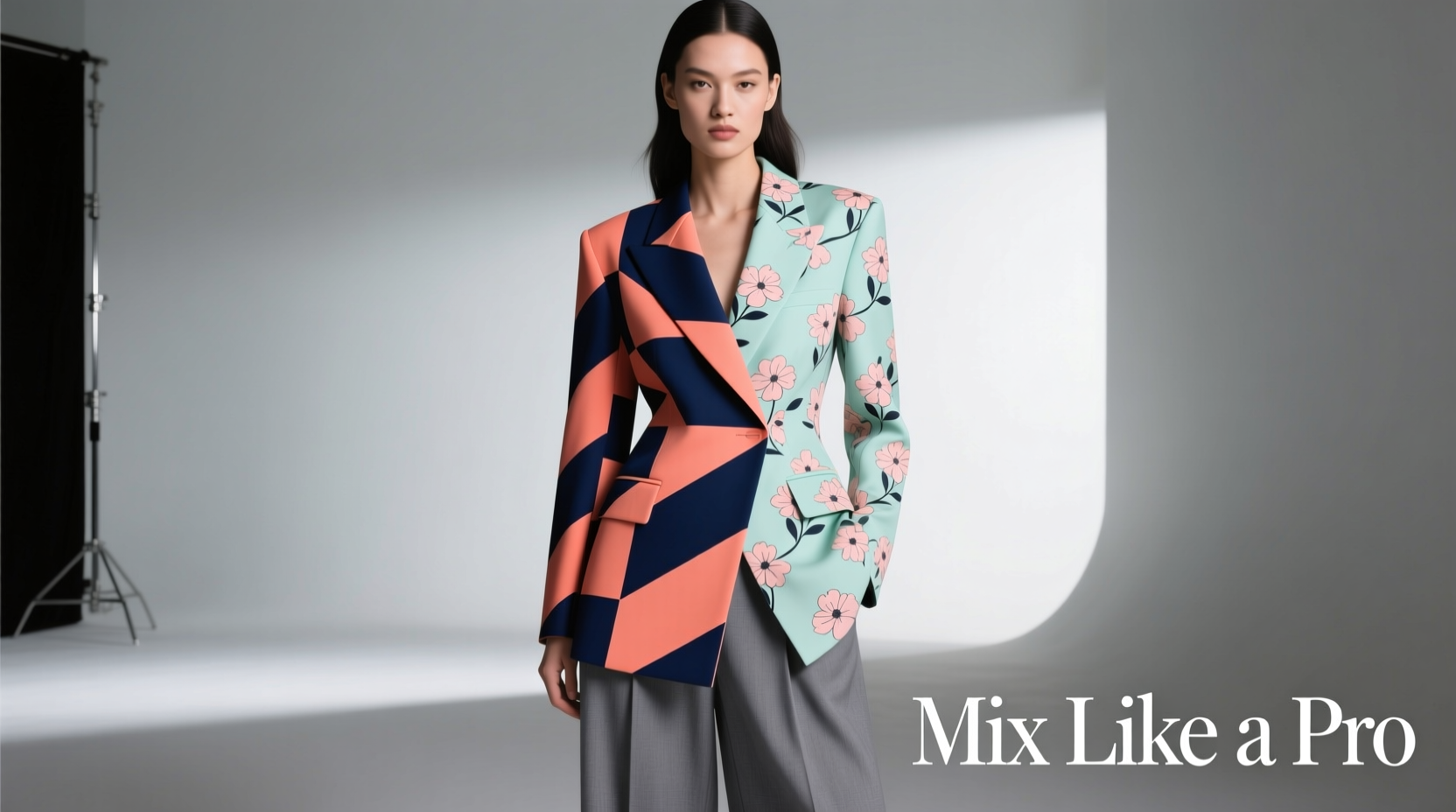
The key to successful pattern mixing isn’t randomness—it’s control. Begin by anchoring your look with at least one neutral element. This could be a solid-colored base layer, a pair of jeans, or even shoes and accessories in muted tones like beige, charcoal, navy, or black. A neutral foundation gives the eye a place to rest and prevents visual overload.
For example, pairing a bold floral blouse with pinstripe trousers works because the trousers are in a dark gray or navy, allowing the floral top to shine without competing. Similarly, a striped sweater over a plaid skirt feels balanced when both pieces share a common neutral tone, such as cream or deep brown.
Follow the Rule of Three: Color, Scale, and Type
Professional stylists use a framework known as the “Rule of Three” to ensure pattern combinations feel intentional rather than haphazard. This rule refers to three critical elements: shared color, varied scale, and distinct pattern types.
- Shared Color Palette: Choose patterns that share at least one common color. This creates harmony across disparate designs. For instance, a navy-and-white gingham shirt pairs effortlessly with navy-and-crimson paisley pants because navy ties them together.
- Different Scales: Combine patterns of contrasting sizes—one large, one small. A large-scale floral jacket over a fine pinstripe shirt avoids visual conflict because their scales don’t compete.
- Distinct Pattern Types: Avoid mixing two similar patterns (e.g., two different stripes). Instead, combine dissimilar types: florals with geometrics, checks with abstract prints, or animal prints with polka dots.
When all three rules are applied, even bold combinations appear cohesive. Imagine a look featuring a micro-dot blouse (small scale), a herringbone blazer (geometric, medium scale), and leopard-print loafers (organic, bold accent)—unified by a shared camel-brown base. The result is dynamic, not disjointed.
Pattern Pairing Guide: What Works and Why
| Pattern Combination | Why It Works | Pro Stylist Tip |
|---|---|---|
| Stripes + Florals | Linear vs. organic shapes create contrast without clash | Use vertical stripes to elongate; keep florals below the waist |
| Plaid + Geometric Print | Different grid structures prevent visual merging | Ensure one pattern dominates; let the other recede |
| Animal Print + Solid Texture (e.g., corduroy) | Print contrasts with texture instead of another print | Use animal print as an accessory first (scarf, belt) |
| Polka Dots + Abstract Art Print | Uniform repetition vs. freeform design adds rhythm | Match dot size to abstraction level—small dots with subtle art |
| Chevron + Houndstooth | Both are angular but differ in line weight and density | Separate with a solid mid-layer (e.g., vest or cardigan) |
Build Your Outfit in Layers
One of the most effective ways to avoid chaos is to build your patterned look gradually. Start with one statement piece—say, a bold floral dress—and then introduce a second pattern through a structured layer like a blazer, scarf, or tights. This approach allows you to assess visual balance before committing.
Consider this progression:
- Base Layer: Solid or subtly textured (e.g., black turtleneck).
- Middle Layer: Small-scale pattern (e.g., narrow pinstripe blazer).
- Outer Accent: Bold print accessory (e.g., silk scarf with abstract motifs).
This layering technique ensures that no single element overwhelms the others. It also gives flexibility—if the combination feels too busy, remove the outer accent and reevaluate.
“Pattern mixing isn’t about throwing prints together. It’s about creating rhythm. Think of fashion like music: you need a bassline (neutrals), a melody (main pattern), and accents (secondary prints).” — Lena Torres, Fashion Stylist & Creative Director at Studio Forma
Avoid These Common Mistakes
Even experienced dressers can misstep when combining prints. Watch out for these pitfalls:
- Matching Patterns Too Closely: Two similar stripe widths or floral densities blend into visual noise. Always vary the scale significantly.
- Ignoring Proportion: Wearing a large-scale print on top and bottom simultaneously can overwhelm your frame. Balance volume with solids.
- Overloading Accessories: If your outfit already has two patterns, skip printed scarves or bags. Opt for leather, suede, or solid textiles.
- Forgetting the Background Color: The base color of a print matters more than the accent hues. Two patterns may clash not because of their details, but because their backgrounds fight (e.g., white-on-black vs. black-on-white).
Real-World Example: From Office to Evening
Sophie, a marketing executive in Toronto, wanted to refresh her work wardrobe without sacrificing professionalism. She loved bold prints but feared appearing unpolished. Her stylist advised starting small.
Her first attempt: a navy pinstripe pencil skirt paired with a soft pink blouse featuring tiny white polka dots. The shared pink undertone in the skirt’s thread and the blouse created cohesion. Over this, she added a solid blush blazer and nude pumps. The look was playful yet office-appropriate.
As confidence grew, Sophie introduced a third element: a silk scarf with a watercolor-style floral print, tying it loosely around her neck. The scarf echoed the pink and navy tones, linking all layers. Coworkers complimented her “effortless style,” unaware she was following a deliberate formula.
This progression—from one pattern to layered prints with shared colors and varying scales—demonstrates how anyone can evolve into a confident pattern mixer.
Step-by-Step Guide: Mix Patterns Like a Pro
Follow this six-step process to build a stylish, non-chaotic patterned outfit:
- Choose a dominant pattern: Pick one print as the centerpiece (e.g., a floral midi dress).
- Select a supporting pattern: Find a secondary print that shares at least one color and differs in scale (e.g., a thin black-and-white striped cardigan).
- Add a neutral anchor: Include a solid piece—jeans, belt, or coat—in a color pulled from the palette.
- Check contrast: Ensure patterns don’t bleed into each other. If they do, adjust scale or spacing.
- Limit additional prints: No more than two main patterns in a single outfit. Use accessories sparingly.
- Final test: Take a full-length photo. Does the outfit feel balanced? If not, swap one element and reassess.
This methodical approach removes guesswork and builds confidence over time.
Checklist: Your Pattern-Mixing Readiness
Before wearing a mixed-pattern outfit, run through this checklist:
- ✅ Do both patterns share at least one color?
- ✅ Is there a clear difference in scale (one large, one small)?
- ✅ Are the pattern types distinct (e.g., not two stripes)?
- ✅ Is there a neutral element to ground the look?
- ✅ Have I limited accessories to avoid overcrowding?
- ✅ Does the outfit feel true to my personal style?
If you answer “yes” to all, you’re ready to step out with confidence.
Frequently Asked Questions
Can I mix patterns if I’m petite or curvy?
Absolutely. The principles remain the same regardless of body type. Petite figures benefit from smaller-scale patterns on top to avoid being overwhelmed, while curvier frames can use vertical stripes or diagonal prints to create elongation. The key is proportion, not prohibition.
Is it okay to mix more than two patterns?
Rarely—and only with extreme caution. In high fashion, you might see three patterns combined, but they’re usually connected by a strict color story and separated by solid layers. For everyday wear, stick to two main patterns maximum. Use accessories like socks or bags as subtle third elements only if they echo existing colors.
What if I love bold prints but work in a conservative environment?
Incorporate pattern mixing subtly. Try a subtly patterned blouse under a solid blazer, or wear printed tights beneath a neutral skirt. A patterned silk scarf tied to a solid handbag can also add flair without breaking dress codes.
Master the Art, Not the Trend
Mixing patterns isn’t about chasing trends—it’s about expressing individuality with intention. The most stylish people aren’t those who wear the loudest prints, but those who compose their outfits like artists: balancing color, rhythm, and contrast. By grounding your choices in shared palettes, varied scales, and thoughtful layering, you’ll move beyond fear and into creative freedom.
Start with one new combination this week. Maybe it’s a striped tee under a floral overshirt. Or a geometric skirt with a dotted sweater. Test it, refine it, wear it proudly. With each attempt, you’ll develop an instinct for what works—and soon, you won’t just mix patterns like a stylist. You’ll think like one.




 浙公网安备
33010002000092号
浙公网安备
33010002000092号 浙B2-20120091-4
Comments
No comments yet. Why don't you start the discussion?