
Combining plaids and florals once seemed like a fashion faux pas reserved for bold runways or eccentric style icons. But today, this dynamic duo is a hallmark of confident dressing—when done right. The secret isn’t avoiding contrast but mastering harmony through color, scale, texture, and intentional design. With thoughtful coordination, you can blend these seemingly opposing patterns into cohesive, eye-catching ensembles that feel curated, not chaotic.
The key lies in understanding how patterns interact rather than compete. Plaids offer structure and repetition; florals bring organic flow and variation. When balanced properly, they create visual interest without overwhelming the eye. This guide breaks down the principles and practical steps to help you confidently pair plaids with florals—and wear them with conviction.
Establish a Unified Color Palette
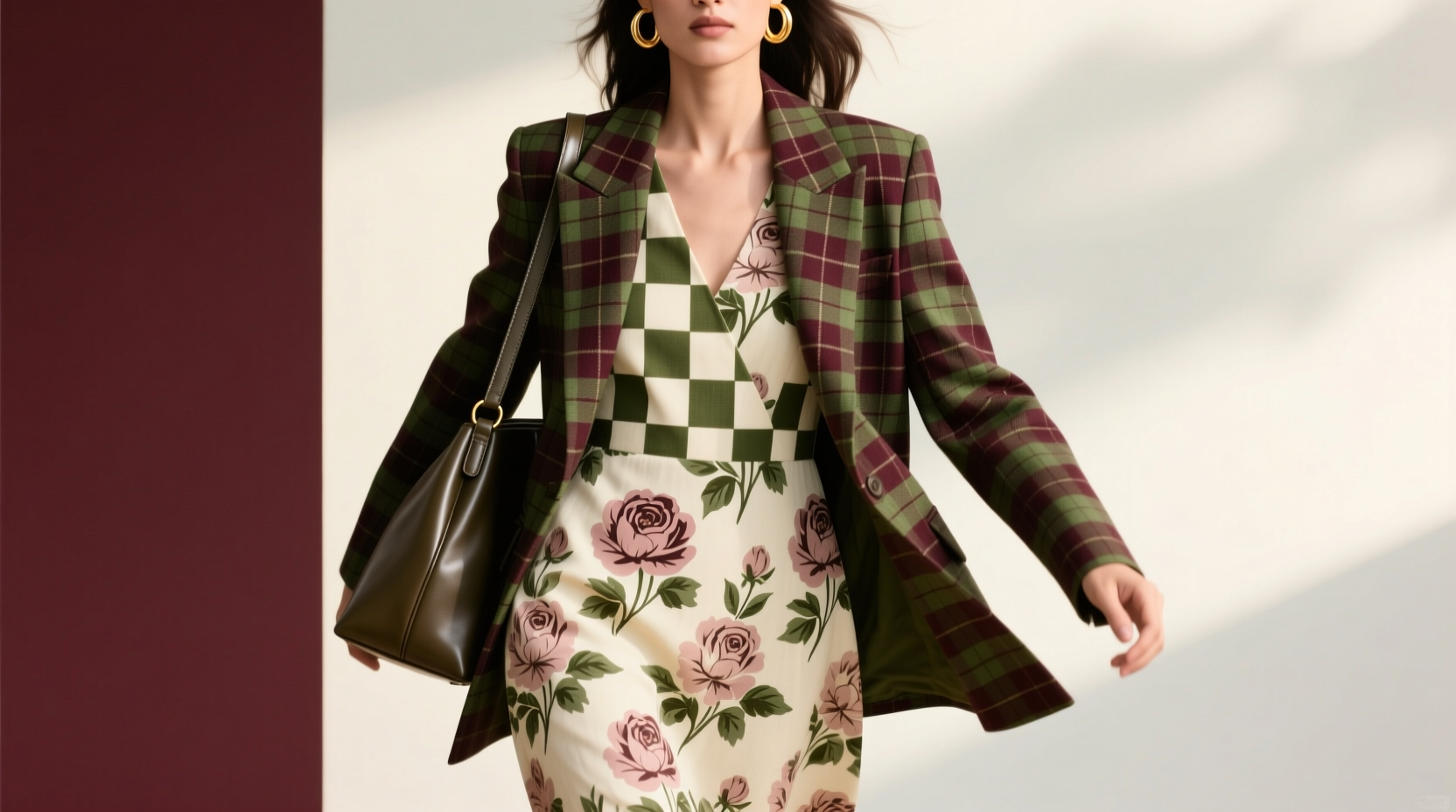
Color is the most powerful tool when blending disparate patterns. Even if one piece features tiny gingham checks and another bursts with oversized tropical blooms, they can coexist seamlessly if they share a common hue or complementary tones.
Start by selecting a base color from your floral print—this could be the dominant background shade or a recurring accent. Use that as the anchor for your plaid. For example, a navy-and-white striped shirt might seem unrelated to a rose-printed midi dress, but if both include navy accents, the connection becomes clear to the viewer.
Avoid relying solely on neutral bases (like black, gray, or beige) unless you're intentionally going monochrome. While neutrals provide safe grounding, overuse can dull the vibrancy of your patterns. Instead, aim for at least one shared saturated tone—such as emerald green, rust orange, or deep burgundy—to unify the look while keeping it lively.
Balance Scale and Proportion
One of the most common mistakes in pattern mixing is pairing two large-scale designs head-on. A giant floral skirt paired with a bold windowpane plaid blazer will likely overwhelm the senses. The solution? Vary the scale.
Pair a large floral print with a fine pinstripe or mini-check plaid. Conversely, offset a wide tartan with a delicate ditsy floral. This contrast allows each pattern to breathe, giving the eye places to rest while still appreciating detail.
Think of it like layering music: a heavy bassline needs lighter melodies to balance it. In fashion terms, let one pattern dominate while the other plays support. If your floral dress has big, sweeping blooms, choose a plaid scarf or cardigan with tight, subtle checks. This creates hierarchy, guiding attention without confusion.
“Scale is everything. One loud statement piece deserves quiet companionship.” — Lena Tran, Fashion Stylist & Editor at *Modish Living*
Use Texture and Fabric Weight as Visual Anchors
Not all visual cues come from color or shape. Texture influences how we perceive patterns. A crisp cotton shirting plaid reads differently than a soft flannel version, even if the design is identical. Similarly, a matte floral cotton feels more grounded than a glossy silk interpretation.
Leverage fabric differences to distinguish between your patterns. Pair a structured wool-plaid blazer with a flowing floral chiffon blouse. The contrast in weight naturally separates the elements, preventing them from competing.
You can also use accessories to bridge textures. A leather belt worn over a floral dress and plaid overshirt adds definition and introduces a third tactile element, further diffusing potential conflict between the two prints.
Step-by-Step Guide to Mixing Plaids and Florals
Follow this five-step process to build a balanced, stylish outfit using plaids and florals:
- Analyze Your Prints: Lay out both garments. Identify their dominant colors, secondary hues, and scale (small, medium, large).
- Select a Base Pattern: Choose which piece will serve as the focal point—usually the larger or brighter of the two.
- Find a Connecting Color: Match one color from the floral to a corresponding color in the plaid. Use this as your unifying thread.
- Vary the Scale: Ensure one pattern is noticeably smaller or more subdued than the other to maintain visual balance.
- Add Solid Accents: Introduce solid-colored layers (cardigan, vest, shoes, bag) in one of the shared tones to reinforce cohesion.
This methodical approach removes guesswork and builds confidence. Over time, you’ll develop an instinct for what works—but starting with structure ensures success.
Do’s and Don’ts of Pattern Pairing
| Do | Don’t |
|---|---|
| Choose one dominant and one supporting pattern | Wear two large-scale patterns together without breaks |
| Use a shared color to link the prints | Ignore color relationships entirely |
| Incorporate solid layers to separate patterns | Layer prints directly on top of each other without transition |
| Leverage texture to differentiate pieces | Use similar fabrics that blur visual distinction |
| Test the outfit in natural light before finalizing | Rely only on artificial lighting, which distorts color perception |
Real Example: From Clashing to Cohesive
Sophie, a marketing consultant in Portland, loved vintage florals but hesitated to wear them with her boyfriend-fit plaid shirts. She once tried pairing a bright pink cabbage-rose blouse with a red-and-black buffalo check shirt—resulting in a jarring, almost vibrating effect.
After applying the principles above, she reworked the combination. She swapped the buffalo check for a fine blue-and-white gingham shirt with a softer handfeel. The new plaid echoed the sky-blue accents in the floral’s background, creating a calm bridge between the two. She added a denim jacket over the ensemble and wore navy loafers, reinforcing the blue thread throughout.
The result? A layered, textured look that felt intentional and polished. Colleagues complimented her “effortless” style—unaware of the careful thought behind it.
Build Confidence with a Pattern-Mixing Checklist
Before stepping out in a plaid-and-floral combo, run through this checklist:
- ✅ Do both pieces share at least one core color?
- ✅ Is one pattern significantly larger or bolder than the other?
- ✅ Are the fabrics different enough in texture or weight to avoid blending?
- ✅ Have I included a solid-colored element (top, bottom, accessory) to break up the prints?
- ✅ Does the outfit feel balanced when viewed in full-length mirror under natural light?
- ✅ Am I wearing it with confidence? (This matters more than any rule.)
Checklists reduce decision fatigue and ensure consistency. Print this or save it on your phone for quick reference during shopping trips or morning styling sessions.
Common Questions About Mixing Patterns
Can I mix plaids and florals in formal settings?
Absolutely—if done subtly. Opt for tonal combinations: a charcoal pinstripe suit paired with a muted rose-patterned silk tie or pocket square. Stick to refined fabrics like wool, silk, or fine cotton to maintain professionalism. Avoid overly busy florals or neon plaids in office environments.
What if my patterns don’t share any colors?
If there’s no direct color match, use a neutral intermediary. Wear a white or beige blouse between a floral skirt and plaid jacket. Alternatively, introduce a belt, bag, or shoes in a color that complements both prints. For instance, camel accessories can harmonize rust florals and olive plaids even if they don’t directly overlap.
Is it okay to mix more than two patterns?
Yes, but proceed cautiously. Limit yourself to three patterns maximum, and always ground the look with solids. For example: floral dress + plaid blazer + striped socks. Keep the additional pattern small in scale and area (e.g., socks, scarf, lapel pin). The goal is rhythm, not chaos.
Final Thoughts: Style Is About Intention, Not Rules
Mixing plaids and florals isn’t about defying fashion—it’s about refining your eye for balance. Every successful outfit communicates intention. When someone sees your layered look and doesn’t think “clashing,” but instead pauses to say, “I love how you put that together,” you’ve succeeded.
These techniques aren’t rigid laws but tools to expand your creative range. Start small: try a floral scarf with a plaid shirt. Then experiment with bolder combinations. Take note of what works for your body type, skin tone, and lifestyle. Over time, you’ll develop a personal language of pattern play that feels authentic and expressive.




 浙公网安备
33010002000092号
浙公网安备
33010002000092号 浙B2-20120091-4
Comments
No comments yet. Why don't you start the discussion?