
Displaying collectible nutcrackers is a cherished holiday tradition in many homes. These hand-carved figures often hold sentimental value and deserve a prominent, secure place in your décor. Mounting a floating shelf above the fireplace offers an elegant solution—elevating your collection while preserving floor space. However, this area presents unique challenges: heat exposure, structural limitations, and safety concerns. Done incorrectly, a poorly installed shelf could lead to damage, falling decor, or even fire risk.
This guide walks you through every critical step of installing a floating shelf above a fireplace, with special attention to protecting delicate collectibles like nutcrackers. From assessing wall type and heat levels to choosing the right hardware and anchoring securely into studs, you’ll learn how to combine aesthetics with long-term safety.
Assessing Your Fireplace and Wall Type
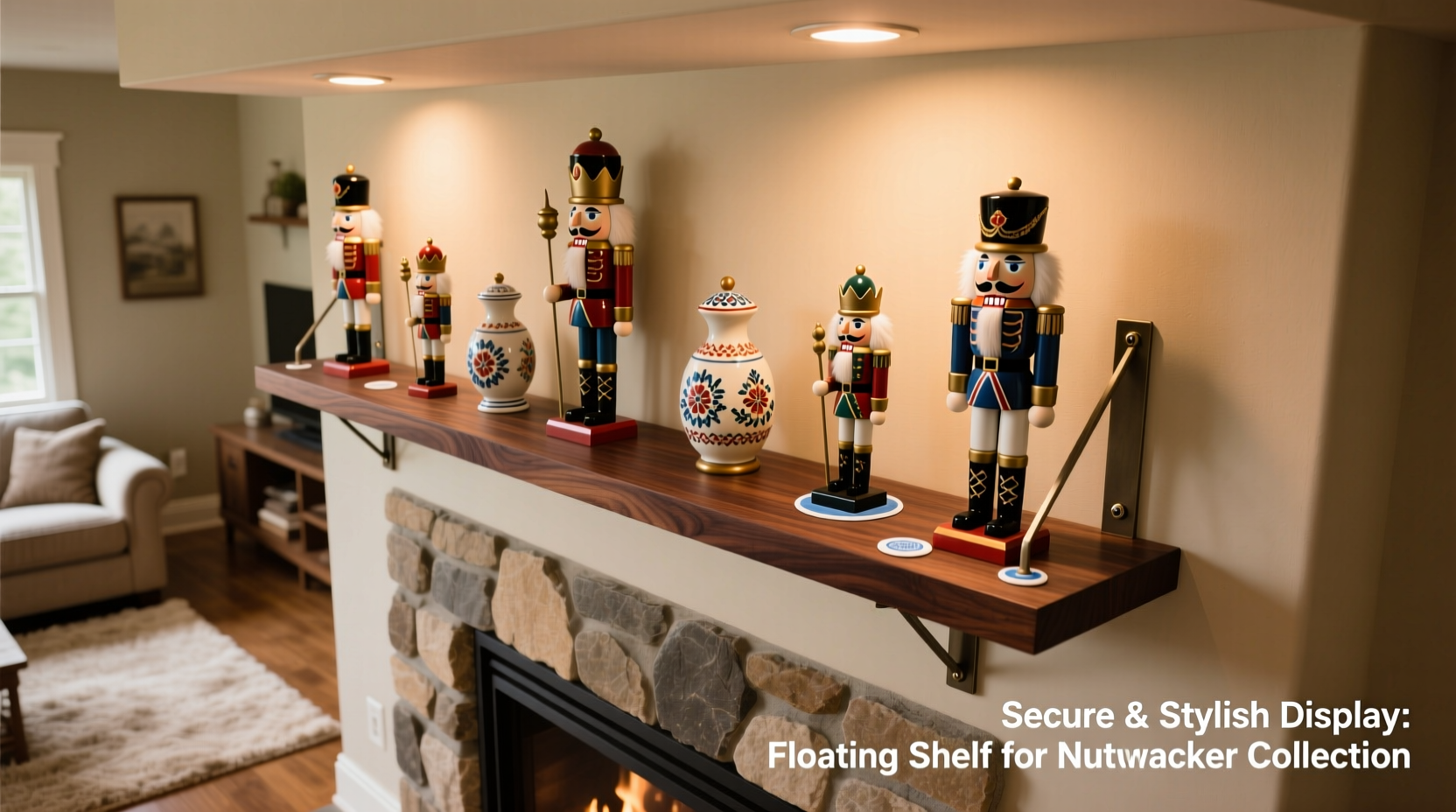
Before drilling a single hole, it’s essential to understand what kind of surface you're working with. Not all walls are created equal—especially above fireplaces, where construction can vary significantly.
Masonry fireplaces (brick, stone, or concrete) often have non-combustible surrounds but may sit beneath drywall or wood-framed mantels. Wood-burning fireplaces generate substantial radiant heat, which rises and accumulates near the ceiling. Gas fireplaces produce less heat but still emit enough warmth to affect nearby materials over time. In both cases, the area directly above the firebox is considered a high-risk zone for combustible installations if not approached carefully.
Determine your wall composition using a stud finder with a masonry detection setting. If the surface gives resistance and the stud finder struggles to penetrate the signal, you’re likely dealing with brick or stone. For drywall-covered fireplaces, look for signs of framing behind the surface. Older homes may have lath-and-plaster, which behaves differently than modern drywall when drilled into.
Understanding Heat Zones Around Fireplaces
The National Fire Protection Association (NFPA) recommends maintaining at least 12 inches of clearance from the top of the firebox opening to any combustible material. This includes shelves, artwork, and trim. While decorative items aren’t subject to the same codes as built-in cabinetry, exceeding safe distances minimizes risk.
To measure actual heat exposure, use an infrared thermometer after running the fireplace for 30–60 minutes. Point it at various heights above the mantel. Surface temperatures above 100°F (38°C) indicate sustained heat that could warp wood, loosen adhesives, or degrade finishes over time. If readings exceed 120°F (49°C), consider mounting the shelf higher or selecting a non-combustible material such as tempered glass or metal.
Choosing the Right Shelf and Hardware
Floating shelves rely on hidden brackets or cleats anchored deep into wall supports. Their ability to bear weight depends entirely on installation quality—not just the shelf’s appearance. When displaying nutcrackers, which typically weigh between 1 and 5 pounds each, the total load must account for multiple figures plus the shelf itself.
Select a shelf made from solid hardwood, engineered wood with moisture-resistant coating, or powder-coated steel. Avoid particleboard or MDF in heated areas—they swell and delaminate under thermal stress. A depth of 6 to 8 inches provides adequate support without protruding too far into the room.
Hardware selection is equally important. Standard drywall anchors won’t suffice here. Even toggle bolts may fail under prolonged vibration or heat cycling. The safest method is direct attachment to wall studs using lag screws or heavy-duty mounting plates.
“Always anchor floating shelves into structural members. Decorative displays may seem light, but dynamic loads—like accidental bumps—can multiply stress on fasteners.” — Daniel Reeves, Residential Structural Engineer
Do’s and Don’ts: Shelf & Fastener Selection
| Do | Don’t |
|---|---|
| Use kiln-dried hardwood or metal shelves rated for wall mounting | Install particleboard shelves near heat sources |
| Choose stainless steel or coated lag screws (3-inch minimum) | Rely solely on plastic drywall anchors |
| Verify bracket compatibility with shelf material thickness | Use generic L-brackets not designed for floating applications |
| Pre-drill pilot holes to prevent splitting | Overtighten screws, risking thread stripping |
Step-by-Step Installation Guide
Follow this sequence to ensure a level, secure, and visually balanced installation.
- Turn off power and clear the area. If your fireplace has electrical components (blowers, lights), shut off the circuit at the breaker. Remove nearby furniture and cover the mantel with drop cloths.
- Determine ideal height. Measure at least 12 inches above the firebox opening. For visual balance, center the shelf vertically between the mantel and ceiling crown molding. Most installations range from 8 to 14 inches above the mantel surface.
- Locate wall studs. Use a stud finder to identify vertical framing members. Mark their centers with a pencil. Studs are typically spaced 16 or 24 inches apart. Confirm locations by knocking—you should hear a solid thud versus a hollow tone.
- Hold shelf bracket in place and level. Position the mounting cleat (usually included with the shelf) so its top edge aligns with your desired height. Use a laser level or bubble level to ensure perfect horizontal alignment. Mark screw holes on the wall.
- Drill pilot holes. For drywall/wood framing: Use a drill bit slightly smaller than your lag screw diameter. For masonry: Use a hammer drill with a carbide bit sized for sleeve anchors. Drill straight and deep enough to accommodate the full screw length.
- Attach mounting bracket. Align the bracket with pilot holes and drive screws firmly into each stud. Do not rely on just one stud unless the shelf is very short (under 18 inches). For longer spans, ensure at least two studs are engaged.
- Test stability. Apply firm upward and downward pressure to verify no movement. Wiggle testing now prevents accidents later.
- Slide shelf onto bracket. Most floating shelves feature a recessed channel or keyhole slot that slides over the mounted cleat. Gently lower into place until fully seated. Some models require tightening set screws from below.
- Check level again. Place a small level on the shelf surface. Adjust if needed by loosening bracket screws slightly and repositioning.
- Wait 24 hours before loading. Allow any mounting adhesives (if used) to cure. Then begin arranging nutcrackers evenly across the span.
Safeguarding Collectible Nutcrackers
Nutcrackers are more than ornaments—they’re heirlooms. Many are crafted from painted wood, fabric uniforms, and fragile accessories like epaulets or swords. Once mounted, they face risks beyond falling: dust accumulation, UV fading, and temperature fluctuations.
Minimize exposure by positioning the shelf away from direct sunlight. South- and west-facing fireplaces receive intense afternoon rays that bleach colors and dry out wood. Install sheer curtains or apply UV-filtering window film to reduce photodegradation.
Clean nutcrackers gently once per season. Use a soft microfiber cloth and a handheld vacuum with a brush attachment. Never spray cleaners directly onto figures—moisture can lift paint and mildew glue joints.
Mini Case Study: The Johnson Family Hearth Display
The Johnsons in Portland, Oregon, inherited a set of eight German nutcrackers dating back to the 1950s. Wanting to showcase them above their gas fireplace, they initially installed a floating shelf using drywall toggles. After six months, the shelf sagged noticeably. One evening, a 4-pound Prussian guard figure tipped forward and cracked its base on the hearth.
They consulted a local handyman who discovered the original install missed both studs. He removed the shelf, patched the wall, and remounted a reinforced oak shelf into two 2x4 studs using 3.5-inch lag screws. He also recommended rotating displays seasonally and keeping a digital inventory of each piece. Since the repair, the display has remained stable and damage-free for three holiday seasons.
Essential Safety Checklist
- ✅ Measured at least 12 inches above firebox opening
- ✅ Confirmed wall type (drywall, masonry, plaster)
- ✅ Located and marked wall studs
- ✅ Used appropriate drill bits and anchors for substrate
- ✅ Mounted shelf bracket directly into structural framing
- ✅ Verified levelness before final tightening
- ✅ Tested load capacity with gradual placement
- ✅ Monitored temperature near shelf during fireplace operation
- ✅ Arranged nutcrackers with heavier pieces near supports
- ✅ Installed smoke detector nearby and tested monthly
Frequently Asked Questions
Can I mount a floating shelf above a wood-burning fireplace?
Yes, but only if the shelf is installed at a safe distance—at least 12 inches above the firebox—and secured into wall studs. Use heat-resistant materials like solid hardwood or metal. Monitor surface temperature regularly, especially during extended burn sessions.
What if I can’t find studs behind the wall?
If no studs align with your desired shelf position, consider installing a horizontal backing board between two studs. Attach a 1x4 pressure-treated or plywood strip vertically across the studs using lag screws, then mount the shelf to this new support structure. This creates a secure anchor point even in challenging layouts.
Are there alternatives to floating shelves for nutcracker displays?
Yes. Glass cabinets with built-in lighting offer superior protection from dust and impact. Freestanding display stands placed beside the fireplace eliminate wall-mounting risks altogether. For renters, tension rods with suspended acrylic shelves (non-combustible) can be a temporary, damage-free option—provided they remain outside the heat plume.
Final Recommendations and Next Steps
A well-mounted floating shelf transforms your fireplace into a curated gallery space—one that honors both architectural design and family tradition. But beauty must never compromise safety. Always prioritize structural integrity over convenience, and treat heat exposure as a silent threat that builds over time.
Your nutcrackers have survived decades; with proper display conditions, they’ll endure many more. Take the extra time to locate studs, use commercial-grade hardware, and monitor environmental factors throughout the heating season. Small investments in installation quality yield lasting peace of mind.




 浙公网安备
33010002000092号
浙公网安备
33010002000092号 浙B2-20120091-4
Comments
No comments yet. Why don't you start the discussion?