
Installing a rotating tree platform—often used for holiday trees, display stands, or decorative centerpieces—can enhance visual appeal and functionality in any room. However, many homeowners hesitate when it comes to securing such platforms, especially over expensive or delicate hardwood flooring. Drilling may compromise the floor’s integrity, void warranties, or reduce resale value. Fortunately, modern mounting techniques offer strong, reliable alternatives that eliminate the need for permanent alterations.
This guide explores practical, proven strategies to securely mount a rotating tree platform on hardwood floors without drilling. From weight-based stabilization to advanced gripping materials and modular support systems, you’ll learn how to achieve both safety and aesthetics while preserving your floor’s finish.
Why avoid drilling into hardwood floors?
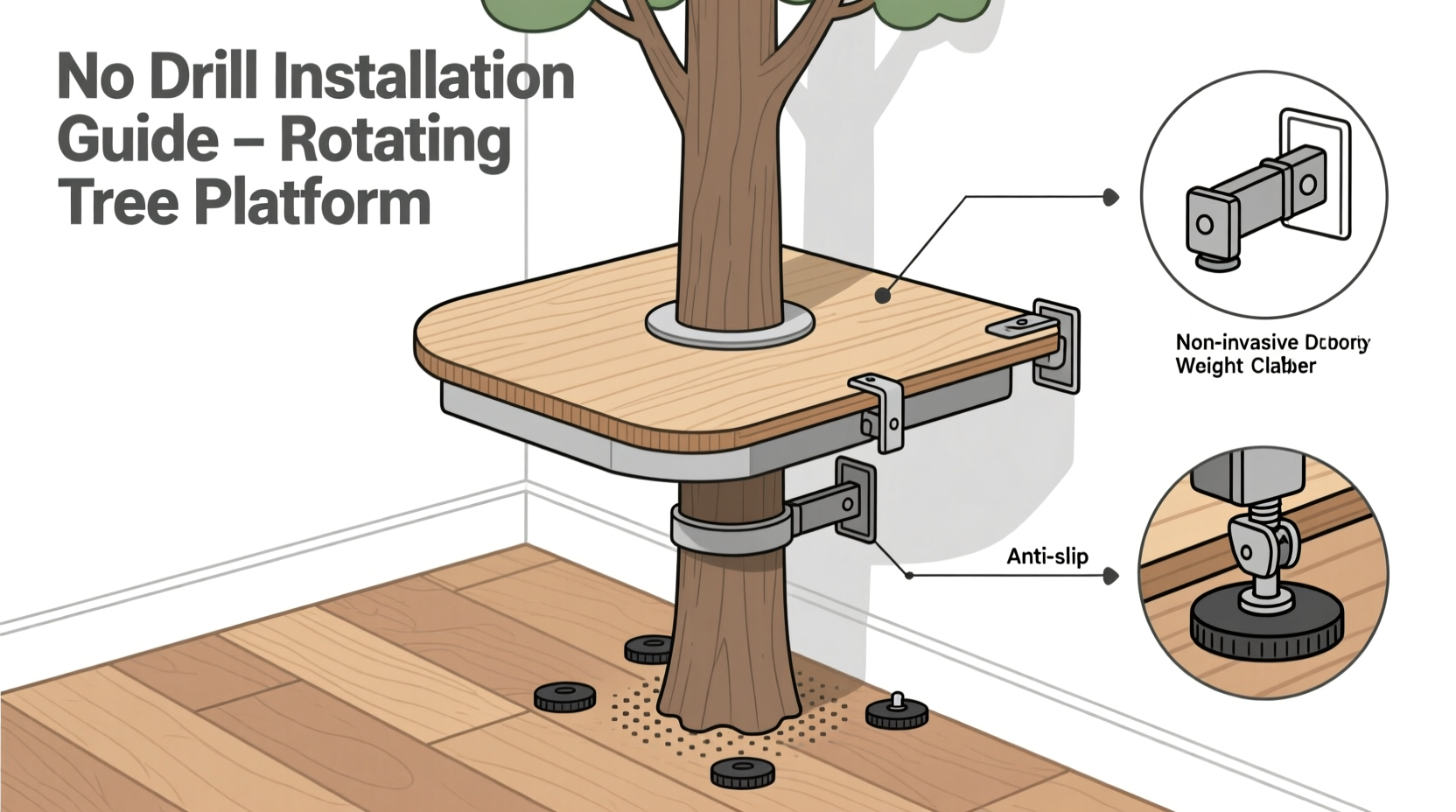
Hardwood floors are prized for their durability and timeless beauty, but they are also a significant investment. Drilling introduces several risks:
- Structural damage: Even small holes can lead to splintering, especially in older or thinner planks.
- Moisture penetration: Openings allow humidity and spills to seep beneath the surface, potentially causing warping or mold.
- Warranty issues: Many manufacturers void warranties if modifications like drilling occur.
- Renters’ restrictions: Tenants often face penalties for altering leased properties.
Given these concerns, finding non-invasive mounting solutions isn’t just convenient—it’s essential for long-term floor care.
Key principles of non-drilling mounting
To successfully install a rotating tree platform without screws or anchors, focus on three core principles: friction, weight distribution, and mechanical resistance.
Friction is maximized by using high-grip materials between the platform base and the floor. Rubber pads, textured polymers, or anti-slip mats create resistance against lateral movement.
Weight distribution ensures that downward force is evenly spread across the base. This reduces tipping risk and increases stability, especially when the tree sways or rotates.
Mechanical resistance involves using external braces, perimeter barriers, or tension-based clamps that resist motion without contacting the floor directly.
When combined, these principles form the foundation of every effective no-drill mounting strategy.
Step-by-step guide: Mounting a rotating platform safely
Follow this detailed process to install your rotating tree platform securely and reversibly.
- Evaluate your space and platform size. Measure the diameter of the platform and confirm there's at least 18 inches of clearance around all sides. Ensure nearby furniture won't interfere with rotation.
- Clean the floor thoroughly. Use a pH-neutral hardwood floor cleaner to remove dust, oils, or residues. A clean surface improves grip and prevents slippage.
- Select a high-traction base pad. Choose a rubber or silicone mat cut to match the platform’s footprint. Avoid foam or felt—they compress too easily under load.
- Add stabilizing weight. Place sandbags, decorative stone weights, or water-filled containers symmetrically around the inner edge of the base. Aim for 10–20% of the total tree weight in added ballast.
- Position the platform carefully. Lower it straight down—do not slide—to prevent shifting or scratching. Align it centrally within your designated area.
- Secure the tree trunk to the platform. Use adjustable nylon straps or a built-in clamp to fasten the trunk firmly. This prevents top-heavy wobbling during rotation.
- Test rotation manually. Turn the platform slowly by hand. If slipping occurs, recheck the pad and consider upgrading to a dual-layer anti-skid system.
- Monitor during initial use. Observe the setup for 24 hours, especially if lights, ornaments, or pets are present. Make micro-adjustments as needed.
This method works best with pre-assembled rotating bases designed for indoor use, typically rated for loads up to 50 lbs. For heavier trees, additional reinforcement is necessary.
Alternative mounting systems without drilling
Beyond basic weight and grip solutions, several engineered options provide superior hold without damaging floors.
1. Adhesive-releasable mounting tapes (temporary)
High-strength double-sided tapes like 3M VHB (Very High Bond) offer surprising holding power. While traditionally used for permanent installations, removable versions now exist with clean-release technology. These are ideal for seasonal setups lasting 2–6 weeks.
2. Floor-to-ceiling tension poles
Adjustable spring-loaded poles press vertically between floor and ceiling, providing lateral bracing. Attach flexible arms from the pole to the platform frame to limit side-to-side movement. Popular in retail displays, they’re increasingly used in homes.
3. Furniture anti-tip brackets (wall-adjacent option)
If the platform is near a wall, use L-shaped anti-tip brackets mounted to baseboard molding or door frames—not the floor. Connect via braided steel cable to the platform’s underside. This transfers lateral forces away from the floor surface.
4. Modular weighted cradles
These are U-shaped metal or composite frames filled with sand or water. The rotating base sits inside the cradle, which acts as a low-profile “moat” preventing shift. Easily disassembled after use.
Comparison of non-drilling methods
| Method | Stability Level | Floor Contact Risk | Setup Time | Best For |
|---|---|---|---|---|
| Rubber Mat + Weights | Medium | None | 10 minutes | Trees under 7 ft, light rotation |
| Double-Sided Tape (Removable) | Low-Medium | Minimal residue risk | 15 minutes | Short-term use, renters |
| Tension Pole Bracing | High | None (if padded) | 25 minutes | Heavy trees, high traffic areas |
| Anti-Tip Cable (to wall) | High | None (no floor contact) | 20 minutes | Wall-proximate setups |
| Modular Weighted Cradle | Very High | None | 30 minutes | Large or top-heavy trees |
Mini case study: A renter’s holiday solution
Sarah K., a tenant in a historic Boston brownstone, wanted a rotating Christmas tree for her living room but couldn’t modify the original oak floors. Her 8-foot Fraser fir weighed nearly 40 pounds, making stability a concern.
She opted for a dual-system approach: a 24-inch silicone anti-slip mat placed under a commercial-grade rotating base, supplemented by a floor-to-ceiling tension rod in the corner. Two flexible support arms connected the rod to the platform frame, allowing free rotation while resisting lateral shifts.
She added four 5-pound sandbags arranged in a square around the base interior. After testing, she confirmed smooth 360-degree turns with zero slippage—even when her dog brushed against the lowest branches.
The entire system was removed in under 15 minutes after the holidays, leaving no trace on the floor. Sarah reported feeling confident and stress-free throughout the season.
Expert insight: Engineering perspective on load dynamics
“People underestimate rotational inertia. A tree may seem stable when still, but once spinning, even a small imbalance generates lateral force. That’s why distributed mass and friction are more important than sheer weight.” — Dr. Alan Reeves, Mechanical Engineer and Product Safety Consultant
Dr. Reeves emphasizes that successful no-drill mounting isn’t about brute force—it’s about smart physics. A lighter tree with well-placed counterweights often performs better than a heavier one relying solely on base grip.
Checklist: Non-drilling tree platform installation
Use this checklist before, during, and after setup to ensure safety and performance:
- ☐ Confirm platform weight capacity exceeds tree weight by at least 20%
- ☐ Clean hardwood surface with appropriate cleaner—no residue left behind
- ☐ Select anti-slip mat made of natural rubber or silicone (avoid PVC)
- ☐ Position stabilizing weights evenly around the base perimeter
- ☐ Secure tree trunk tightly to prevent wobble during rotation
- ☐ Test manual rotation slowly—watch for base movement
- ☐ Install secondary stabilization (tension pole or cable) if needed
- ☐ Monitor for 24 hours, especially with children or pets present
- ☐ Remove all components gently—inspect floor for any marks
- ☐ Store parts in labeled container for future use
Frequently asked questions
Can I use a rotating tree stand on glossy hardwood without scratching?
Yes, provided you use a protective barrier. Place a thin, non-abrasive anti-slip mat—such as felt-backed rubber—between the platform and floor. Avoid any materials with glued seams or rough edges. Lift the platform instead of sliding it during placement or removal.
Will heavy ornaments cause the platform to tip?
Imbalanced ornamentation can shift the center of gravity. Distribute decorations evenly by weight and volume. Heavier items should be placed lower and closer to the trunk. If using large outer ornaments, increase internal ballast accordingly. Regularly check alignment, especially after adjusting decor.
Are there rental options for non-drilling rotating platforms?
Some event supply companies and holiday rental services offer complete rotating tree kits with stabilization systems included. These often come with anti-slip bases, sandbags, and assembly guides—ideal for short-term needs. Check local providers or online marketplaces specializing in seasonal décor.
Final considerations for long-term use
While no-drill methods are highly effective, they require thoughtful execution. Always prioritize balance and incremental testing over immediate full-speed operation. Begin with slow rotations and gradually increase speed only if stability holds.
For annual reuse, label and store all components together. Keep instruction manuals and note what worked well—this saves time and reduces stress next season.
Additionally, inspect your platform regularly for wear. Cracks in plastic gears, worn rubber feet, or loose clamps compromise safety. Replace parts proactively rather than waiting for failure.
Conclusion: Stability without sacrifice
You don’t need to drill into your hardwood floors to enjoy the elegance of a rotating tree platform. With the right combination of grip, weight, and mechanical support, you can achieve rock-solid stability while preserving the beauty and value of your flooring.
Whether you're a homeowner protecting an investment or a renter following lease rules, modern solutions make it possible to celebrate safely and stylishly. By applying the principles outlined here—from proper surface prep to expert-approved stabilization—you gain peace of mind alongside visual impact.




 浙公网安备
33010002000092号
浙公网安备
33010002000092号 浙B2-20120091-4
Comments
No comments yet. Why don't you start the discussion?