
Moving to the United States is a major life decision that combines opportunity with complexity. Whether you're relocating for work, family, education, or a fresh start, the process involves legal, logistical, and emotional steps. Success depends on careful planning, realistic expectations, and timely execution. This guide walks you through every phase—from choosing the right visa to settling into American life—with actionable advice based on real-world experience.
Step 1: Determine Your Visa Pathway
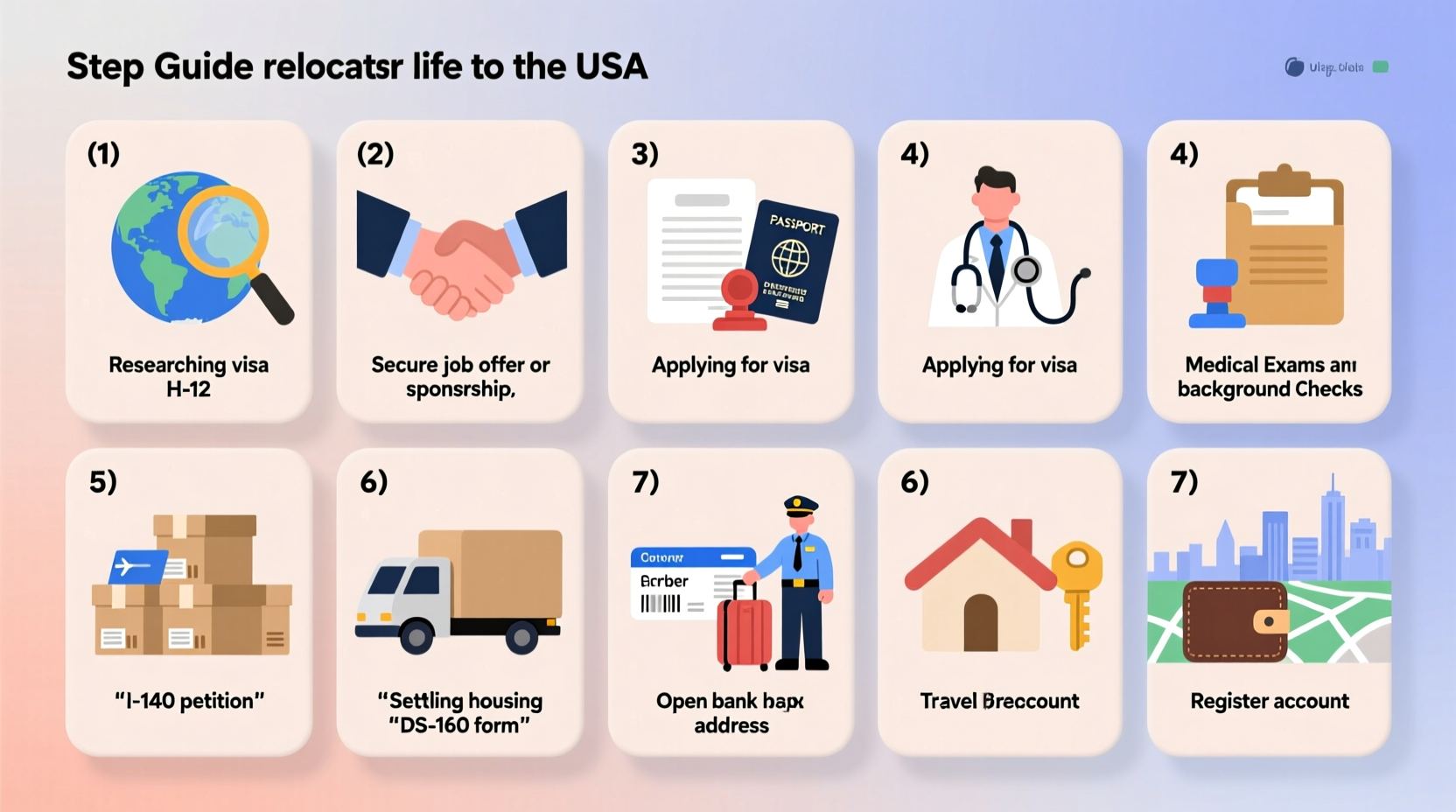
The U.S. immigration system is governed by specific visa categories, each with its own eligibility criteria and limitations. Choosing the correct one is the foundation of your relocation.
Common pathways include:
- H-1B: For skilled workers in specialty occupations (e.g., tech, engineering, finance).
- F-1: For international students enrolled in accredited institutions.
- J-1: Exchange visitor program for research, teaching, or training.
- Green Card (Permanent Residency): Through employment, family sponsorship, or the Diversity Visa Lottery.
- L-1: Intra-company transfers for employees moving from an overseas branch to a U.S. office.
“Immigration is not just about paperwork—it’s about proving intent, stability, and value. A well-documented application can make all the difference.” — Sarah Nguyen, U.S. Immigration Attorney
Step 2: Secure Employment or Sponsorship
For most non-tourist visas, a job offer or institutional acceptance is required. Begin your job search early, tailoring your resume to U.S. standards and leveraging platforms like LinkedIn, Indeed, and Glassdoor.
Key considerations:
- U.S. employers must often petition for your visa (e.g., Form I-129 for H-1B).
- Salaries must meet prevailing wage requirements set by the Department of Labor.
- Some industries are more open to sponsorship—technology, healthcare, and higher education lead the list.
If you’re pursuing permanent residency, understand that processing times vary widely by country and category. Backlogs can extend wait times to several years for applicants from countries like India or China.
Step 3: Plan Your Move Timeline
A successful relocation requires a clear timeline. Use this 12-month roadmap as a baseline:
| Timeframe | Action Items |
|---|---|
| 12–9 Months Before | Research visa types; begin job applications; gather documents (passport, degrees, references) |
| 8–6 Months Before | Secure job offer or university admission; employer files petition (if applicable) |
| 5–3 Months Before | Attend visa interview; receive approval; book flights |
| 2 Months Before | Arrange housing; transfer finances; ship belongings |
| 1 Month Before | Cancel utilities abroad; notify banks; obtain health insurance |
| Arrival Week | Apply for SSN; open bank account; register address |
Step 4: Settle Into Life in the U.S.
Arriving in the U.S. is just the beginning. Practical integration happens in the first 90 days.
Housing and Location
Choose a city based on cost of living, job market, safety, and community. Major hubs like New York, San Francisco, and Seattle offer opportunities but come with high rent. Consider secondary cities like Austin, Atlanta, or Denver for better affordability and growth.
Renting typically requires:
- Proof of income (offer letter or bank statements)
- Credit history (or a co-signer if you’re new)
- Security deposit (often 1–2 months’ rent)
Banking and Finances
You’ll need a Social Security Number (SSN) to open a bank account, file taxes, and access credit. Apply for an SSN at a local Social Security Administration office within two weeks of arrival.
Start with a no-fee checking account and build credit gradually—consider a secured credit card or becoming an authorized user on someone else’s account.
Healthcare
The U.S. does not have universal healthcare. Most employers offer private insurance plans during onboarding. If not, explore marketplace options via Healthcare.gov. Always confirm coverage before seeking care—medical bills can be catastrophic without insurance.
Transportation
Public transit varies greatly. Cities like Chicago and Boston have robust systems, while Houston or Phoenix are car-dependent. Factor in vehicle costs: insurance, fuel, registration, and maintenance.
Mini Case Study: Moving from Germany to Chicago
Lena Müller, a software engineer from Berlin, secured an H-1B visa through a fintech startup in Chicago. She began applying six months before her desired start date and was selected in the lottery. Her employer handled the I-129 petition, and she attended her interview at the U.S. Consulate in Frankfurt.
Upon arrival, Lena used temporary housing for two weeks while searching for an apartment. She opened a Chase checking account using her passport, visa, and employment letter. Within three weeks, she received her SSN and enrolled in the company’s health plan.
Her biggest challenge? Understanding utility deposits and building credit. “No one told me I’d need $300 upfront for electricity,” she said. “And getting a credit card took three months of renting and paying bills on time.”
Lena now advises others to research local norms and budget for hidden setup costs.
Relocation Checklist
Use this checklist to stay organized throughout your move:
- ✅ Research and select the appropriate U.S. visa category
- ✅ Secure a job offer or academic acceptance
- ✅ Complete visa application and attend interview
- ✅ Arrange international shipping or decide what to bring
- ✅ Book flights and temporary accommodation
- ✅ Notify current bank and transfer initial funds
- ✅ Apply for a Social Security Number upon arrival
- ✅ Open a U.S. bank account
- ✅ Enroll in health insurance
- ✅ Register for state identification or driver’s license
- ✅ Update address with USCIS, IRS, and financial institutions
- ✅ Begin building credit history
FAQ
Can I move to the U.S. without a job?
Yes, but options are limited. You can enter on a student (F-1), investor (EB-5), or diversity visa (DV Lottery). Tourists cannot seek employment. Permanent residency without sponsorship is rare and highly competitive.
How much money should I have saved before moving?
Aim for 3–6 months of living expenses. In high-cost cities, this could mean $15,000–$30,000. Include rent deposits, furniture, transportation, and emergency funds.
Do I need to pay U.S. taxes as a newcomer?
If you’re a resident alien (green card holder or on qualifying visa), yes. The U.S. taxes worldwide income. File Form 1040 annually. Non-residents may file Form 1040-NR. Consult a tax professional familiar with international cases.
Final Steps and Long-Term Integration
Moving to the U.S. isn’t a one-time event—it’s the start of adaptation. Language barriers, workplace culture, and social norms take time to navigate. Join expat groups, attend community events, and invest in learning American business etiquette.
Long-term success means more than legal compliance. It includes building relationships, understanding regional differences, and contributing meaningfully to your new community. Many immigrants find that blending their heritage with American life creates a richer, more fulfilling experience.




 浙公网安备
33010002000092号
浙公网安备
33010002000092号 浙B2-20120091-4
Comments
No comments yet. Why don't you start the discussion?