
People evolve. Beliefs shift. Priorities transform. It’s a natural part of personal growth. But what happens when the values that once aligned with your closest friends begin to diverge? You might find yourself feeling disconnected, conflicted, or even guilty for outgrowing certain relationships. Navigating this emotional terrain requires honesty, empathy, and courage. This guide offers practical strategies for handling shifting values in friendships—without resentment, blame, or unnecessary loss.
Why Values Shift Over Time
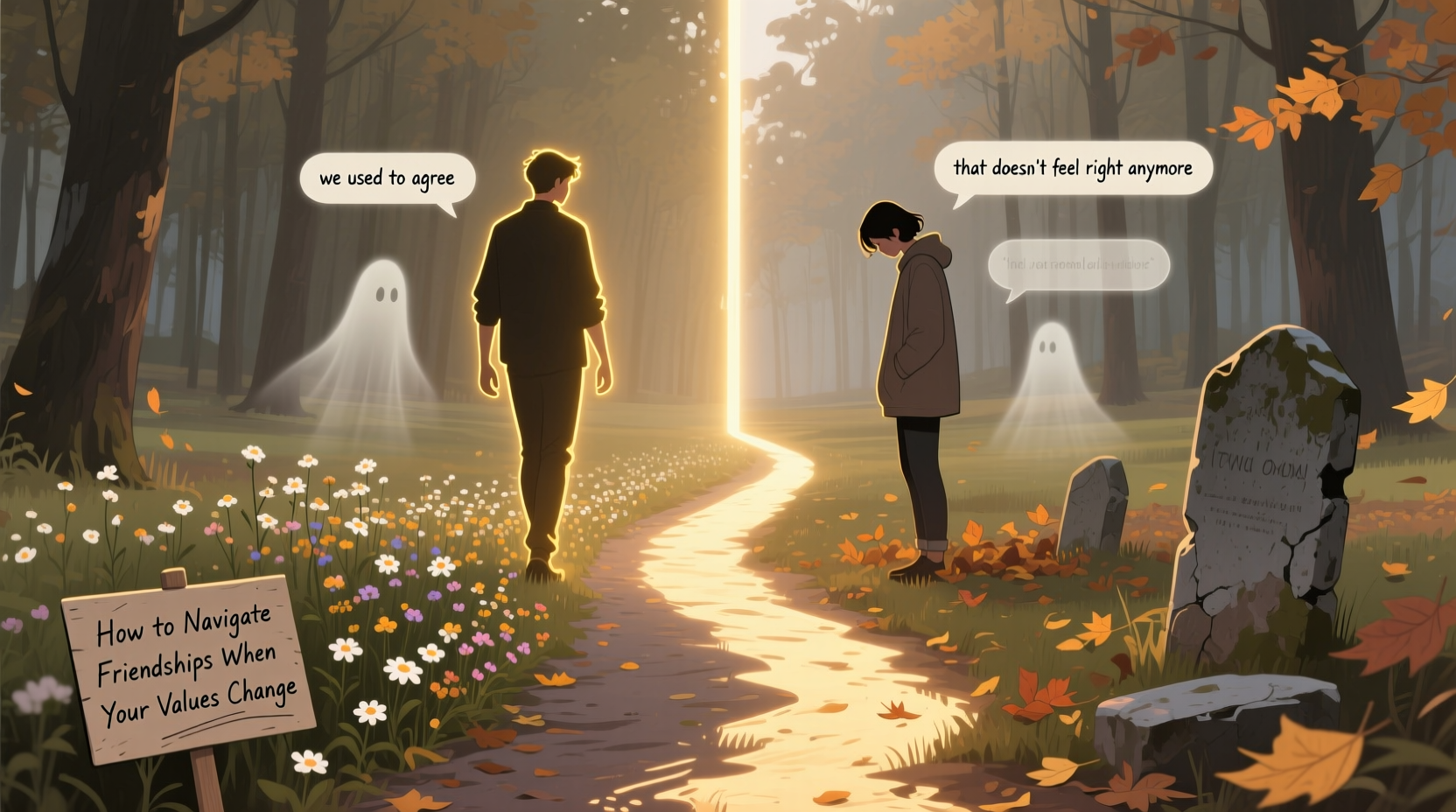
Values are not static. They are shaped by life experiences, education, trauma, travel, relationships, and self-reflection. A person who once prioritized social status may later value authenticity and minimalism. Someone who was politically indifferent may become passionate about justice after witnessing systemic inequity. These changes aren’t failures—they’re signs of growth.
Psychologist Dr. Brené Brown notes, “Growth is never linear, and sometimes the most painful shifts are the ones that lead to the deepest integrity.” When your core beliefs about honesty, equity, spirituality, or lifestyle change, it’s normal for old friendships to feel strained. The discomfort isn’t necessarily a sign of broken bonds—it may simply reflect misalignment.
Recognizing Value Misalignment
Not every disagreement signals a values clash. Occasional differences in opinion are healthy. But persistent tension around fundamental beliefs—such as honesty, loyalty, ambition, or ethics—may indicate deeper divergence. Look for these signs:
- You frequently feel drained or defensive after spending time together.
- Your friend mocks or dismisses causes you care deeply about.
- You avoid discussing certain topics (politics, religion, parenting) to keep peace.
- You’ve changed, but your friend still treats you like your past self.
- Your moral compass leads you to act differently than your friend in key situations.
When values diverge, the friction often isn’t about behavior alone—it’s about underlying principles. One friend may see compromise as maturity; another may see it as betrayal of self. Recognizing these patterns is the first step toward intentional navigation.
Step-by-Step Guide to Reassessing Friendships
Navigating shifting values doesn’t require abrupt endings. A thoughtful process allows space for clarity, compassion, and choice. Follow these steps:
- Reflect on your current values. Write down what matters most to you now—integrity, kindness, growth, family, sustainability, etc. Compare this list to your behaviors and decisions over the past six months. Do they align?
- Assess each friendship objectively. For key relationships, note where alignment remains and where friction occurs. Is the conflict situational or rooted in values?
- Initiate an honest conversation. Choose a calm moment to share your journey. Use “I” statements: “I’ve been rethinking how I approach work-life balance, and it’s shifted some of my priorities.” Avoid blaming language.
- Observe their response. Do they listen with curiosity? Dismiss your growth? Attempt to understand? Their reaction reveals whether mutual respect remains.
- Decide on the relationship’s future. Options include redefining the friendship, creating distance, or ending it with grace. There’s no universal right answer—only what honors your truth.
Real Example: Maria’s Shift from Ambition to Mindfulness
Maria spent years building a high-powered career in finance. Her closest friend, Jenna, shared her drive—weekend networking events, luxury vacations, and relentless goal-setting were their norm. But after a burnout episode, Maria began prioritizing mental health, simplicity, and presence. She started meditating, reduced her workload, and declined invitations to lavish parties.
Jenna didn’t understand. “You’re throwing away everything we worked for,” she said during a tense coffee meeting. Maria felt judged and isolated. Instead of cutting ties immediately, she wrote a letter explaining her transformation—not as a rejection of their past, but as a need for authenticity. She acknowledged their shared history and expressed love, while clarifying her new boundaries.
Jenna needed time. They met less frequently and avoided work-related topics. Over months, their friendship evolved into something quieter—a monthly walk, occasional texts about books. It wasn’t what it once was, but it remained meaningful. Both women grew, and the friendship adapted.
“We don’t have to stay the same to stay connected—but we do have to respect each other’s paths.” — Dr. Alan Fong, Relationship Psychologist
Do’s and Don’ts When Values Change
| Do | Don’t |
|---|---|
| Communicate changes with kindness and clarity | Announce your evolution as a critique of your friend |
| Allow space for your friend to process | Expect immediate understanding or agreement |
| Reevaluate the friendship over time, not in one conversation | Make irreversible decisions during emotional highs or lows |
| Honor the past without clinging to it | Dismiss shared memories because the present feels strained |
| Set boundaries if values conflict affects your well-being | Stay in a friendship that consistently undermines your integrity |
When to Let Go—and How to Do It Gracefully
Some friendships cannot survive radical value shifts—especially when core ethics clash. If a friend consistently disrespects your identity, promotes harm, or pressures you to compromise your principles, distance may be necessary.
Ending a friendship doesn’t require drama. You can phase out contact gently, especially if confrontation risks safety or emotional harm. Alternatively, a direct but compassionate conversation can provide closure. Example:
“I’ve changed in ways that make our friendship harder to sustain. I still care about you and the memories we’ve shared, but I need to live in alignment with my values. I won’t be reaching out as often, and I hope you understand.”
Letting go isn’t failure. As author Rachel Cargle says, “Choosing yourself isn’t selfish—it’s survival. And sometimes, survival means releasing relationships that no longer serve your soul.”
Building New Connections Aligned With Your Values
Growth often creates space for new relationships. Seek communities—online or local—that reflect your current beliefs. Attend workshops, volunteer for causes you support, or join discussion groups. Authentic connections form when people gather around shared purpose, not just convenience or history.
New friendships don’t replace old ones—they expand your sense of belonging. And unlike past bonds that may have relied on habit, these relationships can be built with intention from the start.
Checklist: Creating Value-Aligned Friendships
- Identify three values you want reflected in future friendships.
- Join one group or event focused on a cause you care about.
- Practice sharing your beliefs in low-stakes conversations.
- Notice how others respond when you express your truth—do they engage or shut down?
- Invest time in relationships where mutual respect is evident.
FAQ: Navigating Friendship and Value Changes
Is it wrong to outgrow a friend?
No. Personal growth is not a betrayal. People change at different paces. Outgrowing someone doesn’t mean they’re flawed—it means your paths have diverged. Honoring your evolution is an act of self-respect, not disloyalty.
How do I tell a friend I’ve changed without hurting them?
Focus on your journey, not their shortcomings. Say, “I’ve been reflecting on what matters most to me lately, and some things have shifted. I still value our connection, but I want to be honest about where I am now.” Timing and tone matter—choose a private, calm setting.
Can a friendship survive major value differences?
Sometimes. If both people respect the difference and set boundaries around contentious topics, coexistence is possible. However, if the values involve ethics (e.g., honesty, inclusivity, accountability), sustained misalignment may erode trust. Ask: Can we disagree without disrespect?
Conclusion: Embracing Growth With Compassion
Friendships are among life’s greatest gifts—but they are not all meant to last forever. When your values change, you face a profound choice: remain comfortable in familiarity or embrace authenticity, even at the cost of connection. Neither path is easy, but choosing integrity builds a life of deeper meaning.
Navigating this shift with empathy—for yourself and others—allows you to honor the past while making space for the person you’re becoming. Some friendships will transform. Others will fade. And from that soil, new, resonant connections can grow.




 浙公网安备
33010002000092号
浙公网安备
33010002000092号 浙B2-20120091-4
Comments
No comments yet. Why don't you start the discussion?