
Starting a business is more than just a bold idea—it’s a disciplined process of validation, planning, execution, and adaptation. Many aspiring entrepreneurs dream of building the next big thing, but only those who approach it with clarity and structure turn vision into viable ventures. This guide breaks down the real-world steps to open a startup, from concept to launch, avoiding hype and focusing on what actually works.
1. Validate Your Idea Before Spending a Dime
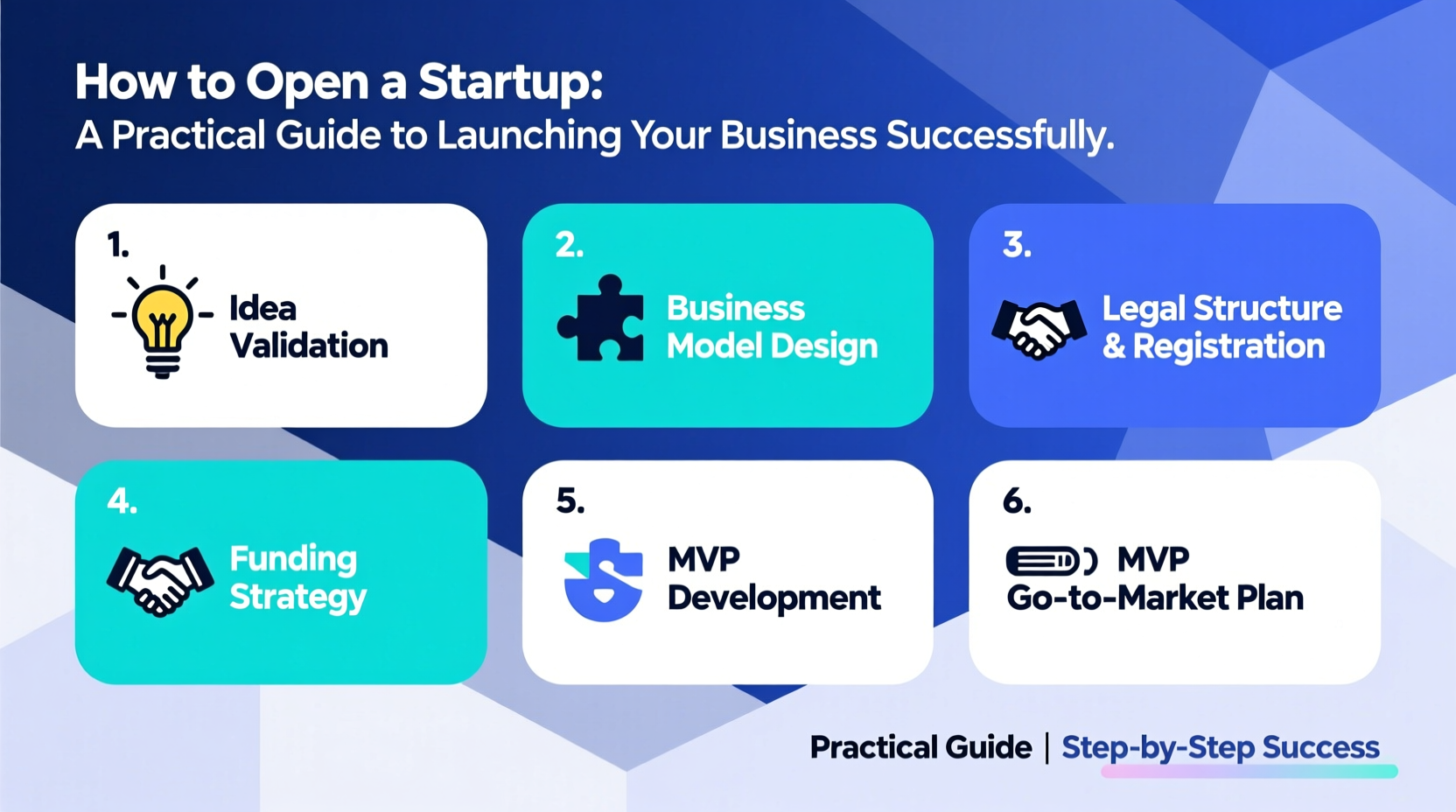
The most common reason startups fail is building something nobody wants. Before writing code or signing leases, test whether your solution solves a real problem for real people. Start by identifying your target audience and speaking directly with them.
Ask questions like: What frustrates you about [problem area]? How do you currently solve this? Would you pay for a better solution? These conversations reveal whether your idea has traction—or needs refinement.
Use tools like landing pages with sign-up forms, pre-order options, or mockups to gauge interest without building the full product. If people hesitate to commit even minimal effort (like an email), reconsider your value proposition.
2. Build a Lean Business Plan That Works
A lean business plan isn’t a 50-page document for investors—it’s a living roadmap that answers six critical questions:
- What problem are you solving?
- Who exactly has this problem?
- How does your solution work?
- What makes you different from existing options?
- How will you acquire customers cost-effectively?
- What are your key financial assumptions?
This version keeps you focused on action, not paperwork. Update it monthly as you learn more from customers and market conditions.
“Your first business plan is wrong. The key is not to perfect it upfront, but to test it quickly and adapt.” — Eric Ries, author of *The Lean Startup*
3. Choose the Right Legal Structure and Register Your Business
Legal setup matters—not because it's exciting, but because it protects you and sets the foundation for growth. Most early-stage startups choose one of three structures:
| Structure | Best For | Key Benefits | Drawbacks |
|---|---|---|---|
| Sole Proprietorship | Solopreneurs, freelancers | Simple, low cost | No liability protection |
| LLC (Limited Liability Company) | Most tech and service startups | Liability protection, tax flexibility | More paperwork and fees |
| C-Corporation | Startups seeking venture capital | Investor-friendly, stock options | Double taxation, complex compliance |
In most cases, forming an LLC offers the best balance of simplicity and protection. Register your business name, obtain an EIN from the IRS, and open a separate bank account. Never mix personal and business finances—this undermines legal protection and confuses accounting.
4. Develop a Minimum Viable Product (MVP) That Tests Core Assumptions
An MVP is not a half-finished product. It’s the simplest version that allows you to test your riskiest assumption—usually, whether customers will use and pay for your solution.
For example, Dropbox started with a video demonstrating how file syncing would work. They used it to collect sign-ups before writing a single line of sync code. That proved demand before investing in complex engineering.
Your MVP could be a concierge service (doing the work manually), a no-code prototype, or a basic web app with one core feature. The goal is learning, not perfection.
5. Launch with Traction, Not Hype
Too many startups “launch” with a press release and crickets. A successful launch starts before Day One—with early adopters already using, paying, or waiting for your product.
Build momentum by:
- Creating a waitlist during validation
- Offering beta access to engaged users
- Gathering testimonials and case studies early
- Planning outreach to niche communities (Reddit, LinkedIn groups, forums)
Real Example: How Buffer Started with Zero Code
Buffer, the social media scheduling tool, began as a simple landing page explaining the idea. Founder Joel Gascoigne linked to two versions: one for individuals, one for teams. Each had a pricing table and a “Get Started” button that led to a Stripe payment form. When someone tried to pay, they got a message: “We’re not built yet. Want to be notified when we launch?”
This tested both demand and willingness to pay. Hundreds signed up. With real data in hand, Gascoigne prioritized development and secured early customers the moment the product was ready.
Step-by-Step Timeline: First 90 Days of a Startup
Here’s a realistic 12-week roadmap for launching your startup:
- Weeks 1–2: Define your idea and identify 20 target customers to interview.
- Weeks 3–4: Refine your value proposition and build a landing page with a call-to-action.
- Weeks 5–6: Drive traffic via outreach, social media, and small ads. Measure conversion rates.
- Weeks 7–8: Decide on legal structure and register your business. Open a business bank account.
- Weeks 9–10: Build your MVP—manual, no-code, or coded—based on top feedback.
- Weeks 11–12: Onboard 10–20 beta users, gather feedback, fix issues, and prepare for public launch.
This timeline assumes you're working part-time. Full-time founders can move faster—but speed without direction leads to wasted effort.
Frequently Asked Questions
Do I need funding to start a startup?
No. Most startups begin with personal savings, revenue from early customers, or freelance work to fund development. External funding introduces pressure and expectations. Prove demand first—then consider raising money if scaling requires capital.
How do I pick a name for my startup?
Choose a name that’s memorable, easy to spell, and available as a domain and social handles. Avoid overly clever or abstract names. Test it with strangers: “I use a tool called [Name] to [solve X].” Does it make sense immediately?
Should I incorporate in Delaware?
Only if you plan to raise venture capital. For most small startups, incorporating in your home state is simpler and cheaper. Delaware offers legal advantages for large corporations, not early-stage businesses.
Action Checklist: Launch Your Startup in 10 Steps
- Define the specific problem you’re solving
- Interview 20+ potential customers
- Build a landing page with a clear offer
- Test messaging and measure sign-up rates
- Finalize your business model (pricing, costs, margins)
- Choose and register your legal entity
- Obtain EIN and open a business bank account
- Develop an MVP that tests your riskiest assumption
- Onboard early users and collect feedback
- Launch publicly with at least 10 paying or committed customers
Conclusion: Start Small, Learn Fast, Scale with Confidence
Launching a startup isn’t about having the perfect idea or massive funding. It’s about moving forward with discipline, testing assumptions, and adapting based on real feedback. The most successful founders aren’t the smartest or richest—they’re the ones who ship early, listen closely, and persist through uncertainty.




 浙公网安备
33010002000092号
浙公网安备
33010002000092号 浙B2-20120091-4
Comments
No comments yet. Why don't you start the discussion?