
Replacing a watch battery doesn’t always require a trip to the jeweler or a specialized toolkit. Many people assume that opening a watch case demands precision screwdrivers or case-back removers, but with careful technique and everyday household items, it’s possible to access the battery compartment safely and efficiently. This guide reveals practical, no-tools methods to open common watch types, helping you save time and money while maintaining the integrity of your timepiece.
Understanding Watch Case Types
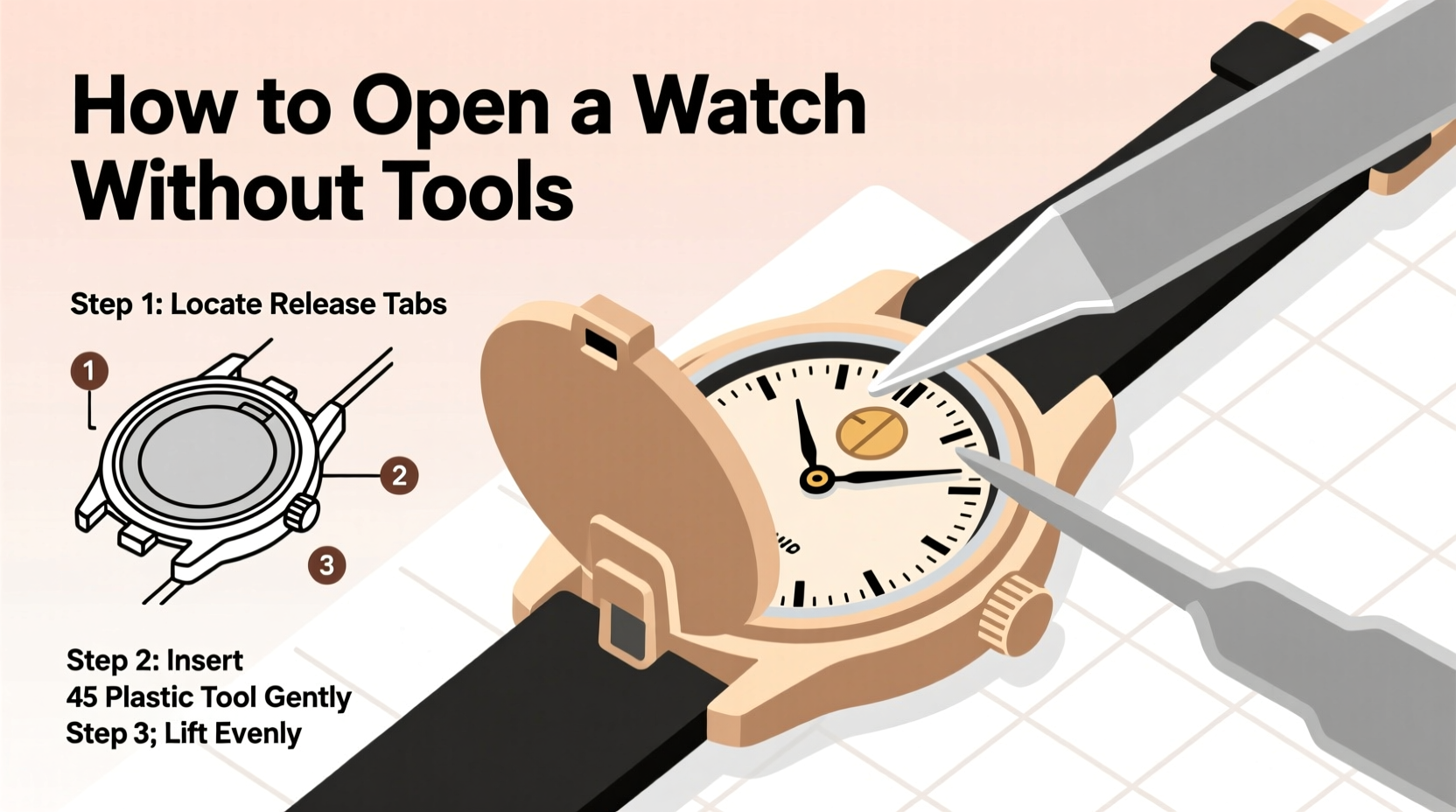
Before attempting to open any watch, it's essential to identify the type of case back. Most watches fall into one of three categories: snap-on, screw-down, or screw-off. Knowing which type you're dealing with prevents damage and guides your approach.
- Snap-on backs are held in place by tension and can be pried open with gentle pressure.
- Screw-down backs have notches or grooves and require rotation to unlock—often mistaken for being tool-dependent.
- Screw-off backs twist off like a jar lid and may be sealed tightly but can sometimes be loosened manually.
Mistaking one for another is a common cause of scratches or stripped edges. Always inspect the back under good lighting before proceeding.
Safe Techniques to Open a Watch Without Tools
The key to success lies in using soft, non-abrasive objects that provide grip without marring the metal. Below are proven techniques categorized by case type.
For Snap-On Case Backs
- Clean the edge of the case back with rubbing alcohol to remove grease and improve grip.
- Wrap a thin rubber band around the edge of the watch to increase traction.
- Place the watch face-down on a soft surface like a microfiber cloth.
- Use your thumbnail or the edge of a plastic guitar pick to gently pry at the seam where the back meets the case.
- Work slowly around the perimeter, applying consistent but light pressure until the back releases.
A wide rubber band stretched over the case can also create enough leverage when twisted. The elasticity helps “walk” the back loose through incremental movement.
For Screw-Down or Notched Backs
These backs have small indentations designed for a case knife or specialty tool, but alternatives exist:
- Use the tines of a fork to align with the notches. Gently twist counterclockwise to loosen.
- A butter knife wrapped in tape (blade edge covered) can act as a makeshift case opener if carefully inserted into a notch.
- Some users report success with tweezers—insert the tip into a notch and use controlled rotational force.
Patience is critical. Rushing can slip the implement and scratch the case or injure your hand.
Step-by-Step Guide: Battery Replacement Without Tools
Follow this sequence to replace the battery safely after opening the case:
- Prepare your workspace: Choose a clean, well-lit area with a soft surface (like a folded towel) to prevent scratches or losing small parts.
- Open the case back: Use one of the above techniques based on your watch type.
- Remove the old battery: Tilt the watch gently; the battery often falls out on its own. If secured by a clip, use clean fingernails or toothpick to nudge it free.
- Note battery type: Check the number printed on the old battery (e.g., CR2032). Match it exactly when purchasing a replacement.
- Insert new battery: Place the positive side up unless otherwise marked. Ensure it sits flush and secure.
- Reassemble the case: Align the back properly and press evenly around the edges until it snaps shut. For screw-type backs, reverse the opening process carefully.
- Test the watch: Wait a few seconds for the watch to power on. Adjust the time if necessary.
This entire process should take less than 15 minutes once familiarized. Avoid touching internal components with bare fingers to prevent oil transfer.
Do’s and Don’ts: A Quick Reference Table
| Do’s | Don’ts |
|---|---|
| Use rubber bands or plastic tools for grip | Use metal knives directly on the case |
| Work slowly and apply even pressure | Rush or force the back open |
| Clean hands and workspace thoroughly | Touch the battery with oily fingers |
| Double-check battery orientation | Assume all batteries go in the same way |
| Store the watch in a dry place post-repair | Expose internals to moisture or dust |
Real Example: Sarah’s Successful DIY Fix
Sarah, a teacher from Portland, noticed her favorite minimalist wristwatch had stopped working. She didn’t want to pay $20 for a battery change at the mall kiosk. After researching online, she used a guitar pick and a rubber band to open the snap-back case. “I was terrified I’d scratch it,” she said, “but going slow made all the difference.” She replaced the CR1632 battery bought online for $2.50 and had the watch running again within ten minutes. Two months later, it’s still ticking perfectly.
Her story reflects a growing trend: consumers gaining confidence in minor repairs using accessible methods.
“With the right technique, most watches can be serviced at home—even without tools. The biggest risk isn’t failure—it’s impatience.” — James Rolen, Master Watchmaker (Retired), Swiss Time Institute
Frequently Asked Questions
Can I damage my watch by opening it without tools?
Yes, if excessive force or improper tools are used. However, when done carefully with soft materials like rubber or plastic, the risk is minimal. Watches designed for frequent battery changes are built with user servicing in mind.
What if the case back won’t budge?
Do not continue forcing it. Let the watch rest for a few minutes—sometimes condensation or static creates temporary resistance. Try warming it gently in your hand or repositioning your grip. If still stuck, consider professional help to avoid irreversible damage.
How often should I replace my watch battery?
Most watch batteries last between 1–3 years. Signs of a dying battery include slowing timekeeping, dim display (in digital models), or complete stoppage. Replacing it promptly prevents potential leakage, which can corrode internal components.
Checklist: DIY Watch Battery Change Without Tools
- ✔ Identify the case back type (snap, screw, etc.)
- ✔ Gather household items: rubber band, plastic pick, fork, or toothpick
- ✔ Work on a soft, clean surface
- ✔ Use natural grip enhancers (warm hands, rubber band)
- ✔ Remove old battery carefully and note model number
- ✔ Insert new battery with correct polarity
- ✔ Snap or screw the back securely into place
- ✔ Test functionality before resuming regular wear
Final Thoughts
Opening a watch without tools is entirely feasible with the right knowledge and caution. These techniques empower you to maintain your accessories independently, reducing reliance on costly services for simple tasks. Whether it’s a sentimental heirloom or a daily-wear fashion piece, preserving its function enhances both utility and emotional value. With practice, what once seemed delicate and intimidating becomes routine.




 浙公网安备
33010002000092号
浙公网安备
33010002000092号 浙B2-20120091-4
Comments
No comments yet. Why don't you start the discussion?