
Starting an online business is one of the most accessible ways to become an entrepreneur in today’s digital economy. With minimal upfront costs and global reach, anyone with a solid idea and dedication can build a profitable venture from home. However, turning that idea into a functioning, growing business requires careful planning, execution, and persistence. This guide walks you through each essential phase—from validating your concept to launching and scaling—so you can confidently take your first steps.
1. Validate Your Business Idea
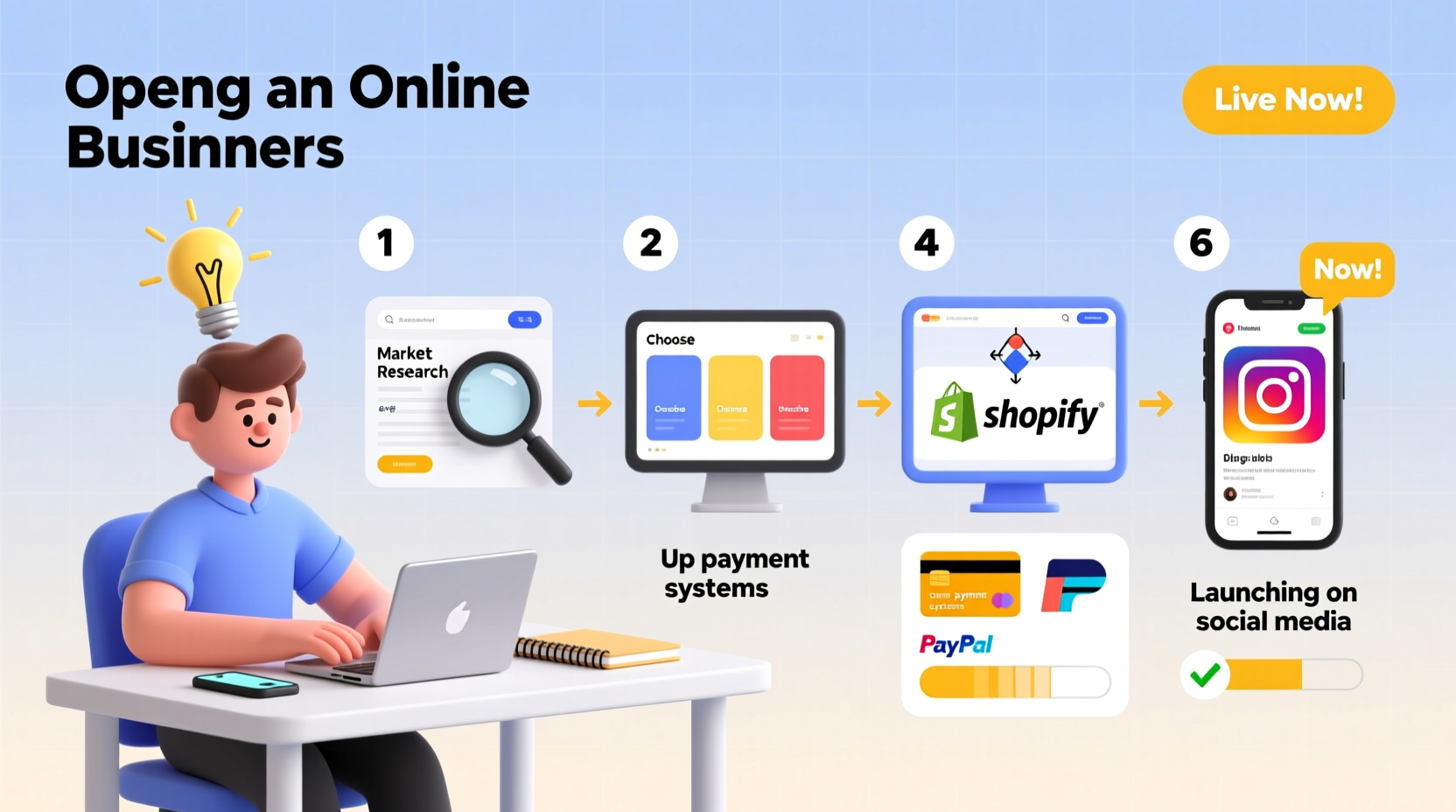
Before investing time and money, ensure there’s real demand for your product or service. Many new entrepreneurs skip this step and launch something nobody wants. Validation helps reduce risk by testing your idea with actual potential customers.
Start by identifying a problem people face and consider whether your idea offers a genuine solution. Ask yourself: Who would benefit? How are they solving it now? Is your approach better?
Next, create a simple landing page describing your product with a call-to-action—like “Get Early Access” or “Join the Waitlist.” Drive traffic using low-cost methods such as Facebook groups or targeted posts. If people sign up, you’ve got early validation.
“Don’t fall in love with your idea. Fall in love with the problem you’re solving.” — Paul Graham, Y Combinator Co-Founder
2. Choose a Viable Business Model
There are several proven models for making money online. The right one depends on your skills, resources, and goals. Here’s a comparison of common options:
| Business Model | Startup Cost | Skill Required | Time to Revenue |
|---|---|---|---|
| E-commerce (Sell Physical Products) | Moderate ($500–$2,000) | Product sourcing, marketing | 3–6 months |
| Digital Products (e.g., courses, templates) | Low ($100–$500) | Content creation, design | 1–3 months |
| Freelancing (e.g., writing, design) | Very Low ($0–$100) | Specialized expertise | Immediate |
| Affiliate Marketing | Low ($100–$300) | SEO, content writing | 3–12 months |
| Subscription Service (e.g., membership site) | Moderate ($300–$1,000) | Community building, consistency | 4–8 months |
If you're just starting out, freelancing or selling digital products often offer the fastest path to revenue with limited risk.
3. Legal Setup and Brand Foundation
Once you’ve confirmed your idea has potential, it’s time to make things official. While you don’t need a full legal structure on day one, laying the groundwork protects you and builds credibility.
First, choose a business name that reflects your brand and is easy to remember. Check domain availability—if possible, secure a .com version of your business name. Then register your business entity. In the U.S., most solopreneurs start with a Sole Proprietorship or LLC. An LLC limits personal liability and looks more professional.
Register with your state if required, obtain an EIN (Employer Identification Number) from the IRS, and open a separate business bank account. Keeping finances separate makes accounting easier and strengthens your legitimacy.
4. Build Your Online Presence
Your website is your digital storefront. It doesn’t need to be perfect at launch, but it must clearly communicate what you do, who it’s for, and how to buy or contact you.
Choose a user-friendly platform like Shopify (for e-commerce), WordPress (for content-heavy sites), or Squarespace (for portfolios). Use a clean, mobile-responsive theme and include these essential pages:
- Homepage: Clear value proposition and next step (e.g., shop now, book a call).
- About Page: Tell your story and why customers should trust you.
- Contact Page: Email, form, or social links.
- Product/Service Pages: High-quality descriptions and images.
- Privacy Policy & Terms: Required for compliance and customer trust.
Set up payment processing through Stripe, PayPal, or Square. Test every button and checkout flow before going live.
Mini Case Study: Sarah Launches Her Digital Planners
Sarah, a former teacher, noticed many educators struggled with time management. She designed printable weekly planners in Canva and tested demand via a free download offer on Pinterest. Within three weeks, she collected 400 email sign-ups. Using feedback, she refined her designs, priced them at $12, and launched a simple Gumroad store. By month three, she was earning $1,200/month—proving that even small digital products can scale with the right audience.
5. Market and Grow Your Business
Having a great product isn’t enough—you need visibility. Focus on one or two marketing channels initially to avoid burnout.
- Email List: Offer a lead magnet (e.g., free checklist, discount) in exchange for emails. Use platforms like MailerLite or ConvertKit to automate follow-ups.
- Social Media: Pick one platform where your audience spends time—Instagram for visuals, LinkedIn for B2B, TikTok for trends—and post consistently.
- Content Marketing: Write blog posts or record short videos answering common questions. Optimize for search engines (SEO) to attract organic traffic over time.
- Paid Ads (Optional): Once profitable, test low-budget ads on Facebook or Google to accelerate growth.
Track key metrics: conversion rate, customer acquisition cost, and lifetime value. Adjust your strategy based on data—not guesswork.
Checklist: Launch-Ready Business
- ✅ Validated business idea with customer interest
- ✅ Chosen business model and pricing strategy
- ✅ Registered business name and entity (if applicable)
- ✅ Secured domain and built functional website
- ✅ Set up payment processing and privacy policy
- ✅ Created initial product or service offering
- ✅ Built email list with lead magnet
- ✅ Launched and started promoting via one primary channel
Frequently Asked Questions
How much does it cost to start an online business?
It varies, but many online businesses can launch for under $500. Costs typically include domain ($15/year), hosting ($10–$30/month), website builder or e-commerce platform fees, and initial marketing. Digital products have the lowest overhead.
Do I need technical skills to start online?
No. Platforms like Shopify, Wix, and Gumroad require no coding. Most tasks—building websites, designing graphics, managing email—can be done with drag-and-drop tools. Learn as you go using free tutorials on YouTube or Skillshare.
How long does it take to make money?
Some make sales within days (e.g., freelancers), while others take 3–6 months to gain traction. Consistency matters more than speed. Focus on delivering value, learning from feedback, and improving daily.
Conclusion: Start Before You’re Ready
The best time to start your online business was last year. The second-best time is now. Perfection is the enemy of progress—launch with what you have, learn from real customers, and iterate quickly. Every successful founder began exactly where you are: uncertain, under-resourced, but willing to try.
You don’t need permission. You don’t need a huge budget. You just need a problem worth solving and the discipline to follow through. Take the first step today—validate your idea, write down your plan, or build that landing page. Momentum begins with action.




 浙公网安备
33010002000092号
浙公网安备
33010002000092号 浙B2-20120091-4
Comments
No comments yet. Why don't you start the discussion?