
Every home has one: the junk drawer. It starts innocently enough—a spare battery here, a rubber band there—but before long, it becomes a black hole of miscellany. Pens without caps, broken chargers, expired coupons, and mystery screws accumulate until opening the drawer feels like tempting fate. The good news? You don’t need hours or expensive organizers to fix it. With a focused 30-minute effort and a clear strategy, you can transform chaos into clarity. This guide walks you through a proven method to declutter, categorize, and maintain your junk drawer—fast.
Why Junk Drawers Spiral Out of Control
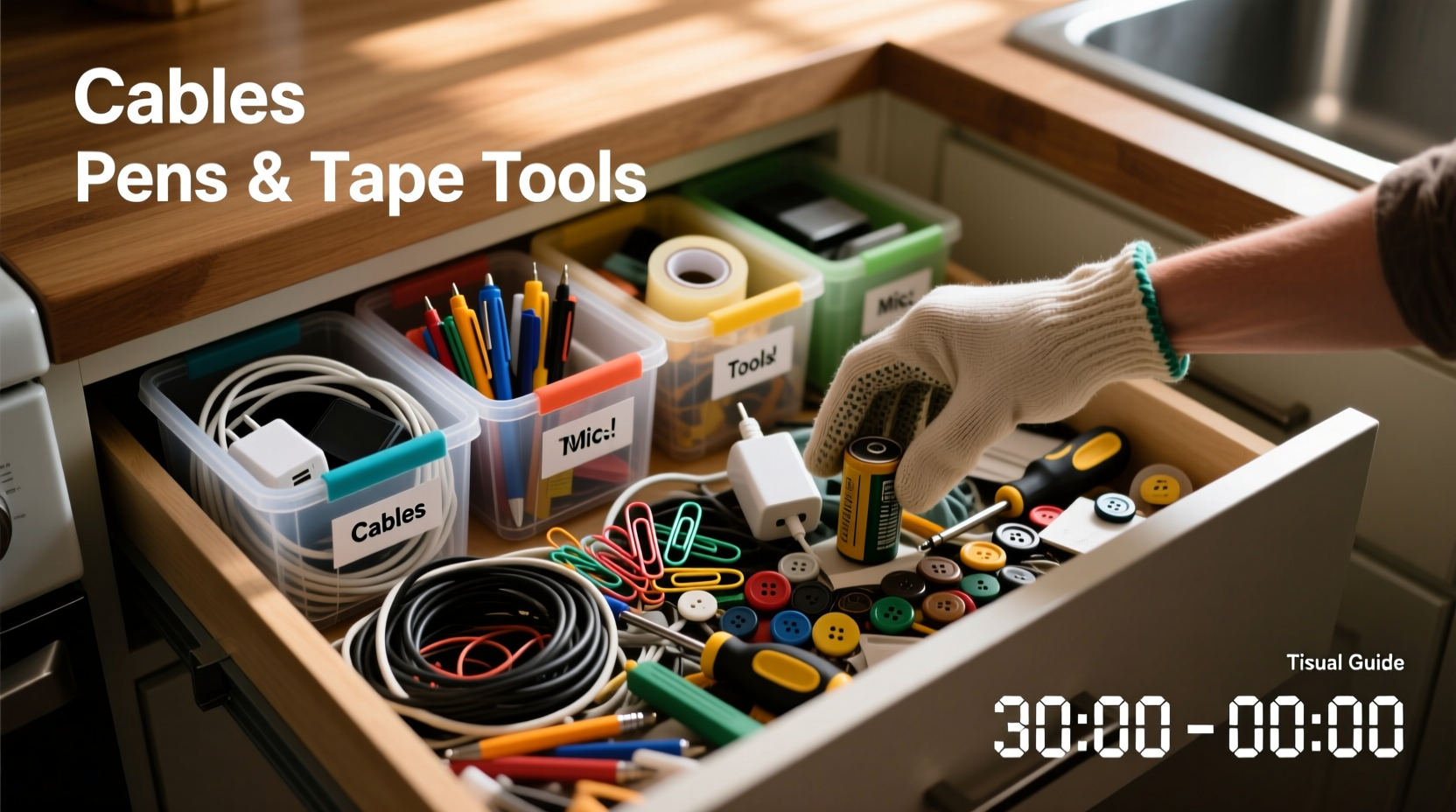
The junk drawer is often a default catch-all for items that don’t have a designated home. Unlike kitchen utensils or office supplies, which are stored with intention, the junk drawer absorbs whatever doesn’t fit elsewhere. Over time, this lack of structure leads to clutter. A study by the National Association of Professional Organizers found that households spend an average of 12 days per year searching for misplaced small items—many of which end up buried in drawers like these.
The real cost isn’t just lost time. A disorganized drawer increases daily friction. Need a flashlight during a power outage? Good luck finding it. Looking for tape to wrap a last-minute gift? Prepare to dig. The psychological toll matters too. Cluttered spaces contribute to mental fatigue and reduced focus, according to research published in the Journal of Environmental Psychology.
But here’s the upside: because junk drawers are usually small in physical size, they’re ideal candidates for rapid transformation. You don’t need perfection—just function.
Step-by-Step: The 30-Minute Junk Drawer Reset
This method breaks the process into timed phases. Each stage builds on the last, ensuring you stay focused and avoid decision fatigue. Set a timer, gather supplies, and follow this sequence.
- Minute 0–5: Empty and Assess (5 min)
Remove everything from the drawer. Place items on a clean surface—kitchen counter or table works well. Resist the urge to sort while emptying. Just get it all out. Take a moment to assess the volume and variety. This visual audit often reveals surprising duplicates (three dead flashlights?) or forgotten useful tools. - Minute 5–15: Sort and Purge (10 min)
Create four labeled zones: Keep, Recycle, Trash, Relocate. Work quickly:- Keep: Functional, frequently used items (scissors, batteries, notepads).
- Recycle: Electronics, metal bits, or plastic with recycling symbols.
- Trash: Broken pens, frayed cords, expired items.
- Relocate: Anything that belongs elsewhere (batteries → storage bin; nail clippers → bathroom).
- Minute 15–20: Clean the Drawer (5 min)
Wipe down the interior with a damp cloth. For sticky residue, use a bit of rubbing alcohol on a cotton pad. Let it dry completely. This small act reinforces the reset—it signals a fresh start. - Minute 20–27: Group and Containerize (7 min)
Categorize remaining items into functional groups:- Writing tools (pens, pencils, markers)
- Fasteners (rubber bands, paper clips, thumbtacks)
- Batteries and cables
- Tools (scissors, tape, mini-flashlight)
- Emergency/miscellaneous (band-aids, matches, spare key)
- Minute 27–30: Place and Label (3 min)
Return containers to the drawer in order of use frequency. Most-used items go front and center. Less common ones can be tucked behind. If using opaque containers, label them with masking tape and a marker. Done? Close the drawer. Open it again. Does it feel intentional? That’s success.
Smart Storage Solutions Without Spending a Dime
You don’t need specialty organizers from a home store. Household items work just as well—and often fit better. Here are practical alternatives:
| Item to Store | DIY Container | Pro Tip |
|---|---|---|
| Pens & Pencils | Empty toilet paper roll or spice jar | Line with fabric scrap for a polished look |
| Batteries | Mint tin or film canister | Label polarity (+/-) with tape to avoid mix-ups |
| Cables & Chargers | Paper clip or hair tie wrapped around a cardboard square | Attach a tag noting device type (e.g., “Phone”) |
| Small Tools | Ice cube tray or muffin tin liner | Perfect for separating nails, screws, or buttons |
| Notes & Coupons | File folder folded into a pocket | Clip important ones with a binder clip |
These solutions are temporary but effective. Once you’ve maintained order for a month, consider investing in modular drawer dividers if needed. But first, test the system with what you already own.
Real-Life Example: Sarah’s Kitchen Junk Drawer Turnaround
Sarah, a busy mother of two in Portland, had a kitchen drawer that spilled over every time she opened it. “I’d reach for a spoon and end up with a handful of twist ties and a dead AA battery,” she said. She tried organizing it twice before, only for it to devolve within weeks.
Using the 30-minute method, she pulled everything out and was shocked to find three sets of reading glasses, two expired coupons for pet food (she doesn’t own a pet), and a broken garlic press. She sorted aggressively, tossing 40% of the contents. She repurposed a small baking sheet divider to separate batteries, scissors, and tape. She placed frequently used items—like her go-to pen and kitchen twine—in front.
Three months later, the drawer remains functional. “I built in a 2-minute weekly check,” she shared. “If something doesn’t belong, I put it away immediately. It’s not perfect, but it’s usable—which is all I wanted.”
“Organization isn’t about perfection. It’s about creating systems that reduce friction in daily life.” — Lisa Monroe, Certified Home Organizing Consultant
Avoid These Common Organization Mistakes
Even with good intentions, people often undermine their efforts. Watch out for these pitfalls:
- Over-containerizing: Too many bins create their own clutter. Stick to 3–5 categories max.
- Keeping “just in case” items: That single screw from an IKEA shelf assembled five years ago? Let it go. Hardware stores exist for a reason.
- Ignoring usage patterns: Don’t store scissors at the back if you use them daily. Prioritize accessibility.
- Skipping the purge: Cleaning around clutter doesn’t solve the problem. Remove the excess first.
- Forgetting maintenance: Without a quick reset habit, disorder returns fast.
Checklist: Your 30-Minute Junk Drawer Rescue Plan
Print or bookmark this checklist for your next session:
- ☐ Set a 30-minute timer
- ☐ Remove all contents from the drawer
- ☐ Sort into Keep, Trash, Recycle, Relocate
- ☐ Discard broken, expired, or unnecessary items
- ☐ Wipe down the drawer interior
- ☐ Group kept items into 3–5 functional categories
- ☐ Use household containers to separate groups
- ☐ Place most-used items in easy reach
- ☐ Label containers if needed
- ☐ Put relocated items where they belong immediately
- ☐ Do a 60-second review: Is it clear and functional?
Frequently Asked Questions
What if my junk drawer is actually multiple drawers?
Tackle one at a time. Start with the most chaotic or frequently used. Apply the same 30-minute method to each on separate days. Avoid doing all at once—focus yields better decisions.
How often should I reorganize the junk drawer?
A monthly 5-minute refresh is ideal. Open it, remove anything that doesn’t belong, and reposition containers if they’ve shifted. After three consistent cycles, you’ll likely only need seasonal resets.
Is it okay to have more than one junk drawer?
Yes—if they’re specialized. Consider splitting functions: one for tools, one for office supplies, one for emergency items. The key is naming them clearly (e.g., “Repair Kit” instead of “Junk”) to prevent category drift.
Conclusion: Clarity Starts in the Smallest Spaces
Organizing a junk drawer in under 30 minutes isn’t just about tidiness—it’s about reclaiming control. Every time you open that drawer and find what you need instantly, you gain a tiny victory. Multiply that by dozens of daily interactions, and the impact on your peace of mind becomes clear.
The method works because it’s fast, realistic, and sustainable. You’re not aiming for Pinterest perfection. You’re building a functional system with minimal effort. And once you’ve done it once, the next time will be even easier.




 浙公网安备
33010002000092号
浙公网安备
33010002000092号 浙B2-20120091-4
Comments
No comments yet. Why don't you start the discussion?