
Planning a holiday gift exchange often centers around festive energy, group laughter, and shared excitement. But when your circle includes introverted friends—those who recharge through solitude and may feel drained by large gatherings or forced social interaction—the traditional approach can backfire. Instead of creating joy, it might spark anxiety, discomfort, or disengagement.
The key isn’t to exclude introverts or dull the celebration. It’s to design an experience that honors their temperament while still delivering warmth, thoughtfulness, and genuine connection. With intentional planning, you can host a gift exchange that feels inclusive, low-pressure, and deeply appreciated by everyone—including those who’d rather read by the fire than play party games.
Understand What Introversion Really Means
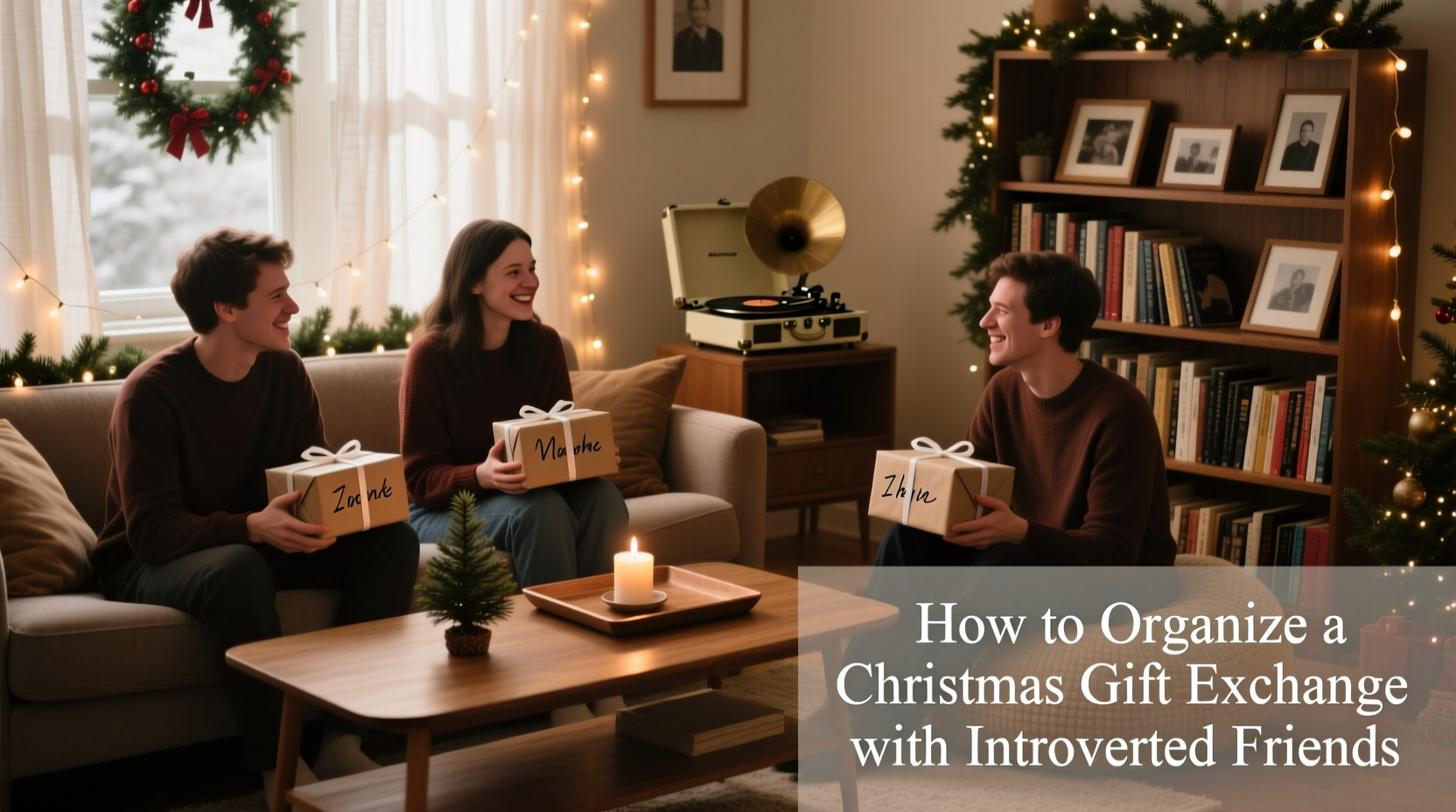
Before organizing any event involving introverts, it’s essential to dispel common myths. Introversion isn’t shyness, social anxiety, or dislike of people. It’s a preference for lower-stimulation environments and a tendency to process experiences internally. Introverts often enjoy deep conversations, meaningful rituals, and small-group interactions—but they may struggle in loud, unpredictable, or overly structured settings.
When applied to a gift exchange, this means avoiding assumptions like “everyone loves surprises” or “more people = more fun.” Instead, prioritize predictability, personal space, and opportunities for quiet participation.
“Introverts aren’t antisocial—they’re selectively social. The best events meet them where they are, not where we assume they should be.” — Dr. Lena Torres, Social Psychologist
Design a Thoughtful Exchange Structure
The format of your gift exchange sets the tone. A chaotic White Elephant game with boisterous trading might energize extroverts but overwhelm others. Choose—or adapt—a model that reduces pressure and allows for autonomy.
One effective method is the **Secret Santa with a twist**: assign givers privately via email or messaging app, allow ample time for shopping, and set a clear theme (e.g., “cozy comforts,” “local artisan goods,” or “nostalgic childhood treats”). This removes the stress of public performance while preserving the fun of surprise.
Alternatively, consider a **mailbox-style exchange**, where participants drop off wrapped gifts at each other’s homes without requiring face-to-face interaction. Pair each delivery with a handwritten note explaining the gift’s significance. This honors introverts’ love of reflection and avoids sudden social demands.
Step-by-Step Guide: Creating a Low-Pressure Gift Exchange
- Start early: Send out invitations 4–6 weeks ahead so guests have time to prepare mentally and logistically.
- Use digital tools: Use a randomizer app or website (like Elfster or DrawNames) to assign pairings privately.
- Set a clear theme and budget: Themes guide creativity; budgets prevent financial stress. Suggest ideas like “under $25” or “something that brings calm.”
- Offer participation options: Allow attendees to choose between attending live, sending gifts remotely, or contributing to a group donation in someone’s name. <5> Host a hybrid reveal: Share unboxing moments through photos in a group chat, or schedule a short optional video call where only those comfortable speak up.
Choose the Right Setting and Timing
Venue matters—even if there’s no physical gathering. For introverts, environmental control is crucial. If hosting in person, pick a space with quiet corners, dimmable lighting, and escape routes (like a spare room or porch). Avoid crowded restaurants or noisy bars.
Timing also plays a role. Late-night parties after dinner can exhaust even mildly introverted individuals. Consider a mid-afternoon tea-and-gift session instead, ending before energy dips. Serve simple refreshments—no need for elaborate spreads or mandatory mingling.
If going fully virtual, avoid long Zoom calls. Instead, create a shared digital album where people upload photos of their gifts with short captions. This lets everyone participate on their own schedule, in their own space.
| Situation | Recommended Format | Avoid |
|---|---|---|
| In-person with mixed temperaments | Small group, themed gifts, optional activities | Loud music, icebreakers, timed games |
| Fully remote | Digital photo exchange or asynchronous video messages | Mandatory hour-long calls |
| Hybrid option available | Live stream for drop-ins, recorded highlights later | Requiring attendance or real-time responses |
Create Space for Meaningful Connection
Introverts often thrive not in quantity of interaction, but in quality. Rather than focusing on entertainment, shift the emphasis to emotional resonance. Encourage gift-givers to include a note explaining why they chose the item—what memory it evokes, how it reflects the recipient’s personality, or what comfort it might bring during the winter months.
You could also introduce a gentle ritual: invite each person (if willing) to share one sentence about their gift when revealed. No speeches, no pressure—just a moment of authentic acknowledgment. Those who don’t wish to speak can simply smile and nod, or send their message afterward.
Another idea: pair the exchange with a quiet activity like cookie decorating, journaling prompts, or watching a classic holiday film together—something that allows presence without constant conversation.
Mini Case Study: A Successful Low-Key Holiday Exchange
Marina, a graphic designer in Portland, hosts an annual gift swap for her close-knit friend group of seven. Three members identify as highly introverted, one has social anxiety, and two are energetic extroverts. In past years, attempts at lively parties led to early departures and post-event guilt.
Last December, Marina redesigned the event. She used an online tool to randomly assign pairs and set a “self-care” theme. Each person had three weeks to shop. On the designated day, everyone dropped off their wrapped gifts at a central location (a trusted friend’s porch) with a note attached.
Later that evening, she hosted a 30-minute optional Zoom call. Attendees could turn cameras on or off. One by one, they opened their gifts on screen—some laughing, some quietly touched. Two chose not to join the call but sent voice notes the next morning describing their gifts.
The feedback was overwhelmingly positive. “I actually looked forward to it,” said Ben, who typically dreads holiday obligations. “There was no pressure, just kindness.”
Checklist: Planning Your Introvert-Friendly Gift Exchange
- ☐ Confirm participant preferences (in person, remote, hybrid)
- ☐ Choose a respectful, flexible format (e.g., Secret Santa, mailbox drop)
- ☐ Set a clear theme and spending limit
- ☐ Use private digital tools for pairing assignments
- ☐ Communicate all details in writing well in advance
- ☐ Designate a quiet physical or virtual space for participation
- ☐ Encourage handwritten notes with gifts
- ☐ Offer multiple ways to engage (live, recorded, written)
- ☐ Keep the event short and predictable in structure
- ☐ Follow up with gratitude—thank everyone individually
FAQ: Common Questions About Inclusive Gift Exchanges
What if someone doesn’t want to participate at all?
Respect their choice. Participation should never feel obligatory. You might say, “We’d love to include you if you’re comfortable, but no pressure—we value your presence however you show up.” Some may contribute a small gesture later, like a kind message or shared playlist, which counts just as much.
How do I explain the plan without making it awkward?
Frame it positively and inclusively. Write something like: “This year, we’re trying a relaxed gift exchange so everyone can enjoy it in their own way. Whether you join us live, send something by mail, or just want to be kept in the loop—we’ve got you covered.” Clarity reduces anxiety.
Can we still have fun if it’s low-key?
Absolutely. Fun looks different for different people. For many introverts, joy comes from feeling seen, safe, and free from performance. A calm, thoughtful exchange often leaves a deeper impression than a high-energy party. Laughter still happens—it’s just quieter, warmer, and more authentic.
Final Thoughts: Celebrate Connection, Not Performance
Organizing a Christmas gift exchange with introverted friends isn’t about scaling back the holiday spirit. It’s about redefining it. True celebration lies not in volume or spectacle, but in care, intention, and mutual respect.
When you design an event that accommodates different temperaments, you don’t just make introverts feel welcome—you elevate the experience for everyone. Extroverts learn the beauty of stillness. Shy guests feel safe to open up. And relationships deepen because they’re built on authenticity, not expectation.
This season, let go of the myth that connection requires noise. Sometimes the most meaningful moments happen in silence, in a handwritten note, in a carefully chosen book left on a doorstep, in a text that says, “I was thinking of you.”




 浙公网安备
33010002000092号
浙公网安备
33010002000092号 浙B2-20120091-4
Comments
No comments yet. Why don't you start the discussion?