
In a world where fast fashion pushes constant consumption, the idea of building a functional wardrobe from just ten clothing items may seem radical. Yet, this minimalist approach isn't about deprivation—it's about intentionality. A ten-item closet challenges you to focus on quality over quantity, versatility over trends, and personal expression over impulse. When executed well, such a wardrobe doesn’t compromise style; it enhances it by eliminating clutter and amplifying confidence in every outfit choice.
The concept draws inspiration from capsule wardrobes, a movement popularized by designers like Donna Karan and embraced by sustainability advocates. The goal is not to dress less, but to dress better—with pieces that reflect your lifestyle, fit impeccably, and work together seamlessly. Whether you're preparing for a short-term travel stint, embracing seasonal simplicity, or rethinking your relationship with fashion, organizing a closet with only ten items can be both liberating and stylish.
The Philosophy Behind a 10-Item Wardrobe
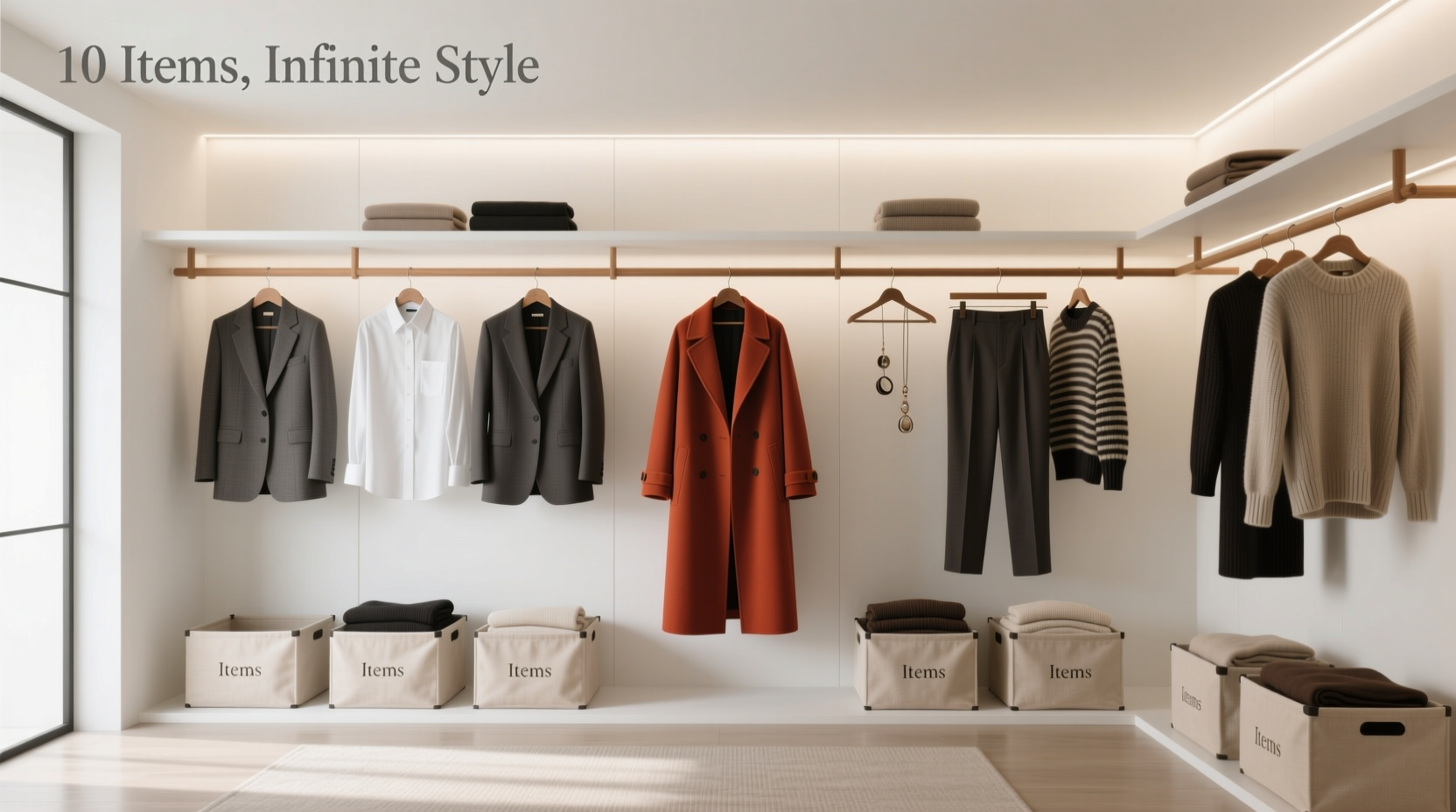
A minimalist wardrobe isn’t defined by scarcity, but by curation. Each item must serve multiple purposes: appropriate for different occasions, combinable with others, and aligned with your personal aesthetic. This requires a shift from asking “Do I like this?” to “How many ways can I wear this?”
The ten-item rule forces thoughtful decision-making. It removes the paralysis of too many choices and reduces daily styling stress. More importantly, it encourages investment in high-quality materials and timeless silhouettes that transcend fleeting trends.
“Minimalism in fashion isn’t about having less—it’s about making room for more of what matters.” — Sarah Thornton, Sociologist and Author of *The Sociology of Style*
Contrary to assumption, a small wardrobe doesn’t mean wearing the same outfit repeatedly. With strategic layering, accessories, and creative combinations, ten core pieces can yield dozens of distinct looks. The key lies in selecting garments that are inherently flexible and emotionally resonant.
Selecting Your 10 Core Items: A Strategic Framework
Choosing which ten items make the cut requires a blend of practicality, climate awareness, and self-knowledge. Begin by defining your primary activities: Do you work remotely? Attend meetings? Walk daily? Entertain socially? Your wardrobe should support your life, not complicate it.
Consider these criteria when selecting each piece:
- Versatility: Can it transition from day to night, casual to formal?
- Fit: Does it flatter your body and allow ease of movement?
- Durability: Is it made from resilient fabric that ages well?
- Color Harmony: Does it coordinate with at least three other items?
- Emotional Value: Do you feel confident and authentic wearing it?
Step-by-Step Guide to Building the Closet
- Assess Your Lifestyle Needs: List your top five weekly activities (e.g., working from home, gym, dinner out).
- Inventory Current Wardrobe: Pull out clothes you actually wear and love.
- Identify Gaps: Note missing essentials (e.g., no blazer, worn-out jeans).
- Select Foundation Pieces: Choose items that anchor multiple outfits.
- Edit Ruthlessly: Remove anything that doesn’t meet all five criteria.
- Test Combinations: Mix and match before finalizing your list.
Sample 10-Item Capsule Wardrobe (Urban Professional)
| Item | Description | Wears With | Occasions |
|---|---|---|---|
| Tailored Trousers | High-waisted, mid-gray wool blend | Blouse, sweater, turtleneck, blazer | Work, meetings, dinners |
| Crewneck Sweater | Oversized black merino wool | Trousers, jeans, skirt, under blazer | Casual, office, weekend |
| White Button-Down | Silk-cotton blend, relaxed fit | Trousers, jeans, tucked or untucked | Professional, smart-casual |
| Dark Wash Jeans | Straight-leg, non-stretch denim | Sweater, blouse, t-shirt, blazer | Casual, errands, informal events |
| Blazer | Navy unstructured linen-cotton | All tops + trousers/jeans/skirt | Work, travel, evening |
| Mid-Length Skirt | Black A-line, ponte knit | Blouse, turtleneck, sweater | Office, lunch, date night |
| Turtleneck | Fine-gauge beige cashmere | Skirt, trousers, under blazer | Winter layering, elegance |
| Leather Loafers | Brown oxfords, low heel | All bottoms | Work, walking, transit |
| Ankle Boots | Black suede, block heel | Jeans, skirt, trousers | Evening, cooler weather |
| T-Shirt | Organic cotton, heather gray | Jeans, under blazer, with skirt | Casual, layering base |
This combination allows for over 25 unique ensembles using only ten pieces. For example:
- Blouse + trousers + loafers = professional meeting look
- T-shirt + jeans + boots + blazer = weekend brunch
- Turtleneck + skirt + boots = evening event
- Sweater + t-shirt + jeans = relaxed home day
Maintaining Style Within Constraints
Style thrives not in abundance, but in creativity. With limited pieces, attention shifts from accumulation to arrangement. Accessories become powerful tools—scarves, belts, jewelry, and bags can dramatically alter an outfit’s tone without adding core garments.
Layering is another essential strategy. A turtleneck under a blouse, a blazer over a sweater, or a scarf tied at the neck can transform a familiar look into something fresh. Seasonal adaptability is built into the system: swap footwear or outerwear (if allowed outside the ten-item count) to adjust for weather.
Shoes and outerwear often exist outside the ten-item rule, depending on interpretation. If included, prioritize transitional footwear and a classic coat. If excluded, treat them as modular extensions that enhance rather than define the wardrobe.
Mini Case Study: Emma’s 10-Day Travel Wardrobe
Emma, a freelance designer, needed a lightweight suitcase for a two-week European trip combining client meetings and cultural exploration. She built a ten-item wardrobe centered around wrinkle-resistant fabrics and cohesive tones.
Her selections: navy trousers, black jeans, white tunic, striped long-sleeve tee, gray cardigan, black turtleneck, midi dress, trench coat (excluded from count), loafers, ankle boots. She added a silk scarf and gold hoop earrings.
Each day, she created new looks by rotating layers and accessories. The tunic served as a dress with a belt, then paired with jeans for daytime. The cardigan doubled as a cover-up and jacket. By day ten, locals assumed she had packed more—proof that consistency in color and cut creates the illusion of variety.
Common Pitfalls and How to Avoid Them
While the ten-item challenge is empowering, missteps can undermine its success. Awareness of these pitfalls ensures long-term viability.
| Do’s | Don’ts |
|---|---|
| Choose natural, breathable fabrics that age gracefully | Include trendy pieces with short stylistic lifespans |
| Ensure every item pairs with at least three others | Pick items that only work in one specific combo |
| Try everything on together before finalizing | Select based solely on photos or labels |
| Allow flexibility for laundering cycles | Forget that clothes need rotation and care |
“The most stylish people aren’t those with the most clothes, but those who know exactly what works for them.” — Iris Apfel, Fashion Icon
One frequent error is choosing pieces out of obligation rather than joy. If you keep an item because “it might be useful,” it likely won’t be worn. Conversely, if you reach for it instinctively, it belongs.
FAQ
Can I include undergarments and sleepwear in the ten items?
No—undergarments, socks, sleepwear, and workout clothes are typically excluded from the count. The ten-item rule usually applies to visible, outer-layer clothing worn during the day.
What if I live in a place with extreme seasons?
In climates with dramatic shifts, consider creating two separate 10-item capsules—one for warm months, one for cold. Rotate them seasonally to maintain relevance and comfort.
How do I handle special events like weddings or parties?
Rent, borrow, or invest in one versatile dressy piece that can be styled up or down. Alternatively, use accessories to transform a core item—adding a metallic belt or heels can make a work dress event-appropriate.
Checklist: Building Your 10-Item Closet
- ☐ Define your lifestyle and dressing needs
- ☐ Clear out your current closet, keeping only loved pieces
- ☐ Identify gaps in functionality or style
- ☐ Choose a cohesive color palette (neutrals + 1–2 accents)
- ☐ Select 3–4 bottoms (pants, jeans, skirts)
- ☐ Select 4–5 tops (blouses, sweaters, tees)
- ☐ Choose 1–2 layering pieces (cardigan, blazer)
- ☐ Prioritize timeless cuts over trends
- ☐ Test mix-and-match potential of all items
- ☐ Commit to wearing the capsule for one week
Conclusion
A ten-item closet is not a limitation—it’s a liberation. By stripping away excess, you gain clarity, reduce decision fatigue, and cultivate a deeper connection with your clothing. Style emerges not from volume, but from vision. When every piece is chosen with purpose, your wardrobe becomes a true reflection of who you are and how you want to move through the world.




 浙公网安备
33010002000092号
浙公网安备
33010002000092号 浙B2-20120091-4
Comments
No comments yet. Why don't you start the discussion?