
A cluttered closet doesn’t just waste space—it wastes time, energy, and peace of mind. Every morning spent digging through tangled hangers or stepping over shoes is a small frustration that adds up. The good news? You don’t need a weekend renovation or professional help to reclaim your closet. With the right strategy, you can transform a chaotic mess into a streamlined, functional space in under 60 minutes.
This guide walks you through a proven, no-nonsense method for organizing your closet quickly and effectively. Whether you're dealing with overflowing shelves, mismatched hangers, or seasonal confusion, these steps are designed to work whether you live alone, share a closet, or manage a family wardrobe.
Step 1: Set Your Goal and Gather Supplies (5 Minutes)
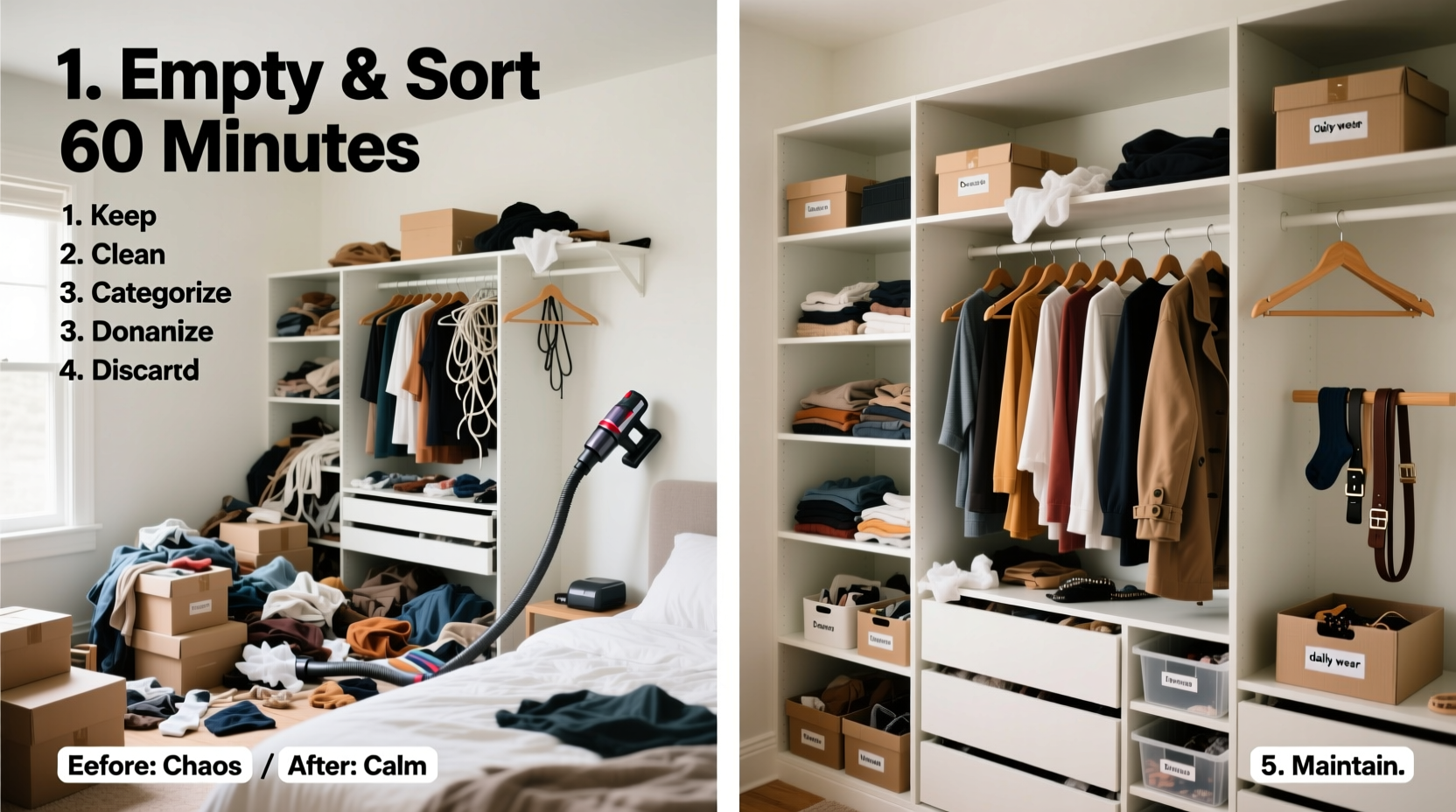
Before diving in, define what success looks like. Do you want more breathing room? Easier access to daily outfits? A place for everything from scarves to sneakers? Knowing your goal keeps you focused and prevents indecision during the process.
Next, gather the essential tools:
- A laundry basket or bin for donations
- A second bin for items to repair or alter
- A third bin for things that belong elsewhere in the house
- Trash bag for worn-out textiles or unusable items
- Lint roller, damp cloth, or duster for quick cleaning
- Matching slimline hangers (optional but highly recommended)
- Shelf dividers, drawer organizers, or shoe racks (if already owned)
Step 2: Empty and Assess (10 Minutes)
Take everything out. Yes, everything. This may seem extreme, but it’s the fastest way to reset. As items come out, place them directly into one of your pre-labeled bins based on their condition and usefulness.
While emptying, assess the closet itself. Wipe down shelves, vacuum the floor, and check for loose hardware. If a shelf sags or a rod wobbles, tighten it now. A clean foundation makes organization last longer.
This step also reveals how much space you actually have. Most people overestimate capacity because clutter distorts perception. Now, with the space bare, you’ll see exactly how much room is available for clothes, shoes, and accessories.
“Emptying the closet forces a physical and mental reset. You stop seeing ‘stuff’ and start seeing systems.” — Lena Patel, Professional Home Organizer
Step 3: Sort with the 3-Question Rule (15 Minutes)
As you pull each item out—even if it goes straight into a donation bin—ask three questions:
- Have I worn this in the past year? If not, it’s likely not serving you.
- Does it fit comfortably and make me feel confident? Clothes that pinch, gape, or sag aren’t worth keeping “just in case.”
- Would I buy this again today? If the answer is no, let it go.
Be honest. Sentimental value is valid, but store those pieces in a memory box—not your daily closet. Keep only what aligns with your current lifestyle, body, and aesthetic.
For shared closets, apply the same rule individually. Each person should handle their own items to avoid conflict and ensure personal standards are respected.
Step 4: Categorize and Zone Your Space (15 Minutes)
Now that you’ve edited your wardrobe, group remaining items into categories:
- Workwear
- Casual wear
- Activewear
- Dresses & special occasion
- Outerwear
- Belts, scarves, hats
- Shoes
- Bags
Assign each category a designated zone in your closet. Use the following logic:
| Zone | Best For | Tips |
|---|---|---|
| Eye-Level Rods | Frequently worn items (work shirts, jeans) | Use consistent hangers for visual calm |
| Top Shelves | Off-season storage, bags, linens | Label bins clearly; rotate twice a year |
| Middle Shelves | Folded sweaters, jeans, t-shirts | Use shelf dividers to prevent stacks from collapsing |
| Floor or Bottom Shelf | Shoes, boots, laundry baskets | Elevate off carpet; use trays to contain dust |
| Back Wall or Door | Accessories (belts, scarves, jewelry) | Add hooks, over-door organizers, or pegboards |
Zoning reduces decision fatigue. When everything has a home, putting things away becomes automatic. You’ll also spot gaps in your wardrobe more easily—like realizing you own five black blazers but no neutral cardigans.
Step 5: Maximize Storage Efficiency (10 Minutes)
Small tweaks can double usable space. Focus on verticality, visibility, and consistency:
- Double hanging rods: Install a second rod below the main one for shirts above and pants folded over the bar.
- Stackable bins: Use clear containers for socks, underwear, or workout gear. Label each.
- Shoe solutions: Heels can hang on door-mounted racks; flats stack neatly in cubbies.
- Hanger uniformity: Replace mismatched wire hangers with slim, non-slip velvet ones. They save space and prevent slips.
- Door storage: Over-the-door organizers hold scarves, belts, or even clutches.
If you lack adjustable shelving, use sturdy boxes to create tiered levels. Avoid overcrowding—leave at least 2 inches between items to allow airflow and ease of access.
Mini Case Study: Sarah’s 45-Minute Closet Turnaround
Sarah, a marketing manager and mother of two, dreaded opening her closet each morning. It was packed with clothes from different life phases: maternity wear, old work suits, and kids’ hand-me-downs she planned to alter “someday.”
She set a timer for 50 minutes and followed the steps above. In 12 minutes, she’d filled a donation bin with 18 items she hadn’t worn in over a year. She sorted the rest into categories and reorganized using existing shelves and a $12 shoe rack from a discount store.
The result? She found three outfits she’d forgotten she owned and cut her morning routine by seven minutes. “I didn’t realize how much mental clutter my closet was causing,” she said. “Now I open the door and feel calm instead of chaos.”
Do’s and Don’ts of Fast Closet Organization
| Do | Don’t |
|---|---|
| Set a timer to stay focused | Try to organize while distracted by phone or TV |
| Sort by category, not color (at first) | Reorganize before editing your wardrobe |
| Use bins with labels | Store items you use weekly on high unreachable shelves |
| Keep a donation bag in your closet long-term | Hang clothes that wrinkle easily in crowded sections |
| Invest in one or two key organizers | Buy storage solutions before knowing your actual needs |
“The most organized closets aren’t full of products—they’re full of habits.” — Marcus Tran, Interior Designer & Minimalism Advocate
FAQ: Quick Answers to Common Concerns
What if I don’t have drawers or shelves?
No problem. Use stackable fabric bins, under-bed storage, or freestanding garment racks. Even a single rod with labeled bins on the floor can be highly effective. Prioritize accessibility over aesthetics when space is limited.
How often should I reorganize my closet?
Twice a year is ideal—align with seasonal changes. But do a 10-minute “closet sweep” monthly: remove anything damaged, donate what you didn’t wear, and realign zones. This prevents buildup and maintains order.
Can I organize a shared closet fairly?
Absolutely. Divide space proportionally based on usage, not necessarily size. Use color-coded hangers or bins (e.g., blue for partner, green for you). Agree on shared zones for items like formal wear or travel gear. Communication prevents resentment and ensures both parties feel heard.
Final Checklist: Your One-Hour Closet Reset Plan
- Define your goal: What does an organized closet mean to you?
- Gather bins for donations, repairs, relocation, and trash.
- Remove everything from the closet and wipe down surfaces.
- Sort each item using the 3-question rule: worn recently? fits well? would buy again?
- Create categories: work, casual, outerwear, accessories, etc.
- Assign zones based on frequency of use and item type.
- Install or adjust organizers: hangers, bins, racks, door storage.
- Fold and hang items vertically for visibility and space-saving.
- Place donations in your car or by the door immediately.
- Set a reminder to review your closet in 30 days.
Conclusion: Transform Chaos Into Calm—Starting Today
An organized closet isn’t about perfection. It’s about creating a system that works for your real life—one that saves time, reduces stress, and makes getting dressed feel effortless. The steps outlined here don’t require special skills, expensive products, or hours of labor. Just focus, clarity, and action.
You don’t need to wait for “the right time” or a bigger space. Right now, your closet holds the potential for change. In less than an hour, you can shift from frustration to function, from clutter to control. The effort compounds daily—in smoother mornings, fewer impulse buys, and greater confidence in your choices.




 浙公网安备
33010002000092号
浙公网安备
33010002000092号 浙B2-20120091-4
Comments
No comments yet. Why don't you start the discussion?