
In an age where holiday excess often leads to clutter and stress, many are turning toward intentional simplicity. A minimalist Christmas tree is not about having less for the sake of austerity—it’s about curating more meaning. By limiting your decorations to just ten essential ornaments, you shift focus from quantity to quality, from chaos to calm. This approach celebrates craftsmanship, memory, and mindfulness, transforming your tree into a quiet centerpiece of reflection and joy.
Minimalism doesn’t mean bare or cold. When done thoughtfully, it results in a tree that feels balanced, intentional, and deeply personal. Each ornament carries weight—not in physical heft, but in emotional resonance. Whether you're embracing slow living, recovering from seasonal burnout, or simply seeking a new tradition, this guide will help you build a tree that honors the spirit of the season without overwhelming your space or senses.
The Philosophy Behind a Minimalist Tree
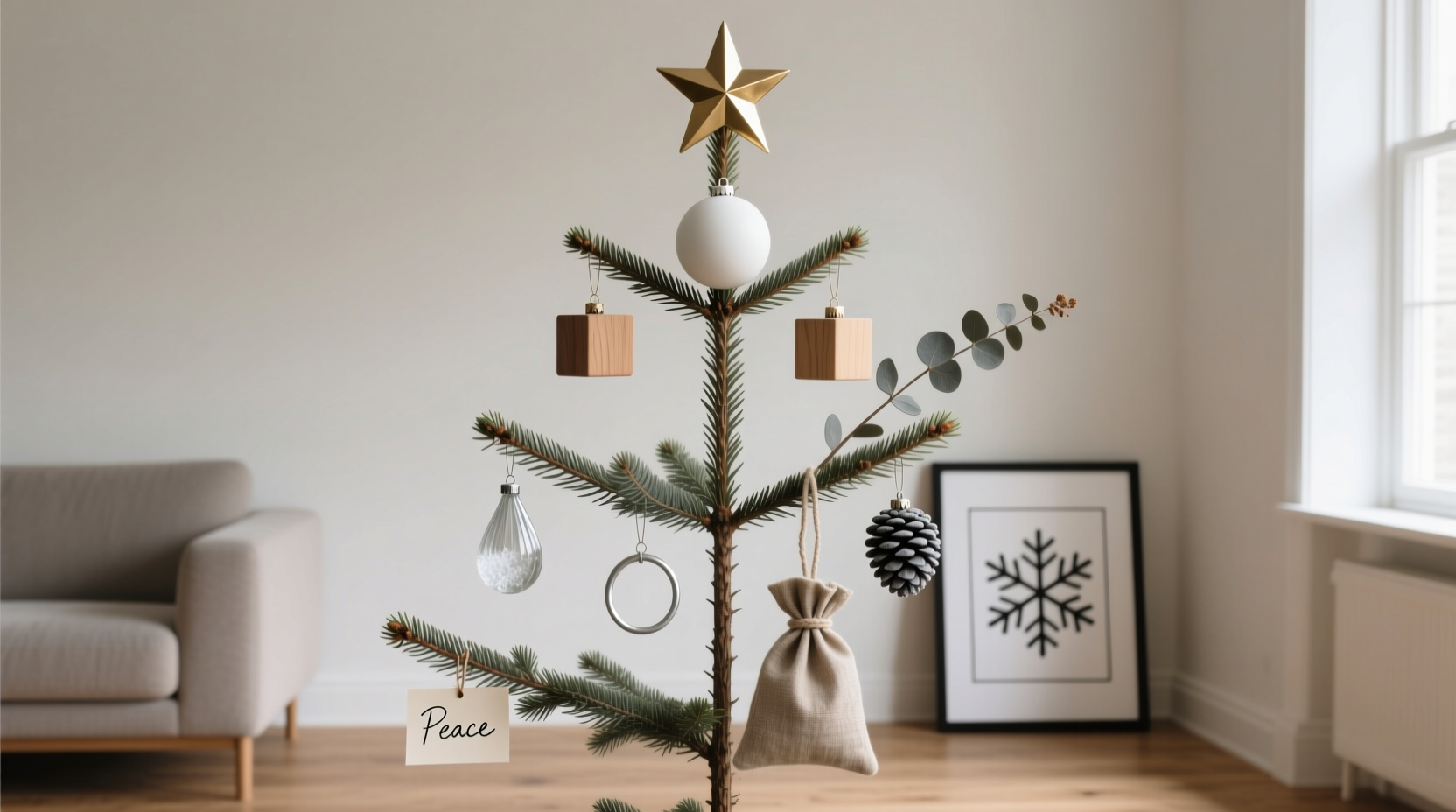
A minimalist Christmas tree is rooted in the principle of deliberate curation. Instead of filling every branch with color and sparkle, you choose only what truly matters. This isn’t minimalism as deprivation; it’s minimalism as clarity. The fewer the elements, the more attention each one receives. A single handmade glass ball becomes a focal point. A vintage star from your childhood glows with significance.
This practice aligns with broader lifestyle shifts—slow holidays, conscious consumption, and sustainable traditions. According to designer and author Emily Henderson, “When you reduce visual noise, you increase emotional resonance.” In a home already buzzing with activity, a serene tree can be an anchor of peace.
“Simplicity is not the absence of clutter, but the presence of purpose.” — Joshua Becker, minimalism advocate
By choosing only ten ornaments, you’re forced to ask: What do I want my tree to say? Is it about family heritage? Natural beauty? Spiritual symbolism? The answer shapes your selection process and elevates your tree from decoration to narrative.
Step-by-Step Guide to Building Your 10-Ornament Tree
Creating a minimalist tree requires planning, patience, and precision. Follow this sequence to ensure balance, harmony, and lasting impact.
- Choose your tree: Opt for a real or high-quality artificial tree with a natural shape. Avoid pre-lit trees with dense, uniform branches—they compete with ornaments. A sparse, asymmetrical silhouette allows each ornament to breathe.
- Set a theme or story: Decide on a guiding concept—family history, nature, faith, or travel memories. This will inform your ornament choices.
- Select a neutral palette: Stick to one or two dominant colors (e.g., white, gold, forest green) with subtle texture variation. Matte finishes feel more organic than glossy ones.
- Curate your ten ornaments: Pull out all your decorations and lay them out. Keep only those that align with your theme and evoke genuine emotion. Set aside everything else.
- Plan placement: Walk around your tree and visualize where each ornament will go. Aim for even distribution, avoiding clustering at the bottom.
- Hang with intention: Use soft ribbon or twine instead of plastic hooks. Position each ornament slowly, stepping back after each addition.
- Add ambient lighting: String warm-white fairy lights sparingly—about 50 bulbs for a 6-foot tree. Let them complement, not dominate.
- Top the tree mindfully: Choose a simple topper—a fabric star, wooden angel, or dried citrus wreath—that echoes your theme.
- Style the base: Wrap presents in kraft paper with linen ribbon, or place a woven basket beneath. Avoid flashy packaging.
- Live with it: Spend time near the tree daily. Notice how light changes its appearance. Let it inspire stillness.
The 10 Essential Ornaments: A Thoughtful Selection
Your ten ornaments should represent a mix of form, function, and feeling. They don’t need to match perfectly—but they should belong together. Here’s a suggested breakdown:
| Ornament Type | Purpose | Example |
|---|---|---|
| Heirloom Piece | Connects to family history | Grandmother’s hand-blown glass bell |
| Natural Element | Brings in organic texture | Dried orange slice on twine |
| Handmade Item | Reflects personal effort | Felt reindeer made with child’s help |
| Spiritual Symbol | Expresses faith or values | Simple wooden cross or Star of David |
| Memory Marker | Commemorates a milestone | Ornament from first Christmas together |
| Textural Ball | Adds depth and shadow | Linen-wrapped sphere |
| Metal Accent | Catches light subtly | Brushed brass teardrop |
| Seasonal Shape | Provides classic recognition | Mini pinecone with gold tip |
| Personal Token | Represents identity | Ornament shaped like a book or musical note |
| Finial Topper | Completes the vertical line | Hand-carved wooden star |
Note: The “topper” counts as one of your ten. It’s not an add-on. This constraint forces elegance. If your current star feels too large or flashy, replace it with something humble—a folded paper crane, a sprig of dried lavender tied with string.
Real Example: Sarah’s First Minimalist Tree
Sarah, a graphic designer from Portland, spent years assembling a densely decorated tree covered in themed sections—vintage, rustic, glittery, candy-themed. After her mother passed, she found herself dreading the unpacking ritual. “It felt like performance,” she said. “Like I was decorating for ghosts.”
Last year, she decided to try a 10-ornament tree. She kept only pieces that reminded her of her mother: a tiny knitted stocking, a silver dove engraved with “Peace,” and a red glass apple from their annual orchard trip. She added handmade clay stars made by her daughter, a brass moon from a favorite trip to Kyoto, and a sprig of preserved eucalyptus.
The result was transformative. “People didn’t swarm the tree asking, ‘Where’d you get this?’ They stood quietly. Some cried. My daughter said it felt ‘like magic.’ That’s what I wanted—the feeling, not the frenzy.”
Sarah now stores her other ornaments in labeled bins, rotating one or two into next year’s collection if they earn their place. “Ten isn’t a limit,” she says. “It’s a filter.”
Common Mistakes to Avoid
Even with good intentions, pitfalls can undermine a minimalist aesthetic. Watch for these missteps:
- Over-lighting: Too many bulbs drown out ornaments. Use warm, dimmable lights on a timer.
- Mismatched scale: One oversized ornament can unbalance the whole tree. Keep diameters within 2–3 inches of each other.
- Ignoring negative space: Empty branches are part of the design. Don’t treat them as “missing” spots.
- Forcing symmetry: Perfect left-right matching feels rigid. Aim for visual balance, not mirroring.
- Keeping “should” ornaments: “I should keep this because it was expensive” defeats the purpose. Sentiment > cost.
Checklist: Preparing Your 10-Ornament Tree
Use this checklist in the weeks before decorating:
- ☐ Define your theme (e.g., “quiet joy,” “forest calm,” “family roots”)
- ☐ Gather all ornaments and sort by emotion: keep, rotate, donate
- ☐ Select exactly ten—including the topper
- ☐ Test lights on your tree; remove excess strands
- ☐ Clean ornaments gently (use microfiber cloth, no chemicals)
- ☐ Choose natural hangers (ribbon, twine, leather cord)
- ☐ Plan placement: sketch or mentally map positions
- ☐ Decorate during daylight to see true color and shadow
- ☐ Style the base with neutral wrapping or a simple skirt
- ☐ Take a photo and live with it for 24 hours before final adjustments
FAQ
Can I change my ten ornaments each year?
Absolutely. The number is fixed, but the selections can evolve. This flexibility keeps the tradition alive and responsive to your life changes. Rotate in new memories and phase out what no longer resonates.
What if I have kids who want to add their crafts?
Incorporate their creations intentionally. One handmade piece per child fits within the ten-ornament framework. Frame it as honor, not limitation: “We choose your best work to display all season.” Store others in a memory box.
Isn’t this too austere for the holidays?
Minimalism isn’t cold—it’s focused. Many find this approach more emotionally rich than overloaded trees. The absence of clutter makes room for presence. Try it for one season; you may find the quiet more joyful than the noise.
Conclusion: Less Ornament, More Meaning
A minimalist Christmas tree with only ten essential ornaments is not a trend—it’s a statement. It says you value depth over dazzle, memory over mass production, peace over pressure. In a world that equates more with better, choosing less takes courage. But within that choice lies freedom: to celebrate authentically, to decorate with integrity, and to enjoy the season without exhaustion.
Your tree doesn’t need to impress visitors. It needs to speak to you. When you walk into the room and feel a sense of calm, when your child points and whispers, “It’s so pretty,” when you catch the light reflecting off a single glass ball—you’ll know you’ve created something rare: a holiday symbol that feels true.




 浙公网安备
33010002000092号
浙公网安备
33010002000092号 浙B2-20120091-4
Comments
No comments yet. Why don't you start the discussion?