
In today’s fast-paced world, even the smallest spaces can be optimized for maximum functionality. Nowhere is this more critical than in a small closet—often overlooked but essential to your daily routine. A cluttered closet doesn’t just waste space; it wastes time, energy, and peace of mind. The good news? With thoughtful planning and a few clever storage strategies, you can transform a cramped, chaotic closet into a streamlined, efficient system. This guide walks you through practical, proven methods to reclaim every inch of space and keep your wardrobe accessible and organized.
1. Assess and Declutter: Start with a Clean Slate
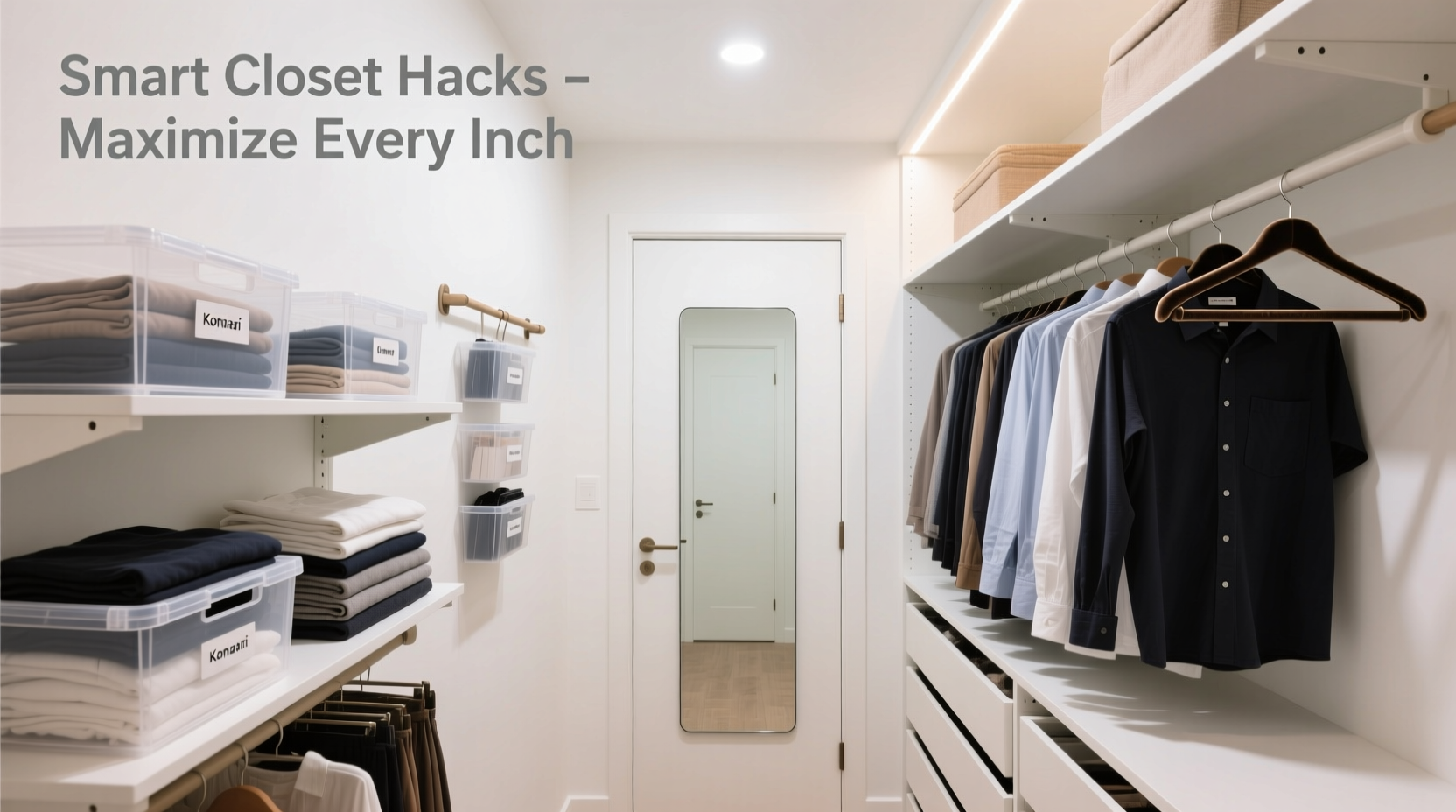
Before adding any organizational tools, begin by emptying your closet completely. This allows you to evaluate every item without blind spots. Lay everything out where you can see it—on your bed or floor—and sort items into four categories: keep, donate, repair, and discard.
Ask yourself these questions for each piece:
- Have I worn this in the past 12 months?
- Does it fit well and make me feel confident?
- Is it in good condition, or does it need mending?
- Does it align with my current lifestyle and wardrobe needs?
Be ruthless. Holding onto clothes “just in case” only takes up valuable real estate. According to Marie Kondo, author of *The Life-Changing Magic of Tidying Up*, “Keep only those things that speak to the heart.” If an item no longer serves you, let it go.
2. Optimize Vertical and Horizontal Space
Small closets often suffer from underutilized vertical space. Most people focus on the middle shelf and rod, leaving the top and bottom areas neglected. Here’s how to use every dimension effectively:
Use Double-Hang Rods
Install a second clothing rod below the primary one to create two levels of hanging space. This works especially well for shorter garments like shirts, blouses, skirts, and folded pants. You’ll instantly double your hanging capacity without expanding the footprint.
Maximize Shelf Height with Stackable Organizers
Standard shelves are often too tall for folded sweaters or jeans. Insert stackable bins or shelf dividers to prevent stacks from toppling and improve visibility. Clear plastic or fabric bins work best—they allow you to see contents while maintaining a clean look.
Leverage the Back of the Door
The inside of the closet door is prime real estate. Install an over-the-door organizer with pockets for accessories like scarves, belts, socks, or jewelry. For heavier items, consider a slim over-door rack designed for shoes or bags.
| Area | Storage Solution | Best For |
|---|---|---|
| Top Shelf | Clear labeled bins | Off-season clothing, luggage, memorabilia |
| Middle Rod | Uniform hangers + double hang | Dresses, jackets, long pants |
| Floor | Stackable shoe cubbies or pull-out trays | Shoes, handbags, bins |
| Back of Door | Pocket organizers or hooks | Accessories, robes, frequently used items |
| Under-Rod Space | Rolling drawers or low bins | Sweaters, loungewear, workout clothes |
“Efficiency in small spaces comes from using volume, not just floor area. Think upward, inward, and downward.” — Sarah Barnard, Sustainable Interior Designer
3. Choose the Right Hangers and Storage Tools
The type of hangers you use can dramatically affect both space and garment longevity. Wire hangers may be free, but they’re flimsy, take up more room, and can distort shoulders. Upgrade to slim, non-slip velvet hangers—they’re compact, prevent slipping, and create a uniform appearance.
For folded items, avoid piling clothes too high. Instead, use the KonMari folding method: fold garments into small rectangles that stand upright. This allows you to see every item at a glance and prevents stacks from collapsing.
Smart Storage Add-Ons
- Adjustable shelving: Customize shelf heights as your storage needs change.
- Pull-out baskets: Ideal for deep closets—bring hidden items forward.
- Shoe carousels: Rotate easily to access all pairs without digging.
- Modular cubes: Combine open and closed units for flexible organization.
4. Implement a Logical Zoning System
Efficient closets follow a logical flow based on frequency of use and category. Divide your closet into functional zones:
- Daily Wear Zone: Place near the front or center—easily accessible for workwear, casual outfits, or gym clothes.
- Seasonal Storage: Store off-season items in labeled bins on high shelves or under-bed containers.
- Special Occasion: Keep formal wear, dresses, or suits together, protected with garment bags.
- Accessories Hub: Designate one drawer or section for belts, ties, hats, and jewelry.
Arrange clothing within each zone by category, then by color. This creates visual harmony and makes outfit selection faster. For example, group all shirts together, then order them from white to black. The result is not just aesthetic—it reduces decision fatigue.
Real-Life Example: The Studio Apartment Closet Makeover
Jamie, a graphic designer living in a 500-square-foot studio, struggled with a shallow closet barely 3 feet wide. After removing 40% of her clothes (donating most), she installed a double-hang rod and added a slim over-the-door shoe rack. She used shelf dividers for folded knits and stored off-season pieces in vacuum-sealed bags under her bed. By adopting uniform hangers and organizing by frequency of use, she gained 70% more usable space and reduced morning dressing time by half.
5. Maintain Your System with a Simple Routine
An organized closet won’t stay that way without maintenance. Build habits that preserve order:
- Return misplaced items to their designated zones.
- Wipe down shelves and rods with a dry cloth.
- Check for stains or damage on stored garments.
- Rotate seasonal items as needed.
- Donate one item for every new clothing purchase.
Perform a deeper review every three months. This helps you adapt to changing seasons, lifestyle shifts, or evolving fashion preferences. It also prevents clutter from creeping back in unnoticed.
Avoid Common Organization Pitfalls
- Overbuying storage solutions: Start with what you have. Add organizers only after testing layouts.
- Ignoring accessibility: Don’t store daily items on high shelves or behind heavy boxes.
- Using mismatched containers: Uniform bins and labels create cohesion and make the system easier to follow.
- Skipping labeling: Even if you remember where things go now, others (or future you) might not.
“The most effective closet systems are simple, sustainable, and tailored to the user’s actual habits—not idealized versions of them.” — David King, Professional Organizer & Author of *Clutter-Free Mindset*
Frequently Asked Questions
Can I organize a small closet without buying anything?
Absolutely. Begin by decluttering and rearranging what you already own. Use cardboard boxes as temporary dividers, repurpose gift bags for drawer storage, and fold clothes vertically using the KonMari method. Many improvements cost nothing but time and intention.
How do I store bulky sweaters without stretching them?
Never hang heavy knits—they lose shape over time. Fold them neatly and store on a mid-level shelf. Use shelf dividers to prevent stacks from leaning. For long-term storage, place cedar blocks inside to deter moths, and avoid plastic bags, which trap moisture.
What’s the best way to organize shoes in a small closet?
Use vertical space wisely. Options include over-the-door shoe pockets, tiered shoe racks, or a rotating shoe carousel. If floor space is tight, consider under-shelf hanging organizers or wall-mounted racks. Limit everyday shoes to 8–10 pairs to avoid overcrowding.
Conclusion: Transform Your Closet, Transform Your Routine
A small closet doesn’t have to mean limited potential. With strategic planning, the right tools, and consistent habits, you can create a system that maximizes every inch and simplifies your day-to-day life. The key is to design around your actual usage patterns, not generic ideals. Whether you live in a studio apartment or just have a compact reach-in closet, efficiency is achievable through smart choices—from decluttering mindfully to leveraging vertical space and maintaining order with simple routines.
Start today: empty your closet, sort with purpose, and rebuild with intention. You don’t need a renovation or expensive upgrades—just clarity and consistency. Once your closet works for you, getting dressed becomes less of a chore and more of a joy.




 浙公网安备
33010002000092号
浙公网安备
33010002000092号 浙B2-20120091-4
Comments
No comments yet. Why don't you start the discussion?