
Living with a small closet doesn’t mean you have to live with clutter. With smart planning and the right tools, even the tiniest storage space can become highly functional. The best part? You don’t need to spend hundreds on organizing systems. In fact, nearly everything you need is available at your local dollar store—for a dollar or two. From repurposed bins to creative shelving tricks, this guide reveals how to transform a cramped, chaotic closet into a streamlined, efficient space using only affordable, accessible items.
Why Dollar Store Organizing Works
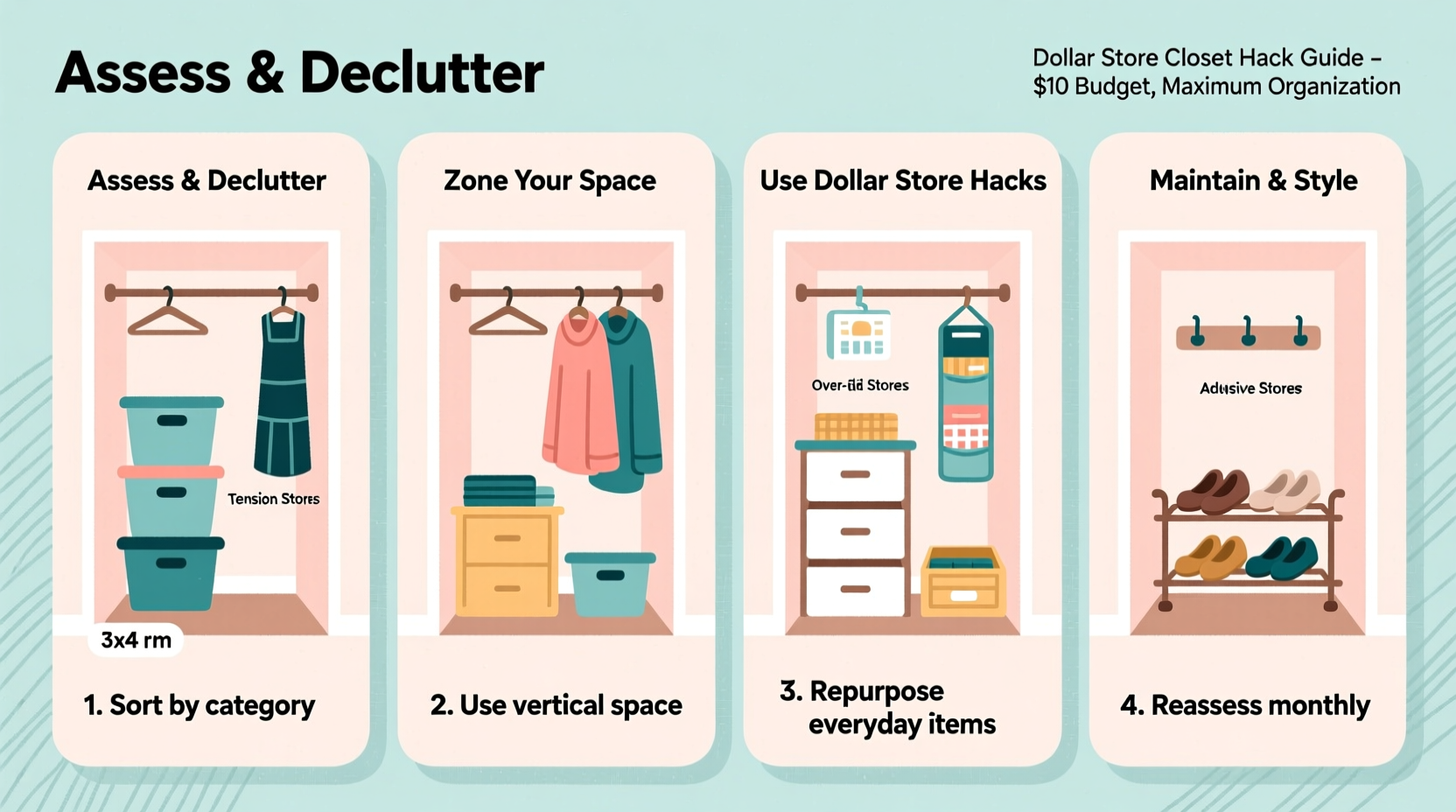
The misconception that effective organization requires expensive custom units is one of the biggest barriers to getting organized. In reality, many high-end closet systems rely on the same principles found in basic plastic bins, wire baskets, and adhesive hooks—all of which are staples at dollar stores. These stores stock surprisingly durable, versatile products that, when used creatively, can outperform pricier alternatives.
Dollar store items are especially ideal for renters, students, or anyone on a tight budget. They’re easy to replace, simple to install, and often modular—meaning they can be rearranged as your needs change. Plus, because they're low-cost, experimenting with different configurations carries no financial risk.
“Organization isn’t about having the most expensive tools—it’s about using what you have efficiently. A $1 bin used well beats a $50 organizer left unused.” — Lena Ruiz, Home Efficiency Consultant
Step-by-Step: Transform Your Closet in One Afternoon
Follow this realistic, time-efficient plan to reorganize your small closet from start to finish. The entire process can be completed in under three hours, using only dollar store supplies and common household tools.
- Empty the closet completely. Remove every item, placing clothes and accessories on your bed or nearby chair. This gives you a blank slate and forces you to evaluate what you actually own.
- Sort and declutter. Create four piles: Keep, Donate, Repair, Discard. Be ruthless—if you haven’t worn it in a year, let it go. Shoes without soles, stained shirts, and single socks belong in the discard pile.
- Measure your space. Use a tape measure (or ruler) to record the width, depth, and height of your closet. Note shelf spacing and rod placement. This ensures your dollar store purchases will fit.
- Visit the dollar store with a list. Focus on bins, baskets, drawer dividers, over-the-door organizers, and shelf risers. Stick to your list to avoid impulse buys.
- Install vertical and layered storage. Maximize unused air space with stackable bins and hanging solutions.
- Group like items together. Use labeled containers to separate categories: belts, scarves, workout gear, etc.
- Re-evaluate after one week. Adjust placements based on real usage. If something feels awkward, move it.
Clever Dollar Store Hacks That Save Space
The secret to maximizing a small closet lies not in buying more, but in using less space more intelligently. Below are seven proven dollar store hacks that deliver big organizational impact.
1. Turn Shoe Boxes into Drawer Dividers
Purchase plain cardboard shoe boxes (often sold for $1 each). Cut them down to size and line them up inside drawers to separate socks, underwear, or folded tees. Cover with wrapping paper or contact paper for a polished look.
2. Use Bins as Shelf Risers
Place shallow plastic bins on closet shelves and stack items on top of them. This creates a second layer of storage underneath, perfect for storing hats, bags, or off-season clothing.
3. Hang a Shoe Organizer for Accessories
Over-the-door shoe organizers aren’t just for shoes. Use the pockets to store scarves, sunglasses, jewelry, or even rolled-up belts. Clear pockets make contents visible at a glance.
4. Repurpose Ice Cube Trays for Jewelry
Small plastic ice cube trays are ideal for sorting rings, earrings, and studs. Mount them vertically inside the closet door using adhesive hooks or place them on a shelf for easy access.
5. Stackable Bins for Seasonal Rotation
Label three or four stackable bins: “Winter,” “Summer,” “Workout,” and “Special Occasion.” Rotate them seasonally and store off-season items on high shelves. Their uniform shape prevents wobbling.
6. Adhesive Hooks for Instant Hanging Space
Stick adhesive-backed hooks on the back of the closet door or side walls. Hang robes, necklaces, or frequently used bags. Choose heavy-duty versions rated for 5+ pounds.
7. Tension Rods for Double-Hanging
Install a short tension rod beneath your main clothing rod to create a second hanging tier. Ideal for folding pants in half and hanging by the cuff, effectively doubling hanging capacity.
Smart Storage Solutions: What to Buy and What to Skip
Not all dollar store items are created equal. Some offer excellent value; others are too flimsy to last. Use this guide to make informed choices.
| Item | Recommended? | Why | Better Alternative (if any) |
|---|---|---|---|
| Plastic stackable bins | Yes | Durable, clear, modular. Great for shelves and under-bed storage. | None—these are ideal. |
| Wire mesh baskets | Yes | Ventilated, sturdy, and perfect for shoes or towels. | Same quality found in big-box stores at 5x the price. |
| Fabric drawer cubes | Sometimes | Lightweight and collapsible, but fabric may sag over time. | Use only for low-weight items like scarves or pajamas. |
| Adhesive shelves | No | Often fail under modest weight; not suitable for long-term use. | Opt for tension rods or adjustable shelf kits instead. |
| Over-the-door organizers | Yes | Maximize unused door space. Look for ones with reinforced stitching. | Choose models with clear pockets for visibility. |
| Plastic hangers | No | Thin, break easily, and stretch collars. Avoid at all costs. | Keep existing wooden or velvet hangers; buy replacements elsewhere. |
Real-Life Example: Maria’s 4x2-Foot Closet Makeover
Maria, a teacher living in a studio apartment in Chicago, struggled with a shallow closet barely wide enough for her wardrobe. Her clothes were crammed together, shoes piled on the floor, and accessories tangled in a drawer. She set a goal: organize the space for under $15 using only dollar store items.
She began by removing everything and donating over half her clothes. Then, she bought: two over-the-door shoe organizers ($2), three stackable bins ($3), a pack of adhesive hooks ($1), a tension rod ($1), and two ice cube trays ($1). She installed the shoe organizer on the door for scarves and belts, used bins on shelves for sweaters and gym clothes, hung the tension rod below the main bar to double-hang pants, and mounted ice cube trays inside the door for earrings.
The result? Every item had a designated spot. She gained 40% more usable space and could see everything at a glance. Total cost: $13. “I thought I needed a renovation,” Maria said. “Turns out, I just needed ten bucks and an afternoon.”
Essential Checklist: Dollar Store Closet Organization
Before heading to the store, print or memorize this checklist to stay focused and effective.
- ✅ Empty and clean the closet
- ✅ Sort and donate unneeded items
- ✅ Measure shelf height, width, and depth
- ✅ Buy 2–3 stackable bins (clear preferred)
- ✅ Purchase an over-the-door organizer (shoe or pocket style)
- ✅ Grab adhesive hooks (heavy-duty if possible)
- ✅ Pick up a tension rod (adjustable, 18–24 inch)
- ✅ Get small containers for accessories (ice trays, pill organizers)
- ✅ Label all bins with tape or sticky labels
- ✅ Test accessibility after setup
Frequently Asked Questions
Can dollar store organizers really last?
Yes—when used appropriately. Plastic bins and wire baskets from reputable dollar chains (like Dollar Tree, Family Dollar, or Dollar General) are made from thick, durable materials. Avoid overloading thin plastic containers, and they’ll last years. For high-use areas, reinforce with cardboard or foam board inserts.
What if my closet has no shelves or rods?
You can still organize effectively. Use freestanding racks (sometimes available at dollar stores during moving season) or stack bins directly on the floor. Hang a portable clothing rack in front of the closet opening if needed. Focus on containment: even floor-stacked bins beat loose piles.
How do I keep things looking cohesive on a budget?
Uniformity creates visual calm. Stick to one color of bins (white, black, or clear) and use matching labels. Decorative contact paper or washi tape can unify mismatched containers. Grouping similar items—like all black pants together—also enhances order.
Final Thoughts: Small Space, Big Impact
A small closet doesn’t have to limit your lifestyle. With thoughtful planning and resourceful use of affordable tools, you can create a system that’s both functional and sustainable. The dollar store isn’t just a place to grab party favors—it’s a goldmine for practical organizing solutions. By focusing on versatility, modularity, and smart placement, you can achieve a closet that works smarter, not harder.
Start today. Empty that closet. Visit your nearest dollar store with purpose. Apply these hacks one at a time. You’ll be surprised how much control and clarity come from simply knowing where everything belongs.




 浙公网安备
33010002000092号
浙公网安备
33010002000092号 浙B2-20120091-4
Comments
No comments yet. Why don't you start the discussion?