
In compact living spaces, every inch counts—especially in the wardrobe. A small closet with double hanging rods and storage bins offers great potential, but only if used wisely. Too often, these closets become overcrowded, disorganized, and frustrating to navigate. The key lies not just in what you have, but how you use it. By combining strategic layout planning, smart categorization, and thoughtful product choices, even the tiniest closet can function like a high-end dressing room. This guide walks through proven methods to transform your small double-hang closet into an efficient, accessible, and visually calming storage system using bins and vertical space to full advantage.
Assess Your Space and Inventory
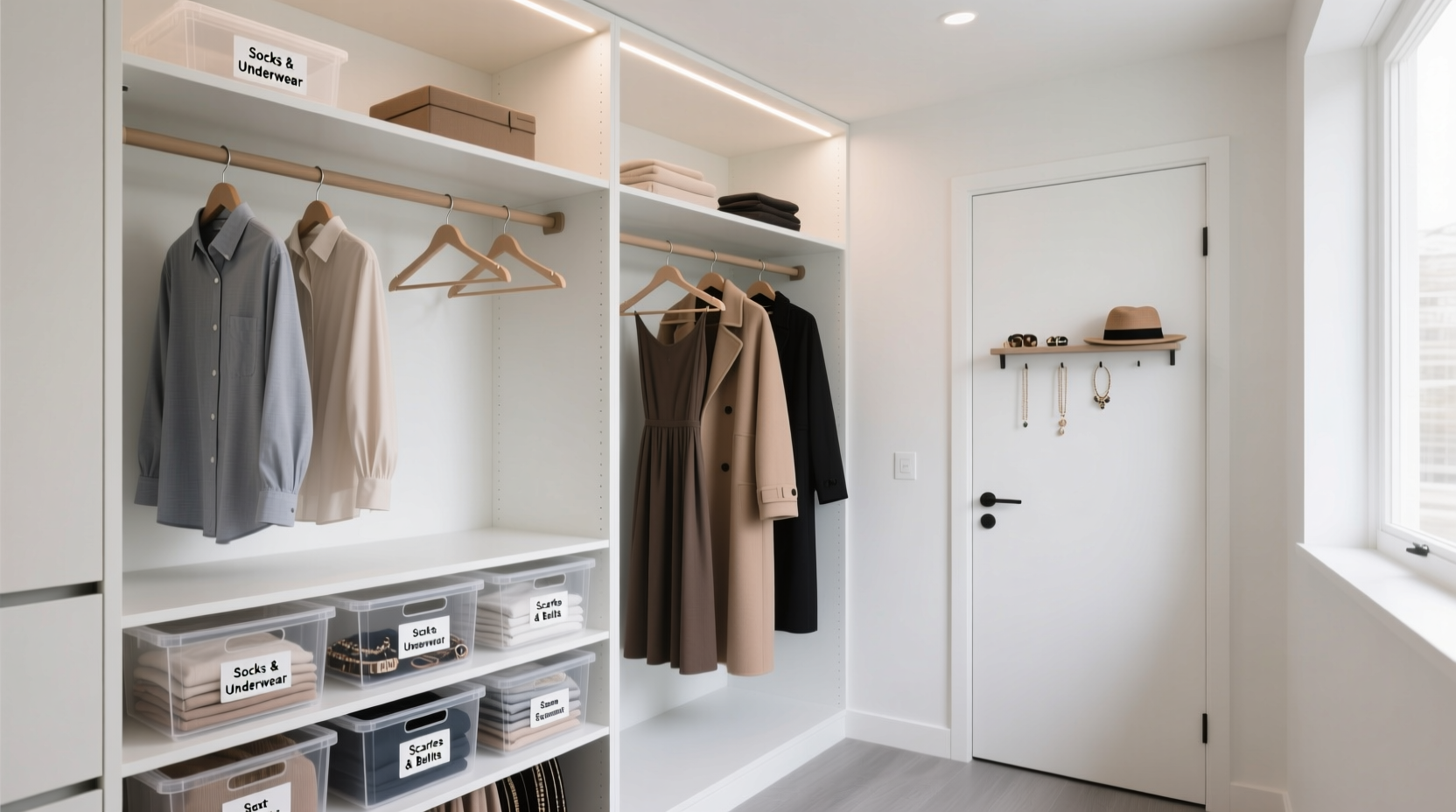
Before making any changes, take stock of both your physical closet dimensions and the contents inside. Measure the height between the upper and lower hanging rods, the depth of the closet, and the available shelf or floor space. Note where obstructions like doors, vents, or baseboards limit usability.
Then, remove everything from the closet. Sort items into categories: tops, pants, dresses, outerwear, off-season clothing, accessories, and shoes. As you sort, be ruthless—discard or donate anything unworn in the past year, ill-fitting, or damaged beyond repair. Reducing clutter is the first step toward sustainable organization.
A common mistake is organizing without understanding usage frequency. Label three boxes: “Daily Wear,” “Occasional Use,” and “Seasonal/Storage.” Place each item in one. This will inform where things should go—frequently worn pieces deserve prime real estate.
Optimize Double Hanging Rods by Function
The double-hang feature is ideal for maximizing vertical space, but only if configured correctly. Most prefab closets place the top rod at 80 inches and the bottom at 40 inches above the floor—a setup better suited for children’s clothing or very short garments. Adults need adjustments.
Reconfigure the rods based on garment length. For example:
- Top rod (72–75 inches high): Reserve for longer items like dresses, coats, and dress pants.
- Bottom rod (40–44 inches high): Use for shirts, blouses, skirts, and folded jeans hung by the waistband.
If adjustable, lower the top rod slightly to gain usable space beneath. Alternatively, install a tension rod underneath the existing lower rod to hang scarves, ties, or lightweight cardigans—effectively creating a third tier without permanent modification.
Use slim, non-slip hangers uniformly throughout. Velvet-flocked or wooden hangers prevent slipping and save space compared to plastic or wire versions. Group similar items together—workwear on one side, casual on the other—and arrange by color within each category for visual clarity and faster selection.
“Double hanging only works when the zones are purpose-built. Mixing long and short garments defeats the point.” — Lena Torres, Residential Organizer & Closet Design Consultant
Create Smart Bin Zones for Non-Hangables
Folded items like sweaters, t-shirts, socks, and undergarments belong in bins—not stacked directly on shelves. Bins protect fabric from dust, prevent toppling stacks, and allow for modular reconfiguration as needs change.
Choose clear-front or labeled bins so contents are visible at a glance. Opt for stackable, shallow containers (6–8 inches deep) to avoid digging through layers. Deep bins encourage disorder.
Divide bin usage by function:
| Bin Location | Ideal Contents | Container Type |
|---|---|---|
| Upper Shelf | Bags, hats, off-season items | Rigid, lidded bins |
| Middle Shelf / Drawer-Level | T-shirts, sweaters, loungewear | Open-top fabric bins |
| Lower Shelf / Floor | Shoes, gym clothes, rolled belts | Ventilated or canvas bins |
| Door-Mounted | Socks, underwear, accessories | Slotted organizers or pocket panels |
For delicate knits, fold them over padded dividers or store flat in bins with acid-free tissue paper to prevent stretching. Avoid vacuum-sealing natural fibers like wool or cashmere—they need airflow to maintain integrity.
Step-by-Step: Transform Your Closet in One Afternoon
You don’t need days to reorganize. Follow this realistic, time-bound plan to complete the overhaul efficiently:
- Hour 1: Empty & Evaluate (30 min)
Remove all items. Wipe down shelves, rods, and baseboards. Check for loose screws or sagging hardware. - Hour 1: Sort & Purge (30 min)
Sort clothes into categories and discard what no longer serves you. Donate in a single bag to avoid second-guessing. - Hour 2: Adjust Hardware (20 min)
Reposition hanging rods if possible. Install additional supports or tension rods. Add shelf dividers or bin brackets. - Hour 2: Hang Core Wardrobe (40 min)
Hang frequently used items first. Group by type and color. Use consistent hangers. - Hour 3: Deploy Bins Strategically (30 min)
Place labeled bins on shelves. Fold clothes vertically (KonMari-style) for visibility. - Hour 3: Final Touches (30 min)
Add lighting (battery-powered LED strip), mirror, or scent diffuser. Test accessibility of all zones.
This sequence ensures progress without overwhelm. By the end, you’ll have a functional, aesthetically coherent closet that reflects your actual lifestyle.
Real-Life Example: From Chaos to Calm in a Studio Apartment
Jamie, a graphic designer living in a 450-square-foot studio in Seattle, struggled with a narrow reach-in closet measuring just 4 feet wide and 2 feet deep. The factory-installed double rods were poorly spaced—one too high, the other too low—forcing her to stack sweaters on the lower rod, which bent under weight.
She lowered the upper rod by 6 inches and raised the lower one by 4 inches, creating balanced zones. She replaced bulky plastic hangers with slim velvet ones, instantly freeing up 30% more rail space. On the now-accessible middle shelf, she added three open fabric bins: one for tees, one for hoodies, and one for pajamas—all folded vertically.
Shoes went into breathable canvas cubbies on the floor, while off-season boots and winter scarves were stored in clear lidded bins atop the upper shelf. A door-mounted organizer held sunglasses and charging cables. The result? Jamie regained 11 linear inches of hanging space and reduced morning outfit decisions from 15 minutes to under 3.
Avoid These Common Mistakes
Even well-intentioned efforts can backfire. Watch out for these pitfalls:
- Overfilling bins: When containers are stuffed, they lose structural integrity and become hard to access.
- Mixing hanging lengths: Hanging short shirts above long dresses wastes space and creates tangles.
- Ignoring weight distribution: Heavy sweaters on flimsy shelves cause sagging. Reinforce weak areas with plywood backing.
- Skipping labels: Without clear identification, bins become “black holes” where items vanish.
- Forgetting airflow: Sealing natural fabrics in airtight containers invites mildew. Allow breathing room.
Also, resist the urge to buy organizing products before assessing needs. Many people purchase stackable drawers or shoe racks that don’t fit their closet depth, leading to wasted money and clutter.
Essential Checklist for a Smarter Small Closet
Use this checklist to ensure no detail is missed during your reorganization:
- ✅ Measure closet dimensions (height, width, depth)
- ✅ Remove all contents and clean interior surfaces
- ✅ Declutter ruthlessly—donate or discard unused items
- ✅ Reconfigure hanging rods for optimal garment clearance
- ✅ Replace old hangers with uniform, space-saving styles
- ✅ Purchase bins in varied depths and transparency levels
- ✅ Label every bin clearly (use removable labels for flexibility)
- ✅ Fold clothes vertically for visibility and easy access
- ✅ Reserve prime space (eye-level, near front) for daily-use items
- ✅ Add supplemental lighting if interior is dark
- ✅ Install door or side organizers for small accessories
- ✅ Test functionality: Can you reach top shelves safely? Do doors close?
Frequently Asked Questions
Can I add double hanging to a closet that only has single rod?
Yes, provided there's enough vertical clearance (at least 70 inches). You can install a second rod below the existing one using wall brackets or a drop-down kit. Ensure studs or toggle bolts support the weight, especially if hanging heavy coats.
What’s the best way to store jeans in a small closet?
Hang jeans by the waistband to preserve shape and prevent creasing. If folding, use bins with dividers and store them vertically. Avoid stacking more than five pairs high to prevent slumping.
How do I keep bins from sliding on smooth shelves?
Line the bottom of bins with non-slip shelf liner or adhesive rubber pads. Alternatively, choose bins with textured bases or built-in grippers.
Conclusion: Turn Constraints Into Strengths
A small closet isn’t a limitation—it’s an invitation to design with intention. With double hanging rods and bins, you have the tools to create a system that’s efficient, sustainable, and tailored to your life. The goal isn’t perfection, but consistency: a closet that makes getting dressed easier, not harder. When your space reflects clarity and purpose, it reduces decision fatigue and elevates everyday routines.




 浙公网安备
33010002000092号
浙公网安备
33010002000092号 浙B2-20120091-4
Comments
No comments yet. Why don't you start the discussion?