
A cluttered, cramped closet doesn’t just make mornings chaotic—it wastes valuable space you already don’t have. The good news? You don’t need a renovation or extra square footage to transform your small closet into a highly functional storage hub. With strategic planning and efficient techniques, it’s entirely possible to double your usable storage space in under 60 minutes. This guide walks you through actionable steps, proven organization principles, and real-world-tested solutions that deliver immediate results—no professional help required.
Assess Your Current Closet Layout
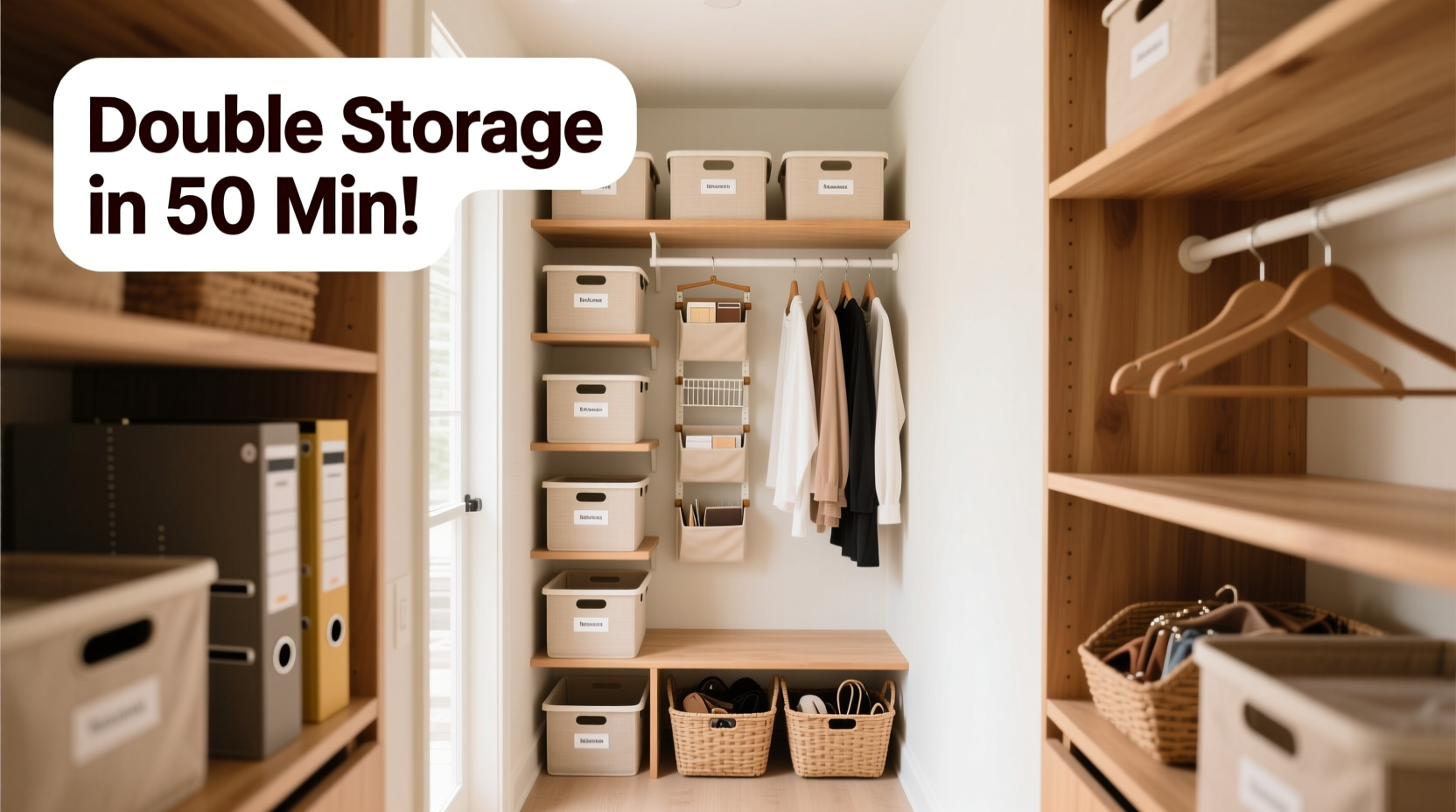
Before making any changes, take stock of what you’re working with. Most standard reach-in closets measure between 6 to 8 feet wide and 24 inches deep. Despite their modest size, they often operate at less than half capacity due to inefficient use of vertical space, poor categorization, and overstuffing.
Begin by removing everything from the closet. Yes, everything. This gives you a blank slate and forces you to evaluate each item critically. As you pull items out, sort them into three piles: keep, donate/sell, and discard. Be ruthless—anything unworn for over a year, ill-fitting, or damaged beyond repair should go.
Once cleared, measure your closet’s dimensions. Note shelf heights, rod placement, and any dead zones—like the area above the top shelf or behind the door. These are prime targets for reclaiming storage.
Maximize Vertical Space Strategically
The most underutilized dimension in small closets is vertical space. Standard single-hang rods leave nearly two feet of air above them—space that can be converted into organized storage with minimal effort.
- Add a second hanging rod below the primary one – Ideal for shorter garments like shirts, blouses, or children’s clothing. This creates a double-hang system without structural changes.
- Install stackable shelving units – Adjustable cube shelves fit snugly on closet floors and allow for folded items, shoes, or bins. Choose open designs to maintain visibility.
- Use the top shelf for off-season storage – Rotate clothes twice a year and store off-season items in labeled, breathable bins. Vacuum-sealed bags save space but can damage fabrics over time; opt for fabric-covered bins instead.
| Storage Zone | Ideal For | Avoid Storing Here |
|---|---|---|
| Top Shelf (Above Eye Level) | Off-season clothes, luggage, memorabilia | Daily-use items, heavy objects |
| Middle Shelf (Eye to Waist Level) | Folded sweaters, jeans, accessories | Items you rarely access |
| Floor Space | Shoes, bins, rolling organizers | Loose piles, overflow laundry |
| Behind Door | Hats, scarves, jewelry, belts | Bulky items that block closure |
Vertical stacking isn’t limited to shelves. Hanging organizers with multiple pockets can hold t-shirts, underwear, or workout gear and take up zero floor space. Look for models designed specifically for closet doors or mounted rails.
Step-by-Step: Transform Your Closet in Under 60 Minutes
This timeline assumes you’ve already removed all contents and completed your initial purge. If not, add 15–20 minutes for sorting.
- Minute 0–10: Reconfigure hanging rods and shelves
Lower the existing rod if adjustable, or install a second lower rod using affordable tension rods or bracket extensions. Reposition shelves to create taller compartments for bins or folded stacks. - Minute 10–20: Install door and wall organizers
Mount an over-the-door rack with clear pockets for small items. Attach adhesive hooks or slim rails on side walls for belts, robes, or frequently worn jackets. - Minute 20–35: Sort and fold remaining clothes
Use the KonMari folding method: fold clothes into compact rectangles that stand upright in drawers or bins. This maximizes visibility and prevents pile collapse. - Minute 35–50: Assign zones and place storage solutions
Create designated areas: tops, bottoms, activewear, accessories. Place labeled bins or baskets in each zone. Use risers under hanging clothes to store folded items beneath. - Minute 50–60: Finalize and test accessibility
Hang frequently used items at eye level. Store seasonal or occasional pieces higher or deeper. Close and reopen the door to ensure nothing blocks it. Step back and assess flow.
Real Example: Sarah’s 5x3 Foot Closet Makeover
Sarah, a graphic designer living in a downtown studio apartment, struggled with a shallow 5-foot-wide closet that overflowed with clothes, shoes, and bags. She wore only 40% of her wardrobe regularly but had no room to breathe. After spending 55 minutes following this system, she doubled her effective storage.
She installed a second hanging rod 18 inches below the original, dedicating the upper tier to dresses and coats, and the lower to blouses and slacks. A fabric over-the-door organizer held scarves and socks. Stackable bins on the floor stored workout clothes and pajamas. The top shelf now holds two labeled bins: “Winter Layers” and “Travel Essentials.”
“I can actually see everything now,” Sarah said. “I’m not pulling things off hangers or digging through piles. Getting dressed takes half the time.”
Her closet didn’t grow larger—but its functionality did. By reorganizing vertically and zoning categories, she freed up space equivalent to adding a second small closet.
Essential Tools and Products That Multiply Storage
You don’t need expensive systems to achieve dramatic results. The right tools—many under $20—can significantly boost capacity.
- Sliding Double-Hang Rods – Extend existing rod length and add a second tier without drilling. Perfect for maximizing depth.
- Adjustable Shelf Dividers – Keep folded stacks upright and prevent toppling, especially useful for towels or sweaters.
- Shoe Cubbies or Heel Hangers – Store shoes vertically or hang them from the rod to free floor space.
- Label Maker or Chalkboard Tags – Labels reduce decision fatigue and keep systems sustainable long-term.
- Non-Slip Hangers – Thin, contoured velvet hangers prevent slippage and save up to 50% more space than bulky plastic or wire versions.
“Small closets aren’t a storage problem—they’re a design challenge. The solution lies in layering storage vertically and horizontally without sacrificing accessibility.” — Lena Torres, Certified Home Organizing Specialist (CHOS)
Common Mistakes That Waste Closet Space
Even well-intentioned efforts can backfire if common pitfalls aren’t avoided. Watch out for these space-wasting habits:
- Using mismatched hangers – Bulky hangers increase spacing needs and create visual clutter. Stick to uniform, slimline options.
- Overfilling shelves or rods – Crowded spaces make it hard to see or retrieve items, leading to forgotten clothes and repeated purchases.
- Ignoring depth – Many closets are 24 inches deep, but single rods only use half that. Use shelf risers or under-hang bins to utilize the full depth.
- Storing items out of sight, out of mind – Just because something fits on the top shelf doesn’t mean it should go there. Reserve high spaces for truly seasonal or rare-use items.
Checklist: Quick Closet Organization in Under an Hour
Follow this concise checklist to stay on track and complete your transformation efficiently:
- ☐ Remove all items from the closet
- ☐ Sort into keep, donate, discard piles
- ☐ Measure closet dimensions and identify dead zones
- ☐ Install second hanging rod or shelf riser
- ☐ Mount over-the-door or wall organizer
- ☐ Fold clothes using upright method (KonMari-style)
- ☐ Group like items into zones (tops, pants, accessories)
- ☐ Label bins and baskets clearly
- ☐ Store off-season items on high shelf in breathable containers
- ☐ Test door swing and accessibility of all items
FAQ: Common Questions About Small Closet Organization
Can I double my storage without buying anything?
Yes—rearranging existing items strategically can yield significant gains. Start by re-folding clothes vertically, grouping by category, and using empty space above rods or under hanging clothes. Even without new tools, better organization creates perceived and functional doubling of usable space.
What’s the best way to store shoes in a small closet?
Use heel hangers that clip onto the rod, stackable shoe cubbies, or angled shelves on the floor. Avoid loose piles. If floor space is limited, consider storing daily shoes outside the closet (e.g., under a bench) and rotating seasonal pairs in and out.
How do I keep my closet organized long-term?
Adopt a “one in, one out” rule: when you buy a new clothing item, remove an old one. Perform a quick 10-minute refresh weekly—straighten hangers, return misplaced items, and reassess zones. Labeling and consistent categorization make maintenance effortless.
Conclusion: Transform Clutter Into Clarity Today
A small closet doesn’t have to mean limited storage. With focused effort and intelligent organization, you can unlock hidden capacity and create a system that works smarter, not harder. The techniques outlined here—vertical layering, strategic zoning, and smart product use—deliver real results in under an hour. No construction, no cost overload, just immediate improvement.
Start today. Clear the space, follow the steps, and experience the difference. Once you see how much more your closet can hold—and how much faster you can find what you need—you’ll wonder why you waited so long. A well-organized closet isn’t a luxury; it’s a daily win that simplifies your life, one outfit at a time.




 浙公网安备
33010002000092号
浙公网安备
33010002000092号 浙B2-20120091-4
Comments
No comments yet. Why don't you start the discussion?