
In an era where space is limited and decision fatigue is real, mastering the art of minimalist dressing isn’t just stylish—it’s strategic. A small closet doesn’t mean sacrificing variety or personal expression. In fact, by curating exactly 10 high-functioning, interchangeable pieces, you can create dozens of outfits while maintaining clarity, ease, and intentionality in your daily routine. This approach is not about deprivation but precision: selecting garments that work across seasons, occasions, and body types, all while fitting neatly into compact storage.
The foundation of this system lies in versatility, cohesion, and thoughtful organization. Whether you live in a studio apartment, travel frequently, or simply want to reduce wardrobe overwhelm, a 10-item closet offers freedom through simplicity. Below, we break down how to build, maintain, and style such a closet—efficiently and elegantly.
Selecting the 10 Core Items
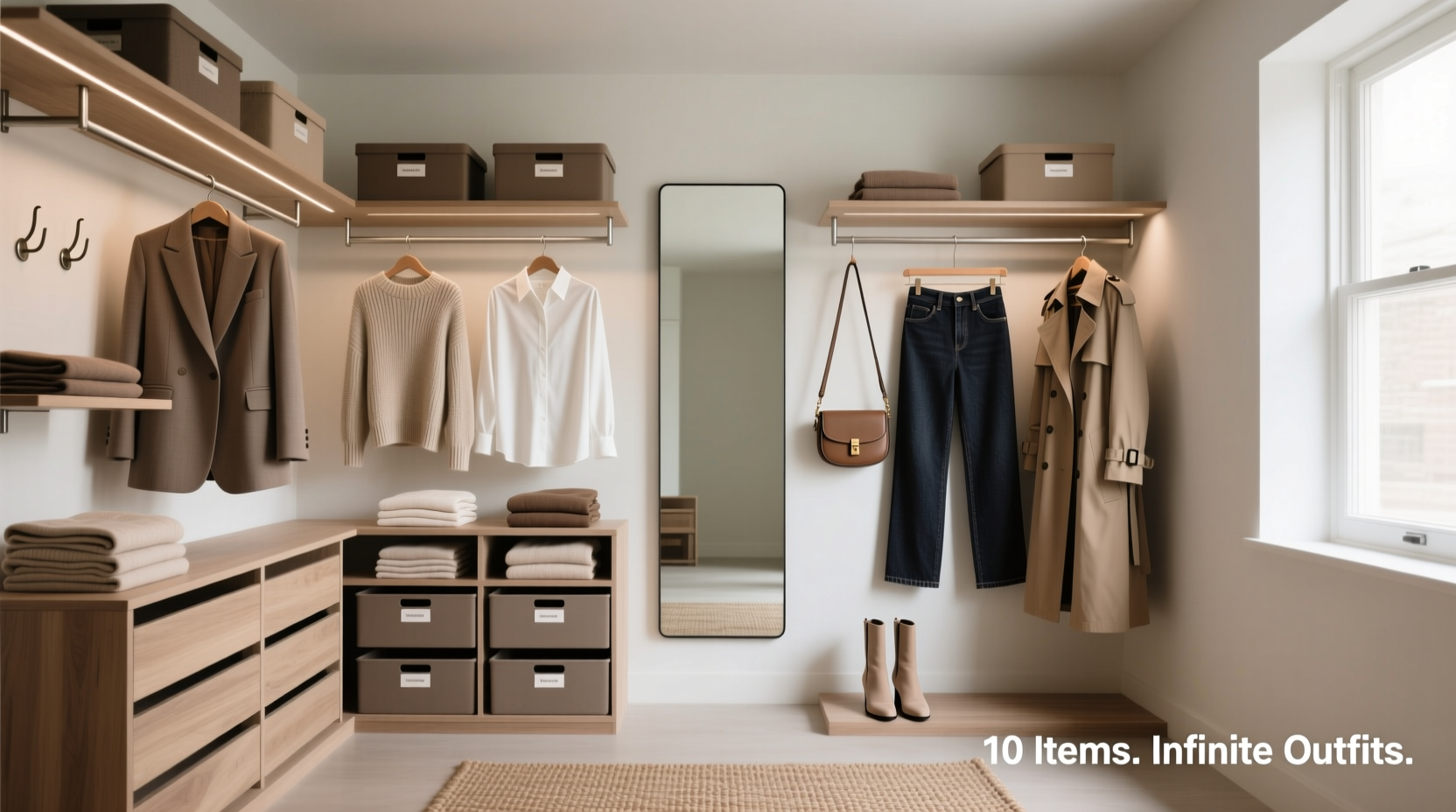
The success of a minimalist closet hinges on choosing pieces that serve multiple roles. Each item should pair well with at least three others and transition seamlessly from day to night, casual to semi-formal. The goal is cohesion through color, fabric, and cut.
Begin by defining a neutral base palette—typically shades of black, gray, navy, beige, or white—that allows for effortless mixing. Then, introduce one or two subtle accent tones (like olive green or burgundy) if desired, ensuring they complement the base. Avoid loud patterns or highly seasonal fabrics unless they are irreplaceable staples.
Here’s a sample framework for the 10 items:
- Dark wash straight-leg jeans
- Tailored navy blazer
- White button-down shirt
- Black turtleneck sweater
- Gray wool trousers
- Navy sheath dress
- Beige trench coat
- Black ankle boots
- White sneakers
- Belted midi skirt (in charcoal or camel)
Each piece serves more than one function. For example, the white shirt works under the blazer for workwear, tied over the turtleneck for weekend layers, or tucked into the skirt for dinner. The trench coat protects in rain and elevates any look with structure.
Maximizing Outfit Combinations
With 10 well-chosen pieces, the number of potential combinations exceeds expectations. Using basic pairing logic, even conservative estimates yield over 30 distinct outfits. The key is layering and accessory rotation—even without including accessories in the core 10, their addition dramatically expands options.
Consider these real-world combinations:
- Workday Look: Gray trousers + white shirt + blazer + ankle boots
- Casual Weekend: Jeans + turtleneck + sneakers
- Dinner Out: Sheath dress + trench coat + ankle boots
- Smart-Casual Office: Skirt + white shirt + blazer
- Travel Day: Jeans + turtleneck + trench + sneakers
By rotating outer layers and footwear, the same base garments take on entirely new identities. The blazer instantly formalizes jeans; the trench adds polish to a simple dress.
| Base Item | Style Options | Occasions Served |
|---|---|---|
| White Button-Down | Tucked, untucked, layered, knotted | Work, casual, travel, evening |
| Navy Blazer | Over dress, over tee, solo with jeans | Professional, smart-casual, transitional |
| Black Turtleneck | Under shirts, alone, with skirt or pants | Winter wear, layering, minimalist chic |
| Ankle Boots | With trousers, dress, jeans, skirt | All-season (with appropriate socks) |
This table illustrates how each item transcends single-use limitations. Versatility isn’t accidental—it’s engineered through design and intention.
Step-by-Step: Building Your 10-Item Closet
Transitioning to a minimalist wardrobe requires planning and honesty about your lifestyle. Follow this timeline to build your capsule effectively:
- Week 1: Audit Your Current Wardrobe
Remove everything from your closet. Try on each piece. Keep only those that fit well, make you feel confident, and align with your current life (e.g., remote work vs. office). - Week 2: Define Your Style & Needs
List your top five daily scenarios (e.g., working from home, meetings, errands, social events). Identify gaps in functionality. - Week 3: Choose Your Color Palette
Select 3–4 coordinating neutrals. Stick to them. This ensures every kept item can mix freely. - Week 4: Select the 10 Pieces
Pick items that cover all bases: tops, bottoms, dresses, outerwear, shoes. Prioritize natural fibers like cotton, wool, and silk for durability and breathability. - Ongoing: Rotate Seasonally (Optional)
If climate demands it, swap one or two items per season—e.g., replace ankle boots with sandals—but keep the structure intact.
Real Example: Maria’s Studio Apartment Makeover
Maria, a freelance designer living in a 400-square-foot Brooklyn studio, struggled with closet overflow despite rarely wearing half her clothes. After adopting the 10-item rule, she pared down to:
- High-waisted black trousers
- Light denim jacket
- Striped Breton top
- Black slip dress
- Beige cardigan
- White tank (x2 for rotation)
- Gray midi skirt
- Blazer (tweed, neutral brown)
- Loafers
- Slip-on mules
Within two weeks, she reported spending less time choosing outfits and receiving more compliments. Her go-to combination—Breton top + black trousers + loafers—became her signature look. The slip dress doubled as a layering piece under the cardigan for cooler days. By focusing on quality over quantity, Maria freed up drawer space and mental energy.
“Minimalism in fashion isn’t about having less. It’s about making what you have matter more.” — Dana Thomas, author of *Fashionopolis*
Common Pitfalls to Avoid
Even with the best intentions, common mistakes can derail a minimalist closet. Awareness is the first step to prevention.
- Keeping ‘Maybe’ Items: If you haven’t worn it in six months, let it go. Sentiment has its place, but not in a functional capsule wardrobe.
- Ignoring Fit: A perfectly versatile item fails if it doesn’t fit well. Invest in tailoring if needed.
- Forgetting Care Routines: High-use items require maintenance. Wash gently, store properly, and repair early.
- Overestimating Versatility: Just because something is neutral doesn’t mean it pairs easily. Test combinations before finalizing.
One frequent error is treating shoes as afterthoughts. Footwear defines the tone of an outfit. Two pairs—one polished, one casual—are sufficient, but they must be comfortable and complementary to all lower garments.
Frequently Asked Questions
Can I really live with only 10 clothing items?
Yes—especially when thoughtfully selected. These 10 are not your entire wardrobe but your core rotation. Undergarments, sleepwear, workout clothes, and seasonal extremes (like a winter parka) are separate. The 10-item rule applies to visible, interchangeable clothing used regularly.
What if my job requires varied attire?
The system adapts. For corporate environments, emphasize tailored separates (blazer, trousers, blouses). For creative fields, lean into expressive textures and silhouettes within a cohesive palette. The principle remains: maximize mix-and-match potential.
How do I handle laundry with so few items?
Rotate items strategically. Wear each piece once, then launder. Natural fibers like wool resist odors and need less washing. Having duplicates of high-rotation basics (like tanks or tees) extends wear cycles without breaking the 10-item limit.
Checklist: Launch Your 10-Item Closet
- Empty your closet completely
- Sort items into Keep, Donate, Maybe
- Try on each potential keep item
- Define your primary color scheme
- Select 10 pieces that mix well
- Test at least five outfit combinations
- Store remaining clothes out of sight
- Create a cleaning and rotation schedule
- Reassess after 30 days
This checklist ensures you don’t skip critical steps. Clarity comes from process, not impulse.
Conclusion: Embrace Simplicity, Gain Freedom
A small closet organized around 10 versatile items is more than a space-saving hack—it’s a mindset shift. It replaces indecision with confidence, clutter with calm, and consumption with curation. You’re not limiting your style; you’re refining it.
Every garment earns its place by serving multiple roles, enduring repeated wear, and aligning with your authentic self. The result? Faster mornings, fewer laundry loads, and a deeper connection to what you wear.




 浙公网安备
33010002000092号
浙公网安备
33010002000092号 浙B2-20120091-4
Comments
No comments yet. Why don't you start the discussion?