
Living with limited space doesn’t mean sacrificing style or functionality. In fact, some of the most efficient and visually pleasing closets are also the smallest. The secret? Smart organization—and surprisingly, many of the best tools don’t come from high-end home brands. They’re found at your local dollar store. With just a few strategic purchases and a bit of planning, you can transform even the tiniest, most overstuffed closet into a streamlined, accessible wardrobe system that feels custom-designed.
The key is working with what you have and using inexpensive, multipurpose items to solve common storage problems. From shoe racks to drawer dividers, hanger organizers to shelf risers, dollar store solutions offer big value without breaking the bank. This guide walks through exactly how to do it—step by step—with real-world strategies, expert insights, and practical tips that deliver lasting results.
Assess Your Space and Declutter First
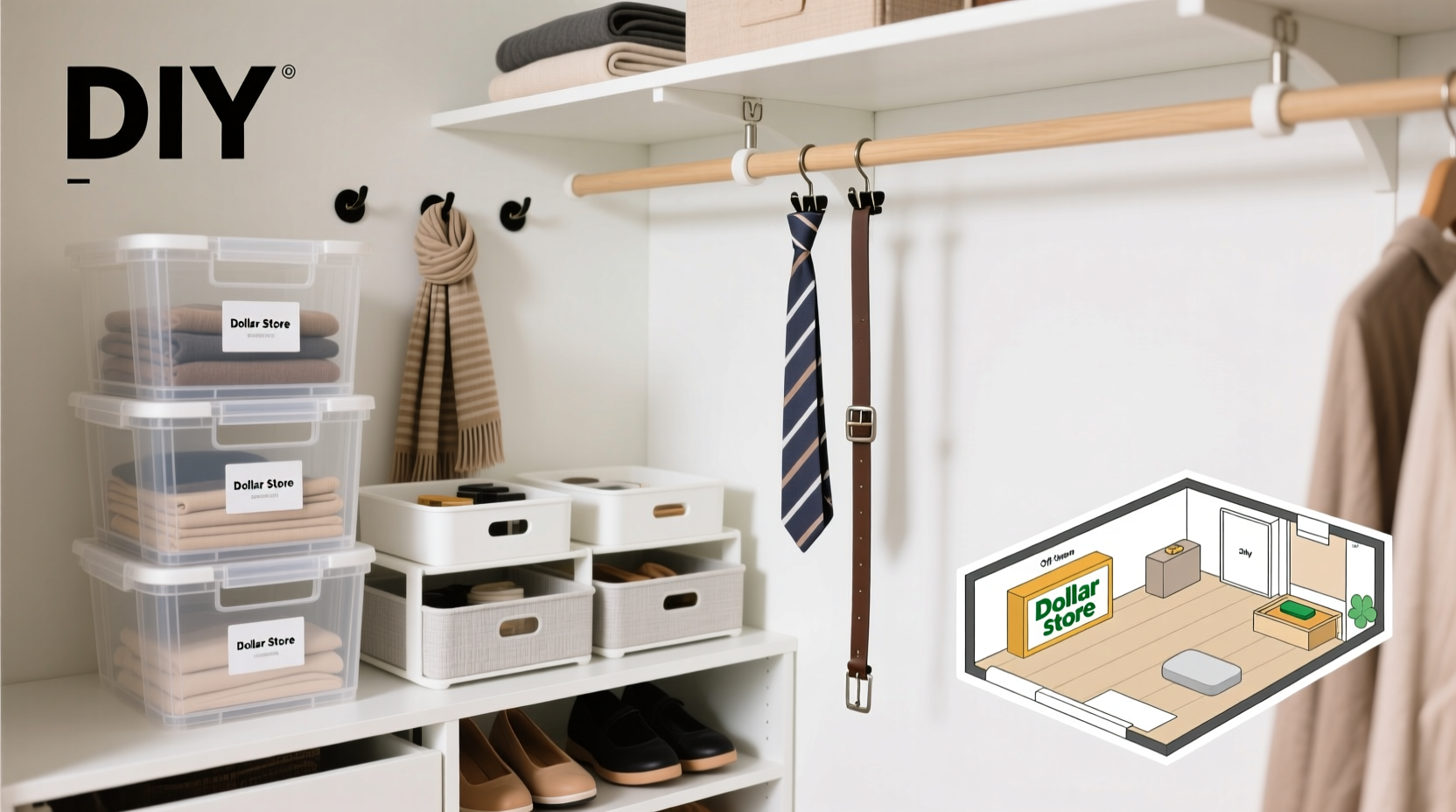
Before buying any organizing supplies, take a hard look at what’s already in your closet. A cluttered space will remain chaotic no matter how many bins or baskets you add. Start with a full inventory: remove everything and sort items into four clear categories—keep, donate, repair, discard.
Ask yourself three questions for each item:
- Have I worn this in the past 12 months?
- Does it fit me comfortably and make me feel confident?
- Is it in good condition, or does it need mending?
If an item fails two or more of these criteria, it’s likely time to let it go. Be ruthless but realistic. Holding onto clothes “just in case” only wastes valuable real estate.
Once decluttered, measure your closet dimensions—height, width, depth—and note existing features like hanging rods, shelves, or drawers. This helps determine which dollar store products will actually fit and function well.
Essential Dollar Store Finds That Work Like Magic
You might be surprised at how many professional-grade organizational tools are available for $1.25 or less. These budget-friendly items aren’t gimmicks—they’re practical, durable, and often indistinguishable from pricier versions sold at specialty stores. Here are the top performers:
| Item | Best For | Tips for Use |
|---|---|---|
| Plastic drawer organizers (clear) | Socks, underwear, accessories | Stack vertically in deep drawers to maximize vertical space. |
| Over-the-door shoe organizer | Shoes, scarves, toiletries, small bags | Hang on back of closet door; use pockets for rolled belts or jewelry. |
| Shelf risers (plastic or wire) | Doubling shelf capacity | Place under folded sweaters or jeans to create a second level for smaller items. |
| Non-slip shelf liner | Preventing slippage on shelves | Cut to size; works great under stacked bins or shoes. |
| Command hooks (mini or medium) | Hanging necklaces, robes, reusable shopping bags | Stick on walls or inside doors—no drilling required. |
| Clear stackable bins | Seasonal clothing, accessories, workout gear | Label sides with chalkboard stickers for easy identification. |
These items may seem basic, but their versatility makes them powerful. A single over-the-door organizer can hold up to 24 pairs of shoes—or repurposed for storing rolled t-shirts, hats, or even cleaning supplies if placed in a utility closet.
“Organization isn’t about having more stuff—it’s about making room for what matters. Simple, low-cost tools often provide the most elegant solutions.” — Lena Torres, Home Efficiency Consultant
Step-by-Step: Transform Your Closet in One Afternoon
You don’t need days or expensive renovations to see dramatic improvements. Follow this timeline to complete your transformation efficiently:
- Hour 1: Empty & Sort
Pull everything out. Sort into keep/donate/repair piles. Wipe down shelves and vacuum the floor. - Hour 2: Measure & Plan Zones
Divide your closet into functional zones: tops, bottoms, outerwear, shoes, accessories. Sketch a quick layout based on frequency of use. - Hour 3: Shop Smart at the Dollar Store
Buy only what aligns with your plan. Stick to a list: e.g., 1 over-the-door organizer, 2 shelf risers, 3 drawer dividers, 1 pack of Command hooks. - Hour 4: Install & Organize
Hang organizers, apply shelf liners, install hooks, place bins. Group like items together—roll jeans, fold sweaters, hang blouses. - Hour 5: Label & Refine
Add labels to bins and baskets. Step back and assess flow. Adjust heights or placements as needed.
This five-hour process delivers visible, lasting results. Many people report getting dressed faster and feeling less stressed about their wardrobe after just one session.
Real Example: Maria’s 3x2-Foot Reach-In Closet
Maria lives in a studio apartment in downtown Seattle. Her closet measures just 3 feet wide and 2 feet deep—barely enough room for a single hanging rod and a shallow shelf. Before organizing, she struggled to find clothes, shoes spilled onto the floor, and scarves tangled in a heap.
She spent $12 at her local dollar store and made these changes:
- Added an over-the-door shoe organizer on the inside of the closet door for scarves, gloves, and rolled T-shirts.
- Installed two plastic shelf risers to double her folding space—one level for jeans, one above for tank tops.
- Used two small clear bins to corral gym clothes and sleepwear, labeling each with a dry-erase sticker.
- Mounted three mini Command hooks on the side wall to hang delicate necklaces and a reusable tote.
- Laid non-slip liner across the bottom shelf to keep folded stacks from sliding.
The result? She gained 40% more usable space, reduced morning decision fatigue, and finally stopped tripping over shoes. “It felt like I got a whole new closet,” she said. “And I didn’t spend more than my weekly grocery budget.”
Pro Tips for Long-Term Success
Even the best setup fails without maintenance. Keep your newly organized closet functioning smoothly with these habits:
- One In, One Out Rule: For every new clothing item you bring in, remove one. This prevents slow re-cluttering.
- Monthly Mini Reset: Spend 10 minutes once a month re-folding stacks, wiping shelves, and checking for misplaced items.
- Use Vertical Space Fully: Hang a second clothing rod below the main one for shorter items like shirts or skirts—use inexpensive plastic brackets from the dollar store to support it.
- Color Code Within Categories: Arrange clothes by type first (e.g., all blouses together), then by color. It looks polished and makes matching outfits easier.
- Store Off-Season Items Elsewhere: If space is extremely tight, rotate seasonal wear into under-bed bins or a spare suitcase stored elsewhere.
“The most organized people aren’t those who buy the most products—they’re the ones who maintain systems consistently.” — Derek Langley, Minimalist Lifestyle Coach
Checklist: Your Dollar Store Closet Makeover Guide
Follow this actionable checklist to ensure nothing gets missed:
- ☐ Remove all items from the closet
- ☐ Sort clothes into keep, donate, repair, discard
- ☐ Clean shelves, rods, and floor
- ☐ Measure closet dimensions and sketch layout
- ☐ Identify storage needs (shoes, folded items, accessories)
- ☐ Create a dollar store shopping list (limit to 5–7 essential items)
- ☐ Purchase organizers (stick to the list!)
- ☐ Install shelf risers, door organizers, and hooks
- ☐ Place drawer dividers and stackable bins
- ☐ Fold, hang, and group items by category
- ☐ Label containers clearly
- ☐ Do a final walk-through to test accessibility
- ☐ Schedule a monthly reset reminder
Frequently Asked Questions
Can dollar store organizers really last long-term?
Yes—especially when used appropriately. Plastic bins and shelf risers made from sturdy polypropylene can last years if not overloaded. Avoid placing heavy items like books or boots on lightweight structures. For high-use areas, consider reinforcing flimsy pieces with cardboard inserts or adhesive backing.
What if my closet has no door for an over-the-door organizer?
No problem. Repurpose the organizer on the back of a bedroom door, inside a cabinet, or hang it horizontally on a wall using small screws or heavy-duty hooks. You can also drape it over a tension rod installed inside the closet frame.
Are there alternatives if I can’t visit a physical dollar store?
Absolutely. Many dollar store chains now sell online (e.g., Dollar Tree, Family Dollar). Alternatively, check discount sections at retailers like Target, Walmart, or Amazon Warehouse for similar items under $2. Look for “clearance organizers” or “dorm room storage” for compact, affordable options.
Final Thoughts: Small Changes, Big Impact
Organizing a tiny closet doesn’t require a renovation, a personal stylist, or a large budget. What it does require is intention, a little creativity, and the willingness to start. Dollar store finds prove that affordability and effectiveness aren’t mutually exclusive. In fact, some of the simplest tools deliver the most transformative results.
When your closet works for you—when you can see what you own, access it easily, and enjoy its neatness—it changes more than just your storage. It affects your mornings, your confidence, and your sense of control. And the best part? You can achieve it all for under $15.




 浙公网安备
33010002000092号
浙公网安备
33010002000092号 浙B2-20120091-4
Comments
No comments yet. Why don't you start the discussion?