
Living in a small space doesn’t mean sacrificing style or functionality—especially when it comes to your closet. A cramped, overstuffed closet can make mornings stressful and outfits feel limited. But with thoughtful planning and strategic organization, even the tiniest closet can hold everything you need while looking clean and intentional. The key is not just fitting more in, but creating a system that makes getting dressed easier, faster, and more enjoyable.
From rethinking layout to adopting minimalist habits, maximizing storage in a small closet is about working smarter—not harder. Whether you're in an apartment with a reach-in wardrobe or sharing a compact bedroom closet, these proven methods will help you reclaim space, reduce visual noise, and keep your clothes accessible and well-maintained.
Declutter First: Edit Your Wardrobe Ruthlessly
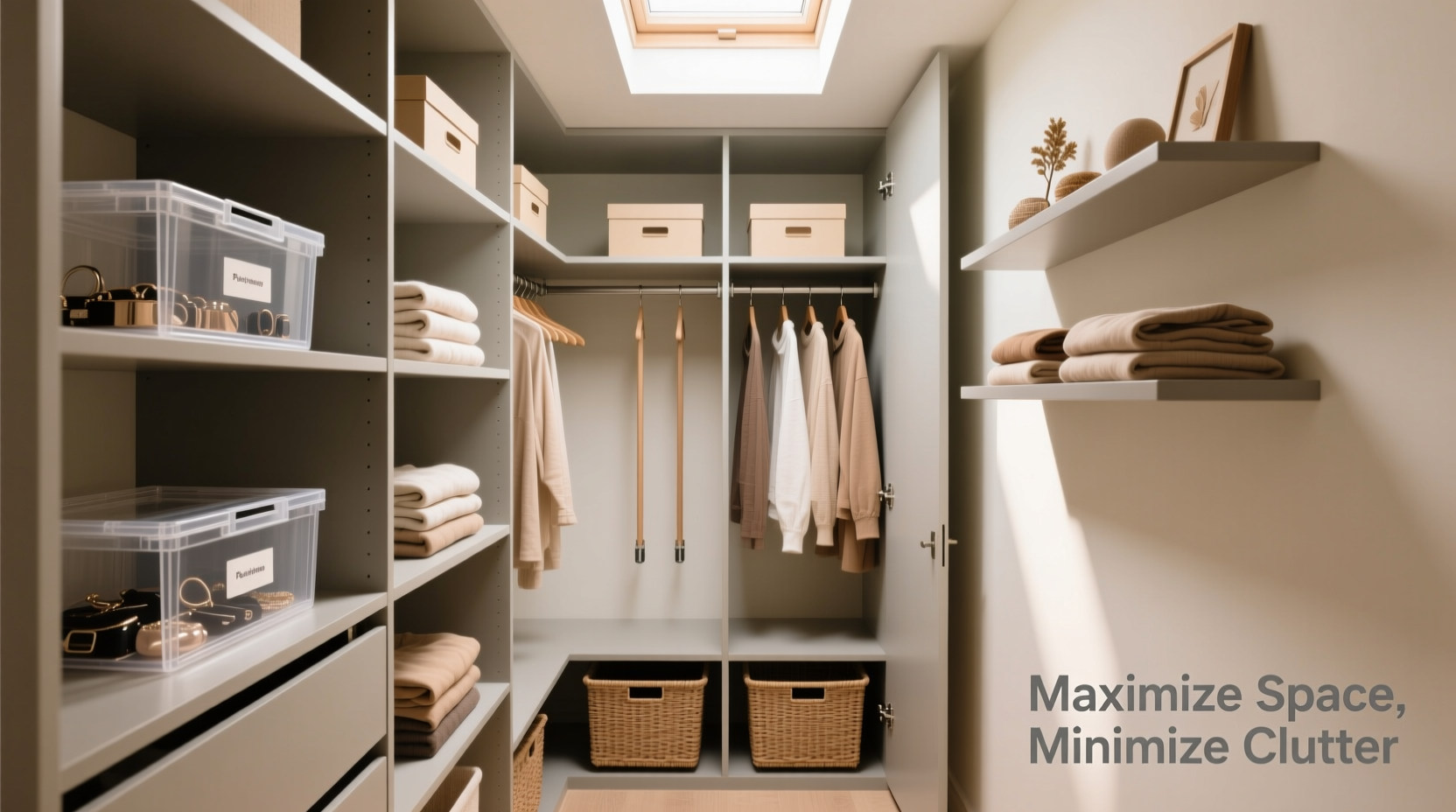
Before adding any organizers or shelves, begin by emptying your entire closet. This step isn't optional—it's essential. Seeing all your clothing at once forces honest decisions about what stays and what goes. Without this purge, even the best organizational tools will fail under the weight of excess.
Use the “touch-and-decide” method: handle each item individually. Ask yourself:
- Have I worn this in the past 12 months?
- Does it fit me comfortably right now?
- Would I buy this again today?
- Does it align with my current lifestyle or aesthetic?
If the answer to any of these is no, it’s time to let go. Sort items into four piles: keep, donate/sell, repair, and discard. Be strict—sentimental attachment shouldn’t override practicality. Remember, a functional closet serves you daily; a cluttered one only adds stress.
Create Zones for Maximum Efficiency
Once you've reduced your collection to only what you love and wear, organize the remaining items into logical zones. Zoning turns chaos into clarity by grouping similar items together and assigning them dedicated real estate within the closet.
A well-zoned closet typically includes the following areas:
- Top Shelf (Overhead): For off-season storage, handbags, or bins of accessories. Use clear, labeled containers so contents remain visible.
- Hanging Section: Divide into long (dresses, coats) and short (shirts, blazers). Consider double-hang rods if space allows.
- Mid-Level Shelves or Drawers: Ideal for folded knits, jeans, or sweaters. Avoid overstacking—keep stacks stable and easy to access.
- Floor Space: Reserve for shoes or rolling bins. Keep floor area as open as possible to prevent tripping and dust accumulation.
- Door & Back Wall: Maximize vertical space with hooks, pocket organizers, or over-the-door racks for belts, scarves, or jewelry.
Zones should reflect your routine. If you dress from bottom to top, arrange items accordingly—shoes first, then pants, tops, outerwear. If you accessorize last, keep jewelry and bags near the exit point.
“Efficiency in small spaces starts with intentionality. Every inch should serve a purpose.” — Lena Torres, Interior Organizer & Author of *Small Space, Big Style*
Smart Storage Solutions That Multiply Space
In a tiny closet, every square inch counts. Invest in modular, multi-functional storage tools that adapt to your needs without overwhelming the space.
| Solution | Best For | Space-Saving Benefit |
|---|---|---|
| Double-Hang Rods | Shirts, pants, skirts | Doubles hanging capacity vertically |
| Stackable Drawer Units | Socks, underwear, t-shirts | Uses vertical air space efficiently |
| Sliding Pull-Out Bins | Bulky sweaters, workout gear | Access deep areas without reaching |
| Over-the-Door Organizers | Scarves, ties, jewelry | Utilizes often-ignored door surface |
| Modular Cube Shelving | Folded items, baskets, shoes | Customizable depth and height |
Choose slim, non-bulky hangers—preferably uniform in material and color (e.g., velvet or wood)—to save space and create visual cohesion. Avoid wire hangers; they stretch shoulders and take up more room due to inconsistent shape.
For drawers or shelves, use dividers to separate categories like tank tops, bras, or rolled jeans. This prevents pile collapse and makes grabbing items effortless.
Step-by-Step: Transform Your Closet in One Weekend
You don’t need weeks to overhaul your closet. Follow this realistic two-day plan to achieve lasting results without burnout.
- Day 1 – Empty & Evaluate (2–3 hours)
Remove everything. Clean shelves, vacuum corners, wipe down rods. Assess what you own and sort into keep/donate/repair piles. Be decisive. - Day 1 – Plan Layout (1 hour)
Sketch a simple map of your closet. Mark where zones will go based on frequency of use. Prioritize eye-level space for daily essentials. - Day 2 – Install Systems (2 hours)
Add new rods, shelves, or organizers. Assemble drawer units, mount door racks. Make sure everything fits before loading in clothes. - Day 2 – Populate & Label (2 hours)
Place items into designated zones. Use labels on bins and baskets—even if you think you’ll remember. Consistency reduces decision fatigue. - Ongoing – Maintain Weekly (10 minutes)
Reset the closet every Sunday: return misplaced items, refold stacks, remove anything worn out. Prevention beats major cleanup later.
Mini Case Study: From Chaos to Calm in 48 Hours
Maria, a graphic designer living in a Brooklyn studio apartment, struggled with a 3-foot-wide reach-in closet that overflowed with clothes, shoes, and random boxes. She avoided opening the door, opting instead to leave items on chairs or under the bed.
Over a weekend, she followed the step-by-step guide: emptied the closet, donated 40% of her wardrobe, installed a double-hang rod, added a slim shoe rack, and used stackable fabric bins for seasonal layers. She grouped workwear on one side, casual wear on the other, and kept accessories in a magnetic jewelry strip mounted inside the door.
The result? She now dresses faster, feels less stressed, and hasn’t worn a wrinkled shirt in weeks. “I didn’t realize how much mental clutter came from my closet,” she says. “Now it actually helps me start the day right.”
Adopt Minimalist Habits for Long-Term Success
Organization isn’t a one-time fix—it’s a habit. To maintain a clutter-free tiny closet, adopt routines that support sustainability over time.
- One-In, One-Out Rule: For every new clothing item brought in, remove one. This keeps volume consistent and encourages mindful purchases.
- Seasonal Rotation: Store off-season clothes in under-bed bins or vacuum-sealed bags. Free up prime space for what you’re currently wearing.
- Shop With Purpose: Before buying, ask: Do I have something similar? Where will this live in my closet? How many ways can I wear it?
- Limit Duplicates: Three black turtlenecks may seem useful, but unless you're rotating daily, two are likely enough.
Minimalism isn’t about deprivation—it’s about freedom. When you own fewer, better items, getting dressed becomes simpler, and your space stays manageable.
Checklist: Tiny Closet Organization Essentials
- ✅ Empty the entire closet
- ✅ Sort clothes: keep, donate, repair, discard
- ✅ Install double-hang rods or adjustable shelving
- ✅ Use slim, uniform hangers
- ✅ Add over-the-door storage for small items
- ✅ Fold clothes vertically in drawers or bins
- ✅ Label containers clearly
- ✅ Rotate seasonal items twice a year
- ✅ Commit to a 10-minute weekly reset
Frequently Asked Questions
How do I organize a shared tiny closet fairly?
Divide the space visually—use different colored hangers or label bins by person. Agree on shared zones (like shoes or coats) and set usage limits. Schedule quarterly reviews to adjust as needs change.
What if my closet has no shelves or rods?
Install a freestanding clothing rack or modular cube unit inside the space. Use wall-mounted rails with hanging baskets or S-hooks. Anchor all units securely, especially in rentals where permanent changes aren’t allowed.
Can I really fit all my clothes in a tiny closet?
Yes—but only if you edit ruthlessly and organize intelligently. Most people own 2–3 times more than they regularly wear. Focus on usability, not capacity. A full closet isn’t successful if nothing is easy to find or use.
Conclusion: Turn Limitations Into Strengths
A tiny closet isn’t a design flaw—it’s an invitation to refine your habits, curate your belongings, and build a system that works seamlessly with your life. By starting with a hard edit, installing smart storage, and maintaining order through simple routines, you can transform a cramped space into a highly functional dressing area.
The most organized closets aren’t the biggest—they’re the ones where everything has a place and nothing is wasted. You don’t need more space; you need better systems. And those begin with a single decision: to make your closet serve you, not weigh you down.




 浙公网安备
33010002000092号
浙公网安备
33010002000092号 浙B2-20120091-4
Comments
No comments yet. Why don't you start the discussion?