
Living in a small space often means making the most of what you have. Nowhere is this more evident than in a tiny closet without built-in shelves. Without structural support or storage compartments, it’s easy for clothes, shoes, and accessories to pile up into an overwhelming mess. But lack of infrastructure doesn’t mean lack of options. With smart organization strategies, even the most barren closet can become a functional, clutter-free zone. This guide delivers real-world-tested methods to transform your bare closet into a streamlined storage system—no renovation required.
Assess Your Space and Inventory
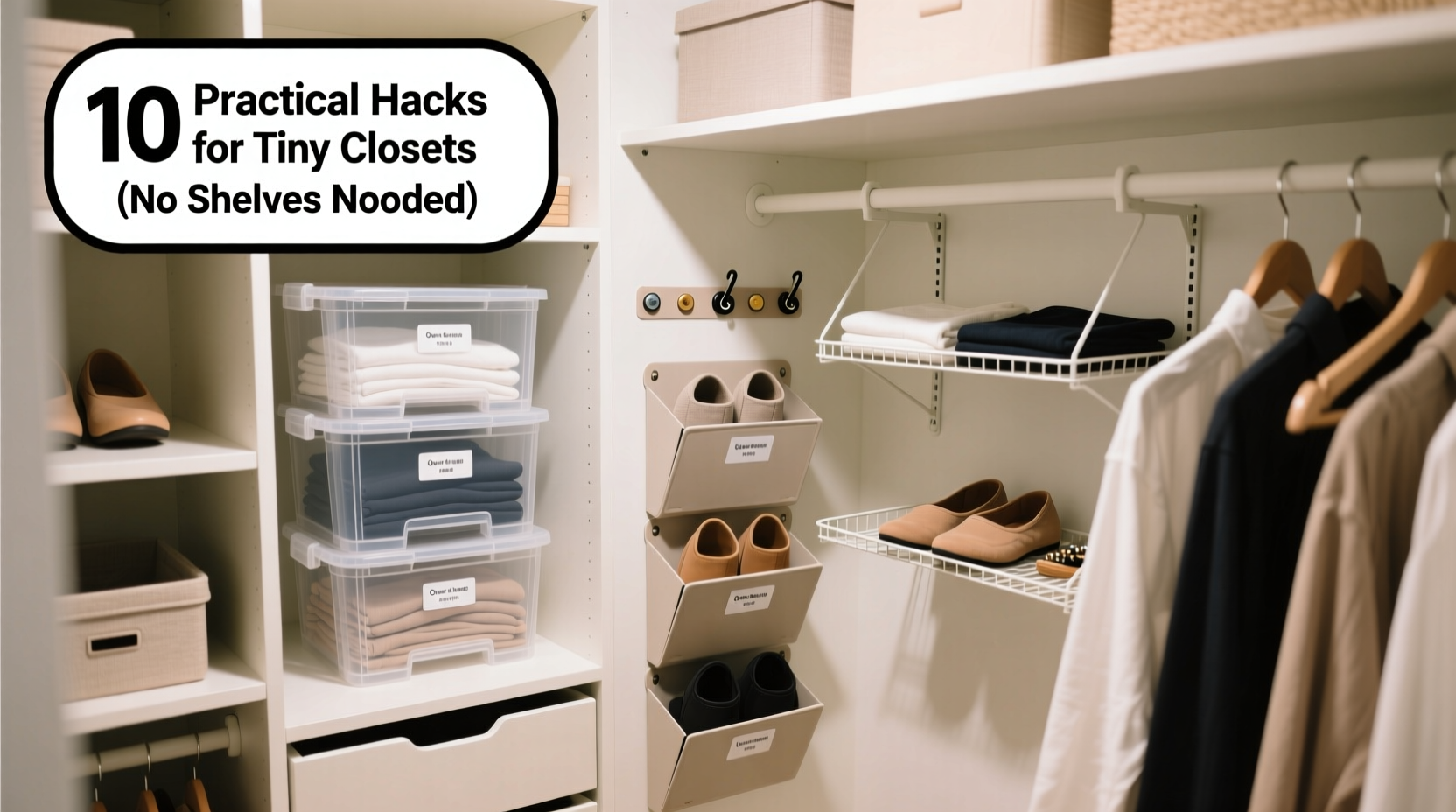
Before adding any tools or systems, take stock of what you’re working with. Measure the closet’s dimensions: height, width, and depth. Note where walls are solid (suitable for mounting) and which areas might be fragile (like drywall near corners). Also, pay attention to door swing—if the door opens inward, avoid placing items too close to the front.
Next, empty everything from the closet. Sort items into categories: tops, bottoms, dresses, outerwear, shoes, bags, and accessories. As you sort, be ruthless. Ask: Have I worn this in the past year? Does it fit? Is it damaged beyond repair? Donate or discard anything that doesn’t meet these standards.
Knowing exactly how much clothing you own—and how it fits within your space—helps determine which organizational tools will work best. For example, if you own 30 long-sleeve shirts but only two pairs of jeans, vertical hanging solutions may be more effective than horizontal stacking.
Maximize Vertical Space with Hanging Solutions
In a shelf-less closet, vertical space is your greatest asset. The standard single rod setup wastes at least half the available height. Instead, create multiple levels of storage using affordable, non-permanent tools.
Double-hang your clothes by installing a second rod below the existing one. You don’t need to drill—use tension rods designed for curtains or shower enclosures. Choose a sturdy metal model rated for heavier loads. Install it about 36–40 inches from the floor, leaving enough room to hang pants or skirts on the lower level while keeping shirts above.
If you can't install a second rod, use cascading hangers. These multi-tiered hangers allow you to hang several garments vertically from one hook, effectively doubling your hanging capacity. They’re ideal for scarves, tank tops, or lightweight blouses.
- Cascading hangers save space but work best with lighter fabrics.
- Use slim, non-slip velvet hangers to reduce bulk and prevent slippage.
- Hanging organizers with clear pockets can store folded items like sweaters or pajamas without wrinkling.
“Vertical layering is the cornerstone of micro-closet efficiency. Every inch of air space should serve a purpose.” — Lena Torres, Urban Home Organizer & Author of *Small Space, Full Life*
Create Modular Storage with Freestanding Units
Without built-in shelves, freestanding furniture becomes essential. The key is choosing compact, adaptable pieces that fit within the closet footprint without blocking access.
A narrow rolling cart (often marketed as a kitchen organizer) fits perfectly beside or under hanging clothes. Use drawers for socks, underwear, or workout gear. The mobility allows you to pull it out when needed and tuck it away when not in use.
Shoe towers or cube storage units made from fabric bins slide easily into tight spaces. Open-back designs let you place them behind the clothing rod so they sit flush against the back wall, minimizing protrusion.
Foldable fabric bins are excellent for seasonal storage. Label each bin clearly—“Winter Scarves,” “Beachwear,” “Formal Shoes”—and stack them neatly on the floor or inside a low cabinet. When seasons change, swap out entire bins instead of reorganizing piece by piece.
| Solution | Best For | Installation Required? | Cost Range |
|---|---|---|---|
| Tension Rod + Shelf Combo | Shirts, folded jeans, handbags | No | $15–$30 |
| Rolling Storage Cart | Underwear, accessories, folded tees | No | $25–$50 |
| Hanging Closet Organizer | Sweaters, pajamas, kids’ clothes | No | $10–$20 |
| Fabric Cube Organizer | Toiletries, off-season items | No | $20–$40 |
| Over-the-Door Rack | Belts, scarves, jewelry | No | $12–$25 |
Optimize Accessory Storage Without Drilling
Accessories like belts, scarves, hats, and jewelry tend to get tangled or lost in overcrowded drawers. Yet many adhesive or over-the-door solutions exist that require zero permanent modification.
Over-the-door shoe organizers aren’t just for shoes. Clear plastic pockets hold rolled belts, sunglasses, gloves, or clutches. For jewelry, use a hanging fabric organizer with mesh pockets or install removable adhesive hooks to drape necklaces and prevent tangling.
Adhesive-backed hooks are a game-changer. Stick them to the side walls of the closet (if structurally sound) to hang robes, hats, or frequently used bags. Choose models rated for 10+ pounds and apply firmly to clean, dry surfaces.
Magnetic strips—commonly used in kitchens—can be mounted inside the closet door to hold bobby pins, hair clips, or small metal tools. Pair with a small corkboard nearby to pin reminder notes or fashion inspiration.
Real-Life Example: Maria’s Studio Apartment Closet
Maria lives in a 450-square-foot studio in downtown Chicago. Her closet measures just 3 feet wide and 2 feet deep, with a single rod and no shelves. After struggling with constant disorganization, she implemented a three-phase system:
- She removed 40% of her wardrobe through donation, focusing on items she hadn’t worn in eight months.
- She added a tension rod 38 inches from the floor to double-hang her pants and skirts.
- She placed a slim 3-drawer rolling cart beside the rod for underwear and sleepwear, and hung a 12-pocket shoe organizer on the back of the door for scarves and travel-sized toiletries.
The result? She gained 70% more usable space and reduced morning dressing time by half. “I can actually see everything now,” she says. “No more digging under piles of sweaters.”
Step-by-Step: Transform Your Bare Closet in One Weekend
You don’t need weeks to reorganize. Follow this realistic two-day plan to overhaul your tiny, shelf-less closet.
Day 1: Declutter and Plan (2–3 hours)
- Empty the entire closet onto your bed or floor.
- Sort items into four piles: Keep, Donate, Repair, Discard.
- Measure your closet’s interior dimensions.
- List the categories of clothing you need to store.
- Identify problem areas (e.g., too many shoes, limited hanging space).
- Research and order necessary organizers (allow delivery time if shopping online).
Day 2: Install and Organize (3–4 hours)
- Install tension rods, over-the-door racks, or adhesive hooks.
- Place freestanding units like carts or cube organizers.
- Hang clothes by category and color for visual clarity (e.g., all shirts together, light to dark).
- Use drawer dividers or small boxes inside bins to separate socks, underwear, or accessories.
- Label every bin and pocket for quick identification.
- Store off-season items in vacuum-sealed bags at the top or back of the closet.
Frequently Asked Questions
Can I organize a tiny closet without spending money?
Yes. Start by repurposing household items: use cardboard boxes as drawer dividers, old belt loops as scarf hangers, or cereal boxes to separate folded clothes. Reconfigure existing hangers to face the same direction—this makes it easier to spot unworn items later.
What if my closet has sliding doors that limit access?
Sliding doors reduce swing space but also mean you can’t block the opening with furniture. Focus on back-wall solutions: hanging organizers, adhesive hooks, or stacking bins that stay flush against the rear. Avoid tall units that could interfere with door tracks.
How do I prevent clothes from getting dusty in an open closet?
Use breathable cotton garment bags for delicate or infrequently worn items. For folded stacks, cover them with a simple linen cloth. Avoid plastic covers—they trap moisture and can lead to mildew.
Final Checklist: Your No-Shelf Closet Organization Plan
- ✅ Empty and sort all closet contents
- ✅ Donate or discard unused items
- ✅ Measure closet dimensions
- ✅ Purchase tension rod or hanging shelf system
- ✅ Add a rolling cart or fabric cubes for modular storage
- ✅ Install over-the-door organizer for small items
- ✅ Use slim, non-slip hangers to maximize rod space
- ✅ Label all bins and sections clearly
- ✅ Store off-season items out of the way
- ✅ Review and adjust monthly for optimal flow
Take Control of Your Space
A tiny closet without shelves isn’t a limitation—it’s an invitation to think creatively. By leveraging vertical space, using modular furniture, and adopting smart habits, you can build a system that works harder and looks better than any pre-built unit. The goal isn’t perfection; it’s functionality. When your clothes are visible, accessible, and neatly arranged, getting dressed becomes effortless, not stressful.
Start today. Empty that closet. Make the cuts. Install one new tool. Small actions compound into lasting change. And once you experience the calm of an organized space, you’ll wonder why you waited so long.




 浙公网安备
33010002000092号
浙公网安备
33010002000092号 浙B2-20120091-4
Comments
No comments yet. Why don't you start the discussion?