
A small pantry doesn’t have to mean chaos. In fact, many of the most efficient pantries are compact—organized not by expensive organizers, but by thoughtful systems and clever use of space. When square footage is limited, every inch counts. The good news? You don’t need to invest in custom bins, drawer inserts, or specialty containers to achieve a functional, clean pantry. With simple household items and strategic planning, you can transform even the tiniest storage space into a streamlined hub for your kitchen essentials.
The key lies in maximizing vertical space, eliminating clutter, and grouping like items together in accessible ways. Whether your pantry is a narrow closet, an under-stair nook, or just a shallow cupboard, these practical methods will help you reclaim order—without spending a dime on pre-made solutions.
Declutter First: Start with a Clean Foundation
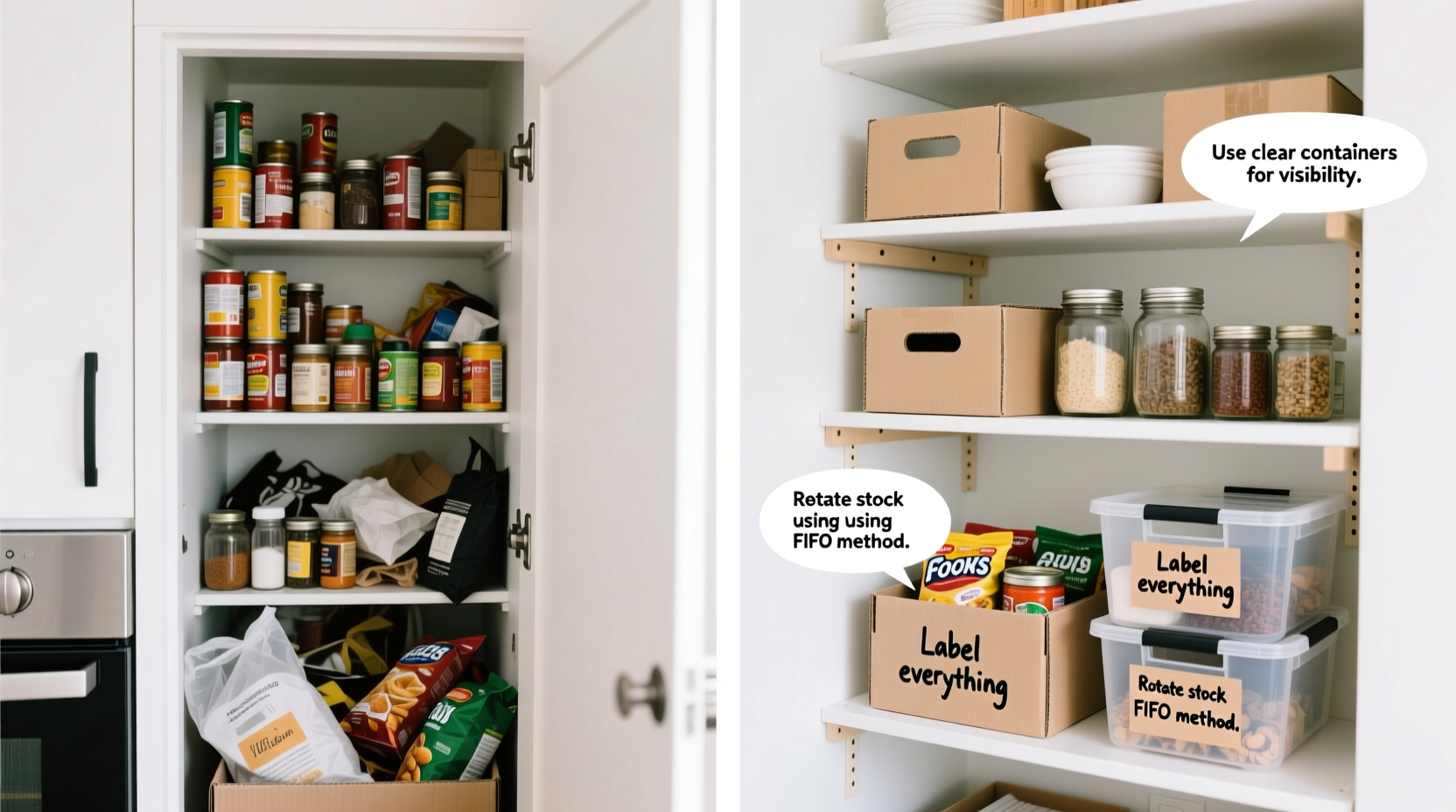
Before organizing, assess what’s currently in your pantry. Over time, it's easy to accumulate expired goods, duplicate items, or products you never use. A cluttered pantry not only wastes space but also makes it harder to find what you need, leading to food waste and frustration.
Begin by removing everything from the shelves. This allows you to see exactly what you own and gives you the opportunity to wipe down surfaces, check for pests, and inspect for moisture issues. As each item comes out, ask yourself:
- Is this still within its expiration date?
- Have I used this in the past six months?
- Does this serve a real purpose in my daily cooking routine?
Discard anything expired, donate unopened non-perishables you won’t use, and consolidate duplicates. If you have three half-empty bags of rice, combine them into one container. This step alone can reduce pantry volume by 30% or more.
Maximize Vertical Space with Simple Tools
In a tiny pantry, horizontal space is limited, so focus on going up. Vertical organization multiplies usable area without requiring structural changes. The best part? You likely already own tools that can help.
Stackable items like canned goods, pasta boxes, or spice jars naturally lend themselves to tiered arrangements. But when containers vary in size and shape, uniformity becomes essential. Use everyday objects to create levels:
- Cardboard boxes: Cut cereal boxes or tissue boxes in half to make risers. Cover with contact paper or washi tape for a cleaner look.
- Plastic tubs: Repurpose yogurt or margarine containers as shelf risers or category dividers.
- Binder clips: Clip large ones to shelf edges to hold recipe cards, foil rolls, or cling wrap.
Arrange taller items toward the back and shorter ones in front so nothing gets lost behind larger packages. This “staggered visibility” method ensures every item is seen and reachable.
“Organization isn’t about having more space—it’s about making better use of the space you already have.” — Sarah Nguyen, Home Efficiency Consultant
Create Zones Without Buying Bins
One of the most effective pantry strategies is zoning—grouping similar items together so they’re predictable and easy to access. Even without labeled bins, you can define zones using spatial cues and consistent placement.
Divide your pantry into logical categories such as:
- Baking supplies (flour, sugar, baking powder)
- Canned goods (vegetables, beans, soups)
- Snacks (chips, nuts, granola bars)
- Breakfast items (cereal, oatmeal, pancake mix)
- Spices and seasonings
- Oil, vinegar, and condiments
To reinforce these zones without purchasing containers, use flat-bottomed books, wooden blocks, or stacked magazines as visual dividers. Place heavier items on lower shelves and lighter, frequently used items at eye level. For example, keep coffee and tea near the top shelf if you use them daily, while storing bulk rice or pet food below.
Repurpose Household Items as Organizers
You don’t need store-bought baskets or acrylic bins to stay organized. Common household items can function just as well—if not better—than commercial products.
Consider these creative swaps:
| Item You Own | How to Repurpose It | Best For |
|---|---|---|
| Glass jars (pasta sauce, pickles) | Wash and reuse for dry goods | Rice, pasta, lentils, snacks |
| Shoeboxes or gift boxes | Line with paper and label sides | Group packets (noodles, gravy mixes) |
| Towel rods or command hooks | Mount inside door or wall | Hanging bags of onions, garlic, or reusable produce nets |
| Old drawer organizers | Place on shelf horizontally | Spices, seasoning packets, tea bags |
| Ice cube trays | Use in a pull-out tray or shallow bin | Small items like bouillon cubes or flavor sachets |
Jars are especially useful because they allow you to see contents at a glance and protect food from moisture and pests. Simply remove labels with warm soapy water, dry thoroughly, and fill with grains, sugar, or nuts. Use chalkboard paint or masking tape to label each jar with its contents and date.
For doors, maximize unused surface area. Adhesive hooks can hold measuring cups, oven mitts, or small baskets made from fabric and cardboard. A hanging shoe organizer with clear pockets works wonders for spices, drink mixes, or snack packs—just mount it vertically on the back of the door.
Step-by-Step Guide: Transform Your Pantry in One Afternoon
You can completely reorganize a tiny pantry in under three hours. Follow this realistic timeline to get it done efficiently.
- Hour 1: Empty and Evaluate (30–45 min)
Remove all items from the pantry. Wipe shelves with a damp cloth and mild cleaner. Sort food into piles: keep, donate, discard. Consolidate partial packages. - Hour 1: Plan Zones (15 min)
Decide which categories go where based on frequency of use and weight. Sketch a quick layout on paper if needed. - Hour 2: Repurpose and Prepare (30 min)
Clean and prep jars, boxes, and containers. Label them clearly. Build risers or dividers using cardboard or plastic tubs. - Hour 2: Install & Arrange (30 min)
Place heavier items on bottom shelves. Use risers to create visibility. Group like items together. Hang organizers on the door. - Hour 3: Fine-Tune & Maintain (30 min)
Test accessibility. Can you reach items easily? Are labels visible? Adjust as needed. Take a “before” and “after” photo for motivation.
This methodical approach prevents overwhelm and ensures lasting results. The goal isn’t perfection—it’s functionality.
Mini Case Study: Maria’s Apartment Pantry Makeover
Maria lives in a 600-square-foot downtown apartment with a pantry no wider than 24 inches. Before organizing, she struggled to find ingredients, often buying duplicates because she couldn’t see what she already had. Her shelves were cluttered with open bags, leaning boxes, and expired spices.
She decided to tackle the space over a Sunday morning. She emptied everything, finding two expired bags of flour and three nearly identical chili spice blends. Using empty pasta sauce jars, she transferred rice, quinoa, and lentils into sealed containers. She cut two cereal boxes in half to create risers for canned tomatoes and beans. On the door, she attached a repurposed fabric shoe organizer to hold individual seasoning packets and tea bags.
The result? She reclaimed 40% of her shelf depth, reduced grocery waste, and now spends less time searching during meal prep. “I didn’t spend a single dollar,” Maria says. “Now I actually enjoy opening the pantry instead of dreading it.”
Common Mistakes to Avoid
Even with good intentions, it’s easy to fall into habits that undermine organization. Watch out for these pitfalls:
- Overfilling shelves: Crowded spaces make it hard to see or retrieve items. Leave breathing room between groups.
- Ignoring door space: The back of the pantry door is prime real estate. Don’t let it go to waste.
- Prioritizing looks over function: A Pinterest-perfect pantry isn’t helpful if you can’t find the olive oil when cooking.
- Not labeling: Without labels, family members may misplace items or open new packages unnecessarily.
- Forgetting maintenance: Revisit your system monthly. Rotate stock, wipe spills, and adjust zones as your eating habits change.
“The most sustainable organization system is the one you can maintain without effort.” — Derek Liu, Minimalist Living Advocate
Frequently Asked Questions
Can I organize a walk-in pantry the same way?
Absolutely. While walk-in pantries offer more space, the principles remain the same: declutter first, create zones, use vertical stacking, and repurpose containers. The difference is scale—you may need more risers or additional shelving, but custom inserts still aren’t required.
What if I have kids who need frequent snacks?
Dedicate a low, accessible shelf or bin to kid-friendly items. Use clear jars or open baskets so children can see and choose their own snacks safely. Label with pictures or words depending on their age. This encourages independence and reduces constant requests.
How do I prevent pests without sealed bins?
Transfer dry goods like flour, sugar, and cereal into glass or rigid plastic containers—even reused ones—as soon as possible. Clean shelves regularly, avoid storing food in cardboard directly on shelves, and check for signs of ants or weevils monthly. A small sachet of bay leaves can naturally deter insects.
Checklist: Pantry Organization Without Spending Money
Use this checklist to stay on track:
- ☐ Remove all items from the pantry
- ☐ Discard expired or unused food
- ☐ Wipe down shelves and walls
- ☐ Sort items into categories (baking, snacks, etc.)
- ☐ Collect clean jars, boxes, and containers from around the house
- ☐ Create risers using cardboard or plastic tubs
- ☐ Label containers with tape or chalk markers
- ☐ Assign zones and place items accordingly
- ☐ Utilize the door with hooks or a hanging organizer
- ☐ Test accessibility and adjust as needed
- ☐ Set a monthly reminder to review and refresh
Conclusion: Small Space, Big Impact
Organizing a tiny pantry without custom inserts proves that efficiency doesn’t require expense. By leveraging what you already own, thinking vertically, and designing intuitive zones, you can create a system that saves time, reduces waste, and simplifies daily life. The most powerful organizing tools aren’t sold in stores—they’re creativity, consistency, and clarity of purpose.




 浙公网安备
33010002000092号
浙公网安备
33010002000092号 浙B2-20120091-4
Comments
No comments yet. Why don't you start the discussion?