
Cable clutter is one of the most common yet overlooked sources of household disorganization. Chargers, USB cords, headphones, HDMI cables—they all seem to tangle into an indecipherable knot at the bottom of a drawer. Instead of buying expensive organizers or letting chaos reign, consider a surprisingly effective, eco-friendly solution: repurposed toilet paper rolls. These simple cardboard tubes can be transformed into functional, customizable cable management tools that not only declutter your space but also give new life to what would otherwise be waste.
This guide walks through a complete system for organizing your cables using toilet paper rolls with creativity, practicality, and sustainability in mind. From preparation to customization, you’ll learn how to turn an everyday disposable item into a sleek storage solution that keeps your tech accessories neat, labeled, and instantly accessible.
Why Toilet Paper Rolls Work for Cable Organization
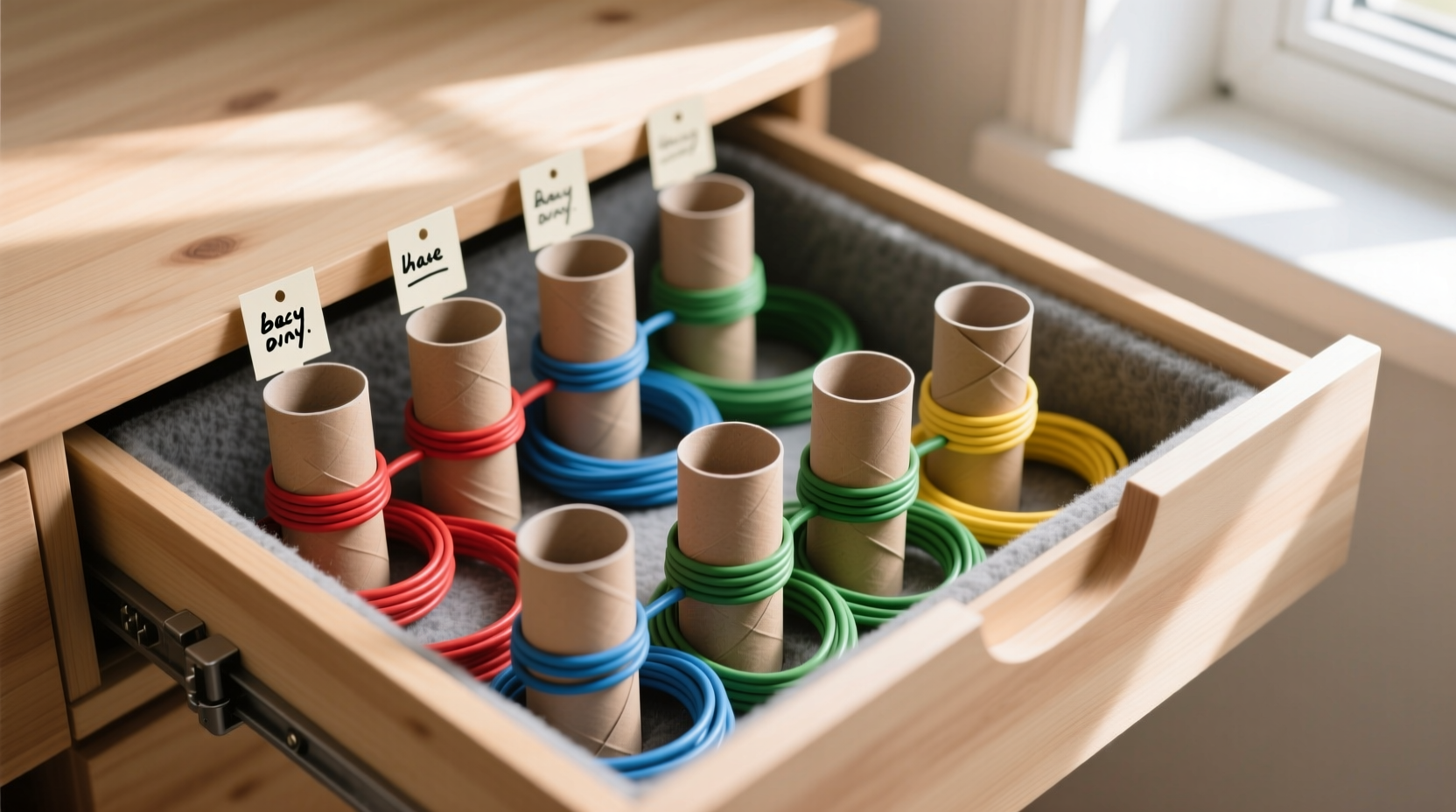
Toilet paper rolls are cylindrical, lightweight, and just the right size to wrap small to medium-length cords. Their hollow center allows cables to be coiled neatly without kinking, while their height prevents tangling between multiple cords stored side by side. Made from sturdy cardboard, they’re easy to cut, paint, or label, making them highly adaptable for different drawer sizes and aesthetic preferences.
Beyond functionality, using toilet paper rolls aligns with sustainable living principles. According to the Environmental Protection Agency, over 3 million tons of tissue paper products end up in landfills annually. Repurposing these rolls reduces waste and minimizes the need for plastic-based organizers, which often contain non-recyclable materials.
“Upcycling household items like toilet paper rolls fosters both creativity and environmental responsibility. It’s organization with purpose.” — Dr. Lena Torres, Sustainable Design Researcher, Urban Eco Lab
Step-by-Step Guide to Organizing Cables with Toilet Paper Rolls
Follow this detailed process to transform your messy drawer into an orderly hub for all your electronic accessories.
- Collect and Clean Materials
Save 10–15 empty toilet paper rolls (depending on drawer size). Wipe them down with a dry cloth to remove dust. If desired, gently press one end closed by folding the edges inward to create a base—this helps prevent cords from slipping out. - Sort Your Cables
Remove everything from your drawer. Group cables by type: phone chargers, laptop adapters, earbuds, camera cords, etc. Test each one to ensure it still works before storing it. - Coil Each Cable Neatly
Use the over-under method: loop the cord alternately over and under your hand to avoid twists. Secure with a reusable tie—velcro strips, fabric scraps, or twist ties work well. Avoid tight rubber bands, which can damage insulation over time. - Insert Cords into Rolls
Place one coiled cable per roll. For longer cords, use two adjacent rolls taped together vertically. Shorter cords like earbuds fit perfectly in half a roll—simply cut the tube in half with scissors. - Label Each Roll
Use a marker, sticker, or printable label to identify the contents. Examples: “iPhone Charger,” “Bluetooth Headphones,” “Tablet Cable.” Color-coding with washi tape adds visual clarity. - Arrange in Drawer
Stand rolls upright in rows. Place frequently used cables toward the front. Fill gaps with small dividers made from cardboard if needed. A shallow drawer (3–4 inches deep) works best. - Final Touches
Line the drawer with shelf liner to prevent sliding. Add a small ziplock bag inside for loose connectors or extra charging tips.
Customization Ideas to Enhance Functionality
Don’t stop at basic cardboard tubes. With minimal effort, you can elevate your organizers from utilitarian to stylish.
- Paint or Decorate: Use acrylic paint, scrapbook paper, or fabric to cover rolls. Match your room’s color scheme or go bold with patterns.
- Add Lids: Cut circles from cardboard or felt to serve as removable lids. Write labels on top for quick identification.
- Create Combo Units: Tape 2–3 rolls together side-by-side to form a single unit for related items—e.g., one roll for a charging cable, another for its wall adapter.
- Incorporate Magnets: Glue small magnets to the bottom of decorated rolls. They’ll stick to metal drawers or frames, allowing vertical mounting inside cabinet doors.
- Use as Travel Organizers: Pack labeled rolls into a padded pouch when traveling. They protect cords and keep luggage organized.
Do’s and Don’ts of Using Toilet Paper Rolls for Storage
| Do’s | Don’ts |
|---|---|
| Use rolls for lightweight, low-voltage cords (USB, audio, power adapters). | Avoid storing heavy-duty extension cords or thick HDMI cables—they may crush the cardboard. |
| Reinforce weak rolls with duct tape or glue layers together for strength. | Don’t expose rolls to moisture; cardboard softens and degrades when wet. |
| Label clearly to maintain long-term usability. | Never force a damaged cable into a roll—replace frayed wires immediately for safety. |
| Replace rolls every 6–12 months or when showing wear. | Don’t overload a single roll; overcrowding causes strain on the cord and structure. |
Real-Life Example: Transforming a Home Office Drawer
Sarah, a freelance graphic designer from Portland, struggled with a deep kitchen drawer she used for tech gear. It housed over 20 cables, many tangled beyond recognition. After reading about eco-friendly organizing hacks, she decided to try toilet paper rolls.
She spent one evening sorting her cords, testing each one, and coiling them neatly. She used 14 rolls—some full-length for longer laptop chargers, others halved for earbuds and camera cables. She wrapped each roll in navy blue patterned paper and labeled them with white tags. To prevent shifting, she created a simple grid inside the drawer using leftover foam board strips glued into place.
The result? Sarah now finds the right cable in seconds. Her partner, initially skeptical, started using the same system for his gaming accessories. “It’s amazing how something so simple can make such a big difference,” she said. “Plus, I feel good knowing I reused something that would’ve been thrown away.”
Checklist: Organize Your Drawer in One Hour
Follow this concise checklist to complete your cable overhaul efficiently:
- ☐ Gather 10–15 clean toilet paper rolls
- ☐ Empty and wipe down your drawer
- ☐ Sort cables by device and frequency of use
- ☐ Coil each cable using the over-under technique
- ☐ Insert one cable per roll and secure open ends if needed
- ☐ Label each roll clearly (use colors or icons for faster recognition)
- ☐ Arrange rolls upright in rows, grouping by category
- ☐ Add drawer liner and supplemental storage for small parts
- ☐ Store the drawer closed and review monthly for updates
Frequently Asked Questions
Can I use paper towel rolls instead?
Absolutely. Paper towel rolls are wider and taller, making them ideal for bulkier cords like monitor cables or AC adapters. Simply cut them to desired height and reinforce the base with cardboard. They take up more space, so reserve them for larger drawers or standalone bins.
How do I prevent the rolls from tipping over?
Ensure your drawer isn’t overfilled or underfilled. Rolls stay upright best when snug against each other. For added stability, glue the bottoms to a cardboard tray cut to fit the drawer interior. Alternatively, use double-sided tape to anchor the tray to the drawer floor.
Are there fire risks with cardboard organizers near electronics?
No significant risk exists under normal conditions. Cardboard is combustible, but so are books and wooden furniture commonly found near electronics. As long as cords are in good condition (no exposed wires), not overloaded, and kept away from heat sources, using cardboard organizers is safe. Always follow electrical safety guidelines and replace damaged cables promptly.
Conclusion: Turn Waste into Order
Organizing cables doesn’t require expensive solutions or complex tools. By reimagining toilet paper rolls as smart storage units, you gain control over clutter while embracing sustainability. This method is accessible, affordable, and customizable to any home or workspace. Whether you're managing a family’s worth of devices or just your own growing collection of gadgets, a little creativity goes a long way.
The next time you finish a roll of toilet paper, pause before tossing it. That humble tube could be the key to a cleaner drawer, a calmer mind, and a greener lifestyle. Start today—your future self will thank you when finding the right charger takes less time than plugging it in.




 浙公网安备
33010002000092号
浙公网安备
33010002000092号 浙B2-20120091-4
Comments
No comments yet. Why don't you start the discussion?