
Every minute counts in the morning. For those who wear makeup daily, fumbling through a cluttered cup of tangled brushes can turn a smooth start into chaos. The solution isn’t buying more products—it’s organizing what you already have. By categorizing your makeup brushes according to their function and frequency of use, you streamline your routine, reduce decision fatigue, and protect your tools from damage. This guide breaks down exactly how to sort, store, and access your brushes efficiently—so you spend less time searching and more time feeling confident.
Why Brush Organization Matters Beyond Aesthetics
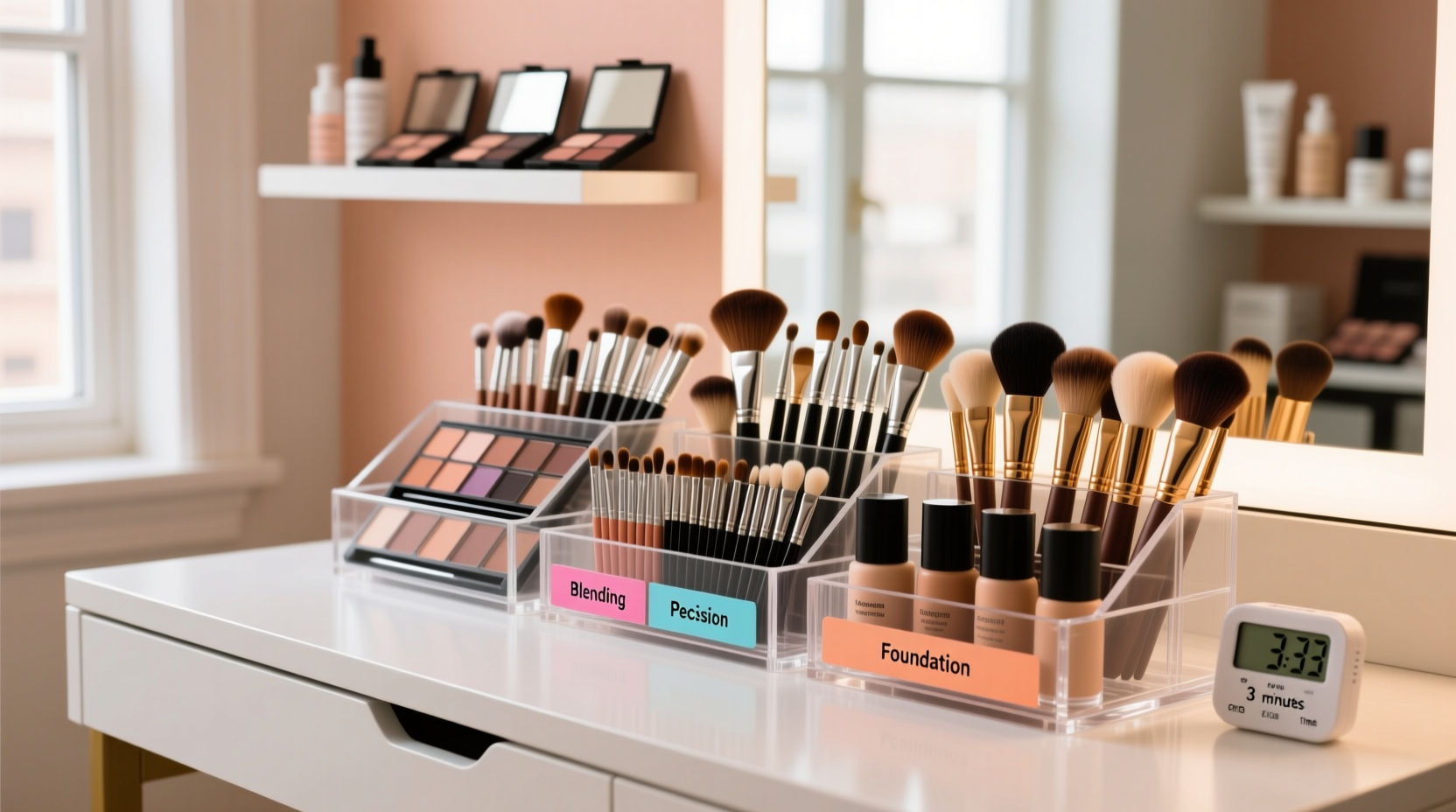
While neatly arranged brushes look satisfying on an Instagram shelf, their real value lies in functionality. Disorganized brushes lead to wasted time, cross-contamination between products, and premature wear. When every brush has a designated place based on its purpose, you eliminate guesswork. You’ll know instantly where to find your foundation brush or eyeshadow blender without rummaging through a jumbled mess.
Makeup artists and beauty professionals rely on systematic organization not just for speed, but for hygiene and precision. Brushes used for liquid products like foundation or concealer should never be stored next to those used for powders if they’re still damp. Separating them by type reduces bacterial growth and product transfer.
“Efficiency starts with intentionality. When your tools are grouped logically, your routine becomes muscle memory.” — Lila Torres, Celebrity Makeup Artist
Step-by-Step: How to Sort Your Brushes by Type
The first step toward a faster routine is sorting your brushes into functional categories. Don’t skip this phase—even if you only own five brushes. Labeling each group helps reinforce habit formation.
- Gather all your brushes. Pull them from drawers, bags, and vanity tops. Lay them out on a clean surface.
- Clean them thoroughly. Dirty brushes obscure bristle shape and texture. Wash with gentle brush cleanser and let dry completely before sorting.
- Group by primary use:
- Face Brushes: Foundation, stippling, buffing, powder, blush, bronzer, highlighter
- Eyeshadow Brushes: Flat shader, crease, blending, smudge, detail liner
- Brow & Liner Tools: Angled brow brush, spoolie, fine eyeliner brush
- Lip Brushes: Small, precise synthetic bristles
- Sponges & Multi-tools: Beauty blenders, dual-ended tools (if applicable)
Some brushes serve multiple purposes, but assign them to the category they're used for most often. For example, a tapered blending brush might occasionally be used for highlighter, but it belongs in the eyeshadow group due to its size and typical application zone.
Optimize Storage Based on Frequency and Space
Once sorted, choose a storage method that aligns with how often you use each category. High-frequency brushes—like foundation and concealer tools—should be the most accessible. Rarely used items, such as specialty glitter brushes or travel-sized tools, can go into secondary storage.
| Brush Type | Daily Use? | Best Storage Solution | Avoid |
|---|---|---|---|
| Foundation, Powder, Blush | Yes | Standing holder on vanity | Buried in drawer |
| Eyeshadow Blending/Shader | Yes | Rotating organizer or tiered cup | Piled horizontally |
| Brow Spoolie, Angled Brush | Yes | Magnetic strip or small jar | Mixed with larger brushes |
| Lip Brushes | Sometimes | Pen holder or pouch inside makeup bag | Left loose in drawer |
| Sponges, Cleaners, Extras | No | Drawer compartment or zip case | Exposed to dust |
If counter space is limited, consider vertical solutions. Wall-mounted magnetic strips allow metal-handled brushes to hang within reach while saving surface area. Stackable acrylic organizers let you separate categories physically without spreading across the entire sink.
Real-Life Example: From Chaos to Calm in One Weekend
Jamie, a nurse working early shifts, used to wake up at 5:15 a.m. to fit in a full face of makeup before her 6 a.m. shift. She’d waste nearly ten minutes digging for the right brush, often grabbing the wrong one and having to reapply. After reading about brush categorization, she spent one Sunday afternoon cleaning and grouping her 14 brushes.
She placed her three most-used face brushes in a ceramic cup near the mirror, tucked eye brushes into a rotating carousel, and kept lip and brow tools in a labeled pouch clipped to her skincare tray. Within two days, her morning routine dropped by seven minutes. “I don’t even think about it now,” she said. “I reach for the same spot every time. It feels automatic.”
Create a Maintenance System That Lasts
Organization isn’t a one-time fix—it requires upkeep. Without a maintenance plan, even the best system collapses within weeks. Build sustainability into your setup with these practices.
- Wipe brushes daily: Use a microfiber cloth sprayed lightly with brush cleaner after applying cream or liquid products.
- Deep clean weekly: Rotate cleaning one category per night (e.g., Monday = face brushes, Tuesday = eyes).
- Reassess monthly: Remove any damaged brushes and check if your layout still fits your routine.
- Label containers: Especially helpful if sharing space with roommates or family members.
Do’s and Don’ts of Brush Storage
| Do | Don't |
|---|---|
| Store brushes upright with bristles facing up to maintain shape | Lay them flat long-term—this can bend bristles over time |
| Use breathable containers like bamboo or mesh holders | Seal brushes in airtight plastic—traps moisture and breeds bacteria |
| Group by function, not brand or color | Organize purely by appearance—this looks nice but slows retrieval |
| Keep frequently used brushes within arm’s reach of your mirror | Store essential brushes in hard-to-reach drawers or cabinets |
Upgrade Your Routine With Smart Accessories
Investing in the right organizational tools pays off in saved time and preserved brush life. Not all organizers are created equal—choose ones designed for workflow efficiency, not just aesthetics.
- Modular Acrylic Organizers: Allow customization. Add sections as your collection grows.
- Travel Roll-Ups: Great for storing spare or seasonal brushes separately.
- Dual-Tier Turntables: Keep face brushes on top level, eye tools below—spin to access either.
- Magnetic Strips: Ideal for small spaces; mount behind doors or inside cabinets.
If you travel often, maintain a duplicate mini-kit organized the same way as your home set. This consistency reinforces muscle memory, whether you're at home or in a hotel bathroom.
“Your vanity should work like a cockpit—every tool in its place, ready for immediate deployment.” — Marcus Lee, Professional MUA and Educator
Frequently Asked Questions
How many makeup brushes do I actually need?
You don’t need dozens. Most people can achieve a complete look with 5–7 core brushes: foundation, powder, blush, eyeshadow shader, crease brush, angled brow, and lip brush. Start with essentials, then add specialized tools only if they fill a consistent need.
Can I store synthetic and natural hair brushes together?
Yes, as long as they’re clean and dry. However, if you notice shedding or odor developing more quickly in one group, separate them. Natural bristles may require gentler care and more thorough drying.
What’s the best way to dry brushes after washing?
Lay them flat with the bristles hanging slightly off the edge of a counter so water doesn’t pool in the ferrule (the metal part). Never stand wet brushes upright—this can cause water to seep in, loosen the glue, and ruin the brush.
Final Checklist: Building Your Ideal Brush System
- Remove all brushes from current storage
- Wash and fully dry each brush
- Sort into functional categories (face, eyes, brows, lips)
- Identify which brushes you use daily vs. occasionally
- Select appropriate storage for each group (cups, carousels, drawers)
- Place high-use brushes in easiest-to-reach spots
- Add labels or visual cues if needed
- Implement a weekly cleaning rotation
- Review and adjust layout every 30 days
- Keep a backup travel roll for replacements or deep cleaning days
Transform Your Mornings Starting Tonight
A well-organized brush collection doesn’t just make your countertop look better—it changes how you experience your mornings. No more frantic searches, no more mixing dirty tools, no more skipping steps because it feels too complicated. When everything has a place and you know exactly where to find it, getting ready becomes effortless.
Tonight, take just 20 minutes to pull out your brushes, wipe them down, and sort them into clear categories. Set up one dedicated container for your daily essentials. That small action will compound into minutes saved every single day—and confidence gained with every smooth, uninterrupted application.




 浙公网安备
33010002000092号
浙公网安备
33010002000092号 浙B2-20120091-4
Comments
No comments yet. Why don't you start the discussion?