
A well-organized spice collection can transform your cooking experience. Too often, home cooks waste time searching through cluttered cabinets or behind bottles that haven’t been touched in months. The solution isn’t just labeling or matching jars—it’s strategic organization based on how often you actually use each spice. By sorting spices according to frequency of use, you reduce decision fatigue, speed up meal prep, and create a kitchen that works with you, not against you.
This approach is rooted in practical ergonomics: the most frequently accessed items should be the easiest to reach. Just as professional kitchens prioritize mise en place, home cooks can benefit from applying similar principles to their pantry systems. With thoughtful categorization and smart storage, you’ll spend less time hunting and more time creating.
Understanding Spice Usage Patterns
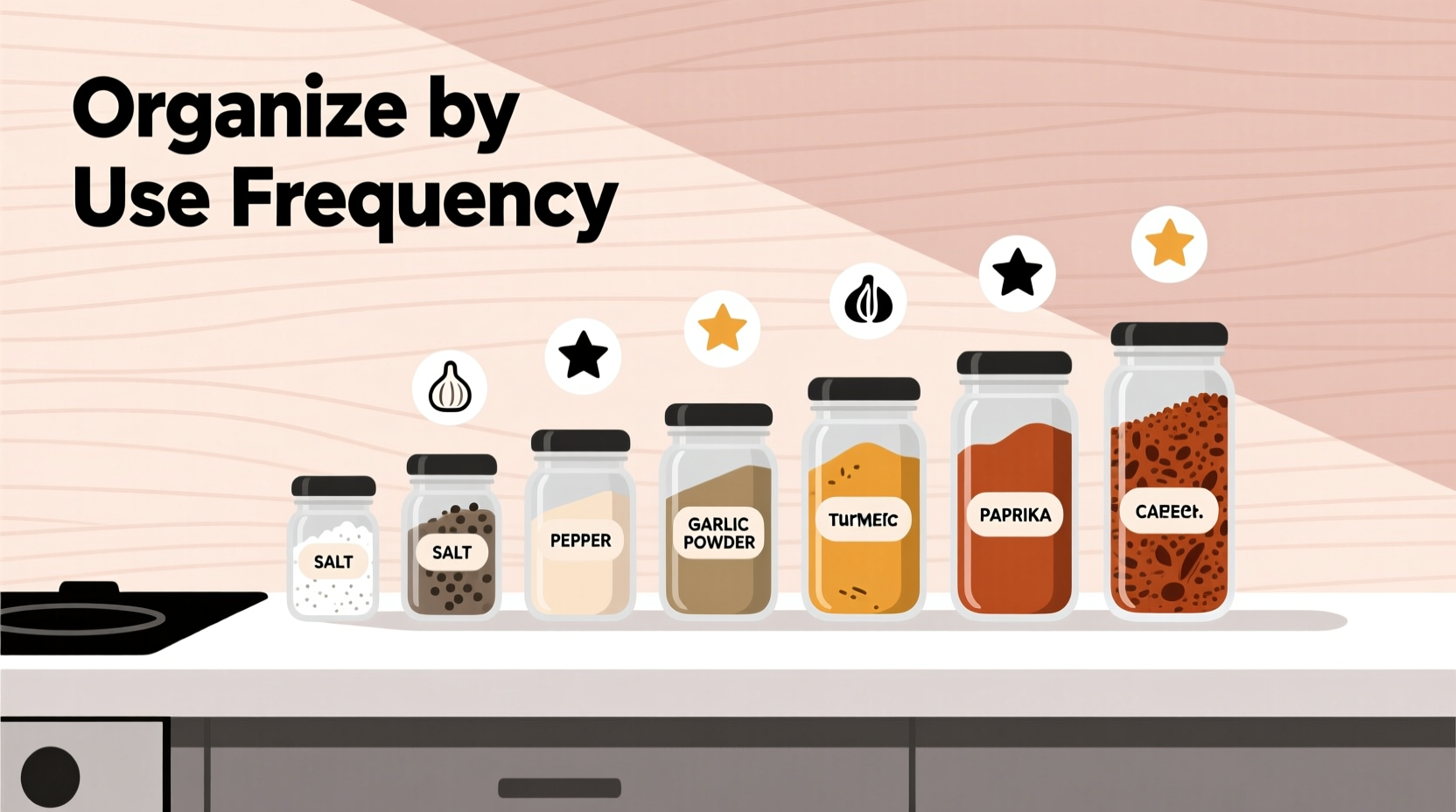
Before rearranging your spice rack, take stock of how you cook. Your usage patterns are unique—someone who makes Italian food weekly will rely heavily on oregano and basil, while a household focused on Indian cuisine may reach for turmeric and cumin daily. Recognizing these habits is the first step toward an efficient system.
Begin by tracking your spice use over one week. Note which spices appear in recipes, how often they’re used, and whether they’re essential or occasional. You’ll likely find that 20% of your spices account for 80% of your cooking—a real-world example of the Pareto Principle. These high-frequency spices deserve prime placement.
Group your spices into three tiers:
- Everyday (High Frequency): Used multiple times per week—e.g., salt, black pepper, garlic powder, paprika, cumin.
- Occasional (Medium Frequency): Used once a week or every few weeks—e.g., coriander, thyme, chili flakes.
- Rare (Low Frequency): Reserved for special dishes—e.g., saffron, sumac, fenugreek.
Step-by-Step Guide to Organizing by Frequency
Organizing your spice jars by usage doesn’t require expensive organizers or a full pantry overhaul. Follow this six-step process to build a sustainable, intuitive system.
- Empty and Audit: Remove all spices from cabinets or drawers. Check expiration dates—whole spices last 2–3 years, ground spices 1–2 years. Discard anything stale or discolored.
- Clean Containers: Wipe down jars and labels. Consider transferring spices to uniform, airtight containers with clear labels for consistency and freshness.
- Categorize by Use: Sort spices into the three groups: everyday, occasional, rare. Be honest about actual use, not idealized habits.
- Assign Zones: Designate areas in your kitchen based on accessibility. Everyday spices go within easy reach—eye-level shelves, front of drawers, or countertop turntables. Occasional ones go slightly farther back; rare spices can be stored higher up or in secondary storage.
- Label Clearly: Use consistent, readable labels. Include both the spice name and purchase/expiry date if possible. Avoid decorative fonts that hinder quick identification.
- Test and Adjust: Use the system for two weeks. If you’re still reaching past essentials, reevaluate placements. Flexibility ensures long-term success.
Real Example: A Busy Home Cook’s Transformation
Sarah, a working parent of two, spent nearly 10 minutes per meal rummaging through her overstuffed cabinet. After auditing her spice use, she discovered she used only nine spices regularly—mostly garlic powder, onion powder, smoked paprika, and Italian seasoning. She moved these to a magnetic rack inside her kitchen cabinet door, at eye level. The remaining 24 spices were grouped by cuisine (Mexican, Indian, baking) and placed on a high shelf. Within a week, her average prep time dropped by four minutes. “I’m not just saving time,” she said. “I feel less stressed before dinner.”
Storage Solutions That Support Frequency-Based Organization
The right storage method enhances your organizational strategy. Here are the most effective options based on frequency:
| Spice Tier | Recommended Storage | Why It Works |
|---|---|---|
| Everyday | Magnetic racks, drawer inserts, lazy Susans, under-cabinet mounts | Maximizes visibility and access without occupying counter space |
| Occasional | Stackable bins, labeled shelves, pull-out trays | Keeps items organized but out of the way until needed |
| Rare | Sealed containers in cool, dark cabinets or pantry boxes | Protects delicate spices from light and moisture while minimizing clutter |
For small kitchens, consider vertical solutions like tiered shelves or rail systems. These allow you to see all jars at a glance without spreading them across multiple surfaces. Drawer organizers with adjustable dividers are ideal for flat layouts, preventing bottles from tipping and mixing.
“Efficiency in the kitchen starts with reducing movement. When your most-used tools and ingredients are within arm’s reach, you eliminate wasted motion—and mental load.” — Chef Marcus Tran, Culinary Instructor and Kitchen Design Consultant
Common Mistakes to Avoid
Even well-intentioned organization can backfire if common pitfalls aren’t addressed. Watch out for these errors:
- Over-prioritizing aesthetics: Matching jars look great, but if they lack clear labels or don’t fit your space, they hinder function.
- Ignoring expiration dates: Old spices lose potency. A beautifully arranged rack filled with stale cumin won’t improve your food.
- Grouping only by alphabet or cuisine: While helpful for reference, these methods don’t reflect actual usage. A cinnamon jar at the front because it’s “baking” season doesn’t help if you never bake.
- Cluttering countertops: Only keep daily-use spices on the counter. More than five to seven jars creates visual noise and takes up valuable workspace.
- Forgetting rotation: New purchases should go behind older ones to prevent forgotten bottles from expiring at the back.
Checklist: Building Your Frequency-Based Spice System
Use this checklist to implement and maintain your optimized spice organization:
- ☐ Remove all spices from storage areas
- ☐ Discard expired or rancid spices
- ☐ Clean jars and replace damaged lids
- ☐ Group spices into High, Medium, and Low Frequency categories
- ☐ Choose appropriate storage for each tier
- ☐ Label all containers clearly and consistently
- ☐ Place high-frequency spices in easiest-to-reach locations
- ☐ Store low-frequency spices in designated, labeled zones
- ☐ Implement a FIFO rotation system
- ☐ Reassess usage every 3–6 months and adjust as needed
Frequently Asked Questions
How do I know if a spice is still good?
Perform a smell and taste test. Fresh spices have a strong aroma and vibrant flavor. If a pinch tastes dull or has little scent, it’s likely past its peak. Whole spices generally last longer than ground—up to three years versus one to two.
Should I transfer all my spices to new jars?
Not necessarily. Transfer only if current containers are difficult to label, don’t seal well, or vary widely in size and shape. Uniform jars improve accessibility and aesthetics, but functionality matters more than appearance. Prioritize airtight, opaque, or UV-protected containers to preserve quality.
What’s the best way to store spices long-term?
Keep spices in a cool, dark, dry place away from heat sources like stoves or ovens. Exposure to light, heat, and humidity degrades flavor compounds quickly. Avoid storing spices above the stove—a common but suboptimal location due to temperature fluctuations.
Conclusion: Turn Chaos Into Culinary Confidence
Organizing spice jars by frequency of use is more than a tidying task—it’s a commitment to smoother, more enjoyable cooking. When your most-used spices are instantly accessible, meal prep becomes less of a chore and more of a rhythm. You’ll reach for bold flavors more often, experiment with confidence, and reclaim precious minutes in your day.
The system isn’t static. As your cooking evolves—trying new cuisines, adjusting dietary needs, or simplifying routines—your spice organization should adapt too. Revisit your setup every few months, fine-tuning based on real habits, not assumptions.




 浙公网安备
33010002000092号
浙公网安备
33010002000092号 浙B2-20120091-4
Comments
No comments yet. Why don't you start the discussion?