
Jewelry is more than an accessory—it’s a personal expression, a memory keeper, and often a meaningful investment. But when necklaces twist into knots, earrings vanish in clutter, and bracelets tangle beyond recognition, the joy of wearing them fades fast. Many assume that solving this chaos requires buying specialized organizers, but what if you could untangle your collection using only items already in your home?
This guide reveals practical, creative, and surprisingly effective ways to organize your jewelry using common household objects. No need for expensive purchases or DIY projects requiring tools. These methods are accessible, space-efficient, and kind to delicate chains and stones. Whether you live in a studio apartment, travel frequently, or simply want a temporary fix while saving for a permanent solution, these strategies will bring order to the chaos.
Why Tangled Jewelry Is More Than Just Annoying
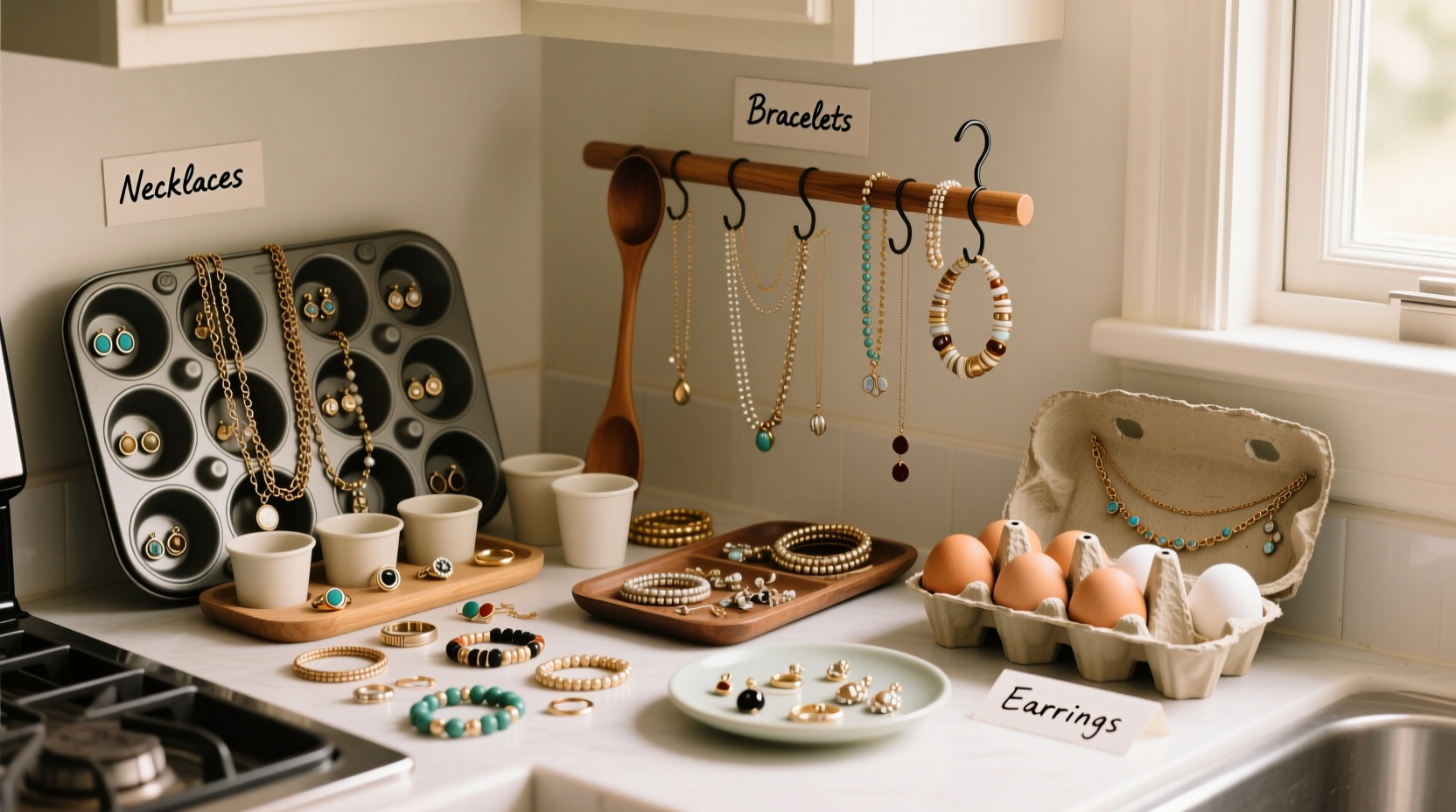
Tangled jewelry isn’t merely inconvenient—it can cause real damage. Delicate gold chains snap under pressure, silver oxidizes faster when compressed, and gemstone settings loosen from constant friction. According to Sarah Lin, a professional jewelry restorer with over 15 years of experience:
“Over 60% of chain repairs I see stem from improper storage. Even a few days of being jumbled in a drawer can weaken metal at stress points.” — Sarah Lin, Jewelry Restoration Specialist
Beyond physical harm, disorganized jewelry reduces usability. If you can’t find your favorite pair of earrings or spend five minutes untangling a necklace each time you wear it, you’re less likely to use your pieces regularly. This leads to forgotten accessories, mismatched sets, and even loss due to misplaced items.
The good news? You don’t need a velvet-lined tray or wall-mounted display to solve this. Simple household items can act as functional, elegant organizers with minimal effort.
Everyday Items That Double as Jewelry Organizers
The key to successful repurposing lies in understanding what makes a good jewelry storage system: accessibility, separation, visibility, and protection. The following common household items meet these criteria when used creatively.
1. Ice Cube Trays for Earrings and Rings
An ice cube tray is one of the most versatile organizers in any home—and perfect for small jewelry. Its individual compartments prevent pieces from touching, reducing scratches and tangling.
Place studs in one section, hoops in another, rings grouped by metal type, and even tiny pendants or charms sorted by color or occasion. For extra protection, line each compartment with felt or tissue paper to cushion delicate finishes.
2. Mason Jars for Necklaces and Bracelets
Mason jars aren’t just for preserves—they’re excellent vertical organizers. Screw the lid onto a shelf underside or mount it on a wall, then hang necklaces through the holes created by removing the center of the metal ring.
If mounting isn’t possible, place rolled-up scarves or fabric tubes inside the jar and drape shorter necklaces over them. This keeps chains separated and visible. For bracelets, stack them like coils around a central dowel or chopstick placed in the jar’s center.
3. Egg Cartons for Travel or Temporary Storage
Cardboard egg cartons offer built-in dividers ideal for separating jewelry during travel or short-term organization. Each cup holds a single item safely. Wrap longer chains around cardboard strips cut from the carton’s edges to prevent snarls.
- Use the lid to secure everything when closed
- Label sections with tape (e.g., “Work Earrings,” “Date Night”)
- Line cups with aluminum foil for a reflective, decorative touch
4. Tension Rods for Long Necklaces
In deep drawers or narrow cabinets, install a small tension rod vertically between two shelves. Hang long necklaces over the rod so they drape freely without touching other pieces. This mimics professional jewelry armoires at zero cost.
Works best with lightweight chains. For heavier pieces, reinforce with foam padding on the rod surface to prevent scratching.
5. Spice Racks for Visibility and Access
Repurpose an unused spice rack to store dangling earrings or short pendant necklaces. Slide earring hooks through the open slots or lay flat pieces across the shelves. Mounted on a wall or standing upright in a drawer, spice racks maximize visibility and minimize handling.
Choose models with adjustable tiers to accommodate different lengths. Clear acrylic versions add a modern look without visual clutter.
Step-by-Step Guide: Organizing Your Jewelry in One Hour
You can transform a chaotic jewelry collection into an orderly system in under 60 minutes. Follow this timeline using only household supplies.
- (Minutes 0–10): Gather Supplies
Pull out all jewelry and collect: ice cube trays, mason jars, egg cartons, spice racks, binder clips, toilet paper rolls, and soft cloths. - (Minutes 11–20): Sort by Type and Frequency
Group items into categories: daily wear, special occasion, seasonal, and rarely used. This helps determine storage priority. - (Minutes 21–35): Assign Storage Solutions
Place everyday earrings in an ice tray on your dresser. Store delicate pendants in a mason jar on a shelf. Roll up chains in toilet paper tubes labeled by length. - (Minutes 36–50): Prevent Tangling Proactively
Thread thin chains through straws before closing clasps. Tie silk scarves loosely around bundled bracelets. Use binder clips on drawer edges to hold necklace ends in place. - (Minutes 51–60): Label and Test Accessibility
Add sticky labels or masking tape tags. Try retrieving three random items to ensure the system works smoothly.
Do’s and Don’ts of Household Jewelry Organization
| Do | Don’t |
|---|---|
| Use soft linings like cloth or foam to protect finishes | Store jewelry directly on bare wood or metal surfaces |
| Separate metals to prevent galvanic corrosion (e.g., gold and silver) | Mix different metal types in tight spaces |
| Keep items in cool, dry areas away from humidity | Leave jewelry in bathrooms or near windows with direct sunlight |
| Label containers clearly for quick access | Rely solely on memory to locate stored pieces |
| Roll chains around cardboard or plastic forms | Ball up chains loosely in piles |
Real-Life Example: Maria’s Apartment Dresser Fix
Maria, a freelance designer living in a Brooklyn studio, struggled with her growing jewelry collection. With no closet space and a shared bathroom, her necklaces constantly tangled in a shoebox under her bed. She avoided wearing her favorites because retrieval took too long.
After reading about household hacks, she repurposed a glass mason jar and an old wooden spoon. She mounted the jar lid to the side of her dresser using screws, inserted the spoon handle-first through the center hole, and began hanging her six favorite necklaces from the bowl. The chains stayed separated, visible, and ready to wear. For earrings, she used a vintage ice tray found at a thrift store, lining each square with black fabric scraps.
“It took me 20 minutes and cost nothing,” Maria said. “Now I actually wear my grandmother’s locket every week instead of forgetting it under scarves.”
Checklist: Quick Setup for Any Space
Follow this checklist to implement an effective jewelry organization system today:
- ☐ Empty all current jewelry storage spots
- ☐ Clean each piece gently before reorganizing
- ☐ Group items by type (necklaces, earrings, rings, etc.)
- ☐ Select household containers based on available space
- ☐ Separate delicate and heavy pieces to avoid damage
- ☐ Secure loose ends using straws, clips, or tubes
- ☐ Label zones for easy identification
- ☐ Test the system by retrieving three items quickly
- ☐ Store in a dry, dark location away from moisture
- ☐ Reassess monthly and adjust as needed
Frequently Asked Questions
Can I use plastic bags to store jewelry?
Clear zip-top bags work well for travel or temporary storage, especially if you seal each item individually. However, avoid long-term use of sealed plastic, as trapped moisture can accelerate tarnishing in silver and base metals. Opt for breathable cloth pouches for extended storage.
How do I stop necklaces from tangling in jars or trays?
Thread the chain through a plastic straw before fastening the clasp. The rigid tube prevents loops from crossing. Alternatively, wrap the necklace around a small cardboard rectangle or a tongue depressor and secure with a rubber band.
What if I have limited drawer space?
Maximize vertical space. Use adhesive hooks inside cabinet doors to hang bracelets. Mount magnetic strips (like knife holders) to store bobby pins or metal-backed earrings. Hang tension rods in unused corners to drape longer chains. Wall-mounted solutions free up surface area while keeping items visible.
Final Thoughts: Simplicity Works Best
Organizing tangled jewelry doesn’t require perfection or expense. Often, the simplest solutions—like a reused jar, a spare tray, or a clever twist of cardboard—are the most sustainable. The goal isn’t a Pinterest-worthy setup but a system that makes your jewelry easier to love, wear, and care for.
By leveraging items already in your home, you not only save money but also reduce waste and adapt quickly to changing needs. Whether you’re in a dorm room, renting, or just waiting for the “perfect” organizer, these methods deliver real results now.




 浙公网安备
33010002000092号
浙公网安备
33010002000092号 浙B2-20120091-4
Comments
No comments yet. Why don't you start the discussion?