
A well-organized closet does more than create visual harmony—it transforms the way you dress. When clothes are arranged intentionally by color and style, getting dressed becomes faster, outfit coordination easier, and wardrobe maintenance simpler. Most people overlook the psychological and functional benefits of a thoughtfully structured closet, settling instead for overcrowded racks and inconsistent storage. But with a clear system based on color theory and garment categorization, anyone can achieve a closet that looks curated and functions efficiently. This guide breaks down the exact process used by stylists and organization experts to build a high-performance wardrobe space.
The Foundation: Declutter Before You Organize
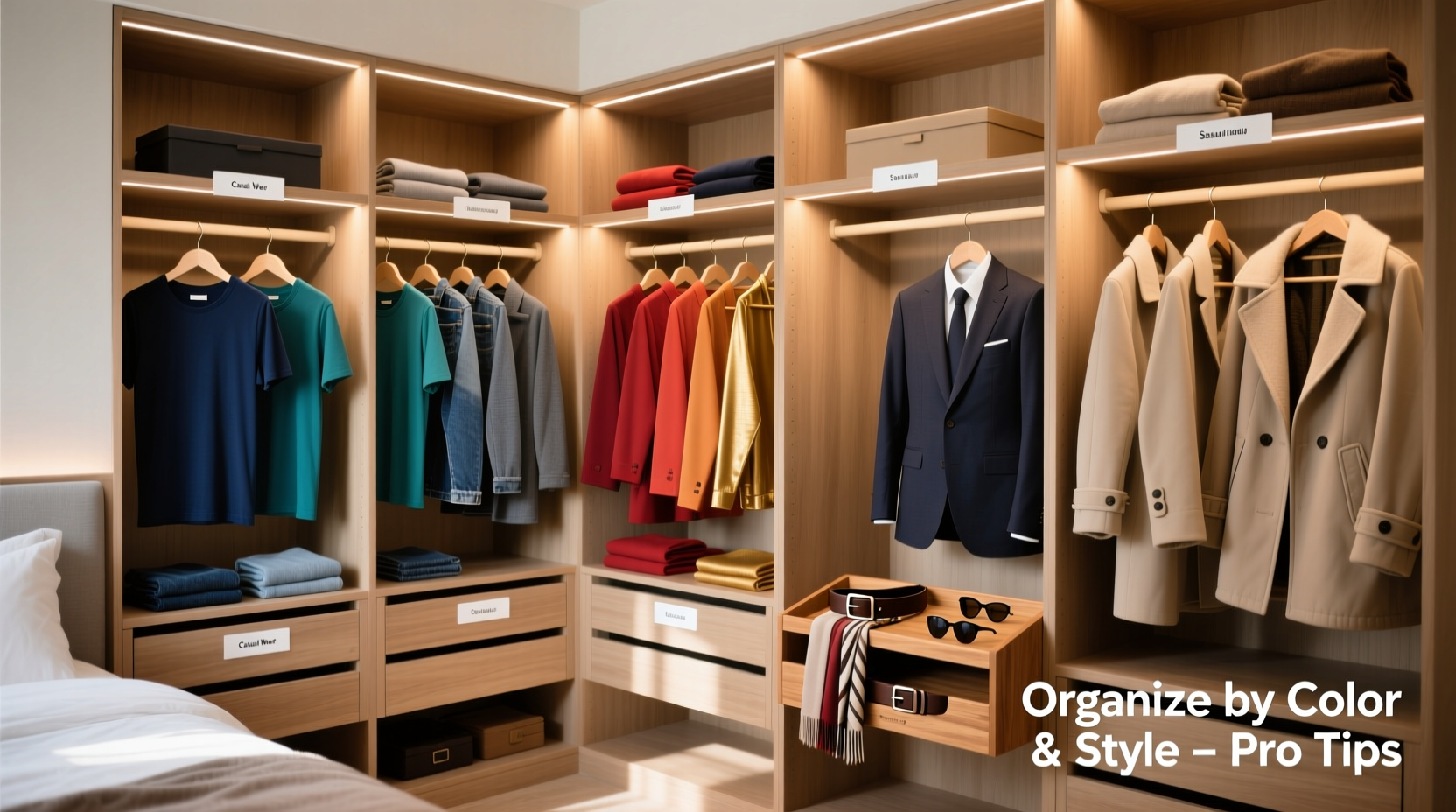
Before any color or style-based sorting begins, a thorough declutter is non-negotiable. A closet filled with unworn, ill-fitting, or outdated items will never feel organized, no matter how perfectly it’s arranged. Start by removing everything from your closet—yes, every last piece. Lay items out on a bed or floor where you can assess them objectively.
Categorize garments into four piles: keep, donate, repair, and reconsider. Be ruthless. Ask yourself: Have I worn this in the past year? Does it fit my current lifestyle? Is it in good condition? If the answer to any of these is “no,” it doesn’t belong in your daily rotation. Items needing minor repairs (a missing button, loose hem) should be set aside with a deadline—two weeks—to fix. If they’re not mended by then, let them go.
Sorting by Style: Build Your Wardrobe Architecture
Once you’ve narrowed your collection to only what you love and wear, the next step is grouping by style. This creates a structural foundation for your closet, making it easier to locate specific types of clothing quickly. Think of your wardrobe as having zones—each dedicated to a category of apparel.
Begin with broad categories such as:
- Workwear (blazers, dress shirts, tailored pants)
- Casual wear (jeans, t-shirts, hoodies)
- Activewear (leggings, sports bras, performance tops)
- Evening/dressy (dresses, suits, cocktail attire)
- Outerwear (coats, jackets, blazers)
- Seasonal (swimsuits, ski gear, holiday-specific pieces)
Within each category, further subdivide if needed. For example, under casual wear, separate long-sleeve versus short-sleeve tops. Keep frequently worn styles at eye level and seasonal or occasional pieces higher up or lower down. This tiered approach ensures convenience without sacrificing accessibility.
“Closet organization isn’t about perfection—it’s about creating a system that reduces decision fatigue and supports your daily life.” — Lena Torres, Professional Stylist & Wardrobe Consultant
Color Sequencing: The Rainbow Method
Now comes the most visually striking—and functionally powerful—step: organizing within each style category by color. The rainbow method follows the visible light spectrum: red, orange, yellow, green, blue, indigo, violet. However, most wardrobes use a simplified version: white/cream → pink → red → orange → yellow → green → blue → purple → gray → black, with neutrals often placed at either end.
To implement this effectively:
- Start with the lightest shade in each hue family and progress to the darkest.
- Keep similar tones together—e.g., olive green next to forest green, not sky blue.
- Place neutrals (white, beige, gray, black, navy) at the beginning or end of sections for clean transitions.
- Use consistent hangers (preferably slim, non-slip velvet ones) to maintain visual continuity.
For those with monochrome-heavy wardrobes, consider adding subtle texture variation—ribbed knits next to smooth cottons—or layering by sleeve length to maintain order without relying solely on color.
| Color Group | Common Garments | Tips for Placement |
|---|---|---|
| White / Cream | Dress shirts, tank tops, linen pants | Place at far left; ideal transition from storage bins |
| Pink / Red | Blouses, sweaters, dresses | Group bright pinks with reds; dusty rose near mauves |
| Blue | Jeans, button-downs, jackets | Sort from light denim to navy; separates easy matching |
| Gray / Black / Navy | Suits, turtlenecks, formal wear | Cluster at end for professional ensembles |
Step-by-Step: Building Your Pro-Level Closet
Follow this timeline over one weekend to transform your closet from chaotic to cohesive:
- Day 1 Morning – Empty & Assess (1–2 hours): Remove all items. Clean shelves, vacuum baseboards, wipe down rods. Evaluate storage capacity and lighting.
- Day 1 Afternoon – Sort by Style (2 hours): Create labeled zones using bins or floor space. Separate into work, casual, activewear, etc.
- Day 1 Evening – Declutter Final Pass (1 hour): Revisit “reconsider” pile. Donate immediately or schedule pickup.
- Day 2 Morning – Color Sort Within Categories (2 hours): Begin with one section (e.g., tops). Arrange each group by hue, progressing across the spectrum.
- Day 2 Afternoon – Install & Zone (1.5 hours): Hang clothes back in designated areas. Use shelf dividers, drawer organizers, and labeled boxes for accessories.
- Day 2 Evening – Review & Refine (30 mins): Step back. Walk through common outfits. Adjust spacing or sequence if needed.
Real-Life Example: Transforming a Busy Professional’s Closet
Sarah, a marketing director in Chicago, struggled with morning indecision despite owning over 100 tops and 30 pairs of pants. Her closet was jammed, with blazers buried behind workout gear and her favorite silk blouses wrinkled under heavier coats. After a consultation, we applied the color-and-style method.
We began by removing 40% of her wardrobe—mostly outdated trends and impulse buys. The remaining pieces were sorted into five core zones: business formal, business casual, weekend casual, exercise, and outerwear. Each zone was then arranged by color. Her once-messy closet now flows logically: white shirts lead into soft blues and grays, followed by bold patterns and accent colors.
The result? Sarah reports shaving 12 minutes off her average morning routine and has eliminated “I have nothing to wear” moments. More importantly, she’s rediscovered pieces she forgot she owned—now seamlessly integrated into her daily mix.
Expert Tips for Long-Term Success
Maintaining a color-and-style organized closet requires consistency, not perfection. Here are proven strategies from top organizers:
- Rotate seasonally: Store off-season clothes in under-bed bins or high shelves. Rotate twice a year during daylight saving shifts as a natural reminder.
- Adopt the one-in, one-out rule: Every time you buy something new, remove one old item. This prevents clutter creep.
- Use uniform hangers: Wooden or velvet hangers maintain shape and create visual calm. Avoid mismatched plastic or wire types.
- Fold knits vertically: Sweaters and delicate fabrics should be folded—not hung—to prevent stretching. Use shelf dividers for upright storage.
- Label storage boxes: For scarves, belts, or seasonal items, clear labels save time and reinforce the system.
“The most organized closets aren’t the fullest—they’re the ones where every item has a purpose and a place.” — Marcus Lee, Certified Professional Organizer (CPO)
Do’s and Don’ts of Color-Based Organization
| Do’s | Don’ts |
|---|---|
| Group similar hues together (navy with dark gray) | Mix textures randomly without regard to flow |
| Place frequently worn items at eye level | Store heavy coats above lightweight blouses |
| Use drawer dividers for small accessories | Let shoes or bags spill onto closet floor |
| Reassess your system every 3 months | Ignore changes in lifestyle or body size |
FAQ: Common Questions About Color & Style Organization
What if I mostly wear black and gray?
Even in a monochrome wardrobe, differentiation matters. Sort by fabric weight (cotton before wool), sleeve length (short to long), or fit (fitted to loose). You can also arrange by occasion—work blacks first, casual second. Adding subtle tonal variation (charcoal vs. onyx) enhances visibility.
Should I organize shoes and accessories the same way?
Yes—but adapt the method. Shoes can be lined up by heel height and then color. Accessories like scarves or ties benefit from color sequencing in drawers or hanging organizers. Belts can hang on hooks in color order. Consistency across categories reinforces the overall system.
How do patterns fit into a color-based system?
Classify patterned items by their dominant color. A floral blouse with pink as the main background goes in the pink section. Striped shirts go where the base color leads (white-striped navy shirt belongs with navy). This keeps the visual rhythm intact while accommodating variety.
Final Checklist: Your Closet Organization Action Plan
- Remove all clothing from the closet
- Declutter using the 1-year rule and fit check
- Sort remaining items into style categories
- Sub-sort each category by color (light to dark)
- Invest in uniform hangers and storage solutions
- Hang clothes back in rainbow order within each zone
- Label drawers and bins for accessories
- Establish a quarterly review habit
- Adopt the one-in, one-out policy
- Take a photo of your finished closet for motivation
Conclusion: Elevate Your Routine, One Hanger at a Time
Organizing your closet by color and style isn’t just about aesthetics—it’s about designing a system that aligns with how you live. When your wardrobe reflects intentionality, dressing becomes effortless, confidence rises, and wasted time fades. The effort you invest today pays dividends every morning for months and years to come. This isn’t a temporary fix; it’s a sustainable upgrade to your personal environment.




 浙公网安备
33010002000092号
浙公网安备
33010002000092号 浙B2-20120091-4
Comments
No comments yet. Why don't you start the discussion?