
Mornings don’t have to be chaotic. For many, the daily scramble begins before they even leave the bedroom—fumbling through mismatched hangers, searching for that one shirt, or realizing too late that nothing matches. The solution isn’t more time; it’s better organization. One of the most effective yet underused strategies is organizing your closet by color. Beyond aesthetics, this method reduces visual clutter, simplifies decision-making, and fosters a sense of calm from the moment you open your closet door.
Color-based organization transforms your wardrobe into a functional system. When clothes are arranged in a gradient order—like a rainbow—you can instantly locate pieces, create coordinated outfits, and maintain consistency in your style. This approach is used by professional stylists, minimalists, and productivity experts who understand that visual harmony directly impacts mental clarity.
The Psychology Behind Color-Based Organization
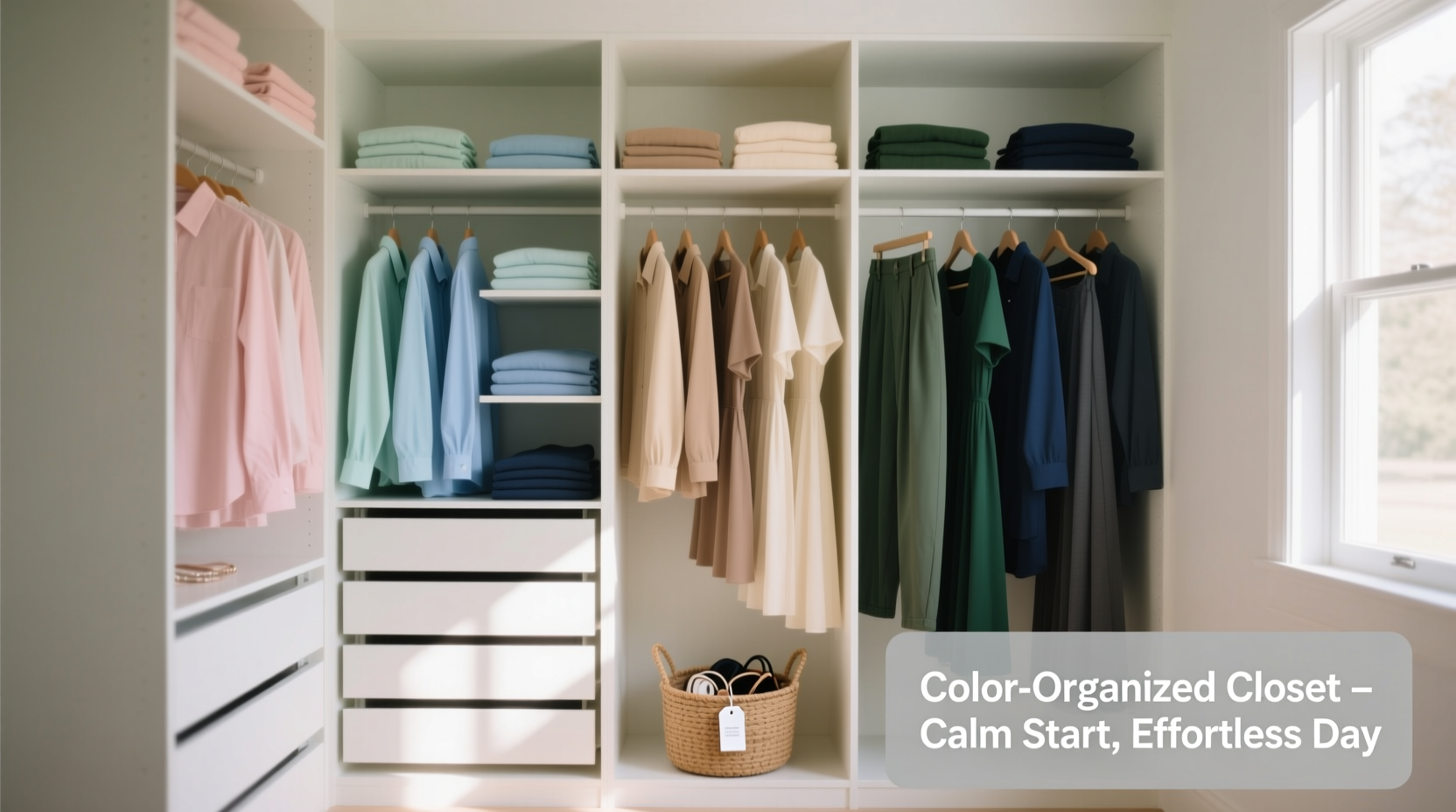
Human brains process color faster than text or shape. Studies in environmental psychology show that organized, visually harmonious spaces reduce stress and improve focus. A closet sorted by color creates a soothing visual rhythm, similar to walking into a well-curated boutique. Instead of confronting a jumble of patterns and hues, you’re greeted with a smooth transition from soft pastels to deep neutrals.
This visual predictability lowers cognitive load. When your brain doesn’t have to work hard to find or match items, you conserve mental energy for more important decisions. That small reduction in friction at the start of the day compounds over time, leading to fewer rushed choices, less frustration, and greater confidence in your appearance.
“Order in the physical space creates order in the mind. A color-sorted closet isn’t just about fashion—it’s a mindfulness tool.” — Dr. Lena Torres, Environmental Psychologist
Step-by-Step: How to Organize Your Closet by Color
Organizing by color isn’t just tossing clothes into vague hue categories. It requires intention, patience, and a logical sequence. Follow this timeline to build a sustainable system.
- Empty your closet completely. Take every garment out. This allows you to assess what you own, spot duplicates, and clean the space before returning items.
- Sort by category first. Separate clothes into groups: tops, bottoms, dresses, outerwear, etc. This prevents mixing a red sweater with red pants when they serve different functions.
- Choose your color spectrum. Most people use the ROYGBIV model (Red, Orange, Yellow, Green, Blue, Indigo, Violet), but adapt it to your wardrobe. If you own mostly neutrals, group shades of white, beige, gray, and black in a grayscale gradient.
- Break down each color into sub-shades. Within “blue,” arrange from light sky blue to navy. In “pink,” go from blush to fuchsia. This micro-ordering enhances precision.
- Rehang or fold in sequence. Use consistent hangers and folding methods. Hang items in color order within each category. Folded stacks should follow the same left-to-right flow.
- Label if needed. For large wardrobes, small fabric labels or discreet tags can help maintain the system, especially if others share the closet.
- Refresh monthly. Set a 10-minute reminder to realign misplaced items and reassess what’s working.
Do’s and Don’ts of Color Sorting
| Do’s | Don’ts |
|---|---|
| Use uniform hangers for visual consistency | Use mismatched hangers that disrupt color flow |
| Group by both category and color | Mix tops and pants in the same color block |
| Fold sweaters vertically to see all colors at once | Stack folded items horizontally where only the top is visible |
| Include accessories like scarves or belts in matching zones | Leave accessories in drawers unrelated to clothing colors |
| Adjust for seasonal rotation without breaking the system | Let off-season clothes clutter the main space |
A Real-Life Example: From Chaos to Calm
Sarah, a project manager in Chicago, used to spend 20 minutes every morning choosing an outfit. Her closet was full of clothes, yet she felt like she had “nothing to wear.” After reading about color sorting, she dedicated a Sunday afternoon to reorganizing. She pulled everything out, donated 37 items she hadn’t worn in a year, and grouped her remaining pieces by type and hue.
She started with blouses: ivory → pink → red → orange → yellow → green → blue → purple → gray → black. Each shade flowed seamlessly into the next. She repeated the process for slacks and dresses. The result? Her morning routine dropped to under five minutes. More importantly, she reported feeling “lighter” and more focused during her commute.
“It’s not magic,” she said. “It’s just that now I can *see* my options. Before, I was guessing. Now, I’m choosing with purpose.”
Tips for Maintaining Your Color System
Even the best systems fail without maintenance. These tips ensure your closet stays functional long-term.
- Adopt the “one in, one out” rule. Every new clothing purchase should replace an old item. This prevents overcrowding and preserves visual balance.
- Wash clothes inside out in cold water. This preserves dye integrity, keeping colors vibrant and distinct longer.
- Rotate seasonally in color order. Store off-season clothes in labeled bins, but keep them sorted by hue so reintegration is seamless.
- Use slim, non-slip hangers. Velvet or flocked hangers prevent slipping and save space, allowing tighter, cleaner rows.
- Keep a “decision zone” mirror nearby. Position a full-length mirror just outside the closet to try combinations immediately after selection.
Common Challenges and How to Solve Them
Not every wardrobe fits neatly into a rainbow. Here’s how to handle frequent obstacles:
- What if I have mostly black, gray, and white? Create a grayscale spectrum: white → cream → beige → tan → gray → charcoal → black. Add texture variety (knits, silks, denim) to differentiate within tones.
- How do I handle multi-colored prints? Assign them to the dominant color. A floral blouse with pink as the base goes in the pink section. If no single color dominates, create a “pattern” zone between neutral and bright sections.
- My partner thinks it’s excessive. Compromise by starting with one shared section—like work shirts—or designate personal zones within the same closet using dividers.
- I travel often and bring back souvenirs. Designate a “travel” drawer or shelf for culturally significant items that don’t fit the system. Enjoy their uniqueness without disrupting flow.
Checklist: Building Your Color-Sorted Closet
Follow this actionable checklist to complete your transformation:
- ☐ Remove all clothing from the closet
- ☐ Sort items by category (tops, bottoms, dresses, etc.)
- ☐ Discard or donate unworn, damaged, or ill-fitting pieces
- ☐ Identify your dominant color palette
- ☐ Arrange each category in ROYGBIV or grayscale order
- ☐ Use consistent hangers and folding techniques
- ☐ Label sections if helpful
- ☐ Test the system: pick three outfits in under 10 minutes
- ☐ Schedule a monthly 10-minute refresh session
- ☐ Share the system with household members or roommates
Frequently Asked Questions
Does this work for small closets?
Absolutely. In fact, small spaces benefit most from color organization. The visual clarity makes the closet feel larger and more intentional. Use vertical space wisely and avoid overcrowding each section.
What if I wear a lot of patterns or dark colors?
Patterns belong in the section where the background color dominates. For dark-heavy wardrobes, focus on subtle shifts in tone—navy vs. black, charcoal vs. plum. Even minor distinctions improve retrieval speed and outfit coordination.
Will I need to buy new clothes to fill color gaps?
No. The goal is organization, not completeness. Over time, you may notice missing hues and choose to add them intentionally, but never force purchases to “complete the rainbow.” Let your style evolve naturally.
Conclusion: Start Today for a Smoother Tomorrow
Organizing your closet by color is more than a visual upgrade—it’s a daily ritual that supports clarity, efficiency, and self-expression. By reducing decision fatigue and creating a peaceful starting point each morning, you set a tone of control and intention for the rest of your day.
You don’t need a walk-in closet or a designer wardrobe. You need a few hours, a clear plan, and the willingness to treat your space as an extension of your mindset. Once you experience the ease of pulling together an outfit in seconds, you’ll wonder why you waited so long.




 浙公网安备
33010002000092号
浙公网安备
33010002000092号 浙B2-20120091-4
Comments
No comments yet. Why don't you start the discussion?