
A disorganized spice drawer is more than just an eyesore—it’s a culinary obstacle. Cluttered containers, mismatched lids, expired seasonings, and indecipherable labels slow down meal prep and compromise flavor. Professional chefs don’t rely on luck when reaching for cumin or coriander; they depend on precision, visibility, and consistency. The good news? You can replicate their efficiency at home without investing in expensive kitchen renovations or specialty gear. With a clear strategy, the right tools, and a few disciplined habits, you can transform your jumbled spice drawer into a streamlined command center for flavor.
Start by Decluttering: Remove the Noise
The foundation of any effective organization system is elimination. Before arranging what remains, you must first remove what no longer serves you. Begin by pulling every spice, seasoning blend, salt, pepper, and dried herb from your drawer. Place them on a clean counter where you can inspect each one.
Check expiration dates. Whole spices generally last 3–4 years, ground spices 2–3 years, and dried herbs 1–3 years. If a container lacks a date, perform a smell and color test. Fresh spices are vibrant and aromatic. If a spice smells dusty or looks faded, it has likely lost its potency and should be discarded.
Be ruthless. Many home cooks accumulate duplicates—two jars of smoked paprika, three versions of chili powder—often because they couldn’t find the original. Consolidate where possible. Keep only what you use regularly or have a specific plan to use within the next six months.
Create a Logical Categorization System
Chefs group ingredients by function and frequency of use. Emulate this logic by sorting your remaining spices into categories. Common groupings include:
- Salt & Pepper Varieties (e.g., flaky sea salt, smoked salt, Tellicherry peppercorns)
- Dried Herbs (e.g., thyme, oregano, rosemary)
- Ground Spices (e.g., cumin, cinnamon, turmeric)
- Whole Spices (e.g., cloves, cardamom pods, star anise)
- Blends (e.g., curry powder, za’atar, garam masala)
- Heat Elements (e.g., crushed red pepper, cayenne, chipotle powder)
- Specialty & Global Flavors (e.g., sumac, ras el hanout, furikake)
This categorization isn’t rigid—it should reflect how you cook. If you frequently make Mexican dishes, group chili powders, cumin, and oregano together. If you bake often, keep sweet spices like nutmeg, allspice, and vanilla extract in close proximity.
“Organization isn’t about perfection—it’s about predictability. When you know exactly where each ingredient lives, you free up mental space for creativity.” — Chef Lena Tran, Culinary Instructor at the Pacific Institute of Baking and Seasoning
Standardize Your Containers
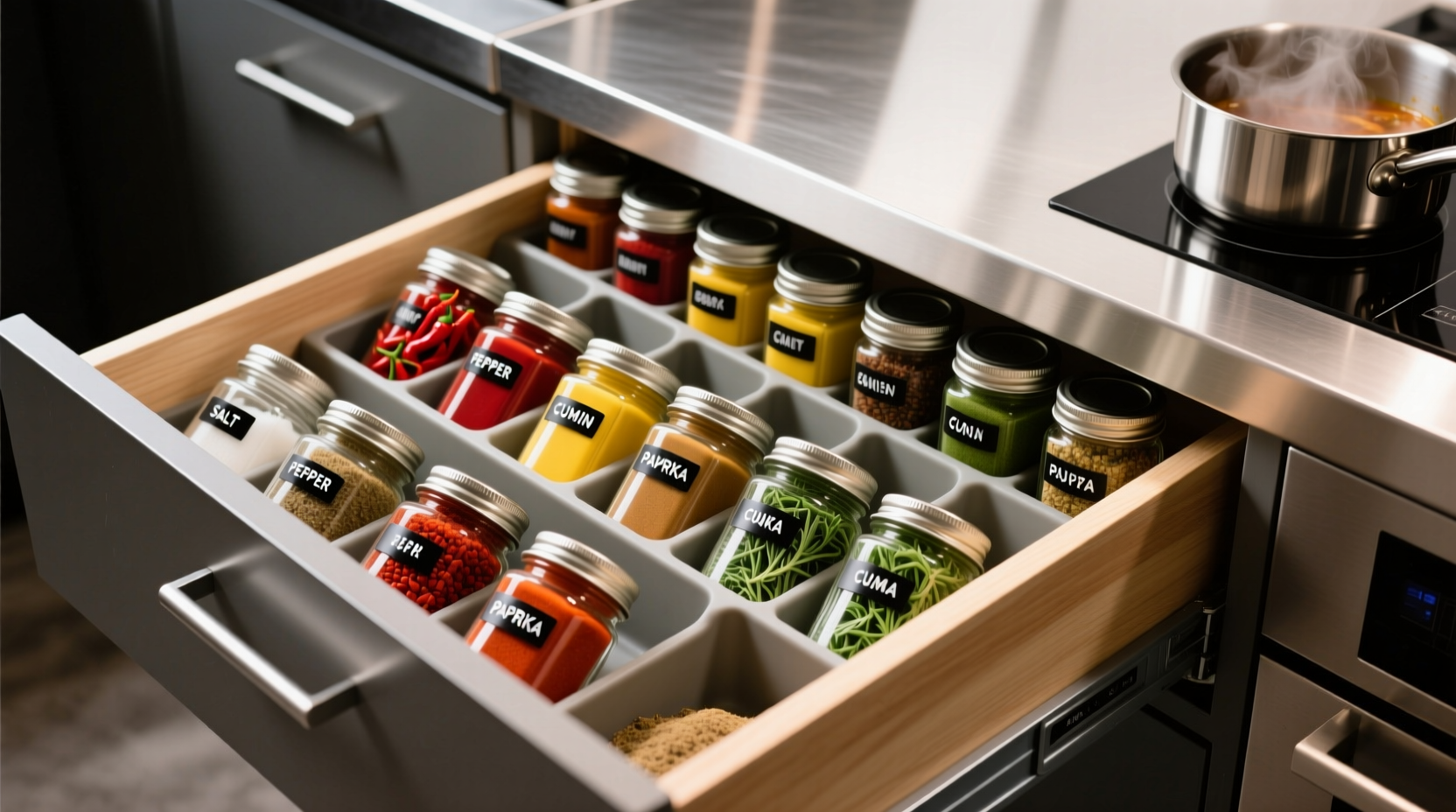
Uniformity is key to both visual clarity and functional efficiency. Mismatched bottles with varying lid types create chaos. Upgrade to a consistent set of high-quality spice jars. Opt for ones with shaker tops, secure lids, and flat fronts so labels face forward. Square or rectangular containers maximize drawer space better than round ones.
Transfer all spices into these new containers—even if they came in attractive packaging. Not only does this eliminate label clutter, but it also protects contents from light degradation. Amber or opaque glass is ideal for preserving potency.
Label clearly. Use a label maker or waterproof stickers with bold, legible text. Include the spice name and date. For multilingual households or frequent cooks, consider adding icons—a flame for spicy items, a leaf for herbs—to speed identification.
| Container Type | Pros | Cons |
|---|---|---|
| Glass Jars with Shaker Lids | Durable, non-reactive, preserves freshness | Heavier, can break if dropped |
| Plastic Stackable Tins | Lightweight, affordable, space-efficient | May absorb odors over time |
| Magnetic Spice Tins | Mounts inside cabinet doors, saves drawer space | Limited capacity, not ideal for large collections |
| Bamboo Boxes with Trays | Eco-friendly, aesthetically pleasing | Less durable, harder to clean |
Design Your Drawer Layout for Speed and Flow
Your drawer should operate like a well-designed workstation: everything visible, accessible, and arranged in order of use. Begin by measuring your drawer’s interior dimensions. Choose organizers that fit snugly but allow smooth opening and closing.
Use adjustable dividers or modular trays to create dedicated zones for each category. Place daily-use spices—salt, pepper, garlic powder, onion powder—at the front. Reserve back sections for occasional or regional blends. If you use a mortar and pestle or spice grinder, allocate a corner for those tools.
Stacking tiers work well for deeper drawers, allowing you to see behind front rows. For shallow drawers, low-profile trays prevent overcrowding. Consider a pull-out tray if your drawer is deep but hard to access at the back.
One pro trick: arrange spices alphabetically within categories. This reduces decision fatigue. Looking for “turmeric”? It’s between “tarragon” and “white pepper,” not buried under paprika and parsley.
Step-by-Step Guide to a Chef-Worthy Spice Drawer
Follow this timeline to complete your transformation in under two hours:
- Day 1 – Empty and Evaluate (30 minutes): Remove all spices. Discard expired or stale ones. Consolidate duplicates.
- Day 1 – Sort and Categorize (20 minutes): Group spices into functional categories based on your cooking style.
- Day 1 – Purchase Supplies (Optional, 30 minutes): Buy uniform containers, labels, and drawer organizers if needed.
- Day 2 – Transfer and Label (45 minutes): Fill containers, label clearly, and note opening dates.
- Day 2 – Install and Arrange (15 minutes): Set up dividers, place containers in logical zones, and test accessibility.
- Ongoing – Maintain Weekly (5 minutes): After grocery shopping, return spices promptly. Wipe spills immediately.
This process doesn’t need to happen all at once. Break it into 15-minute blocks if necessary. The goal is progress, not perfection.
Real Example: From Chaos to Clarity in One Weekend
Sarah, a home cook in Portland, used to dread making dinner. Her spice drawer was a black hole—she’d lose whole cloves while searching for cinnamon, and her paprika often spilled into neighboring jars. After reading about chef-style organization, she spent a Sunday afternoon emptying the drawer, tossing nine expired spices, and consolidating four chili powders into one labeled tin.
She invested in 20 amber glass jars with magnetic labels and a bamboo organizer with adjustable compartments. She grouped her most-used Italian and Mexican blends at the front and placed baking spices in a separate tier. Within a week, she noticed she was seasoning more confidently and experimenting with new recipes. “I actually *see* what I have now,” she said. “It feels like my kitchen finally supports me instead of fighting me.”
Prevent Future Clutter: Build Sustainable Habits
Organization is not a one-time fix—it’s a maintenance practice. To keep your drawer pristine, adopt these rules:
- One In, One Out: When you buy a new spice, remove an old or unused one.
- Shop with a List: Avoid impulse buys unless you have a recipe ready to use it.
- Store Smart: Keep spices away from heat, light, and moisture. Never store above the stove.
- Rotate Stock: Place newer purchases behind older ones to use the oldest first (FIFO method).
- Limit Bulk Buys: Only buy large quantities of spices you use frequently.
If you collect international spices, designate a “rotation bin” for temporary additions. Test a new blend for three meals. If it doesn’t earn a permanent spot, donate or discard it.
Frequently Asked Questions
Can I keep spices in their original packaging?
You can, but it’s not ideal. Retail packaging often fades, lacks uniformity, and may not be airtight. Transferring to standardized containers improves longevity, appearance, and accessibility. If you prefer to keep originals, at least remove outer cardboard sleeves and group them neatly in bins.
How do I organize spices if I have limited drawer space?
Maximize vertical space. Use stackable tins, tiered shelves, or wall-mounted magnetic racks inside cabinet doors. Consider relocating less-used spices to a pantry shelf and keeping only daily essentials in the drawer. A rotating Lazy Susan in a nearby cabinet can also serve as an extension of your system.
What’s the best way to label spices for long-term readability?
Use waterproof labels or a label maker with laminated tape. Avoid masking tape or paper stickers, which degrade over time. For a minimalist look, etch names directly onto glass with a fine-tip paint pen. Ensure font size is large enough to read quickly during cooking.
Final Thoughts: Elevate Your Kitchen, One Spice at a Time
A well-organized spice drawer is more than a neat detail—it’s a reflection of intentionality in your kitchen. When your tools support rather than hinder you, cooking becomes faster, more enjoyable, and infinitely more creative. Professional chefs aren’t born with perfect pantries; they build systems that reduce friction and amplify results. You can do the same.
Start small. Clear out one drawer. Standardize ten jars. Create one logical zone. The momentum will follow. In weeks, you’ll wonder how you ever cooked without seeing every spice at a glance. This isn’t about achieving flawlessness—it’s about building a kitchen that works for you, every single day.




 浙公网安备
33010002000092号
浙公网安备
33010002000092号 浙B2-20120091-4
Comments
No comments yet. Why don't you start the discussion?