
A cluttered spice drawer is more than just an eyesore—it’s a daily frustration. You reach for cumin and end up knocking over paprika. You buy a new spice only to find three hidden jars of the same thing behind the turmeric. The solution isn’t buying more containers or clearing out your entire pantry; it’s smart organization that works with how you cook and how your drawer functions. With thoughtful planning and a few strategic tools, you can transform your spice drawer into a streamlined, efficient system where every jar has a place and every label is instantly readable.
Why Most Spice Drawers Fail
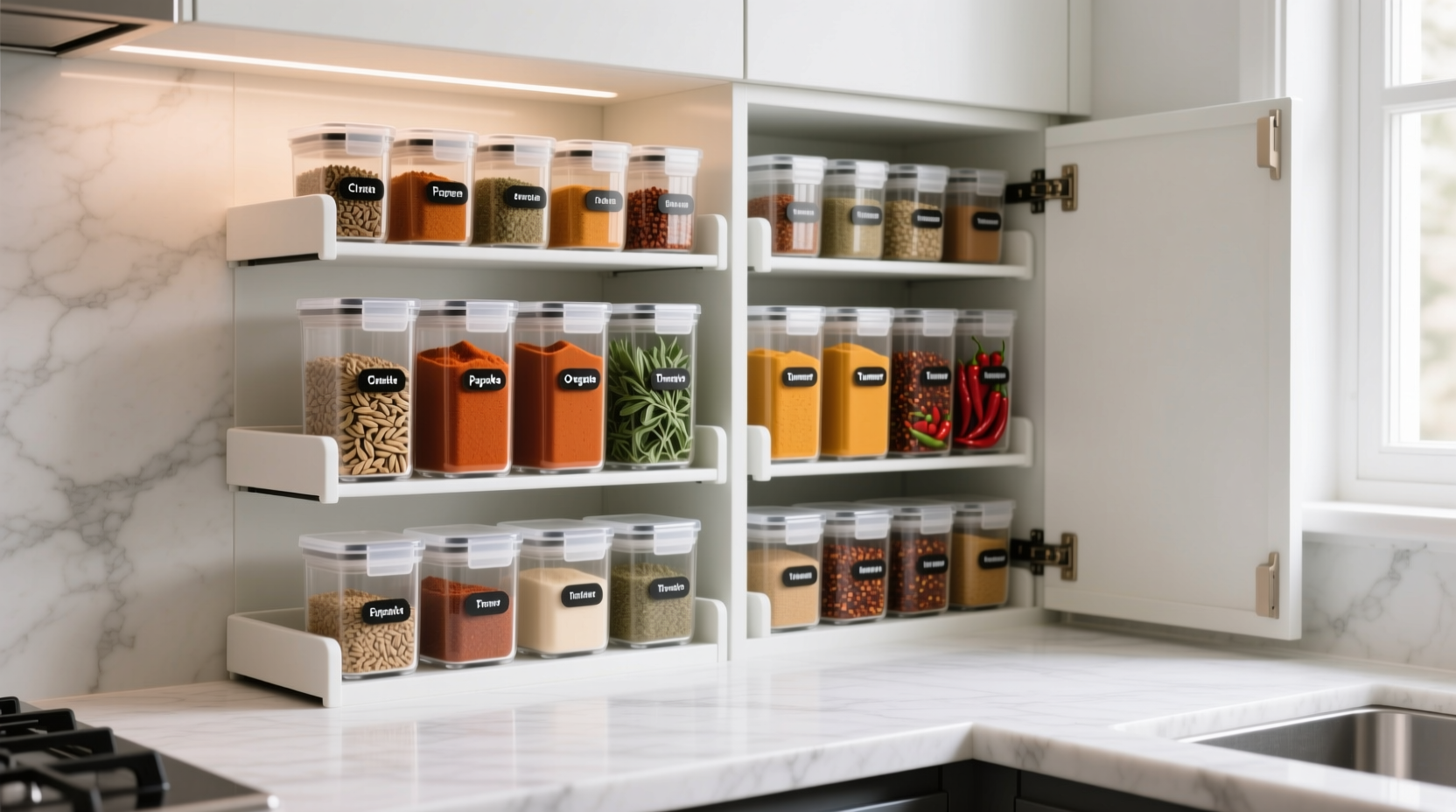
The average kitchen spice drawer becomes chaotic because it grows organically. Spices are added one by one—gifts from relatives, impulse buys at the market, duplicates from forgetting what’s already in stock. Over time, bottles pile up, labels face different directions, and small jars get buried under large ones. Without a consistent storage method, visibility and access diminish quickly.
The core issues usually include:
- Lack of uniformity: Jars come in various shapes, sizes, and heights, making stacking and arranging difficult.
- Poor labeling: Faded labels, tiny print, or no labels at all make identification a guessing game.
- No system: Spices aren’t grouped logically, so finding one requires scanning every row.
- Overcrowding: Too many spices in too small a space leads to jumbled stacks and obscured labels.
Fixing this doesn’t require perfection—it requires consistency.
Step-by-Step: Transform Your Spice Drawer in 60 Minutes
You don’t need a weekend renovation to fix your spice drawer. Follow this timeline to complete the overhaul efficiently.
- Empty Everything (5 minutes): Remove all spices from the drawer. Place them on a counter or table where you can sort them easily.
- Discard Expired Spices (10 minutes): Check expiration dates. Whole spices last 3–4 years; ground spices, 2–3 years. If the aroma is weak or absent, discard it.
- Group by Category (10 minutes): Sort spices into categories such as baking, savory, international, heat, herbs, etc.
- Choose a Storage System (10 minutes): Decide whether to use turntables, tiered racks, drawer inserts, or uniform containers.
- Label Clearly (10 minutes): Ensure every container has a bold, legible label. Consider color-coding if helpful.
- Arrange Strategically (5 minutes): Place most-used spices front and center. Store less common ones toward the back or sides.
Storage Solutions That Maximize Visibility and Access
The right organizer makes all the difference. Not every solution fits every drawer, so consider your space, cooking habits, and preferred layout.
| Solution | Best For | Pros | Cons |
|---|---|---|---|
| Turntable (Lazy Susan) | Deep drawers or cabinets | Full rotation brings every spice forward; great for tall bottles | Takes up horizontal space; hard to read labels on inner ring |
| Tiered Shelf Racks | Shallow drawers with depth issues | Creates layers so back items are visible; stackable | May not fit oddly shaped drawers; limited width capacity |
| Drawer Inserts (Wood or Acrylic) | Standard-width drawers | Customizable compartments; keeps jars upright and aligned | Less flexible if spice count changes; higher cost |
| Uniform Glass Jars | All drawer types | Creates visual harmony; improves readability; airtight | Requires transfer effort; initial investment in containers |
| Floating Labels + Flat Layout | Wide, shallow drawers | Maximizes surface view; easy to scan | Jars can slide; no protection from spills |
If your drawer is narrow but deep, combine a turntable with tiered trays. For wide, shallow drawers, flat acrylic dividers work best. The goal is to eliminate the need to move one jar to see another.
Expert Insight: Designing for Real Cooking Habits
Organization isn’t about aesthetics alone—it’s about function. According to Maria Tran, a professional kitchen organizer and culinary instructor, “The best spice systems reflect how people actually cook, not how they think they should cook.”
“Most home cooks reach for the same 10–15 spices 90% of the time. Your drawer should make those instantly accessible. Don’t waste prime real estate on saffron if you use it twice a year.” — Maria Tran, Kitchen Efficiency Consultant
She recommends placing everyday spices like salt, pepper, garlic powder, and oregano in the front row. Reserve the back or sides for specialty blends, regional spices, or infrequently used ingredients. This “cooking zone” concept reduces decision fatigue and speeds up meal prep.
Real Example: From Chaos to Clarity in One Evening
Sarah, a home cook in Portland, had a deep lower drawer packed with over 50 spice bottles. Some were half-empty, others unlabeled. She often wasted time searching or ended up using substitutes because she couldn’t find what she needed.
After reading about tiered drawer organizers, she measured her drawer and purchased two adjustable acrylic shelf risers. She transferred her most-used spices into uniform 4oz glass jars with chalkboard labels. She grouped them by cuisine: Italian herbs together, Mexican spices adjacent, baking essentials in a separate row.
She placed the tiered racks side by side, creating four visible rows. The change was immediate: she could now see every spice at a glance. Her cooking became faster, and she stopped buying duplicates. “It feels like I gained five minutes every time I cook,” she said.
Checklist: Building Your Ideal Spice Drawer
Use this checklist to ensure your spice drawer overhaul covers all bases:
- ☐ Empty the drawer completely
- ☐ Discard expired or stale spices
- ☐ Wipe down the drawer interior
- ☐ Measure drawer dimensions (width, depth, height)
- ☐ Choose a storage system (turntable, tiers, dividers, etc.)
- ☐ Transfer spices to uniform containers (optional but recommended)
- ☐ Label each container clearly—front-facing and bold
- ☐ Group spices by use: everyday, cuisine, baking, heat level
- ☐ Place most-used spices in easiest-to-reach spots
- ☐ Leave 10–15% empty space for future additions
This process doesn’t need to be perfect on the first try. Adjust compartment sizes or groupings as your cooking evolves.
Do’s and Don’ts of Spice Drawer Organization
| Do | Don't |
|---|---|
| Store spices away from heat, light, and moisture (not above the stove) | Keep spices in clear jars directly next to a window or oven |
| Use consistent container sizes and shapes | Mix tall bottles with short jars without tiering |
| Face all labels forward for instant readability | Let jars face random directions |
| Group by frequency of use or cuisine type | Alphabetize unless that’s how you naturally search |
| Leave breathing room between rows | Pack the drawer so full you can’t remove one jar without disturbing others |
One common mistake is organizing spices alphabetically. While logical in theory, it doesn’t align with how most people cook. You’re more likely to grab “Italian seasoning” when making pasta than to search for “o” under oregano. Functional grouping saves time.
FAQ: Common Spice Drawer Questions Answered
Should I transfer my spices to new containers?
Transferring to uniform containers isn’t mandatory, but it dramatically improves accessibility and appearance. Matching jars allow for tighter packing, easier labeling, and better stacking. Use glass with airtight lids to preserve freshness. If keeping original packaging, consider slipping them into labeled bins or boxes for consistency.
How do I prevent spice jars from sliding around?
Use drawer liners with a grippy texture (like silicone or rubber mesh) to keep jars stable. Alternatively, choose organizers with built-in dividers or non-slip bases. Avoid smooth plastic mats that offer no traction.
What’s the best way to label spices?
Bold, high-contrast labels work best. Black text on white background or white on black is highly readable. Chalkboard labels allow flexibility, while printed waterproof labels last longer. Always place the label on the top edge or front face so it’s visible without pulling the jar out.
Conclusion: A Functional Spice Drawer Changes How You Cook
An organized spice drawer isn’t just a tidy detail—it’s a catalyst for better cooking. When every ingredient is visible and within reach, you’re more likely to experiment, season confidently, and enjoy the process. The time invested in setting up a functional system pays dividends every time you open that drawer.
Start small if needed. Even replacing three mismatched jars with uniform ones and aligning their labels forward is progress. Build from there. Your ideal system doesn’t have to match anyone else’s—only yours.




 浙公网安备
33010002000092号
浙公网安备
33010002000092号 浙B2-20120091-4
Comments
No comments yet. Why don't you start the discussion?