
A cluttered spice rack is more than just an eyesore—it’s a daily frustration. Reaching for cumin only to find it buried behind coriander slows down cooking and adds unnecessary stress. Many people assume that organizing spices means investing in matching jars or expensive drawer inserts. But that’s not true. You can create a clean, functional, and alphabetical spice system using what you already have. This guide walks through practical, budget-friendly steps to reorganize your current collection with no purchases required.
Why Alphabetical Order Works Best
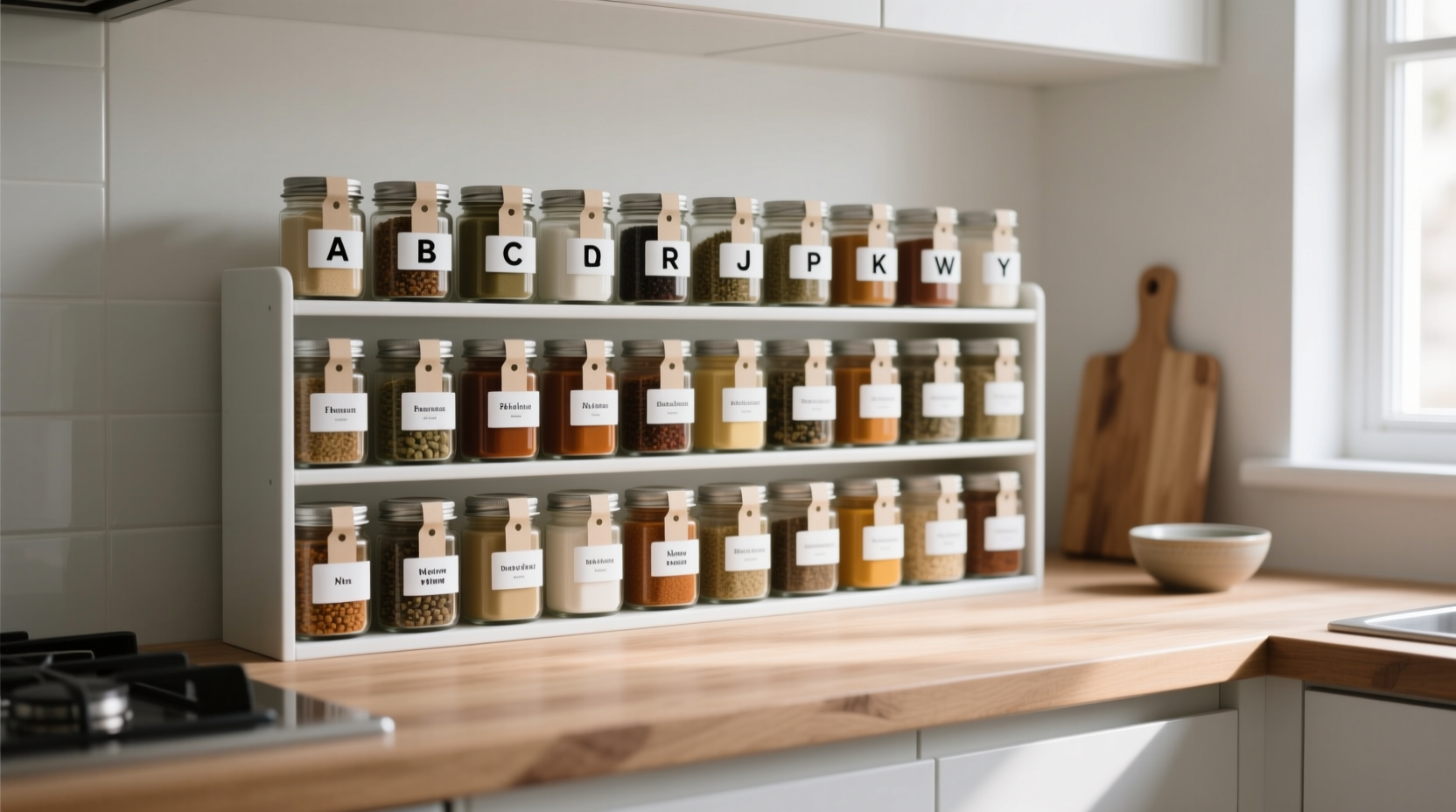
Spice organization systems vary—some sort by cuisine (Indian, Italian), others by frequency of use, or even color. While those approaches have merit, alphabetical order stands out for its universal clarity and speed. When every spice has a predictable place based on its name, anyone in the household can find what they need instantly—even under pressure during dinner prep.
Unlike subjective categories, the alphabet doesn’t change. It requires no memorization of custom groupings. Whether you’re reaching for turmeric or thyme, the logic remains consistent. This method also scales well as your collection grows. Adding a new spice simply means placing it in its correct letter slot, not rethinking an entire category.
“Alphabetical organization reduces decision fatigue in the kitchen. It turns chaos into consistency.” — Chef Lena Ruiz, Culinary Organizer & Cookbook Author
Step-by-Step Guide to Alphabetizing Your Spices
Organizing your spice rack without buying new containers is entirely possible—and often more efficient than starting from scratch. Follow this six-step process to transform your current setup into a streamlined, easy-to-navigate system.
- Empty your spice rack completely. Remove all jars, shakers, and packets. Place them on a clean counter or table where you can see everything at once.
- Check expiration dates. Most ground spices lose potency after 2–3 years; whole spices last up to 4. Discard anything stale, clumped, or odorless. This reduces clutter and ensures only usable spices remain.
- Inventorize your collection. Lay out each container and write down the spice name. Group duplicates together and decide which container to keep if multiple exist.
- Clean the storage area. Wipe down shelves, racks, or drawers with a damp cloth. Let dry before returning spices. This prevents dust buildup and resets the space.
- Sort spices alphabetically. Arrange containers by the first letter of their name (e.g., Basil, Bay Leaf, Black Pepper). For spices with multiple words (like “Smoked Paprika”), use the first significant word.
- Place back in order. Return the sorted spices to your rack or cabinet in sequence. Leave small gaps between letters if space allows, making future additions easier.
Labeling Without Buying New Jars
One common concern when keeping original containers is inconsistent labeling. Some jars have clear print; others are faded or in foreign languages. The solution isn’t replacement—it’s standardization using tools you likely already own.
If labels are peeling or hard to read, reinforce them with clear tape. For better visibility, create uniform tags using masking tape or painter’s tape wrapped around the lid or neck of the jar. Write the spice name in bold marker. These tapes remove cleanly later, so they won’t damage containers.
For a more polished look, use a label maker if available. Even without one, handwritten labels on small paper strips secured with tape work perfectly. Focus on legibility, not perfection.
| Problem | Solution | Materials Needed |
|---|---|---|
| Faded labels | Reinforce with tape + rewrite name | Clear tape, marker |
| Mismatched fonts/sizes | Add uniform external labels | Masking tape, pen |
| Non-English packaging | Attach translation tag | Paper strip, tape |
| Loose lids | Mark lid and jar with same symbol | Permanent marker |
Maximizing Space and Accessibility
The shape and location of your spice storage affect usability. If your rack is narrow or deep, consider rotating jars so labels face forward. Stack smaller containers in front of larger ones to avoid blocking access. For deep cabinets, use a turntable (lazy Susan) to bring rear items forward with a spin.
If shelf space is limited, repurpose everyday objects. A cutlery tray inside a drawer separates jars and keeps them upright. Magazine holders or small photo boxes can stand upright on shelves, grouping spices by letter while preventing tipping.
Store frequently used spices at eye level or within easy reach. Less common ones (like saffron or sumac) can go higher or lower. But still keep them in alphabetical flow so the system stays intact.
Real Example: Maria’s Kitchen Transformation
Maria, a home cook from Portland, had over 40 spice containers crammed into a narrow cabinet above her stove. Labels were worn, some jars unmarked, and she often grabbed the wrong one mid-recipe. She didn’t want to spend money on new jars but needed clarity.
She began by emptying the cabinet and discarding 12 expired or duplicate spices. She wiped down the shelves and used blue painter’s tape to create labeled zones: A–C, D–G, H–L, etc. On each jar, she applied white tape strips across the top front and rewrote the name in black marker.
She grouped jars by letter and arranged them left to right. Tall bottles went toward the back, shorter ones in front. Within two days, she noticed faster meal prep and fewer mistakes. Six months later, the system still works—she simply adds new spices in the correct zone.
“I thought I needed a fancy organizer, but all I really needed was a roll of tape and 30 minutes.” — Maria T., Home Cook
Common Mistakes to Avoid
Even with good intentions, small errors can undermine your organizational effort. Watch out for these pitfalls:
- Ignoring expiration dates: Keeping old spices wastes space and misleads you about flavor strength.
- Overcomplicating categories: Don’t split cinnamon into “baking” and “breakfast.” One entry under “C” is enough.
- Forgetting user height: Placing key spices too high or low makes them inconvenient, leading to system abandonment.
- Skipping labeling: Without clear, readable names, alphabetical order loses its benefit.
- Poor lighting: If you can’t see labels easily, consider adding LED tape lights under cabinets or using reflective tape.
Do’s and Don’ts Summary
| Do | Don't |
|---|---|
| Sort by the first letter of the main word (e.g., “Ground Cumin” under C) | Sort by brand or container type |
| Use removable tape for temporary labels | Peel off original labels if they’re still legible |
| Group duplicates and keep the best-condition container | Keep multiple jars of the same spice scattered |
| Wipe shelves before returning spices | Reorganize over dusty or greasy surfaces |
| Leave room for new additions | Pack jars so tightly they’re hard to remove |
FAQ
What if two spices start with the same letter?
Order them by the second letter. For example, “Basil” comes before “Bay Leaf,” and “Paprika” precedes “Pepper.” If names are very similar (e.g., “Chili Powder” vs. “Chili Seasoning”), place the more frequently used one first.
Should I include blends like “Italian Seasoning” under “I” or “S”?
File blends under the first descriptive word. “Italian Seasoning” goes under “I,” “Pumpkin Pie Spice” under “P,” and “Curry Powder” under “C.” This maintains consistency and avoids confusion.
Can I mix different container types in the same rack?
Absolutely. Glass jars, plastic shakers, and foil packets can coexist. The key is clear labeling and consistent alphabetical placement. Uniformity of appearance is less important than function.
Final Checklist Before You Begin
- ✅ Clear your spice storage area completely
- ✅ Discard expired or unusable spices
- ✅ Inventory all remaining containers
- ✅ Clean shelves or drawers thoroughly
- ✅ Label each jar clearly with the spice name
- ✅ Sort spices A to Z by first letter
- ✅ Return jars in order, leaving space for growth
- ✅ Test accessibility—can you grab any jar easily?
Conclusion
Organizing your spice rack alphabetically doesn’t require a single purchase. With thoughtful sorting, smart labeling, and a few household supplies, you can build a system that saves time, reduces stress, and enhances your cooking experience. The goal isn’t perfection—it’s practicality. A well-organized spice collection means fewer distractions, quicker decisions, and more enjoyment in the kitchen.




 浙公网安备
33010002000092号
浙公网安备
33010002000092号 浙B2-20120091-4
Comments
No comments yet. Why don't you start the discussion?