
Spices are the soul of flavor. They transform simple ingredients into memorable meals. Yet, too often, jars gather dust in the back of cabinets, their labels faded, their contents stale. The average home cook owns 20–30 spices, but many go unused for months—or years. By the time they’re finally opened, potency has faded, and flavor is lost. This isn’t just a waste of money; it’s a missed opportunity for better cooking.
The solution isn’t buying fewer spices. It’s organizing them intentionally. A well-structured spice system ensures visibility, accessibility, and awareness of expiration dates. When you can see what you have and know when it’s best used by, you’ll use it—with confidence and consistency.
Why Spices Expire (And Why It Matters)
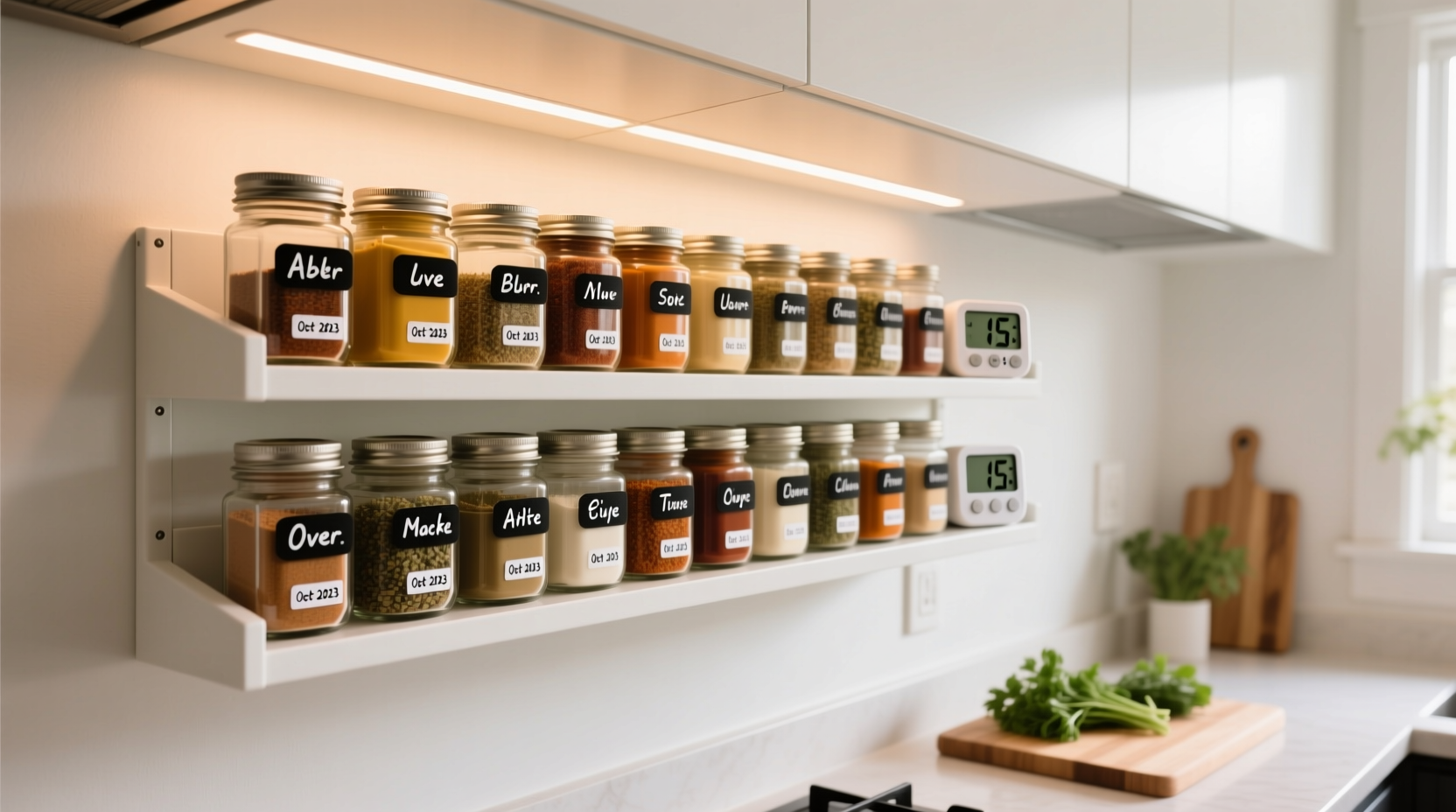
Unlike salt or sugar, spices aren’t shelf-stable forever. While they don’t “spoil” in the traditional sense, they lose potency over time. Whole spices last longer—typically 3 to 4 years—because their essential oils remain sealed within the seed, bark, or fruit. Ground spices, however, degrade faster, usually within 2 to 3 years, due to increased surface area exposed to air, light, and moisture.
Using expired spices doesn’t harm you, but it does harm your food. A curry with flat turmeric or a rub with lifeless paprika will taste dull, no matter how skilled your technique. As chef Yotam Ottolenghi notes:
“Spices are like paint: if the colors are faded, the artwork won’t shine.” — Yotam Ottolenghi, Chef & Cookbook Author
The first step toward better spice use is acknowledging that freshness matters. The second? Making sure you never forget what you have—or when it needs replacing.
Step-by-Step: Reorganize Your Spice Rack in 60 Minutes
Start fresh. Set aside one hour to audit, sort, and reorganize your entire collection. Follow this timeline for maximum efficiency.
- Empty Everything (10 minutes)
Pull every spice from your cabinet, drawer, or rack. Lay them on a counter where you can see each label clearly. - Check Expiration Dates (15 minutes)
Flip each jar over. If there’s no date, smell it. Strong aroma = likely fresh. Musty, faint, or nothing = time to discard. When in doubt, replace it. - Categorize by Type (10 minutes)
Group spices into families: baking (cinnamon, nutmeg), savory (oregano, thyme), heat (cayenne, black pepper), global blends (curry powder, za’atar), and specialty (saffron, sumac). - Declutter Ruthlessly (10 minutes)
Donate duplicates, toss expired jars, consolidate partials into one container. Keep only what you’ll realistically use in the next year. - Label & Date New Containers (5 minutes)
If transferring to uniform jars, label with name and purchase/expiry date. Use a waterproof marker or printed label. - Reinstall with Intention (10 minutes)
Place most-used spices at eye level, grouped by category. Store less common ones behind or above.
Smart Storage: Where and How to Keep Spices Fresh
Location affects shelf life more than most realize. Heat, light, and humidity degrade volatile oils—the source of flavor and aroma. Avoid placing spices near the stove, oven, dishwasher, or sink. Even a few inches make a difference.
Ideally, store spices in a cool, dark, dry cabinet away from appliances. Drawer-mounted racks or pull-out shelves work exceptionally well because they protect from light while keeping spices visible.
Container choice also matters. Glass jars with tight-sealing lids are best. Opaque or tinted glass blocks UV rays. If using clear jars, keep them inside a closed cabinet. Avoid plastic—it can absorb odors and leach chemicals over time.
For high-use spices like salt, pepper, or garlic powder, consider a countertop caddy—but only if it’s kept away from direct sunlight and heat sources.
Do’s and Don’ts of Spice Storage
| Do | Don’t |
|---|---|
| Store in airtight, labeled glass jars | Leave spices in flimsy paper packets or bulk bins |
| Keep in a cool, dark cabinet | Store above the stove or near the microwave |
| Write purchase and expiry dates | Assume “it’s probably still good” without checking |
| Use small jars (4 oz max) to reduce oxidation | Buy giant containers unless you cook daily |
Design Systems That Make Spices Impossible to Ignore
A functional spice rack isn’t just about neatness—it’s about behavior change. The goal is to create a system so intuitive that grabbing the right spice becomes automatic.
One proven method is the **alphabetical + frequency grid**. Arrange spices alphabetically within categories, but place your top five most-used spices (e.g., garlic powder, cumin, paprika, black pepper, cinnamon) in a front-row slot. These should be at thumb level when you open the cabinet—no reaching, no searching.
Another effective layout is the **meal-based zone system**. Group spices by the dishes you cook most often:
- Mexican Zone: chili powder, cumin, oregano, coriander
- Italian Zone: basil, rosemary, fennel, red pepper flakes
- Baking Zone: cinnamon, nutmeg, allspice, cloves
- Global Blends: garam masala, berbere, ras el hanout
This reduces decision fatigue. When making tacos, you open one section. No hunting. No hesitation.
Real Example: From Chaos to Clarity in One Weekend
Sarah, a home cook in Portland, used to dread opening her kitchen drawer. Jars were stacked three deep, labels peeling, half-empty containers mixed with full ones. She’d buy new cumin because she couldn’t find the old—only to discover four jars later.
After reading about expiration tracking, she cleared everything out. She found 17 jars past their prime, including a decade-old bottle of ground cloves. She donated duplicates, consolidated fragments, and invested in 20 identical amber glass bottles with shaker tops.
She organized them in a tiered bamboo rack: front row for daily use, middle for weekly, back for occasional. Each jar was labeled with name, purchase date, and expiry (two years ahead). She added a small laminated checklist inside the cabinet door: “Check expiry dates: Jan & July.”
Three months later, she hasn’t bought a single new spice. Her meals taste bolder, and she’s experimenting more—because she finally knows what she has.
Track Freshness Like a Pro: The Expiry System That Works
Even the best organization fails without maintenance. Build in reminders to prevent future clutter.
Create a simple **spice inventory sheet**—digital or paper—that lists each spice, purchase date, type (whole/ground), and recommended expiry. Update it whenever you add or remove a jar.
Set calendar alerts twice a year: one in spring for summer grilling blends, one in fall for holiday baking. During these audits, do a quick smell test and update your inventory.
Alternatively, use color-coded stickers:
- Green = Fresh (within 6 months)
- Yellow = Monitor (6–18 months)
- Red = Replace Soon (18+ months for ground, 36+ for whole)
“The biggest mistake home cooks make is treating spices like condiments. They’re perishable ingredients—track them like you would milk or produce.” — Dr. Lisa Chen, Food Scientist & Culinary Educator
Checklist: Maintain Your Spice System Year-Round
- ✅ Audit all spices twice a year
- ✅ Label every jar with name and date
- ✅ Store in airtight, opaque containers
- ✅ Keep away from heat, light, and moisture
- ✅ Group by category or meal type
- ✅ Place most-used spices at eye level
- ✅ Replace ground spices after 2 years, whole after 4
- ✅ Use a digital tracker or physical log
Frequently Asked Questions
Can I revive an old spice?
No. Once essential oils evaporate, flavor cannot be restored. Toasting may briefly enhance aroma in whole spices, but it won’t bring back potency. It’s better to replace it.
Should I freeze spices to extend shelf life?
No. Freezing introduces moisture when jars are opened and closed, leading to clumping and mold. Room temperature in a stable environment is ideal.
Is it worth buying spices in bulk?
Only if you use them frequently. For most home cooks, small quantities ensure freshness. Exceptions: salt, pepper, or spices used weekly in large amounts (e.g., cumin for taco nights).
Conclusion: Turn Your Spice Rack Into a Flavor Engine
Your spice rack shouldn’t be a graveyard of forgotten flavors. It should be a dynamic, living part of your kitchen—a tool that inspires creativity and supports better cooking. With a smart system, you’ll stop wasting money, start using what you own, and taste the difference in every dish.
Organization isn’t about perfection. It’s about function. A few intentional changes—labeling, grouping, tracking—can transform confusion into clarity. You don’t need fancy gear or hours of effort. Just consistency.
Take action today. Empty that drawer. Smell those jars. Build a system that works for how you cook. In six months, you’ll wonder why you waited so long.




 浙公网安备
33010002000092号
浙公网安备
33010002000092号 浙B2-20120091-4
Comments
No comments yet. Why don't you start the discussion?