
For many PC gamers, Steam is both a treasure trove and a source of quiet dread. With frequent sales, generous bundles, and enticing free weekends, it’s easy to accumulate hundreds of games—many unplayed, some barely opened. Over time, this growing backlog can become emotionally burdensome, leading to what psychologists and gaming communities alike call “backlog anxiety”: the persistent guilt or stress of owning more games than you could ever reasonably play.
The solution isn’t deleting everything or swearing off future purchases. Instead, it’s about transforming your Steam library from a chaotic digital attic into a structured, intentional space that reflects your actual gaming goals. By organizing your library strategically, you can reduce decision fatigue, regain control, and rediscover the joy of playing rather than collecting.
Create a Clear Mental Framework: Define Your Gaming Identity
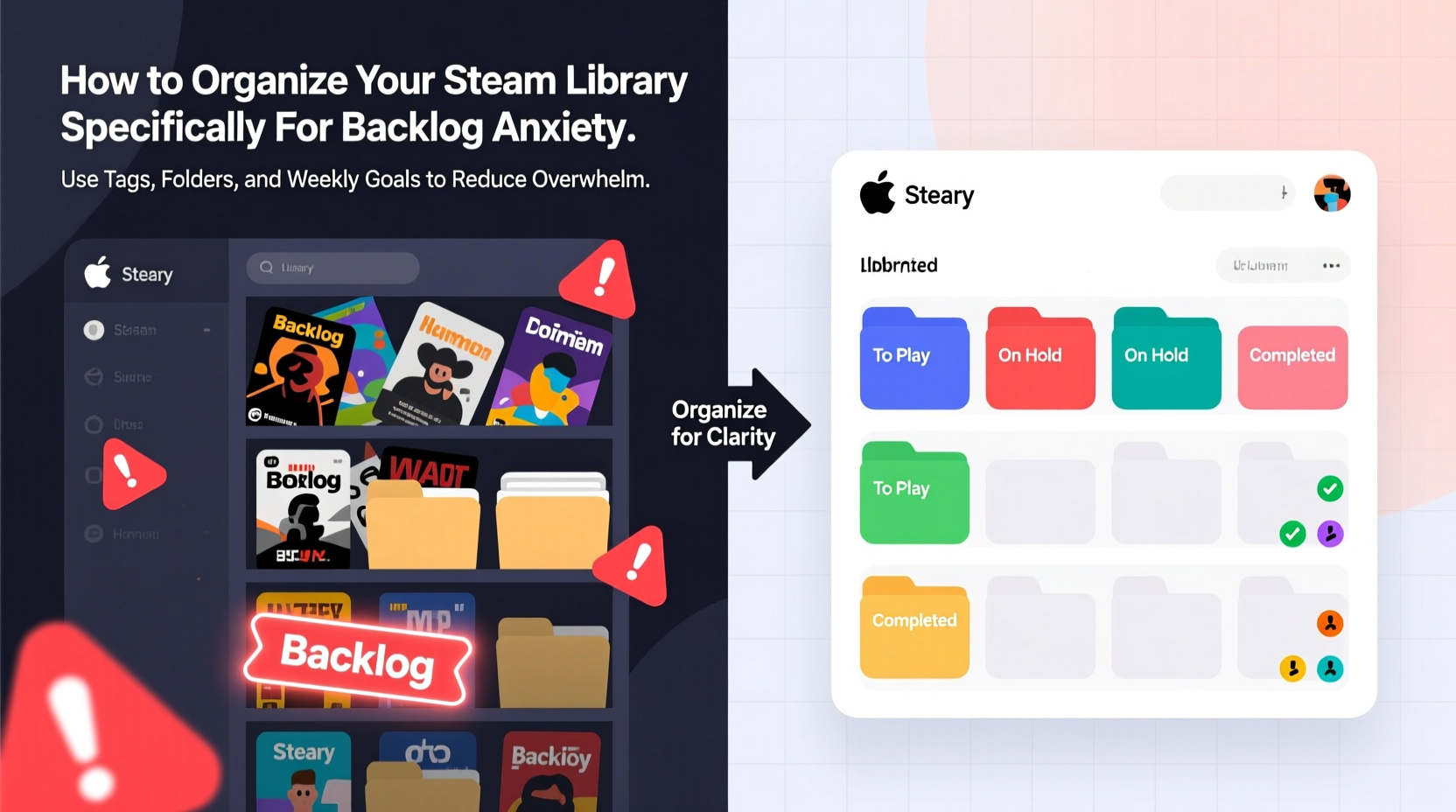
Before diving into Steam’s interface, start with introspection. Backlog anxiety often stems not from disorganization alone, but from a lack of clarity about what kind of gamer you are—or want to be. Are you a completionist? A casual explorer? Someone who enjoys deep narrative experiences over competitive multiplayer?
Answering these questions helps establish a personal “gaming philosophy” that informs how you categorize and prioritize titles. For example, if you value story-rich single-player games, then highlighting those becomes a priority. If you play in short bursts during lunch breaks, shorter indie titles should be surfaced more easily.
“Clarity reduces cognitive load. When players understand their own preferences, they stop feeling guilty for not playing everything—and start enjoying what truly matters to them.” — Dr. Lena Torres, Digital Wellbeing Researcher at the Center for Play & Identity
Use Steam’s Built-in Tools to Build Functional Categories
Steam offers robust organizational tools, though many users overlook them. The key is to move beyond default views like “All Games” and create custom categories tailored to your emotional and practical needs.
To begin:
- Open your Steam library.
- Right-click any game > “Set Category” > Create new categories based on your goals.
- Assign games thoughtfully—not just by genre, but by relevance to your current mindset.
Recommended category types include:
| Category Name | Purpose | Example Titles |
|---|---|---|
| 🔥 Playing Now | Current active game(s) | Elden Ring, Baldur’s Gate 3 |
| 🎯 Next Up | Games you’re committed to playing soon | Starfield, Hades II |
| ⏳ Short (<10hrs) | Quick completions to build momentum | Disco Elysium, Kentucky Route Zero |
| 📖 Story-Focused | Narrative-driven experiences | The Last of Us Part I, Oxenfree |
| 🛡️ Long Haul | Massive games requiring significant time | Final Fantasy XIV, Cyberpunk 2077 |
| ❓ Maybe Later | Marginal interest or uncertain fit | Random bundle grab from 2019 |
| 🗑️ Skip/Delete | No intention to play; candidate for removal | Dupes, tech demos, disliked genres |
Implement a Tiered Prioritization System
Categories help, but without prioritization, you’ll still face paralysis when deciding what to play next. A tiered system adds emotional intelligence to your organization.
Adopt a three-tier model inspired by productivity frameworks:
- High Intent (Tier 1): Games you actively want to play, align with your current interests, and feel excited about. These belong in “Next Up” or “Short” lists.
- Low Pressure (Tier 2): Games you're curious about but aren't urgent. Keep them categorized but out of sight unless filtering intentionally.
- Emotional Triggers (Tier 3): Titles tied to nostalgia, hype, or guilt (“I bought it on sale!”). These often fuel backlog anxiety. Label them honestly and revisit only during scheduled reflection periods.
This system acknowledges that not all games carry equal weight. It allows you to honor curiosity without obligation.
Step-by-Step Guide: Organizing Your Library in One Hour
Follow this timeline to transform your library efficiently:
- Minute 0–10: Audit Your Current State
Open your Steam library and sort by “Play Time.” Notice patterns: How many games have less than 30 minutes played? Which ones do you keep returning to? - Minute 10–25: Delete the Obvious
Remove duplicates, betas, cracked software (if unused), or games you know you hate. Use the “Hidden” tab if deletion feels too final. - Minute 25–45: Assign Core Categories
Go through your remaining library in batches of 20. Assign each game to at least one meaningful category using the naming convention above. - Minute 45–55: Set Your “Next Up” List
Choose 3–5 games you’d genuinely enjoy starting in the next month. Make sure they vary in length and intensity. - Minute 55–60: Schedule a Review Date
Set a calendar reminder for 30 days from now to reassess categories and progress. This builds sustainable habits.
Build Psychological Safety with “No Shame” Rules
A major driver of backlog anxiety is the internalized belief that buying a game obligates you to finish it. But games are art, entertainment, and experiments—not homework.
Establish personal rules that protect your mental space:
- You don’t owe a game your time just because you paid for it.
- It’s okay to stop playing if a game isn’t working for you—even at 80% completion.
- Owning 500 games isn’t bad; ignoring all of them while feeling guilty is the real problem.
Mini Case Study: From Anxiety to Intentional Play
Jamie, a 29-year-old graphic designer, owned 437 games on Steam but hadn’t completed a single title in over a year. Each login brought a wave of guilt: “I should play Disco Elysium… but maybe I’d rather try that new roguelike…” The indecision became so overwhelming that Jamie stopped launching Steam altogether.
After applying the tiered categorization method, Jamie created a “Short & Impactful” list featuring games under 8 hours. They committed to finishing one per week. Within a month, they completed *Gorogoa*, *Papers, Please*, and *Night in the Woods*—games they’d owned for years but never started.
The shift wasn’t in quantity played, but in mindset. “I realized I wasn’t failing at gaming,” Jamie said. “I was just organizing it wrong. Now I feel proud of what I’ve played, not ashamed of what I haven’t.”
Leverage External Tools for Deeper Insights
While Steam’s UI is functional, third-party tools offer enhanced visibility into your habits and backlog.
Consider using:
- SteamDB.info: View detailed stats, price history, and playtime distribution across your library.
- Backloggery.com: Manually track completion status across platforms, adding a sense of accountability.
- Notion or Trello: Build a visual roadmap of your “play queue” with notes, screenshots, and estimated time commitments.
These tools externalize decision-making, freeing up mental energy. For instance, syncing your Steam playtime to a weekly review in Notion turns vague intentions into measurable progress.
Checklist: Maintain a Healthy Steam Library
Use this checklist monthly to prevent clutter and anxiety from creeping back:
- ✅ Review and update categories (e.g., move a finished game out of “Playing Now”)
- ✅ Delete at least one game you know you won’t play
- ✅ Complete one “Short” game or spend 2+ hours in a “Long Haul” title
- ✅ Reflect: Did I play what I intended? If not, why?
- ✅ Adjust upcoming priorities based on mood, time availability, and energy levels
FAQ: Managing Emotions Around Your Game Collection
Isn’t organizing just delaying the inevitable guilt?
Only if done superficially. True organization includes emotional calibration—acknowledging that you don’t need to play everything. The goal isn’t perfection, but peace.
What if I love collecting games, even if I don’t play them?
There’s nothing wrong with being a collector. Reframe your library as a curated archive, like a bookshelf or art collection. Add tags like “For Preservation” or “Cultural Interest” to distinguish between playable and archival titles.
How do I stop myself from buying more games impulsively?
Implement a 48-hour rule: Wait two days before purchasing any non-sale game. Also, add new purchases directly into a “New Releases – Wait 1 Month” category to avoid immediate pressure.
Conclusion: Reclaim Joy, One Game at a Time
Your Steam library doesn’t have to be a monument to missed opportunities. With thoughtful structure, compassionate self-awareness, and consistent maintenance, it can become a dynamic reflection of your evolving tastes and available time.
Organization isn’t about doing more—it’s about focusing on what matters. Every time you launch a game from your “Next Up” list, you’re not just playing; you’re reinforcing intention over impulse, presence over pressure.




 浙公网安备
33010002000092号
浙公网安备
33010002000092号 浙B2-20120091-4
Comments
No comments yet. Why don't you start the discussion?