
A cluttered vanity drawer is more than just an eyesore—it’s a daily time thief. Every morning, you rummage through tangled hair clips, half-empty product tubes, and expired cosmetics, wasting precious minutes before work or social events. The solution isn’t buying more storage; it’s organizing what you already have with intention. A well-organized vanity drawer saves time, reduces stress, and even extends the life of your beauty products by preventing spills, contamination, and forgotten expiration dates. With thoughtful categorization, smart dividers, and a clear system, you can turn chaotic drawers into functional, efficient spaces tailored to your routine.
Declutter First: Know What You Own
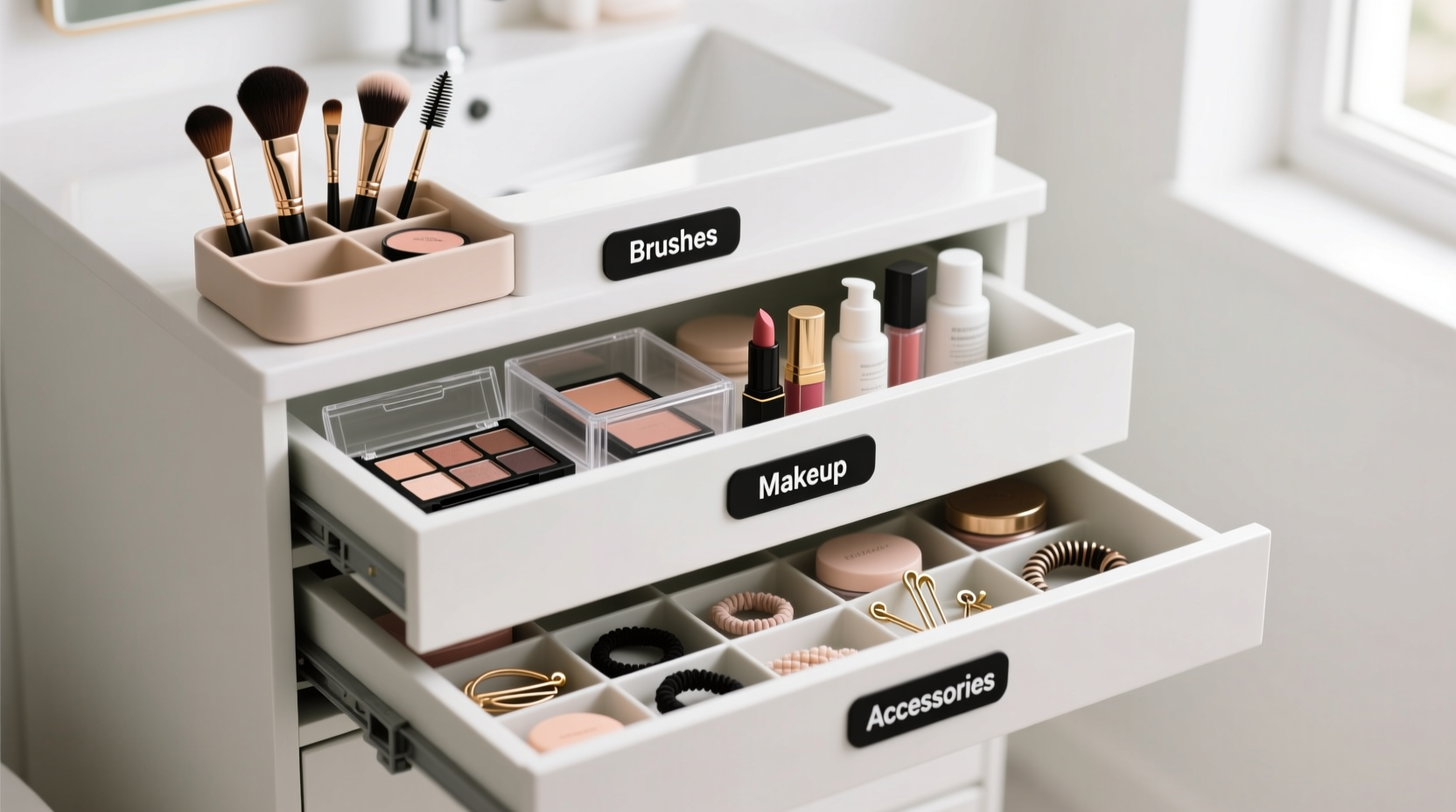
Before placing anything back into your vanity drawer, remove every item. This step is non-negotiable. Only when everything is visible can you make informed decisions about what stays and what goes. Lay all contents on a clean surface and sort them into categories: skincare, makeup, hair tools, accessories, and miscellaneous items.
As you sort, apply the 12-month rule: if you haven’t used a product in the past year, consider discarding it. Expired mascara, dried-up lipsticks, or serums with separated ingredients should be disposed of properly. Fragile or hazardous waste like nail polish remover should go into designated recycling bins where available.
Be ruthless but realistic. If you’re holding onto a high-end foundation because it was expensive but doesn’t match your skin tone, donate unopened items (if allowed) or repurpose them for travel kits. The goal is not minimalism for its own sake, but functionality through reduction.
Create Zones Based on Usage Frequency
Efficient organization mirrors your behavior. Not all items deserve equal real estate. Categorize products based on how often you use them:
- Daily essentials: Moisturizer, sunscreen, brow pencil, lip balm
- Weekly or occasional: Face masks, specialty brushes, eyelash curlers
- Rarely used: Formal event makeup, seasonal products, backup supplies
Assign zones accordingly. The front center of the drawer should house daily-use items for immediate access. Less frequent products go toward the back or sides. Rarely used items may belong in a separate drawer or storage bin outside the primary vanity space.
This zoning strategy reduces decision fatigue. When you're running late, your fingers know exactly where to reach without thinking.
“Function follows frequency. The most-used items must be the easiest to access.” — Lena Torres, Interior Organizer & Lifestyle Consultant
Choose the Right Organizers for Your Drawer Layout
Vanity drawers vary widely in depth, width, and number of compartments. Off-the-shelf organizers rarely fit perfectly. Measure your drawer interior before purchasing any inserts. Standard dimensions are helpful, but custom-fit solutions prevent wasted corners and sliding trays.
Consider material durability. Acrylic is sleek and easy to clean but can scratch. Felt-lined wood offers elegance and protection for delicate items like perfume bottles. Silicone trays are flexible and grippy, ideal for deep drawers where items might shift.
Modular systems allow customization. Small square or rectangular trays can be rearranged as needs change. For example, a narrow slot can hold lipstick upright while a deeper section secures tweezers and nail files.
| Organizer Type | Best For | Limitations |
|---|---|---|
| Acrylic Divider Trays | Makeup palettes, brushes, lipsticks | Can slide; no grip on smooth surfaces |
| Felt-Lined Wooden Boxes | Jewelry, delicate tools, skincare samples | Higher cost; not waterproof |
| Silicone Grid Trays | Travel-sized items, cotton pads, nail care | Limited height; best for shallow drawers |
| Expandable Metal Dividers | Adjustable layouts, changing collections | Bulkier; may reduce usable depth |
Don’t overlook vertical space. Stackable trays double capacity without increasing footprint. A two-tier organizer lets you place frequently used items on top while storing backups below.
Step-by-Step Guide to Organizing Your Vanity Drawer
Follow this sequence to ensure lasting results. Rushing leads to relapse into clutter within days.
- Empty the drawer completely. Remove all contents and wipe down the interior with a disinfectant cloth.
- Sort items into categories. Group by function: face, eyes, lips, skincare, tools, etc.
- Evaluate each product. Discard expired, dried-out, or unused items. Be honest about what you actually wear.
- Measure your drawer. Note width, depth, and height to guide organizer selection.
- Select appropriate dividers. Choose materials and configurations that suit your most common item types.
- Assign zones by frequency. Place daily essentials at the front; reserve back areas for backups or seasonal items.
- Label sections (optional). Use discreet labels on tray edges if multiple people share the space.
- Place items vertically when possible. Store lipsticks, pencils, and brushes upright to maximize visibility.
- Test the system. Simulate your morning routine—can you find everything in under 15 seconds?
- Maintain weekly. Dedicate five minutes every Sunday to reset the drawer and discard empties.
Real-Life Example: Transforming a Shared Bathroom Vanity
Sarah and James, a couple in their early 30s, shared a small bathroom with one deep vanity drawer. It had become a dumping ground for both partners’ grooming supplies. Sarah’s serums were crushed under James’s electric shaver, and his beard oil cap was always missing.
They measured the drawer (14” x 9” x 3”) and purchased a two-tier acrylic organizer. The top layer held Sarah’s daily skincare in labeled silicone cups: toner, serum, moisturizer. A narrow slot stored her eyeliner pencils. The bottom tier featured a rotating brush holder and a compartment for James’s trimmer, blades, and oils. A small magnetic pad on the inside of the drawer front held bobby pins and tweezers.
After setup, they implemented a “one in, one out” rule: for every new product brought in, an old one had to go. Within two weeks, both reported saving an average of seven minutes each morning. The shared system reduced friction over misplaced items and created accountability for upkeep.
Smart Storage Hacks to Maximize Space
Even in compact drawers, clever techniques can unlock hidden capacity.
- Use drawer liners. Non-slip rubber or felt liners prevent trays from shifting and protect wood finishes.
- Store items vertically. Roll up sheet masks or stack cushion compacts like pancakes to save surface area.
- Utilize the drawer underside. Adhesive hooks or magnetic strips can hold metal tools like scissors or tweezers.
- Downsize packaging. Decant large lotion bottles into smaller travel dispensers to free up room.
- Group by routine, not type. Create a “morning kit” container with SPF, tinted moisturizer, and lip balm together for grab-and-go efficiency.
For those with limited drawer space, consider relocating bulky items like hair dryers or flat irons to a nearby shelf or cabinet. Freeing up drawer volume allows for better organization of smaller, frequently used items.
Checklist: Your Vanity Drawer Reset Plan
Use this checklist to stay on track during your reorganization project:
- ☐ Remove all items from the drawer
- ☐ Wipe down interior surfaces
- ☐ Sort products into categories
- ☐ Discard expired or unused items
- ☐ Measure drawer dimensions
- ☐ Select and install organizers
- ☐ Assign zones by usage frequency
- ☐ Place items upright or in labeled containers
- ☐ Attach under-drawer storage (if applicable)
- ☐ Test accessibility of key items
- ☐ Schedule a weekly 5-minute maintenance window
Frequently Asked Questions
How often should I reorganize my vanity drawer?
Perform a full reset every 3–4 months. Seasonal changes in skincare and makeup warrant reassessment. A quick tidy should happen weekly to maintain order.
What’s the best way to store makeup brushes in a drawer?
Use a compartmentalized tray with slots slightly wider than the brush handles. Avoid stacking them loosely, which damages bristles. For longer brushes, opt for a horizontal divider with snug fits to prevent rolling.
Can I use kitchen drawer organizers for my vanity?
Yes, many kitchen organizers—especially utensil trays or spice racks—are perfectly suited for beauty tools. Just ensure materials are non-reactive and easy to clean. Stainless steel or food-grade plastic works well.
Conclusion: Turn Chaos Into Calm, One Drawer at a Time
Organizing your vanity drawers isn’t just about neatness—it’s about designing a system that supports your daily rhythm. When everything has a place and purpose, getting ready becomes effortless rather than exhausting. The time you reclaim each morning adds up to hours over a year. More importantly, a clear drawer reflects a clearer mind, reducing visual noise and decision fatigue.
Start today. Empty one drawer. Make the hard choices. Build a layout that serves your actual habits, not an idealized version of them. Once you experience the ease of finding your favorite concealer in one motion, you won’t want to go back.




 浙公网安备
33010002000092号
浙公网安备
33010002000092号 浙B2-20120091-4
Comments
No comments yet. Why don't you start the discussion?