
Packing for a 10-day trip with just a carry-on backpack is more than a space-saving challenge—it’s a lifestyle upgrade. Travelers who master this skill enjoy faster airport navigation, reduced baggage fees, and greater freedom of movement. The key isn’t magic; it’s strategy. With thoughtful planning, fabric selection, and organization, you can live comfortably across climates and occasions using only what fits in a single, airline-approved bag. This guide breaks down exactly how to do it—without sacrificing comfort or style.
Selecting the Right Backpack
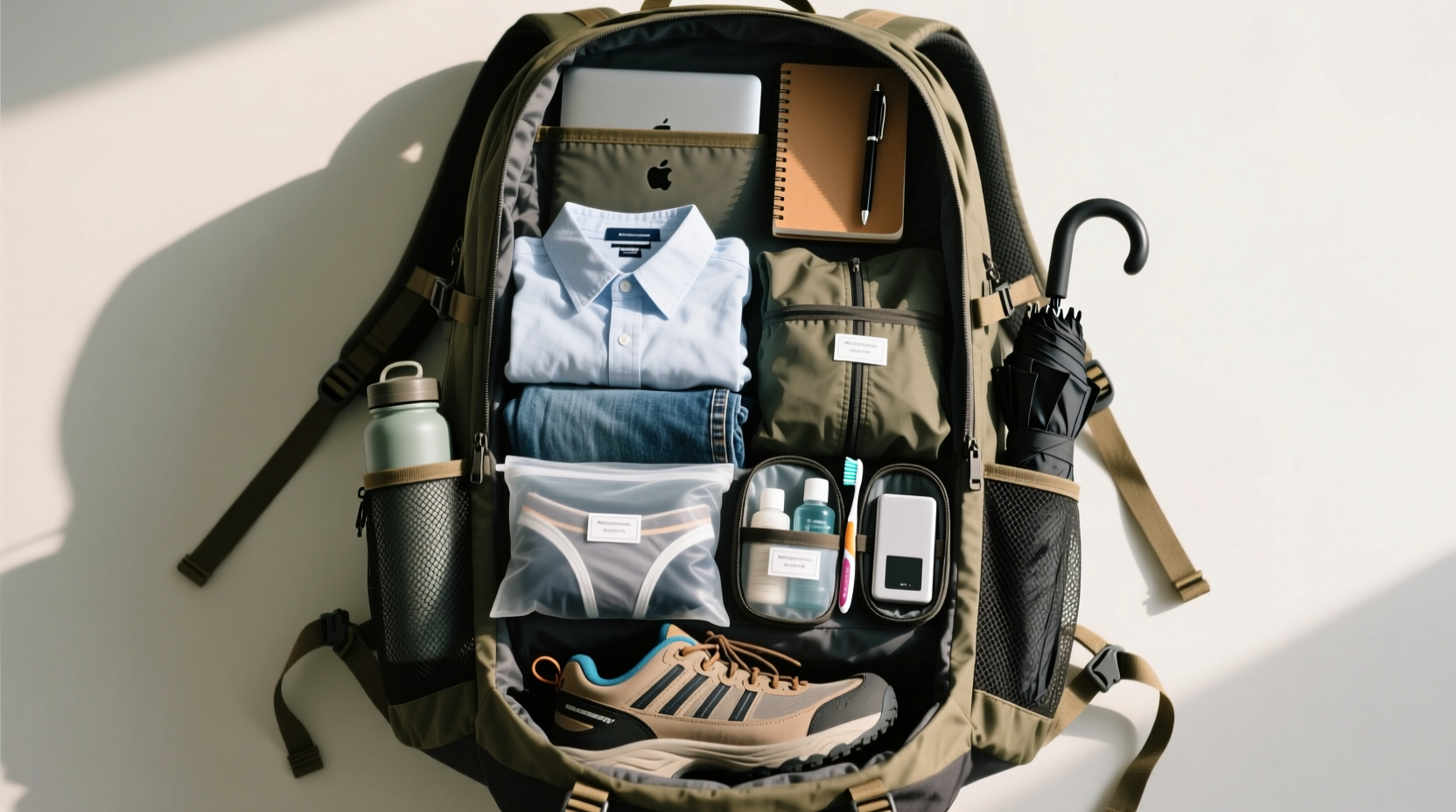
The foundation of successful minimalist travel is choosing a backpack that balances capacity, comfort, and compliance. Most airlines allow carry-ons up to 45 liters, but optimal efficiency lies between 35 and 40 liters. A well-designed travel backpack includes compartments for electronics, quick-access pockets, a dedicated laptop sleeve, and compression straps.
Avoid oversized hiking packs—they lack organizational structure and often exceed size limits. Instead, opt for purpose-built travel backpacks like those from brands such as Osprey, Nomatic, or Tortuga. These models are engineered for urban mobility, security, and weight distribution.
Plan Your Outfits Strategically
Most travelers overpack clothes by assuming they need a new outfit daily. In reality, versatility and layering eliminate that need. Start by mapping your itinerary: note weather conditions, planned activities (e.g., business meetings, hikes, dinners), and laundry access.
Create a capsule wardrobe of 7–9 mix-and-match pieces that serve multiple purposes. Neutral colors—navy, gray, black, beige—pair easily. Choose fabrics that resist odor and wrinkles: merino wool, TENCEL™, and technical synthetics.
“Packing light starts long before you fold your first shirt. It begins with intention.” — Sarah Li, Sustainable Travel Advocate
Sample Capsule Wardrobe (10 Days)
- 2 pairs of pants (chinos + lightweight trousers)
- 1 pair of shorts (if warm climate)
- 4 tops (2 casual, 1 button-down, 1 long-sleeve base layer)
- 1 lightweight sweater or cardigan
- 1 packable jacket or rain shell
- 1 sleepwear set
- Underwear (10 pairs) – consider moisture-wicking materials
- Socks (5–6 pairs) – include 1 thick pair if needed
- 1 swimsuit (doubles as gym wear)
- 1 pair of walking shoes (wear on travel days)
- 1 optional dress shoe or sandal (if required)
With proper care, most garments can be worn 2–3 times. Merino wool shirts, for instance, resist odors even after extended use. Air them out at night near a window or bathroom fan to refresh.
Packing Techniques That Save Space
How you pack matters as much as what you pack. Utilize space-saving methods to compress volume and maintain accessibility.
Roll, Don’t Fold
Rolling clothes tightly minimizes air pockets and reduces wrinkling. It also allows you to see each item when unzipping your bag. Best candidates: t-shirts, underwear, socks, and knits.
Bundle Packing (Advanced Method)
This technique involves wrapping garments around a central core (like toiletries) to prevent creasing and maximize compression. Ideal for button-downs and delicate fabrics.
Use Packing Cubes
Dedicated cubes separate categories (tops, bottoms, undergarments) and keep items compressed. They also speed up security checks and hotel unpacking. Opt for mesh cubes to improve visibility and airflow.
Essentials Beyond Clothing
Clothing takes up space, but toiletries, electronics, and accessories can quickly dominate your bag. Be ruthless in selecting only what you truly need.
Toiletries: Miniaturize and Consolidate
Transfer liquids into travel-sized containers (under 100ml). Use multi-purpose products: tinted moisturizer with SPF, shampoo bars, and toothpaste tablets. Solid versions eliminate leakage risks and save space.
| Item | Travel-Friendly Swap | Why It Works |
|---|---|---|
| Liquid shampoo | Shampoo bar | No leaks, lasts longer, eco-friendly |
| Toothbrush & paste | Folding brush + paste tablets | Compact, no liquid restrictions |
| Deodorant | Crystal or solid stick | TSA-compliant, non-greasy |
| Razor | Safety razor or disposable mini | Less bulk, easier disposal |
Electronics: Keep It Lean
You likely don’t need both a tablet and a laptop. Stick to one primary device. Bring a universal adapter, noise-canceling earbuds, and a power bank under 10,000 mAh (allowed on planes). Use cloud storage to avoid carrying external drives.
Accessories
A scarf doubles as a blanket, sun cover, or modesty wrap. A compact umbrella or packable hat adds weather protection without taking much room. Limit jewelry to 1–2 versatile pieces.
Step-by-Step Packing Timeline
Follow this sequence 24–48 hours before departure to ensure nothing is forgotten and everything fits.
- Day 2 Before Travel: Lay out all potential items based on your itinerary. Eliminate duplicates and “just-in-case” pieces.
- Day 1 Before Travel: Wash and dry any last-minute clothing. Charge all devices and test adapters.
- Morning of Departure: Begin packing in layers:
- Bottom layer: Shoes and heavy items
- Middle layer: Packed cubes with clothing
- Top layer: Toiletry kit and electronics pouch
- External pockets: Passport, wallet, medications, snacks
- Final Check: Weigh your backpack. Most airlines cap carry-ons at 7–10 kg. If overweight, remove non-essentials or redistribute weight.
- At Airport: Keep valuables and medications on your person. Remove laptops and liquids during security screening.
“I once packed for a 12-day Europe trip in a 38L backpack. I wore my heaviest shoes, used a sarong instead of pajamas, and did a sink wash on day 7. No one guessed I wasn’t staying in a suitcase.” — Mark Tran, Digital Nomad & Travel Blogger
Mini Case Study: A Business-Casual Trip to Japan
Julia, a marketing consultant, had a 10-day trip combining client meetings in Tokyo and leisure time in Kyoto. She needed professional attire but wanted to avoid checked baggage.
She packed:
- 1 blazer (wrinkle-resistant blend)
- 1 pair of tailored trousers
- 1 button-up shirt + 1 silk blouse
- 1 dark denim jeans
- 2 neutral-toned tees
- 1 trench coat (lightweight, water-repellent)
- Flats (worn during flights) + foldable loafers
She rolled her clothes and used two packing cubes. For hygiene, she carried a small bottle of laundry detergent and washed delicates in the sink every third night. By mixing workwear with casual layers, she adapted seamlessly from boardrooms to temples. Her total pack weight: 6.8 kg.
Common Mistakes to Avoid
- Over-packing shoes: Two pairs max—one functional, one situational.
- Bringing full-size toiletries: They waste space and risk spills.
- Ignoring laundry options: Even a short hand wash extends clothing life.
- Packing books or bulky entertainment: Use e-readers or phone apps.
- Forgetting a laundry bag: A small mesh pouch separates dirty clothes and controls odors.
Frequently Asked Questions
Can I really fit 10 days of clothes in a carry-on backpack?
Yes, provided you choose versatile, compact clothing and use efficient packing techniques. Most people overestimate how many outfits they actually need. With strategic planning, a 35–40L backpack is more than sufficient.
What if I need to do laundry while traveling?
Carry a small amount of travel detergent or dissolvable sheets. Most hotels have sinks, and some hostels offer guest laundry. Wash lighter items like underwear and shirts every 3–4 days and hang them to dry overnight. Quick-dry fabrics make this seamless.
Is it safe to bring valuables in a carry-on backpack?
Yes, but take precautions. Use RFID-blocking sleeves for cards, keep cash in a hidden waist pouch, and avoid displaying expensive gear. Many travel backpacks come with lockable zippers and slash-resistant materials for added security.
Checklist: How to Pack a Carry-On for 10 Days
- Choose a 35–40L travel backpack with organizational features
- Plan a 7–9 piece capsule wardrobe in coordinating colors
- Select wrinkle-resistant, odor-resistant fabrics
- Limit footwear to 2 pairs; wear the bulkiest on travel days
- Transfer toiletries into TSA-compliant containers
- Use packing cubes to compartmentalize clothing
- Roll clothes or use bundle packing to save space
- Include a laundry bag and travel detergent
- Bring one multi-functional electronic device
- Weigh your backpack before heading to the airport
Conclusion
Packing a carry-on backpack for 10 days isn’t about deprivation—it’s about liberation. When you strip away excess, you gain agility, peace of mind, and the ability to move freely through airports, train stations, and cobblestone streets. The discipline of minimalist packing reshapes how you think about possessions, consumption, and travel itself.
Start with your next trip. Apply these principles, refine your system, and discover how little you actually need to live fully. Once you experience the ease of stepping off a plane with everything you own on your back, you may never check a bag again.




 浙公网安备
33010002000092号
浙公网安备
33010002000092号 浙B2-20120091-4
Comments
No comments yet. Why don't you start the discussion?