
Packing light for a week-long trip isn’t just about discipline—it’s about strategy. With airline fees rising and mobility becoming more important than ever, mastering the art of packing a carry-on backpack efficiently is a modern travel essential. The goal isn't merely fitting clothes into a small bag, but doing so in a way that keeps garments wrinkle-free, organized, and easily accessible. This guide breaks down exactly how to pack a week’s worth of clothing and essentials into a single carry-on backpack using intelligent folding methods, thoughtful selection, and proven packing systems.
Choose the Right Backpack
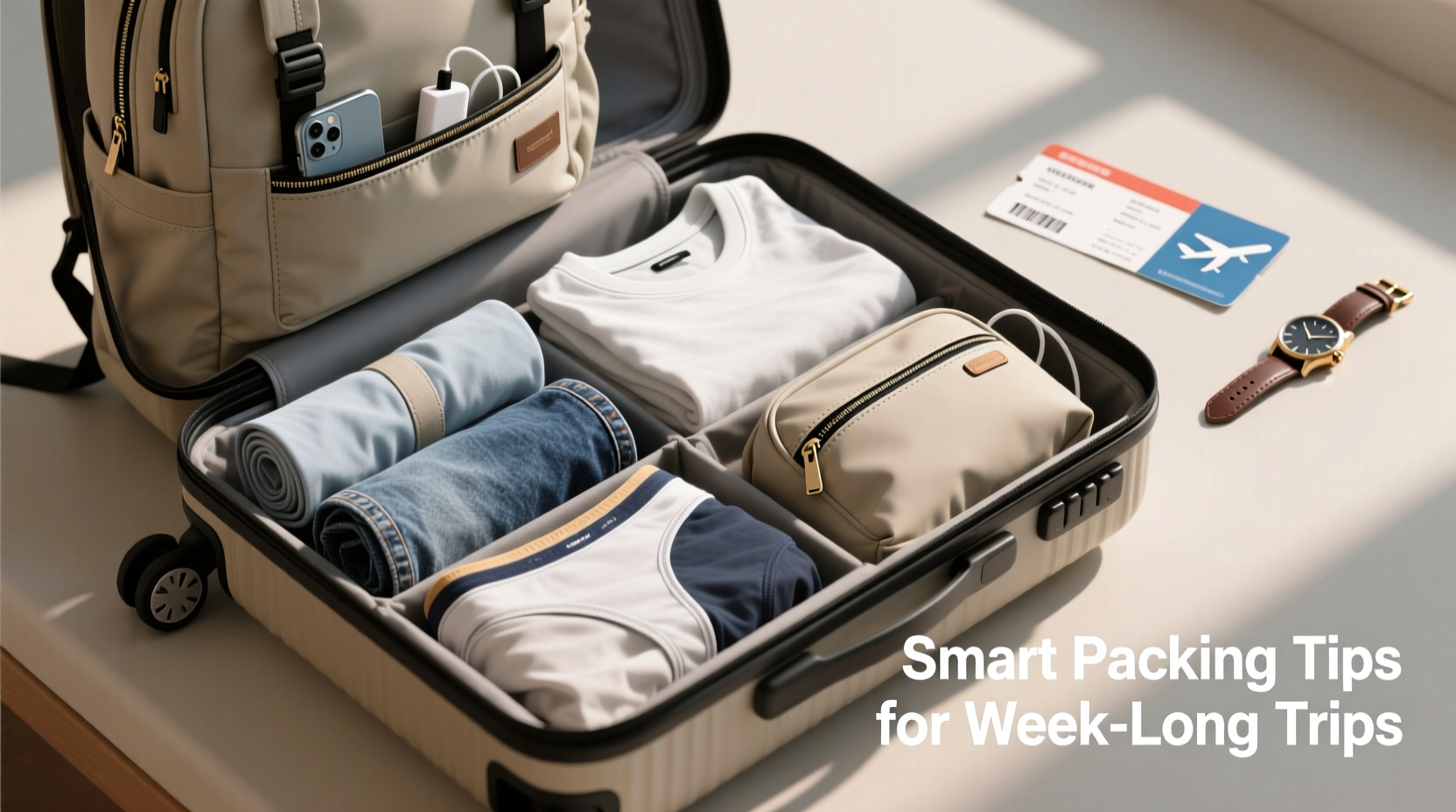
Not all backpacks are created equal when it comes to carry-on compliance and internal organization. Before you even begin folding clothes, ensure your backpack meets airline size restrictions—typically under 22 x 14 x 9 inches (56 x 36 x 23 cm). Look for models with:
- Dedicated laptop or tablet sleeves
- Front-loading design (like a suitcase) for easier access
- Compression straps to reduce bulk
- Internal compartments for toiletries and electronics
- Durable, water-resistant material
A well-designed backpack allows you to maximize vertical space and maintain balance while walking through terminals or cobblestone streets. Brands like Osprey, Nomatic, and Peak Design offer carry-ons specifically engineered for minimalist travelers.
Smart Folding Techniques That Save Space
The way you fold your clothes can make the difference between a neatly packed bag and one bursting at the seams. Traditional folding creates thick stacks and wasted air pockets. Instead, adopt these tested methods:
1. The Military Roll (aka Bundle Wrap)
This method minimizes wrinkles and compresses volume by rolling garments tightly from one end to the other. It works especially well for t-shirts, pants, and lightweight sweaters.
- Lay the garment flat on a clean surface.
- Fold sleeves inward if applicable.
- Start rolling from the bottom hem upward.
- Tighten as you go, removing air pockets.
- Place rolled items vertically in your backpack like files in a drawer.
2. The KonMari Fold
Popularized by Marie Kondo, this origami-inspired fold creates compact rectangles that stand upright and prevent shifting during transit.
- Lay the item flat.
- Fold one-third of the width toward the center.
- Repeat with the opposite side.
- Fold the bottom up about one-third, then fold the top down.
- The result is a tight rectangle that fits snugly in layers.
3. The Bundle Packing Method
Used by frequent business travelers, this involves wrapping clothes around a central core (like toiletry bags or shoes) to minimize creasing and distribute weight evenly.
Layer softer items (underwear, socks) closest to the core, then add shirts, pants, and outerwear. Finish with a compression layer to secure everything.
“Rolling saves up to 30% more space than traditional folding and reduces wrinkling significantly.” — Sarah Lin, Travel Organization Specialist
Essential Packing Checklist: One Week, One Bag
To stay within limits, focus on versatility and mix-and-match potential. Every item should serve multiple purposes. Here’s a realistic checklist for a seven-day trip:
- 4–5 tops (mix of casual and semi-formal)
- 2 bottoms (e.g., jeans + chinos or skirt)
- 1 lightweight jacket or cardigan
- 1 pair of comfortable walking shoes (worn or packed)
- Underwear (7 pairs)
- Socks (5–7 pairs)
- Sleepwear (1 set)
- Workout clothes (if needed)
- Toiletry kit (TSA-compliant containers)
- Electronics (phone, charger, earbuds, power bank)
- Travel documents (passport, ID, printed confirmations)
- Mini laundry detergent sheet (for mid-trip refresh)
Stick to a cohesive color palette—neutrals like black, gray, navy, or beige—to ensure every top works with every bottom. This reduces outfit combinations without sacrificing variety.
Optimize Layout: A Step-by-Step Packing Timeline
Follow this sequence to build a balanced, accessible backpack:
- Hour 1: Lay Out & Edit
Select all intended items, then remove two. Challenge yourself to live with less. - Hour 2: Pre-Fold & Roll
Use the military roll for T-shirts and pants, KonMari fold for button-downs and delicate fabrics. - Hour 3: Pack Heaviest Items First
Place shoes (or packed footwear) and toiletry bag at the bottom, close to your back for better weight distribution. - Hour 4: Layer Clothing Strategically
Stack rolled clothes vertically in the main compartment. Place frequently used items (like a sweater) near the top. - Hour 5: Utilize Compartments
Store electronics in padded sleeves, snacks in front pockets, and medications in easy-access zippers. - Hour 6: Final Compression
Close the backpack and use compression straps to eliminate air gaps. Test carry comfort.
This timeline ensures methodical packing without last-minute stress. Doing it the night before prevents rushed decisions and forgotten items.
Do’s and Don’ts of Carry-On Packing
| Do | Don’t |
|---|---|
| Roll soft garments to save space | Fold bulky sweaters repeatedly (they lose shape) |
| Use packing cubes for organization | Pack full-size liquids (stick to 3-1-1 rule) |
| Wear your bulkiest shoes on travel days | Overpack “just in case” outfits |
| Limit accessories to 3–4 key pieces | Bring iron—most hotels have one |
| Use vacuum storage bags for jackets (if allowed) | Ignore airline-specific carry-on policies |
Packing cubes are game-changers—they create structure, separate categories (e.g., underwear vs. shirts), and make unpacking seamless. Choose mesh cubes for visibility and breathability.
Real Example: A Business Trip to Lisbon
Julia, a marketing consultant, had a week-long client visit in Lisbon. Her flight was early morning, connections tight, and she knew checking luggage could delay her return. She committed to a single 45L backpack.
She selected:
- Three blouses (white, navy, floral)
- Two pairs of tailored trousers (black and gray)
- One wrap dress for evening events
- A lightweight trench coat
- Comfortable loafers (worn), flip-flops for showers
- Minimal makeup, solid shampoo bar
Using the bundle method, she wrapped her clothes around a central toiletry pouch. Each blouse was KonMari-folded, trousers rolled tightly. By day three, she used a sink wash with a detergent sheet and hung clothes to dry overnight—extending wear without odor or stiffness.
She cleared security quickly, avoided baggage claim, and navigated trams and hills effortlessly. “I’ll never check a bag again unless I’m moving countries,” she said afterward.
Frequently Asked Questions
Can I really fit a week’s wardrobe in a carry-on backpack?
Absolutely—if you plan outfits, choose versatile fabrics, and use space-saving folds. Most people overpack by 30–50%. Focus on quality over quantity.
How do I prevent wrinkles in dress shirts?
Place shirts face-down on a flat surface, button them, then fold arms across the back. Sandwich between two rolled sweaters or use a folder board. Avoid stuffing loosely.
What if I need to bring formal attire?
For events requiring suits or gowns, wear the outfit during travel or use a garment folder insert. Some backpacks include a suit sleeve. Alternatively, ship ahead via luggage-forward services.
Final Tips for Long-Term Success
Mastering carry-on packing isn’t a one-time task—it’s a skill that improves with practice. Start with weekend trips to refine your system. Track what you actually wear versus what you pack. Over time, you’ll develop a personalized capsule wardrobe that travels seamlessly.
Invest in wrinkle-resistant fabrics like merino wool, bamboo, or technical blends. They breathe well, resist odors, and recover after rolling. Avoid cotton-heavy items that absorb moisture and take forever to dry.
Conclusion
Packing a carry-on for a week using only a backpack is not just possible—it’s liberating. By applying smart folding techniques, choosing multipurpose clothing, and organizing with intention, you gain freedom from baggage fees, airport delays, and physical strain. The key lies not in how much you pack, but how thoughtfully you do it.




 浙公网安备
33010002000092号
浙公网安备
33010002000092号 浙B2-20120091-4
Comments
No comments yet. Why don't you start the discussion?