
Packing for a week-long trip with only a carry-on is not just possible—it’s practical, efficient, and increasingly preferred by seasoned travelers. Whether you're navigating city streets, attending business meetings, or exploring coastal towns, mastering the art of minimalist packing saves time, avoids baggage fees, and reduces travel stress. The key isn’t in what you bring, but how you organize it. With strategic planning, fabric selection, and packing techniques, you can fit everything you need into a single compact bag that meets airline size restrictions.
Choose the Right Carry-On Bag
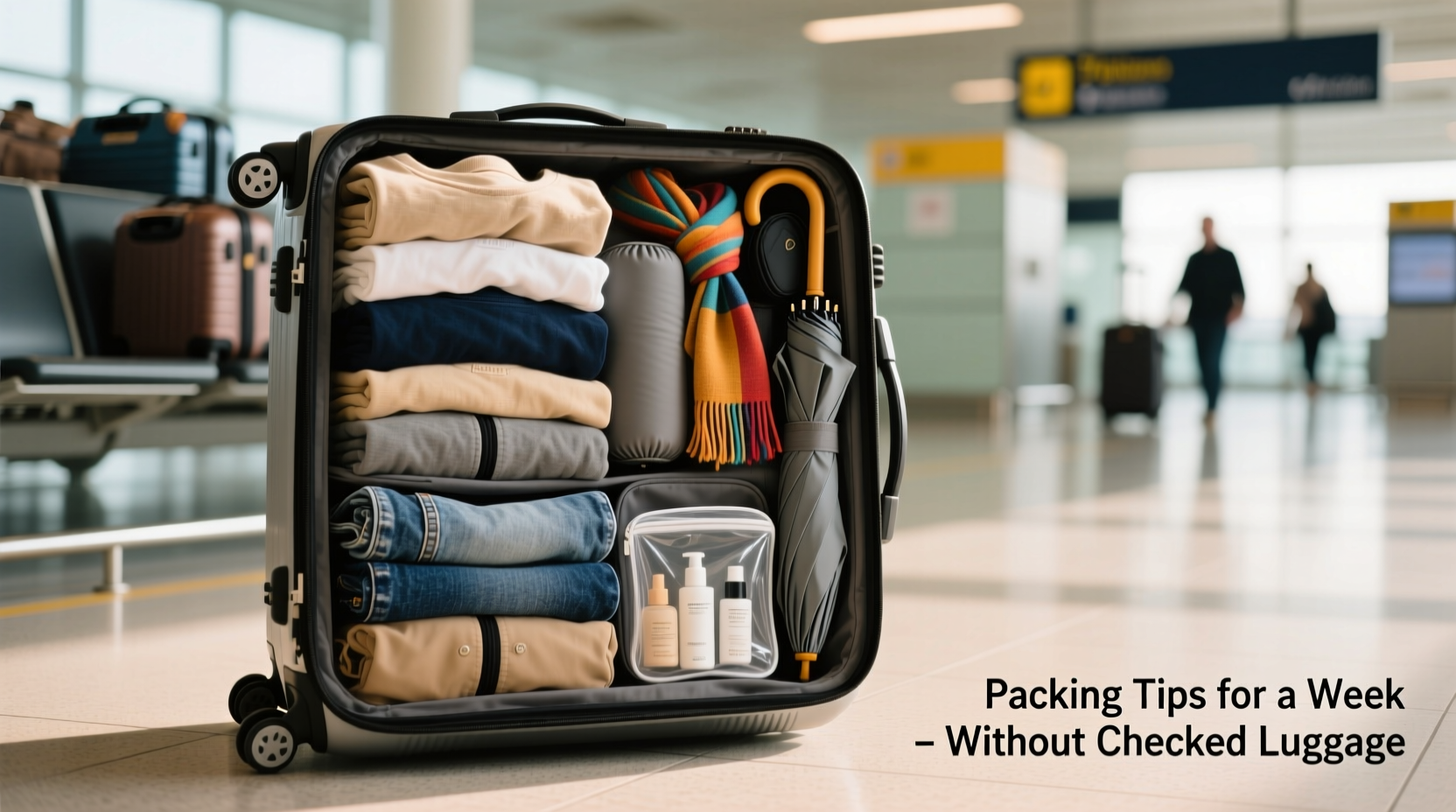
The foundation of successful carry-on packing starts with selecting the right suitcase. Not all carry-ons are created equal. Dimensions vary slightly between airlines, but most adhere to a standard maximum size of 22 x 14 x 9 inches (56 x 36 x 23 cm). A well-designed carry-on should have durability, smooth-rolling wheels, a telescoping handle, and internal compression straps to keep items secure.
Consider whether you prefer a soft-shell or hard-shell case. Soft shells often offer slight expandability and more flexible storage, while hard shells protect fragile contents and maintain shape. Look for models with a front-loading compartment—this makes accessing essentials like electronics or toiletries much easier during security checks.
Plan a Capsule Wardrobe Around Versatile Pieces
One of the most effective ways to reduce volume is by building a capsule wardrobe. This means selecting clothing items that mix and match seamlessly, minimizing the number of outfits while maximizing variety. Stick to a cohesive color palette—neutrals like black, navy, gray, beige, or denim work best because they pair easily across multiple combinations.
A typical week-long capsule includes:
- 3–4 tops (mix of short-sleeve and long-sleeve)
- 2 bottoms (one pair of pants, one skirt or shorts)
- 1 lightweight sweater or jacket
- 1 dress or shirt that doubles as an evening option
- Underwear and socks for 7 days
- 1 sleepwear set
- 1 workout outfit (if needed)
Each top should be able to pair with both bottoms. For example, a white button-down works under a blazer for a meeting, tied over a tank for sightseeing, or dressed up with jewelry for dinner. Choose fabrics that resist wrinkles—merino wool, jersey, and certain synthetic blends hold their shape well and require minimal ironing.
“Packing light isn’t about sacrifice; it’s about intentionality. When every item has multiple uses, you free yourself from clutter and gain flexibility.” — Sarah Chen, Travel Lifestyle Coach
Step-by-Step Packing Process
Efficient packing follows a repeatable system. Follow this step-by-step guide to ensure nothing is forgotten and space is optimized.
- Make a list: Write down all necessary items category by category—clothing, toiletries, electronics, documents.
- Lay everything out: Place each selected item on the bed. This visual audit prevents duplicates and helps identify unnecessary extras.
- Eliminate redundancies: Challenge each item. Do you really need two pairs of jeans? Can one scarf serve three outfit purposes?
- Pack non-clothing first: Begin with heavier, less flexible items like shoes, toiletry bag, and electronics. Place shoes toe-to-toe at the bottom of the suitcase, ideally in shoe bags to prevent dirt transfer.
- Roll soft garments: Rolling clothes instead of folding saves space and reduces creasing. Start with lighter fabrics like t-shirts and roll tightly.
- Fold structured items: Button-down shirts, blazers, and dresses are better folded. Place them flat on top of rolled items, using tissue paper inside if wrinkle prevention is critical.
- Use packing cubes: These small zippered organizers compartmentalize your clothes by type or outfit. They compress contents and make unpacking/repacking effortless.
- Fill gaps: Use empty spaces—inside shoes, along edges—for socks, chargers, or folded belts.
- Top with delicate items: Place sweaters or dry-clean-only pieces on top to avoid compression.
- Secure and test: Zip the bag and lift it. If it strains at the seams or won’t close comfortably, remove one or two items.
Smart Space-Saving Techniques and Tools
Every inch counts when fitting a week’s worth of belongings into a carry-on. Utilize proven methods to compress volume and maximize efficiency.
Compression and Organization Tools
- Packing cubes: Available in various sizes, these help segment clothing and compress bulk. Use clear ones for visibility.
- Vacuum or compression bags: Ideal for bulky items like jackets or sweaters. Squeeze out air manually or with a straw.
- Toiletry bottles: Transfer liquids into reusable silicone travel containers (under 3.4 oz / 100 ml) to comply with TSA rules and save space.
- Travel-sized laundry detergent: Bring a small packet so you can wash clothes in a sink, extending wearability.
Clothing Hacks
- Wear your bulkiest items (jacket, boots, sweater) on travel days.
- Layer clothing around the inside walls of the suitcase for structure and padding.
- Stuff bras with socks or underwear to maintain shape and utilize space.
- Use the “bundle wrap” method: Wrap garments around a central core to minimize wrinkles and save space.
| Do | Don't |
|---|---|
| Pack multi-functional clothing (e.g., convertible pants) | Pack items “just in case” you might need them |
| Roll soft fabrics to save space | Fold heavy knits or delicate silks loosely |
| Use packing cubes for organization | Overstuff the suitcase beyond its capacity |
| Wear bulky shoes on the plane | Bring more than two pairs of shoes |
| Limit accessories to 3–4 versatile pieces | Pack full-size toiletries |
Real Example: One Week in Lisbon with Only a Carry-On
Maria, a freelance designer, traveled to Lisbon for a creative retreat. She brought only a 20-inch soft-shell carry-on and successfully wore seven unique outfits over six days. Her strategy was simple: she built her wardrobe around navy and white, with pops of red in scarves and a statement earring.
She packed:
- Two cotton-blend pants (one cropped, one full-length)
- Three tops (striped tee, white blouse, navy tunic)
- One linen blazer
- One red sundress
- One pair of sandals, one pair of walking flats
- Minimalist jewelry: stud earrings, a pendant necklace, one bracelet
She rolled her casual clothes and used a packing cube for her business-casual looks. On Day 4, she washed her blouse and pants in the sink using a travel soap sheet and hung them to dry overnight. By rotating layers and accessories, she never repeated an outfit and received compliments on her polished yet relaxed style.
Her total suitcase weight: 17 pounds—including laptop, toiletries, and a foldable tote for day trips.
Essential Carry-On Checklist
Before zipping up, verify you have all essentials. Use this checklist to ensure nothing is missed.
Clothing
- 3–4 tops
- 2 bottoms
- 1 jacket or cardigan
- 1 dress or formal top
- 7 sets of underwear
- 7 pairs of socks
- 1 sleepwear set
- 1 workout outfit (optional)
- 1 swimsuit (if applicable)
- 2 pairs of shoes max
Toiletries & Health
- Toothbrush + toothpaste (travel size)
- Deodorant
- Shampoo + conditioner (travel size or solid bar)
- Skin care products (in leak-proof containers)
- Medications (with extra dose)
- Prescription glasses/contacts + solution
- First-aid kit (band-aids, pain relievers)
Electronics & Documents
- Phone + charger
- Laptop/tablet + cable
- Universal adapter (for international trips)
- Passport + ID
- Boarding passes (digital or printed)
- Travel insurance details
- Hotel reservation info
Extras
- Foldable tote bag
- Reusable water bottle (empty through security)
- Eye mask and earplugs
- Snacks for the flight
- Small notebook or journal
Frequently Asked Questions
Can I pack toiletries in my carry-on?
Yes, but liquids, gels, and aerosols must be in containers of 3.4 ounces (100 ml) or less and placed in a single quart-sized, clear, resealable plastic bag. Each traveler is allowed one bag. Solid toiletries like bar soap, deodorant sticks, and powdered shampoo are not subject to these restrictions.
How do I avoid wrinkles when rolling clothes?
Roll only wrinkle-resistant fabrics like cotton knits, jersey, or synthetics. For dressier items like button-downs or blouses, fold them neatly and place them on top of rolled clothes. You can also insert tissue paper between layers or use garment folders. Upon arrival, hang clothes in the bathroom while showering—the steam helps release minor creases.
What if I need to bring a suit or formal attire?
Wear the suit on the flight to avoid packing it. If you must pack it, use a travel garment bag that fits within carry-on dimensions, or carefully fold the jacket with tissue paper inside the sleeves and place it on top of other items. Some travelers drape suits over the interior lid of their suitcase for minimal creasing.
Final Tips for Stress-Free Carry-On Travel
Mastering carry-on-only travel transforms the way you move through airports and cities. It fosters mindfulness in consumption, encourages sustainable habits (like washing clothes mid-trip), and eliminates the anxiety of waiting at baggage claim. The discipline required pays off in speed, freedom, and confidence.
Remember, the goal isn’t to endure discomfort—it’s to travel smarter. Test your packing strategy before departure. Walk around your home with your suitcase. Can you easily open and close it? Does it roll smoothly? Is it comfortable to carry?
Once you’ve streamlined your process, stick to it. Refine it with each trip. Soon, packing will take less than 20 minutes, and you’ll wonder why you ever checked a bag.




 浙公网安备
33010002000092号
浙公网安备
33010002000092号 浙B2-20120091-4
Comments
No comments yet. Why don't you start the discussion?