
Packing light isn’t just a trend—it’s a necessity for modern travelers. Whether you're jetting off for a long weekend, attending a business meeting, or hopping between cities, mastering the art of packing a carry-on into a weekender bag can save time, reduce stress, and eliminate baggage fees. The challenge lies in fitting everything you need without overstuffing or sacrificing essentials. With the right strategy, a well-chosen bag, and smart organization, it’s entirely possible to travel comfortably using only a compact weekender. This guide breaks down proven techniques used by frequent flyers and minimalist travelers to maximize space, maintain versatility, and keep your luggage under the airline’s weight limit.
Choose the Right Weekender Bag
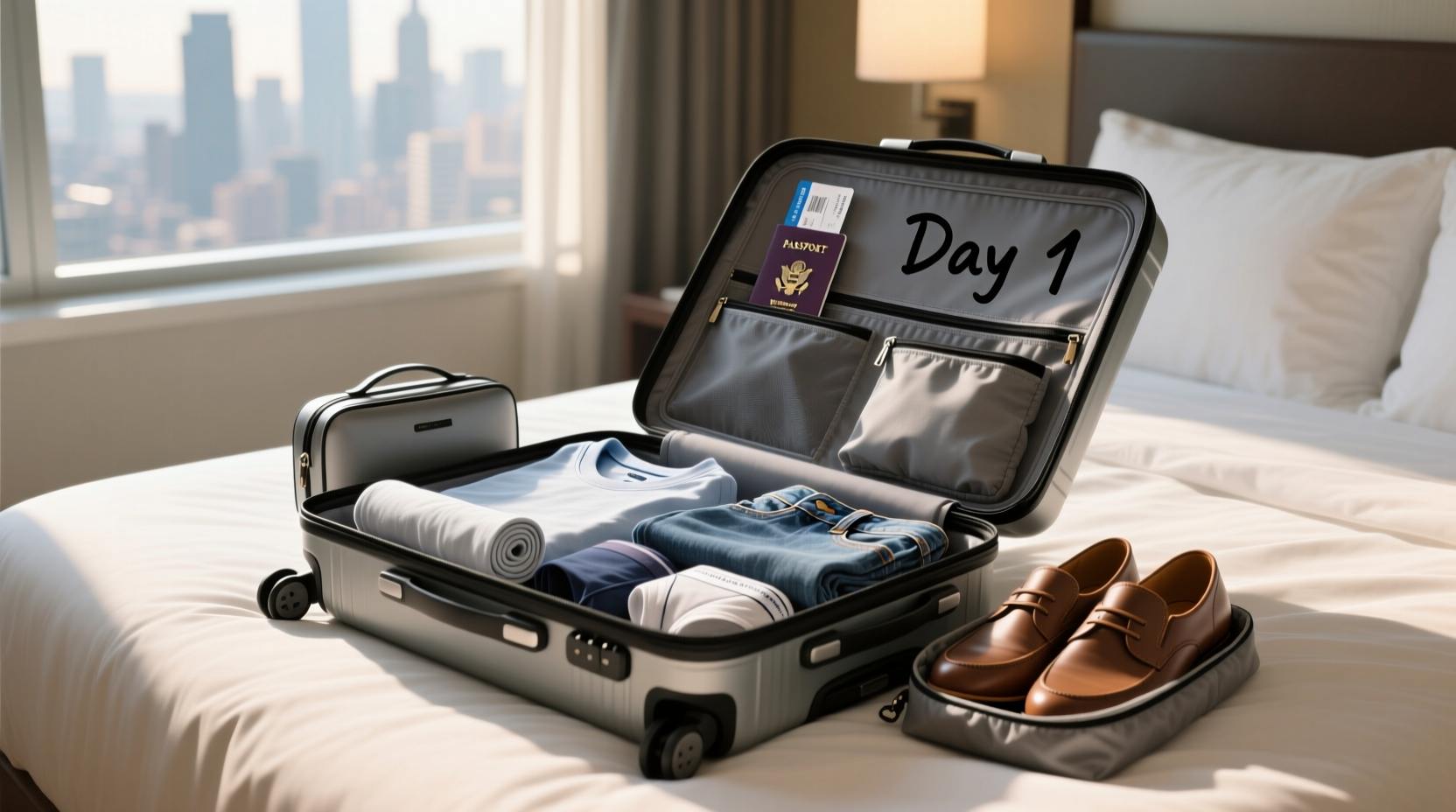
The foundation of efficient carry-on packing starts with selecting the right bag. Not all weekenders are created equal. Some are oversized and barely qualify as carry-ons; others lack structure or internal organization. A good weekender should balance capacity, durability, and compatibility with airline size restrictions.
Airlines typically allow carry-ons up to 22 x 14 x 9 inches (56 x 36 x 23 cm), including handles and wheels. Many weekender bags fall within this range when packed conservatively, but always check dimensions before purchasing. Look for features like trolley sleeves, padded shoulder straps, water-resistant fabric, and multiple compartments.
“Your bag is your mobile closet. It should support your lifestyle—not restrict it.” — Jordan Lee, Travel Gear Designer at Nomadix Supply Co.
Plan Your Outfits Strategically
One of the biggest mistakes travelers make is packing for every possible scenario. Instead of bringing seven shirts for a three-day trip, focus on mix-and-match outfits built around a cohesive color palette. Stick to neutral tones—navy, gray, black, beige—that pair easily across different combinations.
For a four-day trip, consider this approach:
- Two pairs of pants/jeans (one casual, one slightly dressier)
- Three tops (e.g., one button-down, one sweater, one T-shirt)
- One lightweight jacket or blazer
- Underwear and socks for each day (plus one extra)
- Sleepwear and workout clothes (if needed)
- One pair of shoes (wear the bulkiest on travel days)
This system creates up to six outfit variations from just a few pieces. Rolling shirts and layering them vertically prevents deep digging and wrinkling.
Sample Packing Plan: 4-Day Business-Casual Trip
| Item | Quantity | Notes |
|---|---|---|
| Chinos or Dress Pants | 2 | Roll tightly; use as padding for fragile items |
| Casual Button-Down Shirt | 2 | Pair with both pants; roll with tissue paper inside to reduce creases |
| T-Shirt or Sweater | 1 | For layering or casual evening wear |
| Blazer or Lightweight Jacket | 1 | Wear during travel or drape over bag handle |
| Underwear & Socks | 4 sets | Include moisture-wicking materials if exercising |
| Shoes | 1 pair + travel shoes worn | Limit to one versatile pair (e.g., loafers or clean sneakers) |
| Toiletries | Travel-sized containers | Follow TSA liquids rule: 3-1-1 compliant |
Use Space-Saving Packing Techniques
How you fold—or don’t fold—your clothes makes a dramatic difference in available space. Traditional folding wastes air pockets and increases bulk. Instead, adopt these professional methods:
Rolling Method
Ideal for soft fabrics like cotton, jersey, and knits. Rolling compresses garments, reduces wrinkles, and allows for vertical stacking. Start from the shortest edge and roll tightly toward the opposite end. Place rolled items upright in the bag like files in a drawer—this lets you see everything at a glance.
Bundle Wrapping
A lesser-known but highly effective method used by military personnel and ultralight backpackers. Lay out a large piece of clothing (like a button-down shirt) flat, then place smaller items (underwear, socks) in the center. Wrap the arms and sides inward, creating a compact bundle. This minimizes creasing and protects delicate items.
Compression Packing Cubes
While not always necessary in a weekender, small compression cubes help organize categories (e.g., underwear, accessories) and squeeze out excess air. Use them sparingly—over-reliance can defeat the purpose of a minimalist bag.
Maximize Every Nook and Cranny
A weekender bag has limited volume, so every inch counts. Think beyond the main compartment. Utilize pockets, seams, and even footwear to store essentials.
- Shoe storage: Place socks, chargers, or cables inside shoes to save space and maintain shape.
- Front zip pocket: Ideal for boarding passes, passport, phone, and wallet—keep frequently accessed items here.
- Side mesh pockets: Store water bottles, umbrellas, or rolled belts.
- Internal lining pockets: Reserve for medications, jewelry, or electronics.
If your bag lacks internal organization, add a slim pouch or reusable shopping bag that folds flat when empty. Attach a carabiner clip to hang a mask, sunglasses case, or laundry bag externally—just ensure it doesn’t exceed airline limits.
Real Example: Sarah’s Weekend Escape
Sarah, a marketing consultant based in Chicago, travels weekly for client meetings. For a recent trip to Denver, she committed to using only her leather weekender—no checked luggage. She wore her heaviest boots on the plane, packed two pairs of dark jeans, three tops, a blazer, and used rolling techniques for all garments. Her toiletry kit was limited to TSA-approved sizes in a clear pouch. By wearing her jacket onboard and storing her makeup in a padded eyeglass case, she cleared security quickly and avoided baggage claim. “I arrived faster than colleagues who checked bags,” she said. “And I felt more put together because nothing was crushed.”
Essential Checklist: What to Pack in a Weekender
To avoid forgetting critical items while staying minimal, follow this concise checklist tailored for short trips:
- ✅ 2–3 versatile clothing items (tops, bottoms, dress-up option)
- ✅ Underwear and socks (one per day + spare)
- ✅ Sleepwear and gym clothes (if applicable)
- ✅ One pair of shoes (second pair worn during travel)
- ✅ Toiletries in travel-sized containers (TSA 3-1-1 compliant)
- ✅ Charger, cable, and power bank (tuck in side pocket)
- ✅ Medications and daily supplements
- ✅ Travel documents (ID, boarding pass, hotel info)
- ✅ Sunglasses, hat, or scarf (doubles as warmth and style)
- ✅ Small laundry bag or ziplock for dirty clothes
Optional additions: e-reader, journal, noise-canceling earbuds, reusable water bottle (empty during security screening).
Avoid Common Packing Mistakes
Even experienced travelers fall into traps that turn a sleek weekender into a overstuffed burden. Watch out for these pitfalls:
| Don’t | Do |
|---|---|
| Pack full-size toiletries | Use travel-sized bottles or solid alternatives (shampoo bars, toothpaste tablets) |
| Bring “just in case” outfits | Select only what matches your itinerary |
| Overpack shoes | Limit to one pair; wear the bulkiest on travel days |
| Forget laundry options | Plan to hand-wash a shirt overnight if needed |
| Ignore airline weight limits | Weigh your bag at home with a luggage scale |
Another common error is failing to account for return items. If you’re buying souvenirs or gifts, leave room or plan to ship them home. Otherwise, you may face overweight fees or the hassle of repacking at the airport.
Step-by-Step: How to Pack Your Weekender in 10 Minutes
You don’t need hours to pack efficiently. Follow this streamlined process the night before departure:
- Step 1: Lay out all intended items on your bed.
- Step 2: Remove anything not essential or duplicative (e.g., two black T-shirts → keep one).
- Step 3: Pre-roll clothes and group by category (tops, bottoms, underwear).
- Step 4: Place heavier items (shoes, toiletry bag) at the bottom center.
- Step 5: Insert rolled clothes vertically, filling gaps side-to-side.
- Step 6: Use small pouches for electronics, cords, and valuables.
- Step 7: Slide flat items (notebook, tablet) against the interior walls.
- Step 8: Store liquids in a clear, sealed bag and place in an accessible pocket.
- Step 9: Double-check travel documents and chargers.
- Step 10: Zip up, lift the bag, and ensure it feels balanced and under 20 lbs (9 kg).
This routine builds muscle memory over time, turning efficient packing into second nature.
Frequently Asked Questions
Can I fit a suit in a weekender without wrinkling?
Yes, but technique matters. Wear the suit jacket during travel or drape it over your arm. For the pants, fold them along the crease and place them flat at the bottom of the bag, ideally between two stiff items like books or shoe boxes. Alternatively, roll the jacket loosely around a garment sleeve or tissue paper to preserve shape.
What if I need to bring medication that requires refrigeration?
Use a compact medical cooling pouch with pre-charged gel packs. These fit easily in a weekender and maintain temperature for 24–48 hours. Notify airline staff in advance if carrying temperature-sensitive prescriptions—they often allow exceptions for medical needs.
Is it possible to pack for cold weather in a weekender?
Layering is key. Pack thin thermal base layers, a merino wool sweater, and a packable puffer jacket. These compress well and provide warmth without bulk. Avoid bulky coats—opt for technical outerwear designed to fold into their own pocket.
Final Thoughts: Travel Light, Live Freely
Packing a carry-on using only a weekender bag isn’t about restriction—it’s about intentionality. When you choose quality over quantity, preparation over panic, and simplicity over excess, you reclaim time, mobility, and peace of mind. Airlines won’t lose your bag because you never check it. Security lines become quicker. And arriving at your destination feeling organized sets the tone for the entire trip.
The most seasoned travelers aren’t those with the most gear—they’re the ones who know exactly what they need and where it is. Start small. Try the next weekend getaway with just one bag. Apply the rolling method, stick to the checklist, and leave the extras behind. You’ll likely discover that less really is more—and that freedom begins the moment you close your zippers with confidence.




 浙公网安备
33010002000092号
浙公网安备
33010002000092号 浙B2-20120091-4
Comments
No comments yet. Why don't you start the discussion?