
Packing for a two-week trip doesn’t have to mean lugging around an overstuffed suitcase or struggling with last-minute organization. The key lies not in what you bring, but how you pack it. Among the most effective techniques for maximizing space and minimizing wrinkles is the roll and compress method—a favorite among frequent travelers, minimalist packers, and flight attendants alike. This approach combines strategic rolling of clothing with compression tactics to fit more into less, all while keeping garments neat and accessible. When executed correctly, this method can transform your packing experience from chaotic to streamlined.
The roll and compress technique works particularly well with soft fabrics like cotton, jersey, and knits, which respond well to rolling without creasing excessively. It’s also ideal for carry-on travelers aiming to avoid checked baggage fees or those navigating narrow European hotel elevators. But beyond convenience, efficient packing reduces stress at security checkpoints, simplifies outfit changes, and ensures you’re prepared for varied climates and occasions—without overpacking.
Why Rolling Beats Folding
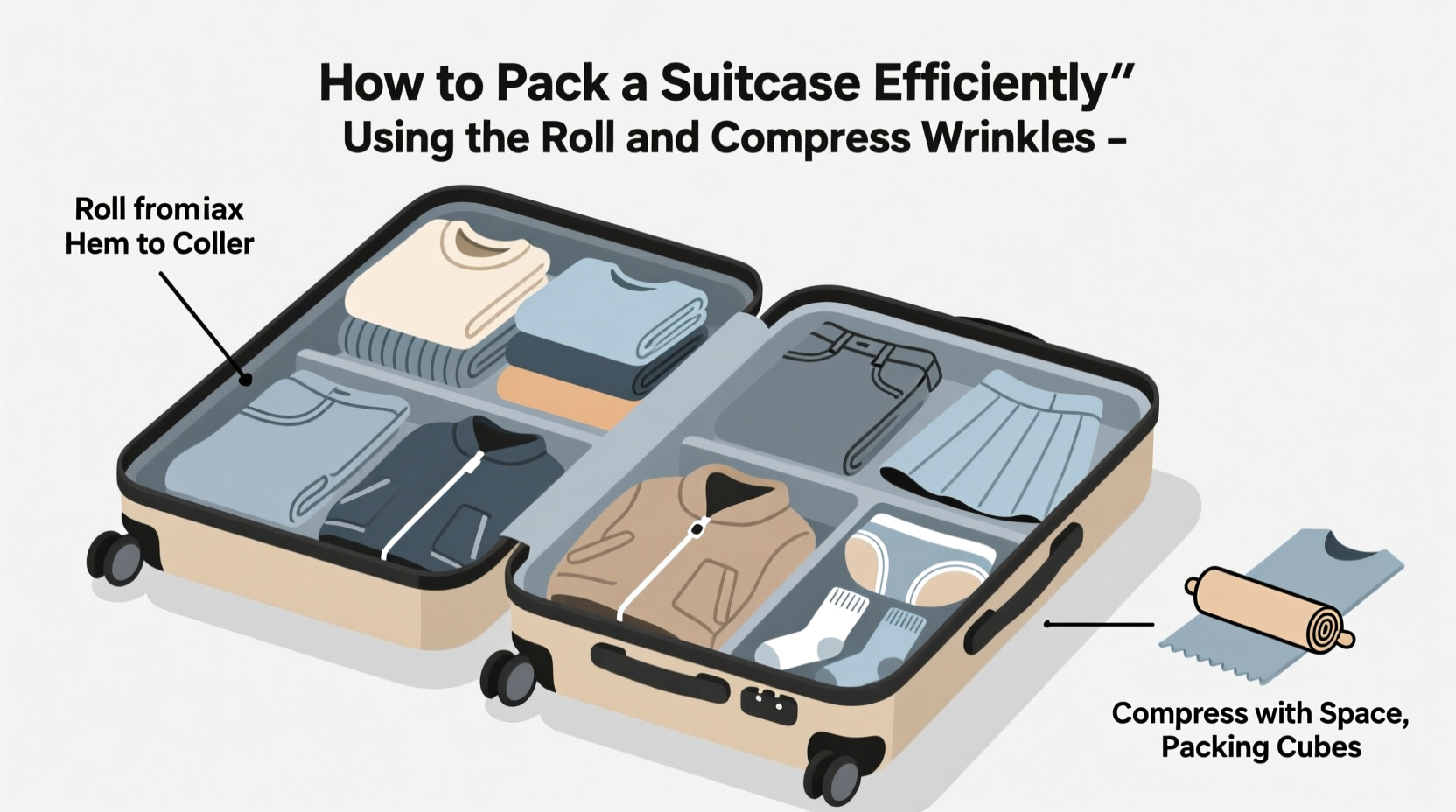
Folding clothes may seem intuitive, but it comes with hidden drawbacks: sharp creases, inefficient use of space, and items shifting during transit. Rolling, on the other hand, offers several structural advantages. First, rolled garments are more compact, often taking up 30–50% less space than folded equivalents. Second, rolling minimizes deep creases because fabric is compressed evenly along its length rather than bent sharply at multiple points.
More importantly, rolling creates uniform cylinders that stack tightly together, eliminating air pockets that folding often leaves behind. This density allows you to fit more items securely within the same footprint. When combined with compression—either through packing cubes or by pressing down layers—you further eliminate dead space and stabilize contents so they don’t shift mid-journey.
Step-by-Step: The Roll and Compress Method
To master this technique, follow a structured sequence that optimizes both space and accessibility. The process takes about 15–20 minutes once practiced and becomes faster with repetition.
- Sort and categorize your clothing by type: tops, bottoms, undergarments, sleepwear, activewear, etc. Lay them out on a bed or table.
- Select a lightweight suitcase with a rigid frame or clamshell opening for easier layering. A medium-sized carry-on (around 22” x 14” x 9”) is usually sufficient for two weeks if packed efficiently.
- Begin with the heaviest, bulkiest items. Place rolled jeans, pants, or jackets at the bottom of the suitcase, arranging them side by side to create a flat foundation.
- Roll each garment individually: Lay the item flat, smooth out wrinkles, fold sleeves inward (for shirts), then roll tightly from one end to the other. Avoid loose rolls—they waste space.
- Layer progressively lighter clothing on top: t-shirts, blouses, sleepwear. Keep similar colors or outfits grouped together for easy identification.
- Use packing cubes or compression bags to group categories (e.g., work attire, casual wear). These help compress volumes further and maintain order when unpacking.
- Fill gaps with small items: socks, underwear, belts, or accessories tucked into corners or wrapped around rolled bundles.
- Compress the entire load by gently pressing down with your palms. If using vacuum-style compression bags, seal and squeeze out excess air.
- Secure the lid and test zippers. If the suitcase closes with effort, remove one non-essential item—it’s better to travel light than risk damage.
This method transforms your luggage into a precision-packed unit where every inch serves a purpose. Unlike haphazard stuffing, rolling ensures predictable capacity and prevents overpacking.
Optimizing Your Packing List for Two Weeks
No technique compensates for poor planning. Before applying the roll and compress method, curate a realistic wardrobe based on destination, climate, and itinerary. Most people overpack by at least 30%. A well-designed capsule wardrobe of 12–15 mix-and-match pieces can cover nearly any two-week scenario.
| Category | Recommended Quantity | Notes |
|---|---|---|
| Tops (blouses, t-shirts, button-downs) | 7–8 | Mix short and long sleeves; choose wrinkle-resistant fabrics |
| Bottoms (pants, skirts, shorts) | 3–4 | Include one dressy pair and one casual; denim rolls well |
| Dresses/Jumpsuits | 2–3 | Roll carefully around tissue paper if prone to wrinkling |
| Underwear & Socks | 10–14 sets | Roll each pair individually or bundle in small pouches |
| Sleepwear & Activewear | 2–3 sets | Lay flat on top or roll separately |
| Jackets/Sweaters | 1–2 | Roll tightly; place at bottom or use as lid padding |
| Shoes | 2 pairs max | Wear bulkiest pair on plane; pack flats or sandals |
Avoid bringing “just in case” items unless absolutely necessary. Laundry—even hand-washing in a sink—can extend the life of a smaller wardrobe. Many hotels offer laundry services, and quick-dry fabrics make refreshing clothes overnight feasible.
“Efficient packing isn’t about fitting more—it’s about choosing wisely and organizing intelligently. Rolling gives you control over volume and access.” — Sarah Lin, Travel Systems Designer and Author of *The Minimalist Traveler*
Real-World Example: Two Weeks in Southern Europe
Consider Maria, a marketing consultant traveling to Spain and Italy for business meetings and weekend sightseeing. Her initial instinct was to pack 18 tops, 5 pairs of shoes, and multiple dresses. After adopting the roll and compress method, she revised her list:
- 6 versatile tops (linen blends and merino wool)
- 3 bottoms (dark jeans, black trousers, midi skirt)
- 2 dresses (one professional, one casual)
- 1 lightweight cardigan and 1 trench coat
- 7 sets of underwear and socks
- 2 sleepwear sets
- 1 pair of walking shoes (worn on flight), 1 pair of flats
She rolled each garment tightly, grouping workwear in a navy packing cube and casual items in a gray one. Shoes were stored in shoe bags and placed along one side wall. Accessories were rolled into belts or stuffed inside shoes to save space. The result? Her 21-inch spinner was only 70% full, leaving room for souvenirs—and she avoided checked baggage fees. At each hotel, she simply removed the cubes and placed them in drawers, maintaining order throughout the trip.
Do’s and Don’ts of the Roll and Compress Method
To get the best results, adhere to proven best practices and avoid common mistakes that undermine efficiency.
| Do’s | Don’ts |
|---|---|
| Roll garments tightly and uniformly | Leave loose ends or uneven rolls |
| Use packing cubes to compress and organize | Pack oversized or bulky outerwear without rolling |
| Place heavy items at the bottom | Overstuff the suitcase to the point of strain |
| Fill empty spaces with small accessories | Forget to leave room for return items or souvenirs |
| Test closure before finalizing | Roll delicate silk or structured blazers without protection |
One frequent error is attempting to roll stiff or structured garments like suit jackets or tailored coats. These should either be worn on the plane or packed using the bundle wrapping method—layered around a central core with tissue paper between folds—to preserve shape without crushing.
Frequently Asked Questions
Can I use the roll and compress method for business trips with formal attire?
Yes, but with modifications. Shirts and knit ties roll well and emerge with minimal creasing. For dress shirts, roll around a cardboard tube or tissue paper insert to protect the front placket. Suit jackets are best worn or folded strategically at the top of the case with soft layers beneath to cushion them. Alternatively, use a foldable garment folder designed for suit preservation.
Will rolling really prevent wrinkles?
It significantly reduces them, especially in casual fabrics. Wrinkles typically form at sharp folds; rolling distributes tension evenly. Upon arrival, hang garments for a few hours—most will relax naturally. For stubborn creases, use a travel steamer or hang clothes in the bathroom during a hot shower.
How do I handle toiletries and electronics?
Store liquids in a clear, zip-top toiletry bag with sealed compartments to prevent leaks. Place this bag on top of your rolled clothing or in an exterior pocket. Electronics should go in a padded sleeve inside the suitcase or carry-on bag, never at the bottom where pressure could damage them. Always keep essential medications and valuables in your personal item.
Final Checklist: Mastering Efficient Packing
- ☐ Finalize a lean, mix-and-match wardrobe (12–15 clothing items)
- ☐ Choose a suitcase with even interior dimensions and smooth lining
- ☐ Gather packing cubes or compression bags
- ☐ Sort clothes by weight and frequency of use
- ☐ Roll each garment tightly from bottom to top
- ☐ Layer heaviest at the base, lightest on top
- ☐ Fill gaps with socks, belts, or small accessories
- ☐ Compress layers manually or with vacuum bags
- ☐ Secure lid and verify zipper function
- ☐ Pack a collapsible tote for return shopping
This checklist ensures no step is skipped and reinforces discipline in selection and execution. Over time, you’ll develop a rhythm that makes packing feel effortless.
Conclusion: Travel Smarter, Not Harder
Packing efficiently for a two-week trip isn’t about sacrifice—it’s about strategy. The roll and compress method empowers you to travel lighter, move faster through airports, and arrive with organized, wearable clothing. It turns what many see as a chore into a repeatable system that saves time, money, and mental energy. Whether you're crossing continents or exploring regional cities, mastering this technique gives you freedom: freedom from baggage fees, from lost items, and from the burden of excess.
Start applying these steps on your next trip. Refine your packing list, invest in quality cubes, and commit to rolling consistently. You’ll quickly discover that less truly is more—especially when every inch of your suitcase works for you.




 浙公网安备
33010002000092号
浙公网安备
33010002000092号 浙B2-20120091-4
Comments
No comments yet. Why don't you start the discussion?