
Packing for a week-long trip without checking a bag is not only possible—it’s liberating. Avoid baggage fees, airport delays, and the stress of lost luggage by mastering the art of efficient carry-on packing. Whether you're traveling for business, leisure, or a mix of both, optimizing your limited space requires strategy, discipline, and a few clever techniques. This guide breaks down exactly how to do it, from selecting the right suitcase to choosing versatile clothing and organizing essentials.
Select the Right Carry-On Luggage
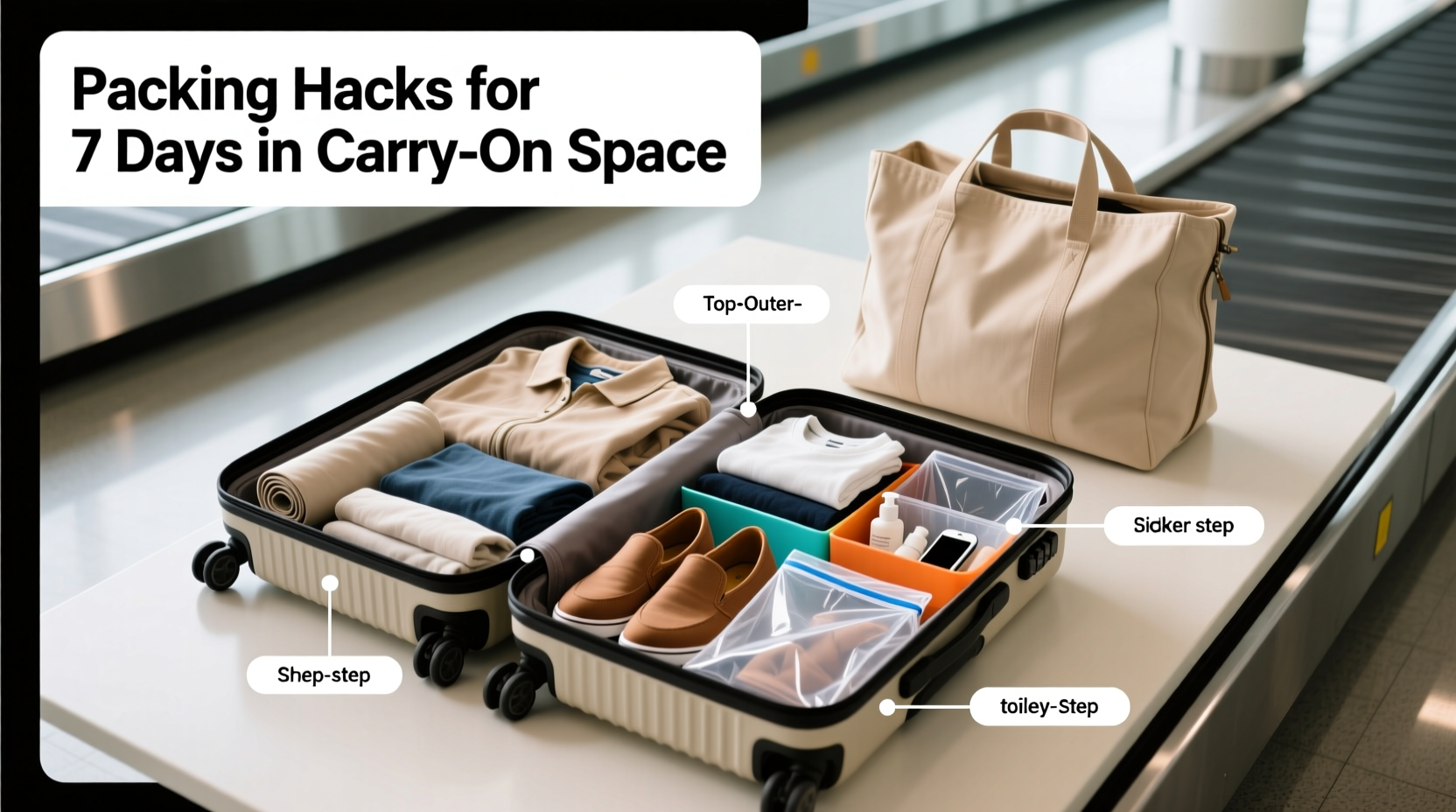
The foundation of successful carry-on packing starts with your suitcase. Not all carry-ons are created equal. Airlines have specific size limits—typically 22 x 14 x 9 inches—but dimensions vary slightly between carriers. Always verify your airline’s restrictions before purchasing or packing.
Choose a suitcase that maximizes interior volume while remaining maneuverable. Hard-shell cases offer durability and water resistance but often sacrifice flexibility. Soft-sided bags typically expand slightly and feature more external pockets, making them ideal for organized packing.
Internal compression straps help stabilize contents and prevent shifting during transit. Look for models with a removable laundry compartment or a dedicated shoe pouch to keep dirty items separated.
Plan Your Outfits Strategically
Most travelers overpack because they fail to plan outfits in advance. Instead of thinking in terms of individual garments, think in complete, mix-and-match ensembles. For a seven-day trip, aim for five core outfits that can be refreshed with accessories or layered differently.
A capsule wardrobe approach works best. Choose a cohesive color palette—neutral tones like black, navy, gray, or beige allow maximum versatility. One pair of pants can pair with multiple tops; a blazer elevates a casual outfit for evening wear.
| Item | Quantity | Rationale |
|---|---|---|
| Tops (shirts, blouses, tees) | 5–6 | One per day + extras for layering or spills |
| Bottoms (pants, skirts, shorts) | 2–3 | Durable fabrics that can be worn multiple times |
| Dresses (if applicable) | 1–2 | Saves space and doubles as day/night wear |
| Jacket or blazer | 1 | Worn on travel days; adds formality when needed |
| Underwear & socks | 7 each | One per day; no need to compromise hygiene |
| Sleepwear | 1 set | Can double as lounge wear |
| Shoes | 2 pairs max | One comfortable walking pair, one dressier option |
Limit shoes—they’re heavy and bulky. Wear the bulkiest pair on travel days and pack a lightweight foldable option if needed. Consider multi-purpose footwear like slip-resistant loafers that work for sightseeing and dinners.
“Efficient packing isn’t about bringing less—it’s about bringing smarter.” — Sarah Lin, Travel Lifestyle Consultant
Master Packing Techniques
How you fold or roll clothes impacts space efficiency and wrinkle prevention. The military roll method—rolling garments tightly into cylinders—is ideal for saving space and minimizing creases in knits and casual wear.
For structured clothing like button-down shirts or blazers, use the bundle wrap technique: lay the largest item flat, place smaller garments inside, and roll everything together. This keeps layers protected and reduces wrinkles.
Utilize every pocket and compartment. Store small electronics in the suiter compartment. Place socks inside shoes to save space and maintain shape. Use packing cubes to separate categories—tops, bottoms, undergarments—making unpacking seamless.
Compression bags are useful for bulky items like sweaters or jackets. Squeeze out excess air manually or with a vacuum attachment. Even without specialized bags, rolling clothes tightly in a plastic grocery bag achieves similar results.
Step-by-Step: The 20-Minute Carry-On Packing Routine
- Day Before Travel: Lay out all planned outfits on your bed. Verify weather forecasts and adjust accordingly.
- Gather Essentials: Collect toiletries, chargers, medications, and documents. Transfer liquids into TSA-approved containers.
- Pre-Pack Categories: Sort items into groups—clothing, toiletries, electronics, documents—using packing cubes or small bags.
- Start with Bottom Layer: Place rolled clothes or flat-packed items along the base. Use compression to maximize space.
- Add Middle Layer: Insert shoes (bagged to protect clothes), toiletry kit, and folded outerwear.
- Top Layer: Add delicate items, pajamas, and a change of clothes for arrival.
- Final Check: Weigh your suitcase. Most airlines limit carry-ons to 22 lbs (10 kg). Adjust if necessary.
This routine prevents last-minute chaos and ensures nothing essential is forgotten.
Toiletries and Electronics: Smart Minimization
Toiletries often take up disproportionate space. Consolidate by choosing multi-use products: a tinted moisturizer with SPF replaces three bottles; a solid shampoo bar eliminates liquid constraints.
Follow TSA guidelines: containers must be 3.4 oz (100 ml) or less and fit in a single quart-sized clear bag. Include only what you’ll use daily:
- Toothbrush and mini toothpaste
- Travel-sized deodorant
- Face wash and moisturizer
- Mini hairbrush or comb
- Feminine hygiene products (if needed)
- Medications in original packaging
Leave behind full-size bottles of lotion or hair products—you can purchase replacements if necessary. Many hotels provide basics, so confirm availability beforehand.
For electronics, bring only what’s essential: phone, charger, earbuds, and perhaps a universal adapter. Avoid carrying multiple devices unless absolutely required. Use a slim power bank instead of a bulky laptop charger if you don’t need full computing power.
Real-World Example: A Business Trip to Chicago
Maria, a marketing executive, had a five-day conference in Chicago followed by two days of client meetings. Her goal: pack light, look professional, and avoid checked baggage.
She started by planning six outfits centered around a navy blazer, black trousers, and a charcoal pencil skirt. She packed three silk blouses, two knit tops, and a shift dress for after-hours networking. Underneath, she included seven sets of underwear and enough accessories—scarves, statement earrings—to refresh her look daily.
She wore her heaviest ankle boots on the flight and packed a pair of foldable ballet flats. Her toiletry kit fit entirely in a transparent zip pouch. Using a soft-shell carry-on with internal dividers, she arranged clothes by category and placed her laptop in the padded sleeve.
The result? A fully functional wardrobe in a suitcase weighing just 18 pounds. She breezed through security, skipped baggage claim, and felt prepared for every meeting.
Common Mistakes to Avoid
Even experienced travelers fall into packing traps. Recognizing these pitfalls can save space and stress:
- Overestimating laundry needs: Most clothes can be worn more than once, especially bottoms and outer layers.
- Packing “just in case” items: That extra jacket or pair of heels likely won’t be used. Leave it behind.
- Ignoring weight distribution: Top-heavy bags tip over and are harder to wheel.
- Forgetting travel documents: Keep passport, boarding pass, and hotel info in a dedicated pocket or crossbody bag.
- Using inefficient folding: Traditional folding creates air pockets. Rolling or bundling saves significant space.
“The most effective packers aren’t minimalists—they’re strategists.” — James Reed, Frequent Flyer Coach
Carry-On Packing Checklist
Use this checklist the night before departure to ensure nothing is missed:
- ✅ 5–6 tops (mix of casual and formal)
- ✅ 2–3 bottoms
- ✅ 1 dress (optional)
- ✅ 1 jacket or blazer
- ✅ 7 sets of underwear and socks
- ✅ 1 sleepwear set
- ✅ 2 pairs of shoes (one worn, one packed)
- ✅ Toiletries in TSA-compliant bag
- ✅ Toothbrush and travel toothpaste
- ✅ Medications and prescriptions
- ✅ Phone, charger, power bank
- ✅ Universal travel adapter
- ✅ Earbuds or headphones
- ✅ Passport, ID, boarding pass
- ✅ Credit cards and cash
- ✅ Reading material or tablet (optional)
- ✅ Reusable water bottle (empty during security)
FAQ
Can I pack laundry for the return trip?
Yes, but plan for it. Use a separate packing cube or sealed bag for dirty clothes. If space allows, roll soiled items tightly and place them at the top for easy removal upon arrival.
What if I need to pack a suit?
Wear the suit on the flight to avoid wrinkles. If you must pack it, use a garment folder or lay it flat inside the suitcase with heavier items underneath to minimize creasing. Button all closures and place tissue paper between folds if available.
Is it possible to pack for cold weather in a carry-on?
Yes, but layering is key. Prioritize thermal base layers, a compact down jacket, and a warm hat and gloves. These items compress well and can be worn on travel days to free up space.
Final Thoughts
Packing a week’s worth of essentials into a carry-on isn’t about sacrifice—it’s about precision. By choosing versatile clothing, applying smart folding methods, and eliminating unnecessary items, you gain freedom, efficiency, and peace of mind. Airports become smoother, commutes easier, and your overall travel experience more enjoyable.
Start implementing these strategies on your next short trip. Refine your system over time. Soon, you’ll wonder why you ever checked a bag.




 浙公网安备
33010002000092号
浙公网安备
33010002000092号 浙B2-20120091-4
Comments
No comments yet. Why don't you start the discussion?