
Packing efficiently isn’t just about fitting more into less—it’s about maintaining order, reducing wrinkles, and making your travel experience smoother from start to finish. Flight attendants, who often live out of carry-ons for days or even weeks at a time, have mastered the art of minimalist, strategic packing. At the heart of their technique lies one simple yet transformative method: the space-saving roll.
This isn’t just about rolling clothes instead of folding. It’s a systematic approach that combines fabric selection, organization, compression, and accessibility. When done correctly, this method can free up 30–50% more space in your luggage, reduce creasing on delicate fabrics, and allow you to travel lighter—without sacrificing style or preparedness.
Why Flight Attendants Swear by the Rolling Method
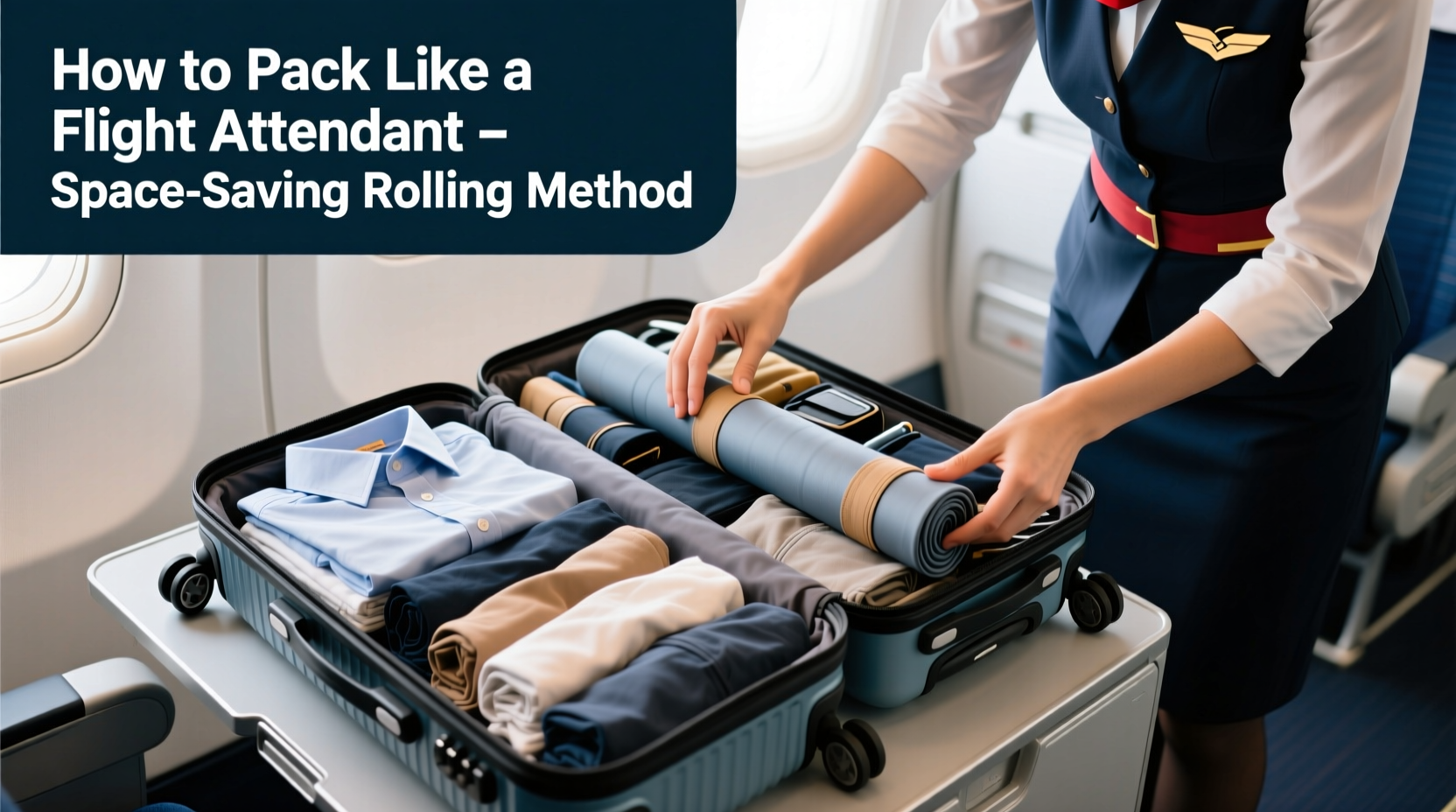
Flight attendants are frequent travelers with strict baggage limits and unpredictable schedules. Their ability to stay polished and professional across multiple time zones hinges on smart packing. Unlike traditional folding, which creates air pockets and uneven layers, rolling compresses clothing uniformly, allowing for denser packing and better weight distribution.
The science behind it is straightforward: rolled garments take up less volume because they eliminate dead space between folds. They also resist shifting during transit, minimizing wrinkles caused by movement. This is especially effective for knitwear, t-shirts, pajamas, and lightweight pants.
“Rolling isn’t just a trick—it’s a necessity when you’re changing hotels every 24 hours and need to look camera-ready by breakfast.” — Carla Mendez, Senior Cabin Crew Supervisor, Delta Airlines (12 years experience)
Beyond space savings, rolling allows for visual inventory. You can see each item without unpacking half your bag, which saves time during layovers or short trips. Flight attendants often pair this method with compartmentalized packing cubes, turning their suitcase into a mobile closet.
Step-by-Step: The Flight Attendant’s Packing Sequence
To replicate this expert-level efficiency, follow a structured process. This timeline assumes a standard carry-on (22” x 14” x 9”) and a 7-day trip, but can be scaled up or down.
- Sort by category: Group clothes into tops, bottoms, underwear, sleepwear, outerwear, and accessories.
- Select fabrics wisely: Prioritize wrinkle-resistant materials like jersey, merino wool, or synthetic blends.
- Lay everything flat: Begin with clean, dry garments spread out on a bed or table.
- Roll from the shortest edge: For shirts and pants, start at the hem and roll tightly toward the collar or waistband.
- Use the “file fold” for bulkier items: Fold sweaters or jackets once vertically, then roll from bottom to top.
- Place heaviest items at the wheels: Position rolled jeans or shoes near the base to stabilize the suitcase.
- Fill gaps with soft rolls: Use socks, underwear, or scarves to fill empty corners and prevent shifting.
- Top with delicate items: Place dress shirts or blouses on top, either rolled loosely or laid flat if necessary.
- Insert packing cubes: Use separate cubes for categories (e.g., workwear, casual, undergarments).
- Final compression check: Close the suitcase and press down gently. If it zips smoothly, you’ve optimized space.
Do’s and Don’ts of the Rolling Technique
Not all garments respond equally to rolling. Some improve with compression; others lose shape or develop permanent creases. Use the following guide to make informed decisions.
| Garment Type | Do | Don’t |
|---|---|---|
| Cotton T-Shirts | Roll tightly—they rebound well | Overstuff them into tight spaces |
| Dress Shirts | Roll loosely around a shirt board or cardboard insert | Fold sharply at shoulders or cuffs |
| Jeans | Roll after turning inside out to preserve color | Wet-pack them—damp denim molds and smells |
| Silk Blouses | Roll with tissue paper inside to prevent snags | Stack heavy items on top |
| Socks & Underwear | Bundle-wrap or roll in sets of three | Leave loose—they migrate to corners |
Real-World Example: A 10-Day European Trip in One Carry-On
Sophie, a corporate trainer based in Chicago, travels frequently for client workshops. On a recent 10-day trip through Paris, Berlin, and Amsterdam, she committed to packing only a carry-on. Using the flight attendant’s rolling method, she curated a capsule wardrobe of 14 clothing items, two pairs of shoes, and essential toiletries—all within airline size limits.
Her strategy:
- Rolled 5 tops (mix of cotton and merino wool) and placed them in a slim packing cube.
- Used the “bundle roll” for 3 pairs of underwear and 4 socks—each set rolled together like a jelly roll.
- Packed 2 pairs of pants: one dark wash jeans (rolled tightly), one chino (rolled with a thin cardboard insert).
- Layered a lightweight sweater using the file-fold roll to minimize bulk.
- Folded a blazer over the top layer, secured with a clip, and laid flat on arrival.
She reported no wrinkles beyond minor shoulder lines, easy access to daily outfits, and enough room for souvenirs on the return flight. Most importantly, she avoided checked baggage fees and airport wait times.
Pro Packing Checklist: Your Pre-Departure Guide
Before closing your suitcase, run through this checklist to ensure nothing is overlooked and everything is optimized.
- ✅ Confirm weather forecast and adjust layers accordingly
- ✅ Sort all clothing by outfit or occasion
- ✅ Roll all eligible items using consistent tightness
- ✅ Place heaviest rolls at the bottom, near wheels
- ✅ Fill side pockets with rolled belts, chargers, or travel documents
- ✅ Use packing cubes to separate clean vs. dirty or formal vs. casual
- ✅ Reserve top layer for delicate or last-minute additions
- ✅ Weigh suitcase before departure to avoid gate fees
- ✅ Snap a photo of packed contents for insurance or TSA purposes
- ✅ Double-zip and test handle durability
“The key isn’t what you pack—it’s how you organize it. I can fit a week’s wardrobe in a personal item because I treat my suitcase like a puzzle, not a trash bag.” — Jamal Rivers, International Flight Attendant, United Airlines
Frequently Asked Questions
Can rolling really prevent wrinkles?
Yes—especially for knit and stretch fabrics. Rolling avoids sharp creases that occur with folding. While some fine linen or cotton may still develop soft lines, these typically fall out after hanging for a few hours. For best results, hang garments as soon as you arrive.
What should I do with bulky items like jackets or sweaters?
Use the “file fold” method: fold the item in half vertically (like closing a book), then roll from the bottom up. This reduces width while preserving shape. Alternatively, wear bulky outerwear during transit to save space.
Is this method suitable for suitcases with front-loading compartments?
Absolutely. In fact, front-loaders benefit more from rolling because layered rolls stack neatly and remain visible when the bag is opened. Use vertical packing cubes to maintain separation and easy retrieval.
Maximizing Space: Advanced Tips from the Pros
Once you’ve mastered the basics, consider these advanced techniques used by veteran flight crews:
- Nested rolling: Place small rolled items (socks, undies) inside the sleeves or body of larger rolled shirts to eliminate dead space.
- Shoe stuffing: Roll belts, cables, or travel-sized bottles and place them inside shoes, which are then packed sole-down with a shoe bag.
- Compression stacking: After initial packing, close the suitcase and place a heavy book or laptop on top overnight to settle contents before final zipping.
- Color-layering: Arrange rolls by color family so opening the suitcase resembles a drawer—this speeds outfit selection.
Additionally, many flight attendants use silicone-coated packing cubes that offer mild compression without restricting airflow. These are particularly useful for humid climates where moisture buildup can cause mildew.
Conclusion: Travel Lighter, Smarter, and More Confident
Packing like a flight attendant isn’t about minimalism for its own sake—it’s about precision, readiness, and control. The space-saving rolling method transforms your suitcase from a storage container into a functional system. With practice, you’ll spend less time repacking, ironing, or searching for lost items, and more time enjoying your destination.
Whether you’re embarking on a weekend getaway or a month-long international tour, applying these techniques will elevate your travel game. Start small: roll just your t-shirts and socks on your next trip. Then expand to full integration. Soon, you’ll wonder how you ever traveled any other way.




 浙公网安备
33010002000092号
浙公网安备
33010002000092号 浙B2-20120091-4
Comments
No comments yet. Why don't you start the discussion?